No products in the cart.


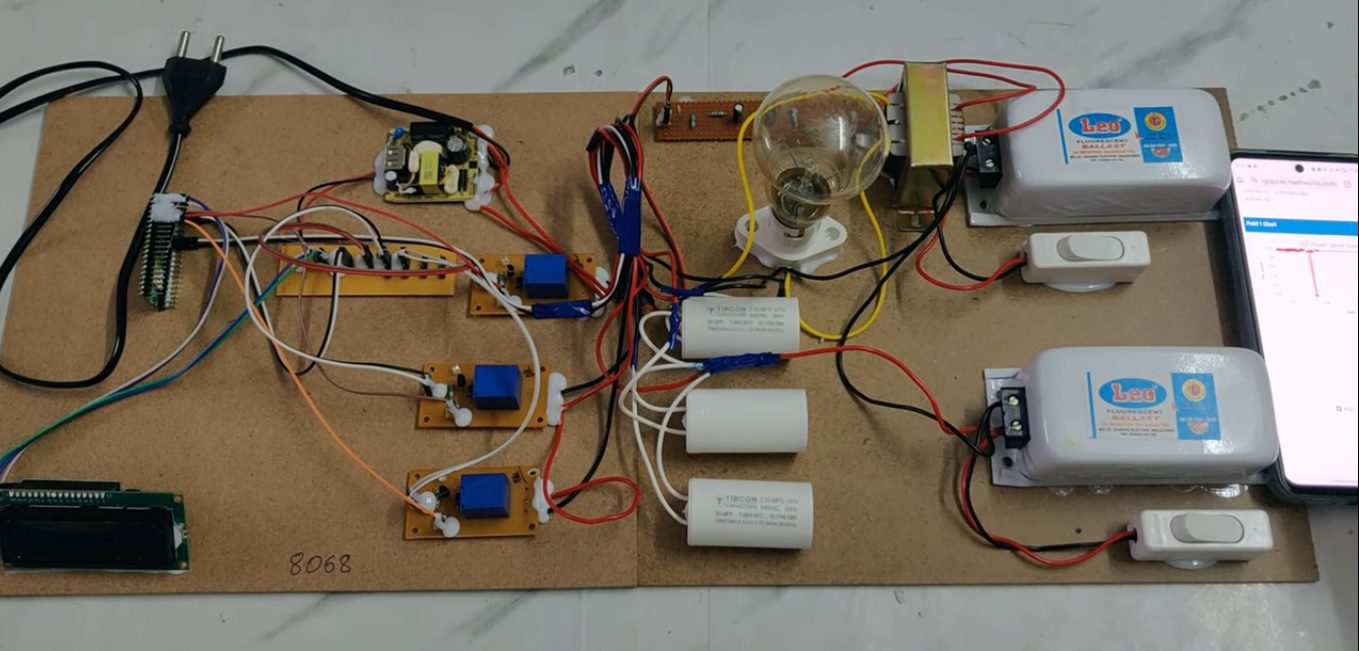
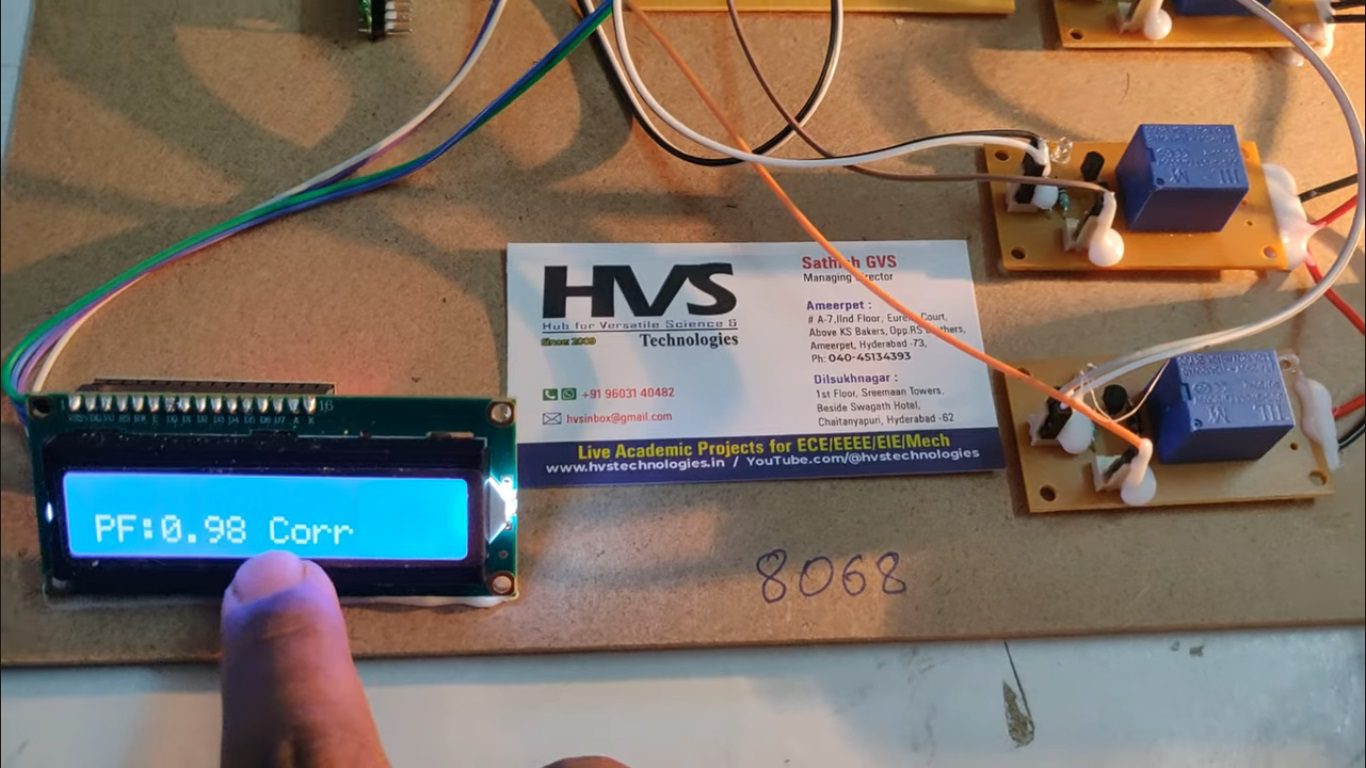
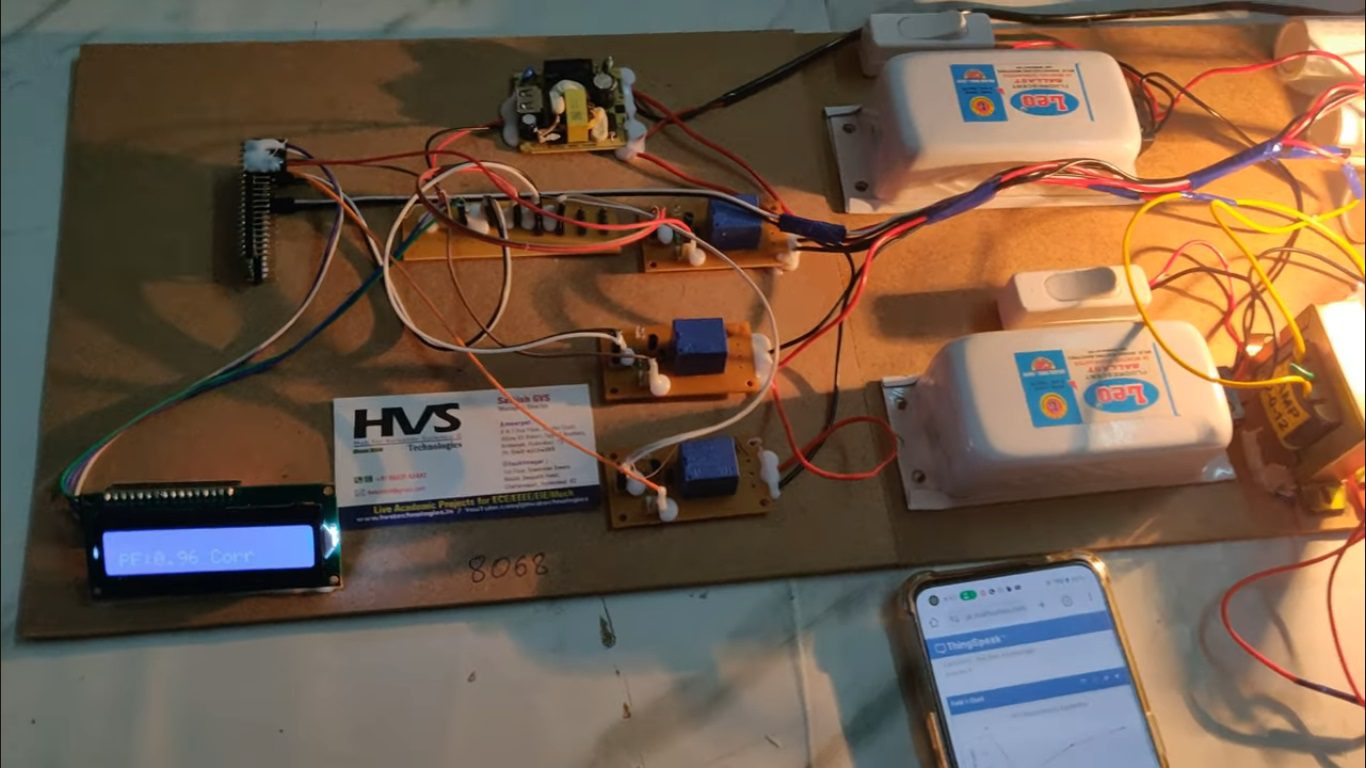
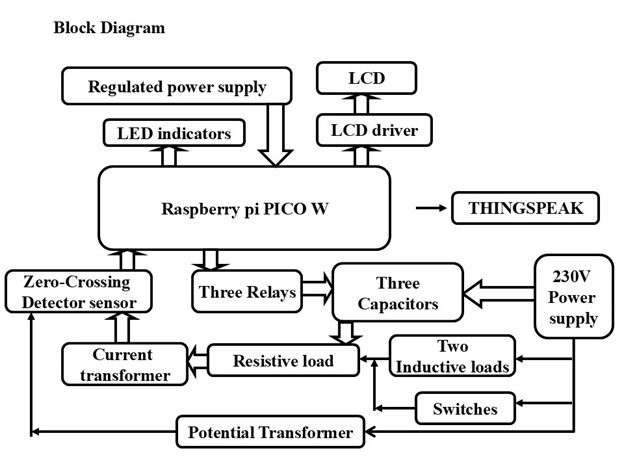
The project presents an IoT-based automatic power factor correction system designed to improve electrical energy efficiency. The system uses a Raspberry Pi Pico W as the central controller, which processes signals received from current transformers (CT), potential transformers (PT), and a zero-crossing detector to analyze voltage, current, and phase difference. Based on these measurements, the system determines the power factor condition of the load, which includes resistive and inductive loads powered by a 230V AC supply. When a low power factor is detected, the controller activates relay-controlled capacitor banks to compensate for reactive power and improve the power factor towards unity. The system also provides real-time monitoring through an LCD display, LED indicators, and cloud connectivity using ThingSpeak IoT platform. A regulated power supply ensures stable operation of all electronic components. Overall, the system enables automatic, efficient, and intelligent power factor correction with real-time monitoring and control.
Objectives:
 video:
- To design and develop an IoT-based Automatic Power Factor Correction (APFC) system.
- To measure voltage, current, and phase difference using PT, CT, and zero-crossing detection.
- To automatically detect low power factor conditions in electrical loads.
- To improve the power factor by switching capacitor banks through relay control.
- To monitor electrical parameters and power factor in real time using the ThingSpeak IoT platform.
- To display system status and electrical parameters on an LCD.
- To improve energy efficiency, reduce power losses, and minimize electricity penalties through automatic power factor correction.
- Regulated power supply.
- Raspberry pi Pico W.
- Zero crossing detectors.
- Relay.
- Three Capacitor.
- Two Inducive loads.
- Current transformer.
- Potential transformer.
- One Resistive Load.
- LCD display.
- THONNY PYTHON IDE programmer.
- Micro Python language.
- Express SCH for Circuit Design.
 video: