Subtotal ₹48,250.00


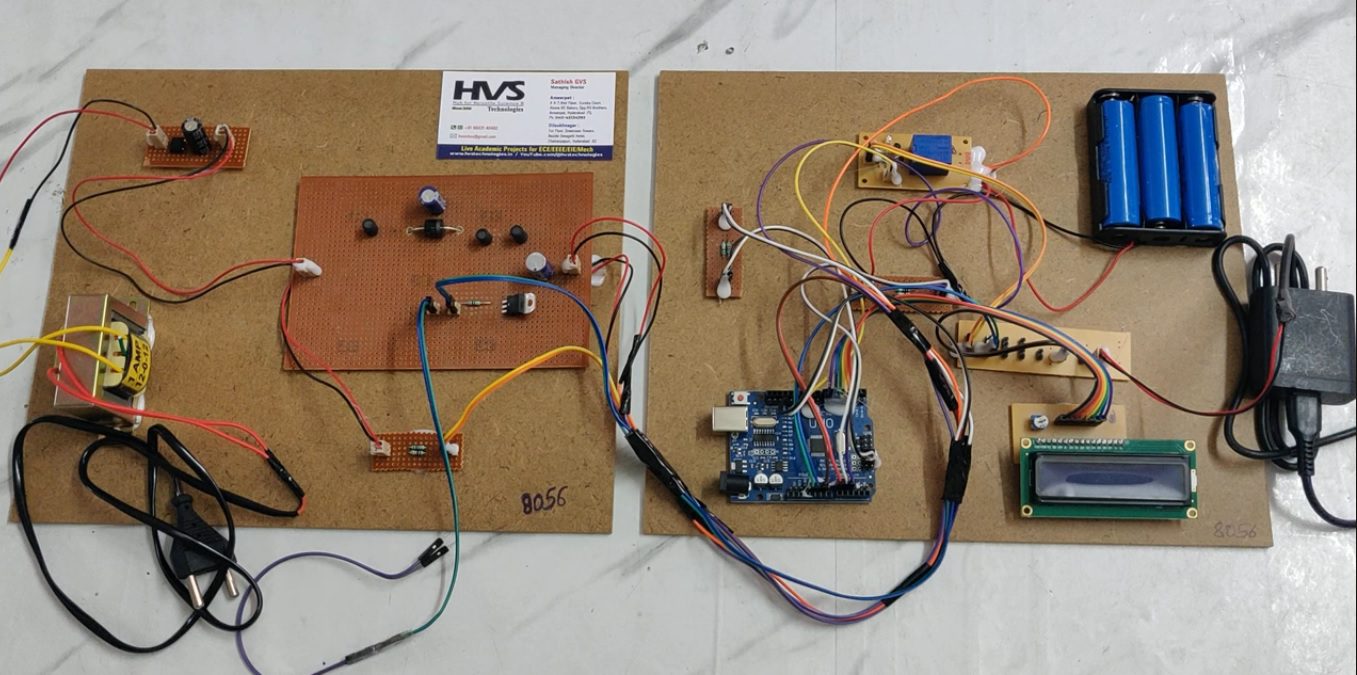
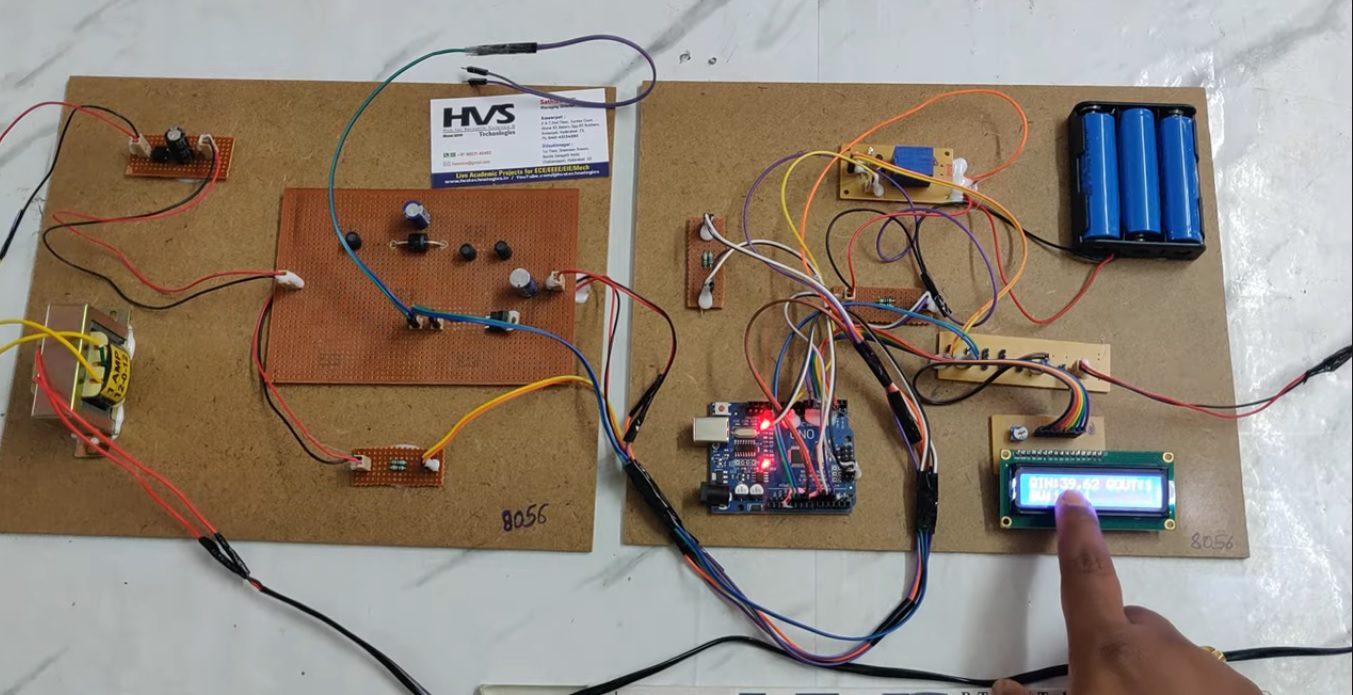
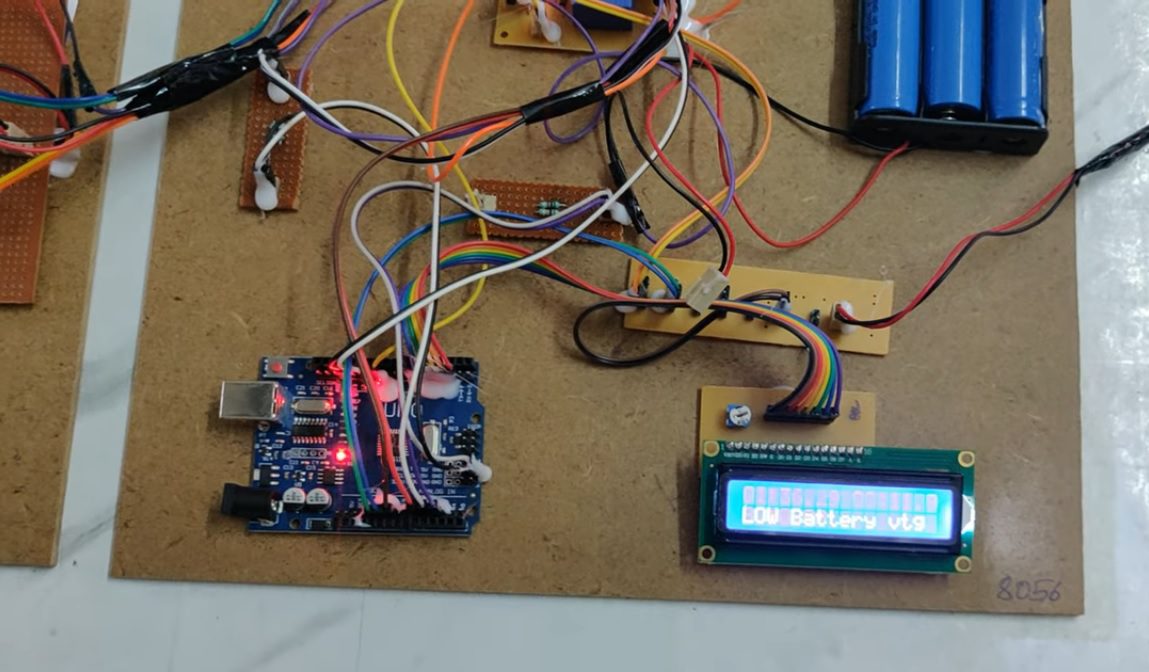
This project presents the design and implementation of a quasi-resonant buck/forward type DC–DC converter incorporating a resonant L–C network and a controlled switching mechanism for efficient power conversion. The system is developed to step down a 24V DC input to a regulated 12V output suitable for charging a Li-ion battery while ensuring high efficiency, reduced switching losses, and improved reliability.
The proposed converter operates on the principle of quasi-resonant switching, where the switching device (MOSFET) is turned ON and OFF at or near zero voltage (Zero Voltage Switching - ZVS) conditions. This is achieved using a resonant tank circuit consisting of an inductor (L) and capacitor (C), which shapes the voltage and current waveforms into a sinusoidal form during switching transitions. As a result, switching losses, electromagnetic interference (EMI), and stress on power components are significantly minimized compared to conventional hard-switched converters.
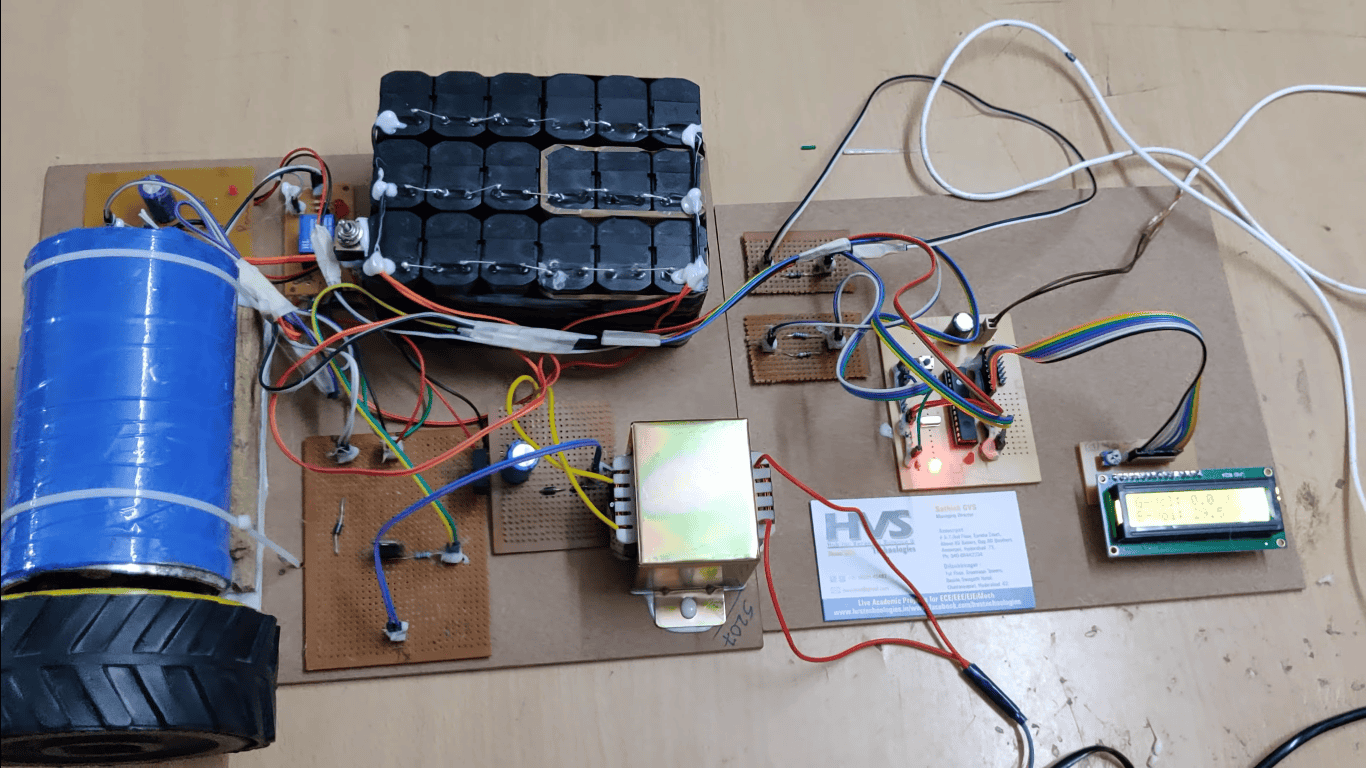
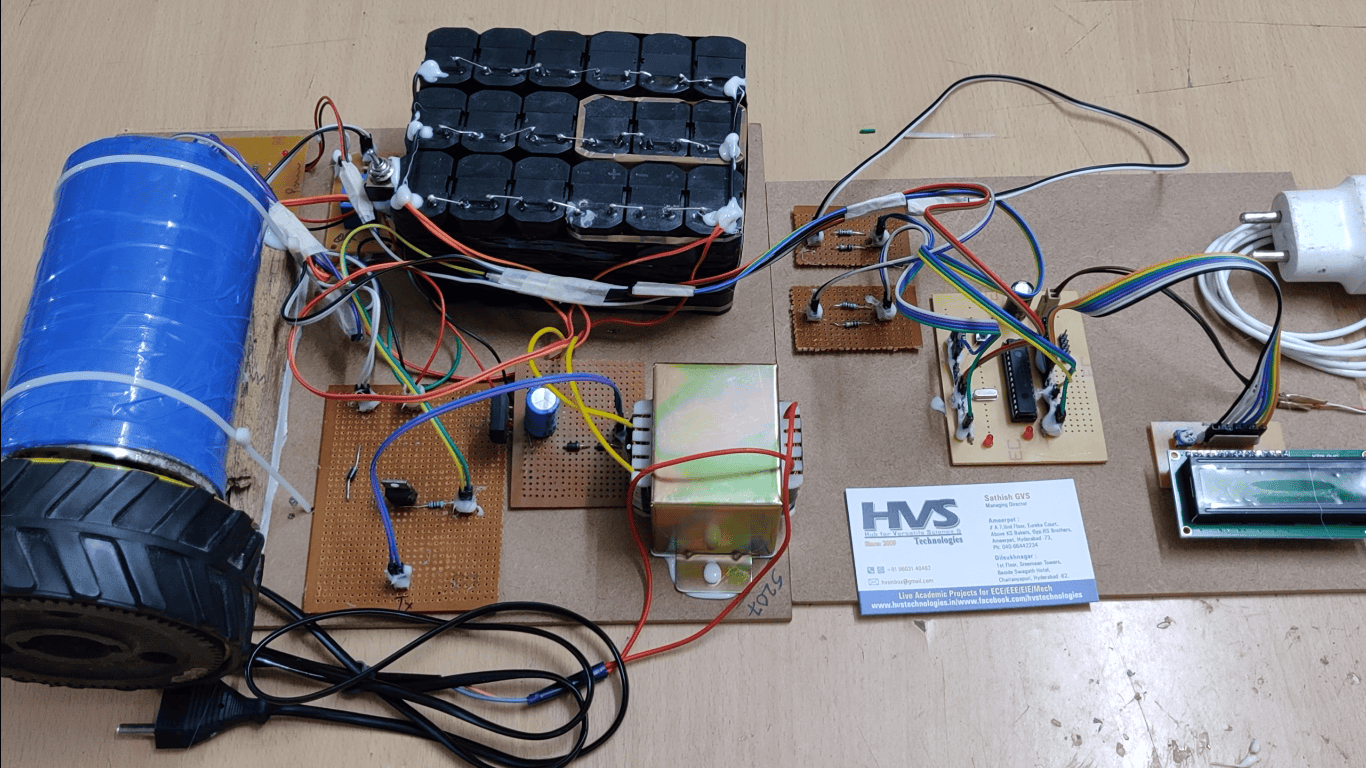
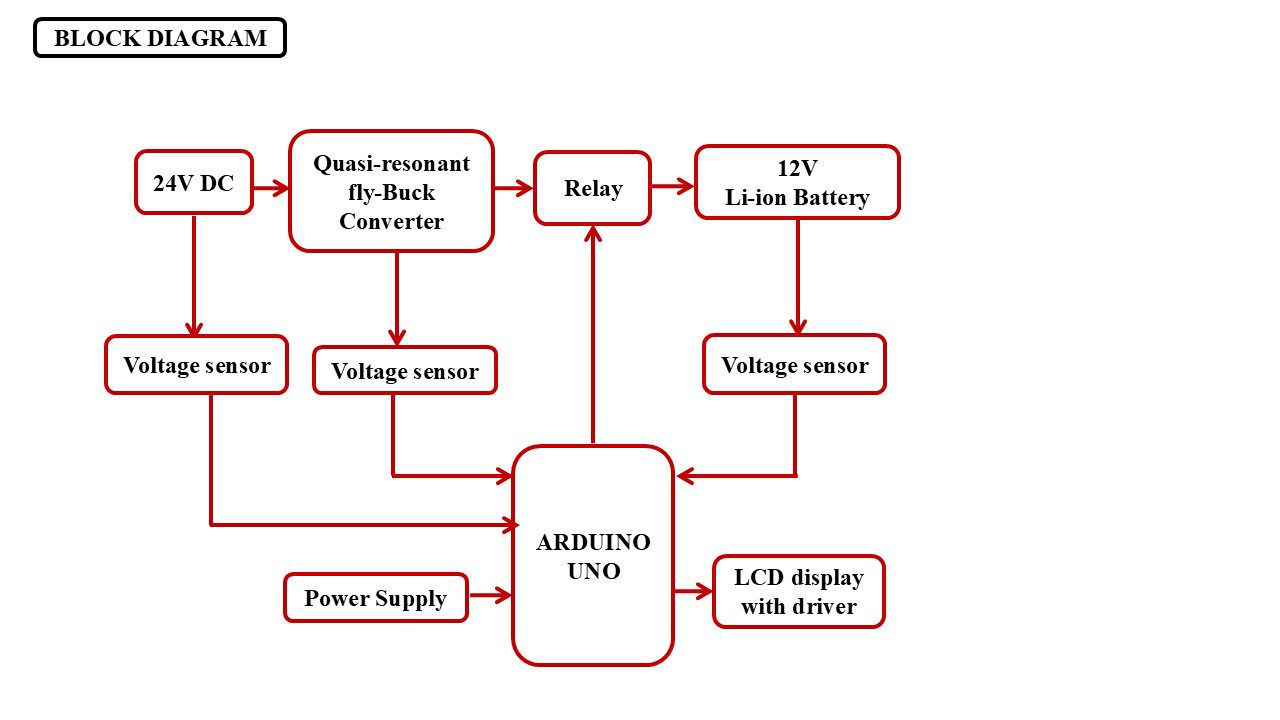
In this system, the quasi-resonant buck/forward converter not only steps down the voltage but also provides electrical isolation and improved energy transfer efficiency. The forward-type operation ensures continuous energy transfer to the load during the ON period of the switch, while the resonant behavior enables soft switching conditions. A relay-based control mechanism, governed by an Arduino Uno, is used to manage battery charging and protect against overvoltage conditions.
Voltage sensors are integrated at various stages (input, converter output, and battery) to provide real-time monitoring. The Arduino processes this data to control the relay operation and display system parameters on an LCD module. This closed-loop monitoring enhances system safety and performance.
Overall, the quasi-resonant buck/forward converter offers advantages such as high efficiency, reduced switching losses, compact design, and improved thermal performance, making it suitable for battery charging applications, renewable energy systems, and low-power DC distribution systems.
Objectives:
 video:
To design a quasi-resonant buck/forward converter : Develop a DC–DC converter using a resonant L–C network that efficiently steps down 24V DC to 12V DC.
To achieve soft-switching operation (ZVS): Implement quasi-resonant switching to reduce switching losses, heat generation, and electromagnetic interference.
To ensure efficient battery charging : Provide a stable and regulated 12V output suitable for charging a Li-ion battery safely.
To monitor system parameters in real-time: Use voltage sensors to continuously measure input voltage, converter output voltage, and battery voltage.
To implement control using Arduino Uno: Process sensor data and control system operation (like relay switching) automatically.
To provide protection mechanisms: Prevent overcharging and unsafe conditions using relay control and programmed thresholds.
To display system status: Show voltage levels and system conditions on an LCD display for user awareness.
To improve overall efficiency and reliability: Reduce power losses and enhance performance compared to conventional converters.
To develop a low-cost and compact solution: Design a system suitable for practical applications like renewable energy and portable power systems.
To study and analyze quasi-resonant converter performance: Understand the behavior, advantages, and practical implementation of resonant converters.
The major building blocks of this project are:- 24V DC Power supply
- ARDUINO UNO Microcontroller.
- Voltage sensors.
- Quasi-resonant buck/forward type DC–DC converter.
- 12V Li-ion Battery pack
- Relay.
- LCD display.
- LED Indicators.
- Embedded C programming.
- Arduino UNO for dumping code into Micro controller.
- Express SCH for Circuit design.
 video: