No products in the cart.


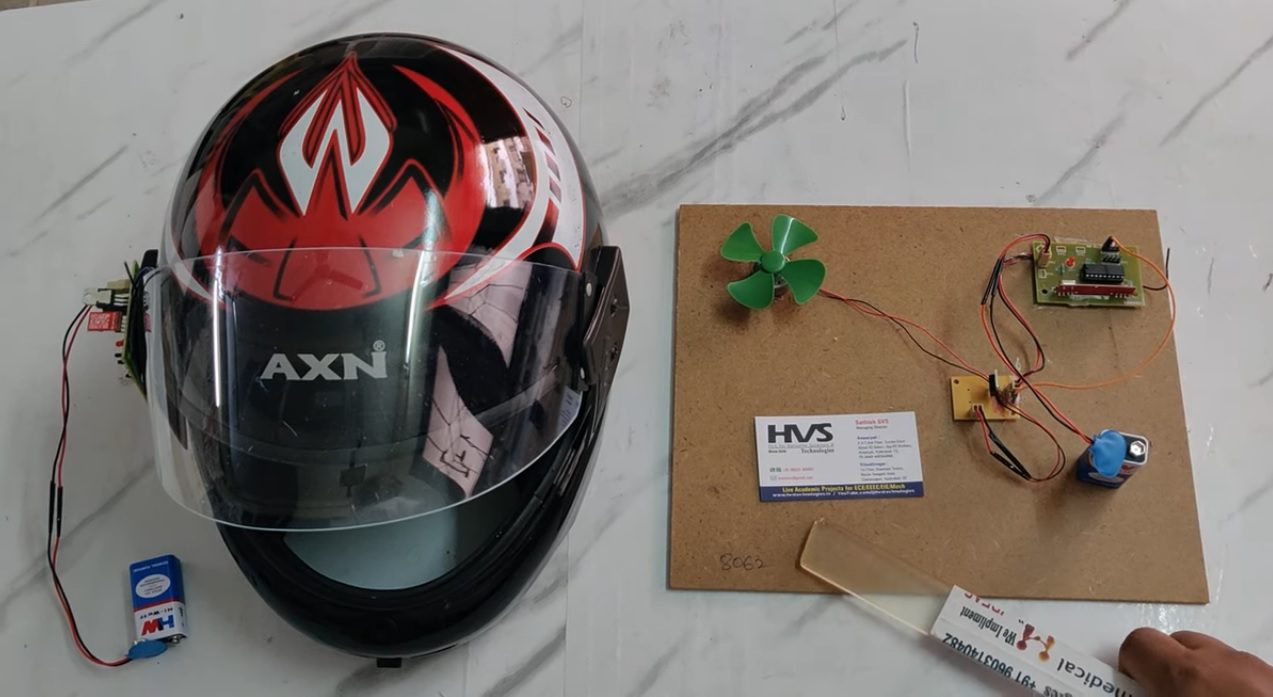
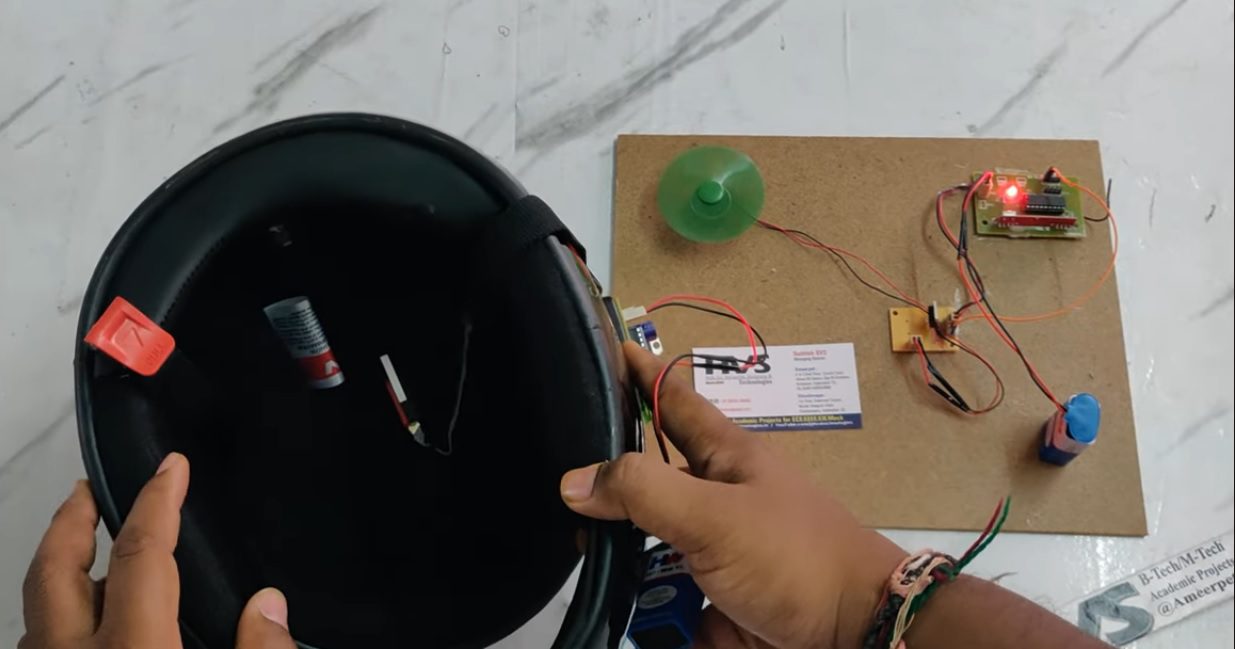
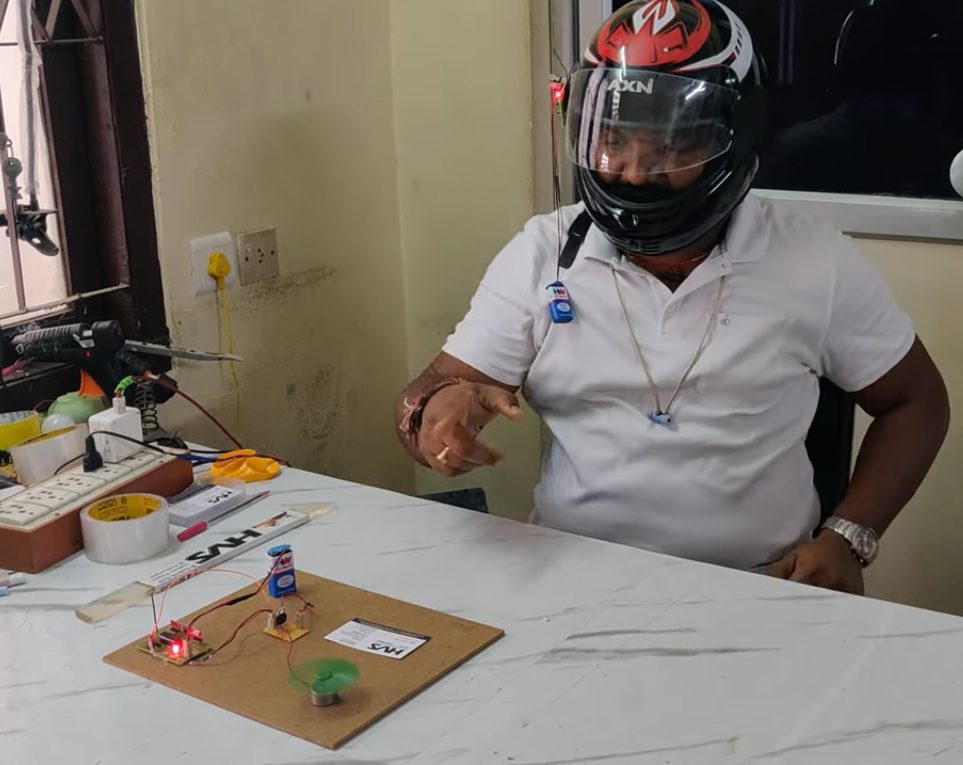
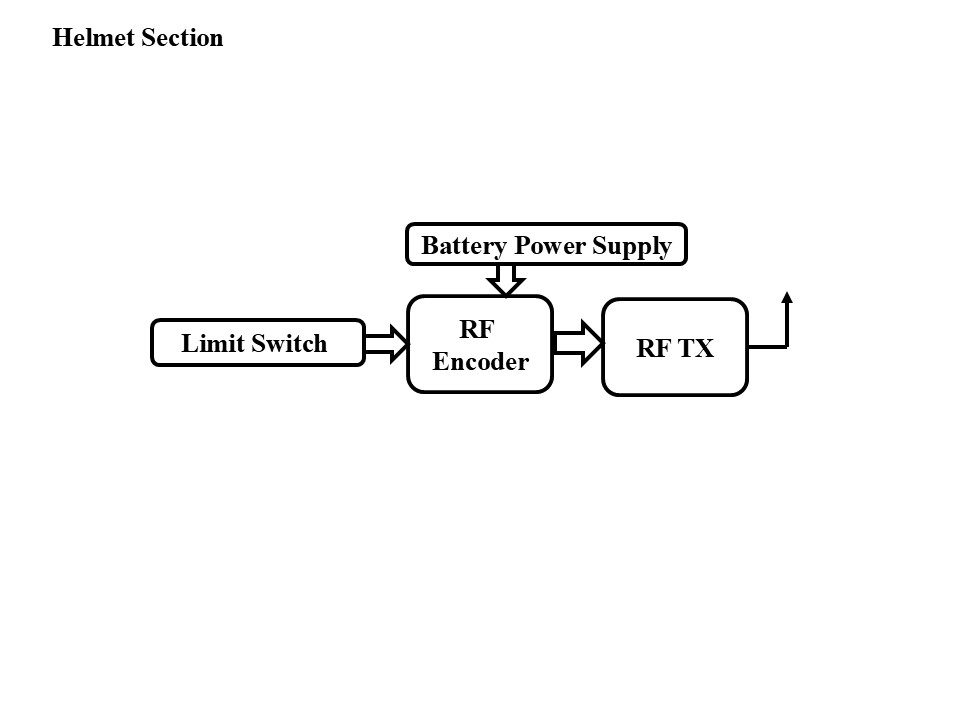
The Smart Helmet for Ignition Control is a safety-based system designed to ensure that a two-wheeler starts only when the rider wears a helmet. The system consists of two sections: a helmet unit and a vehicle unit, which communicate using RF (Radio Frequency) technology. In the helmet section, a limit switch detects whether the helmet is worn properly. When the helmet is worn, the switch activates an RF encoder and transmitter, sending a signal to the vehicle unit.
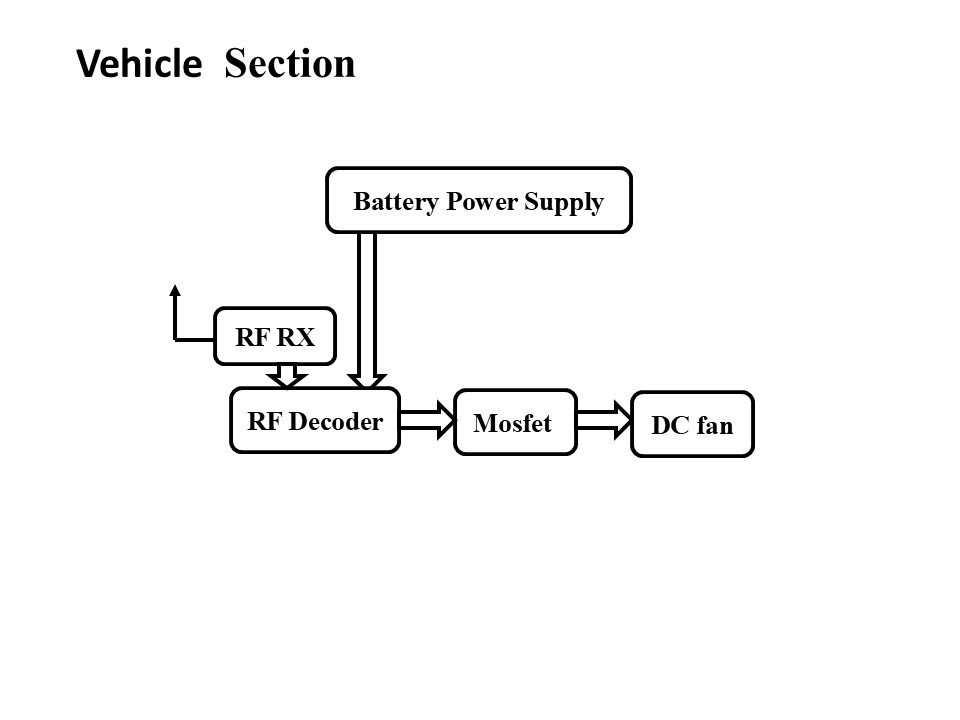
In the vehicle section, the RF receiver and decoder receive this signal and allow the ignition system to operate. A MOSFET is used as a switching device to control the power supply to the engine (or a DC motor/fan in the prototype). If the helmet is not worn, no signal is transmitted, and the ignition remains OFF, preventing the vehicle from starting.
RF Communication ranges in between 30 KHz to 300 GHz. RF communication works by creating electromagnetic waves at a source and being able to pick up those electromagnetic waves at a particular destination. These electromagnetic waves travel through the air at near the speed of light. The wavelength of an electromagnetic signal is inversely proportional to the frequency; the higher the frequency, the shorter the wavelength.
This system enhances road safety by enforcing helmet usage and reducing accidents caused by negligence. It is simple, cost-effective, and can be implemented in real-time vehicle safety applications.
Objectives:
 video:
To ensure rider safety by making helmet wearing mandatory for vehicle ignition.
To design a system that prevents the vehicle from starting if the helmet is not worn.
To establish wireless communication (RF link) between helmet and vehicle sections.
To detect helmet usage using a limit switch sensor in the helmet unit.
To control vehicle ignition using electronic switching (MOSFET/relay).
To develop a low-cost and reliable safety system for two-wheelers.
To reduce road accidents and injuries caused by not wearing helmets.
To create a system that is easy to install and user-friendly.
To demonstrate a prototype model using DC load (fan/motor) for ignition simulation.
To promote smart transportation and safety awareness using embedded systems.
The main blocks of this project are:- Battery power supply.
- RF TX, RX Module.
- Limit switch.
- Mosfet.
- DC fan (VEHICLE).
 video: