No products in the cart.


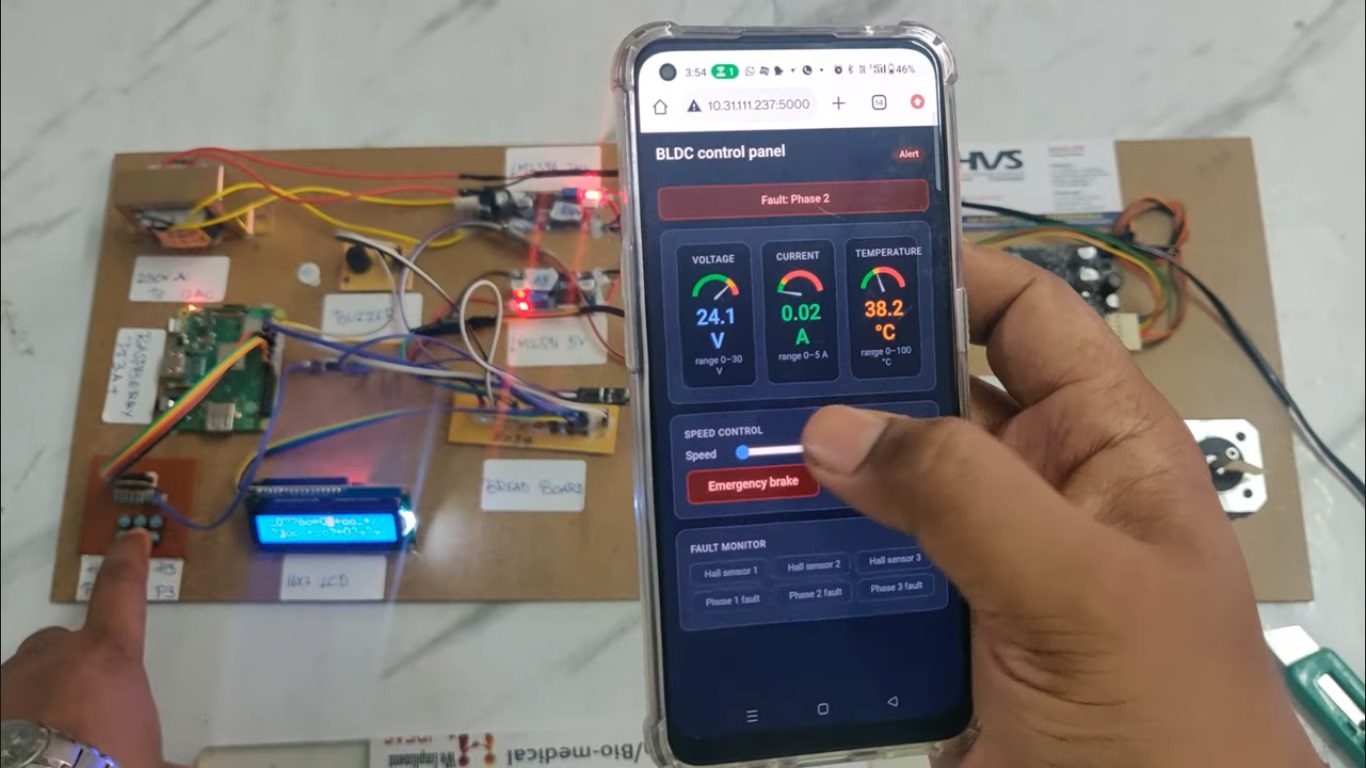
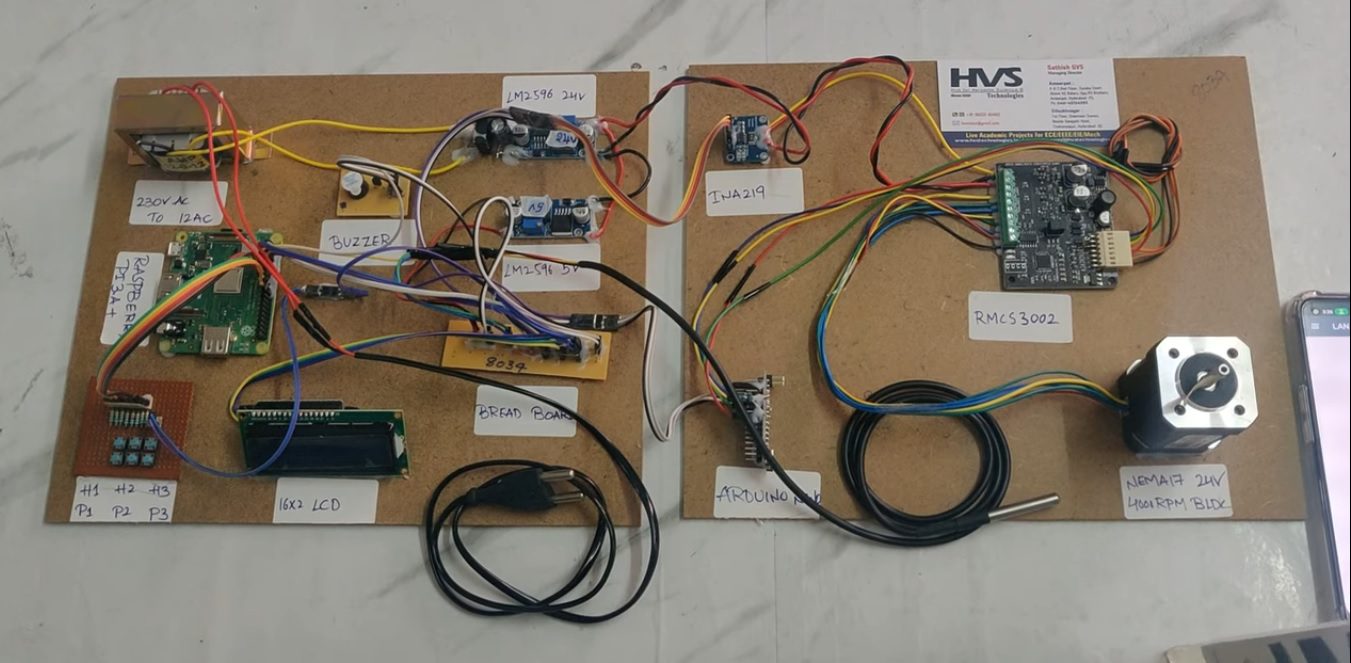
The proposed system focuses on the fault detection, monitoring, and control of a BLDC motor using a Raspberry Pi-based architecture integrated with sensors and a web dashboard. The system is designed to identify and analyze multiple fault conditions in real time, ensuring safe and reliable motor operation.
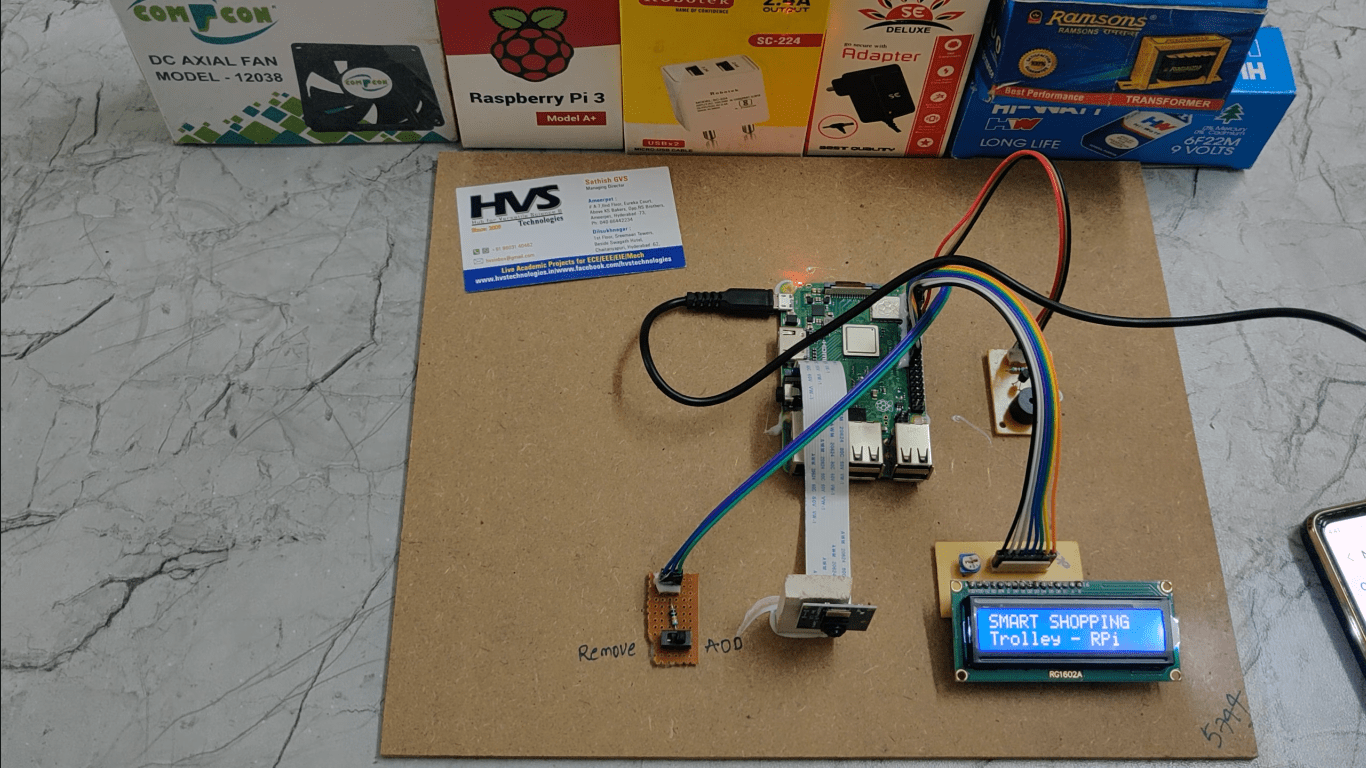
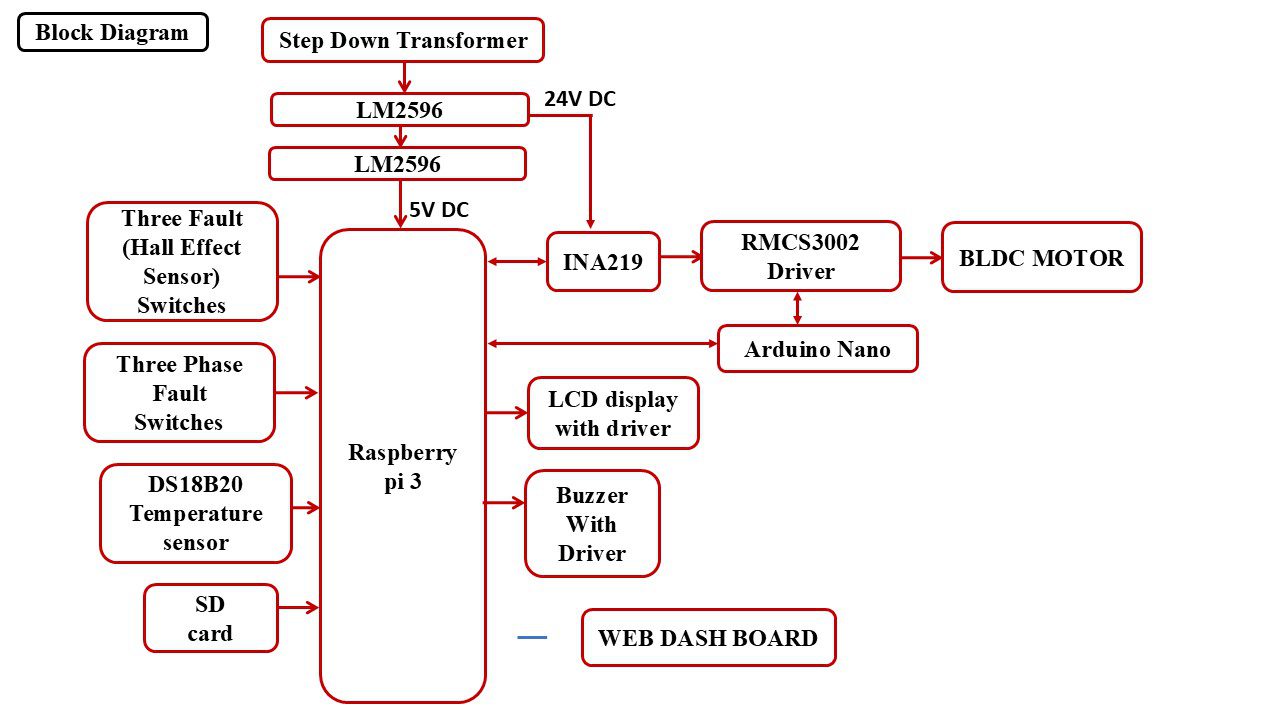
A Raspberry Pi 3 acts as the central processing unit, interfacing with various modules such as Hall effect fault switches, three-phase fault switches, DS18B20 temperature sensor, and an INA219 current and voltage sensor. The system is capable of detecting seven types of faults, including three-phase faults and three Hall sensor faults. These faults can also be manually introduced using switches for testing and analysis purposes.
The BLDC motor is driven using an RMCS3002 motor driver controlled through an Arduino Nano, which communicates with the Raspberry Pi. The power supply is regulated using LM2596 converters to provide stable DC voltages for different components.
A web-based dashboard is developed to provide remote monitoring and control. It displays key parameters such as temperature, current, voltage, fault status, and overall system condition. Additionally, users can control the motor speed and perform emergency stop operations through the dashboard.
For local monitoring, an LCD display shows real-time system parameters, while a buzzer alert system is activated during abnormal conditions such as high temperature, low voltage, or overcurrent. The system also logs data using an SD card for further analysis.
Overall, the proposed system offers an intelligent, real-time, and user-friendly solution for fault detection, performance monitoring, and control of BLDC motors, making it suitable for industrial and automation applications.
Objectives:
 video:
To detect faults in a BLDC motor system.
To identify 3-phase faults and Hall sensor faults.
To monitor temperature, voltage, and current in real time.
To display system status on LCD and web dashboard.
To control motor speed using a web dashboard.
To provide alerts using a buzzer during abnormal conditions.
To implement emergency, stop for safety.
To store data for analysis using an SD card.
The major building blocks of this project are:- Step down transformer
- Raspberry pi3.
- Arduino nano.
- BLDC motor RMCS3002 driver.
- INA219 Voltage and Current Sensor.
- DS8B20 Temperature Sensor
- Six Fault Switches.
- LM2596 BUCK converters.
- LCD display.
- Buzzer.
- Raspbian OS.
- Express SCH for Circuit design.
- WEB technology.
 video: