No products in the cart.


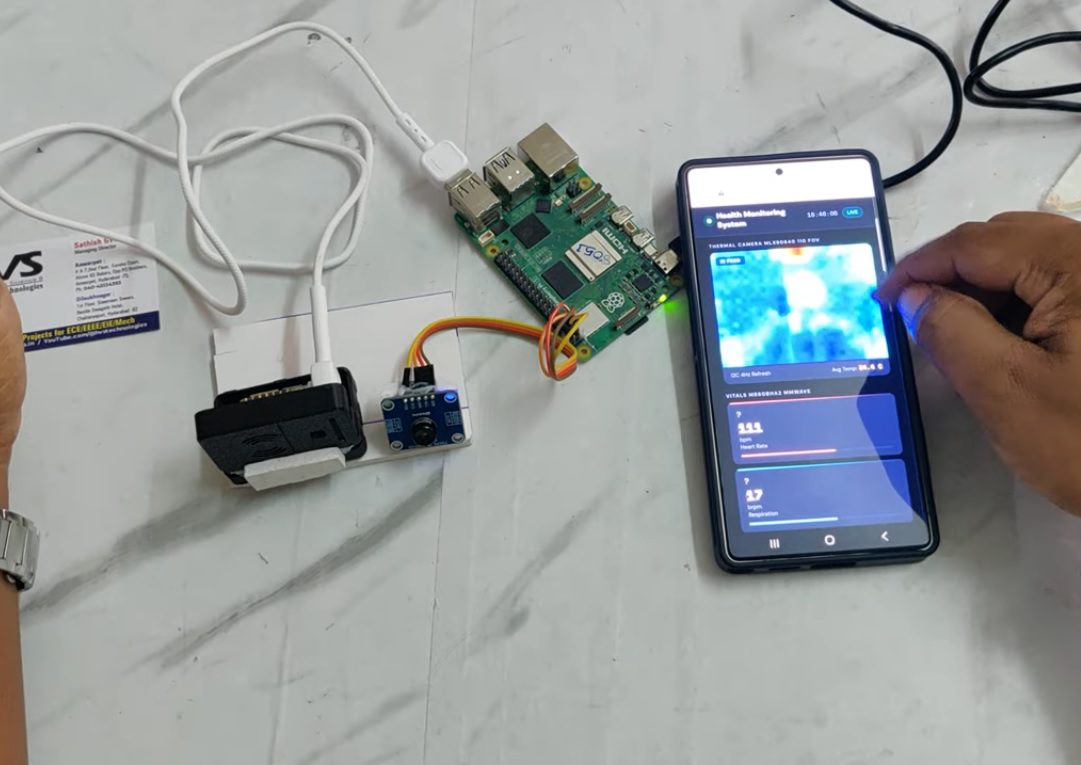
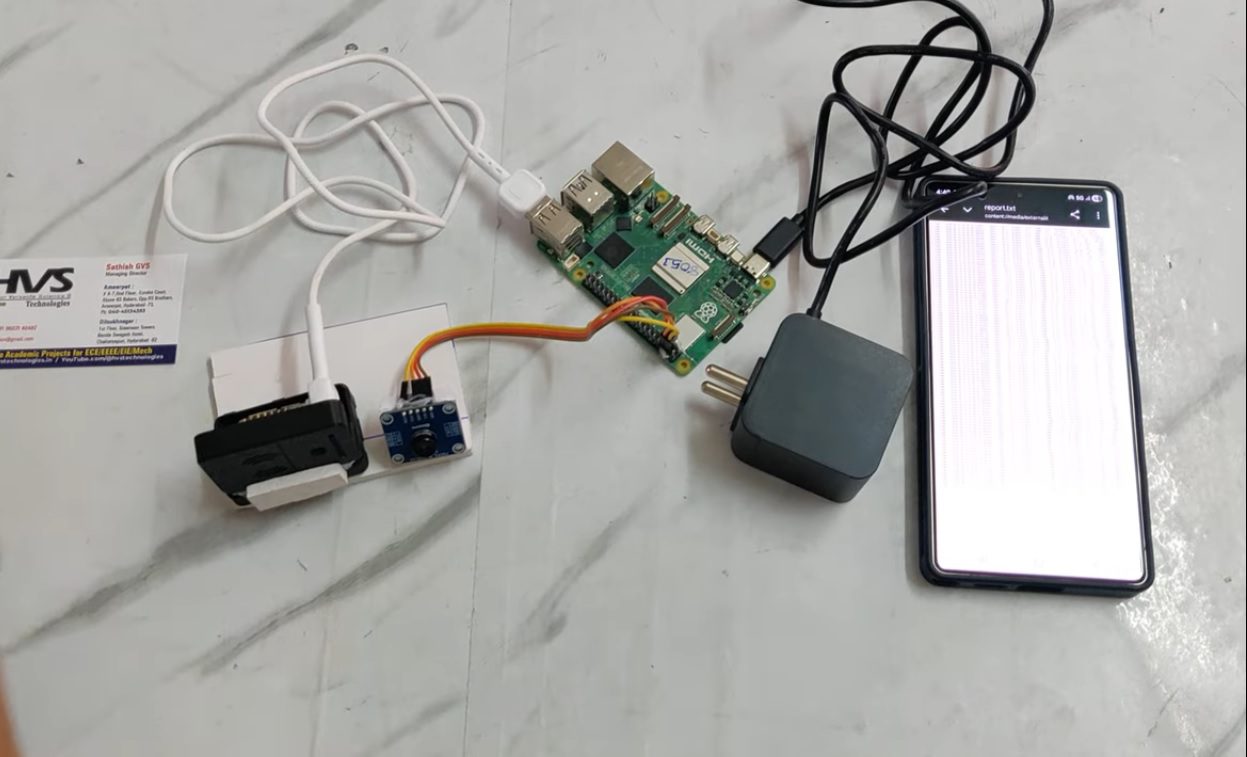
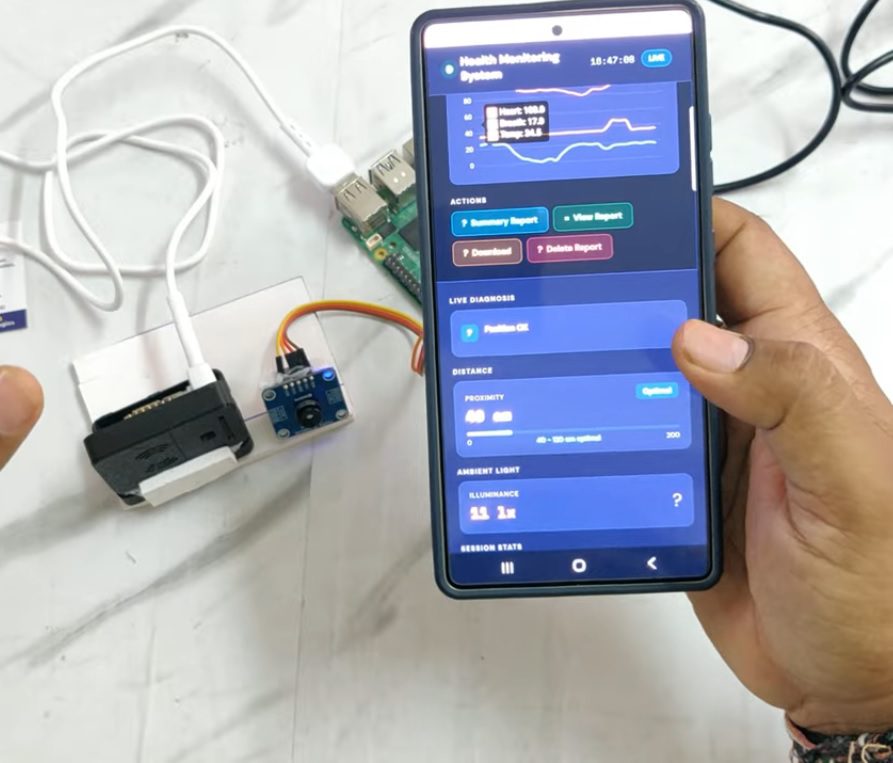
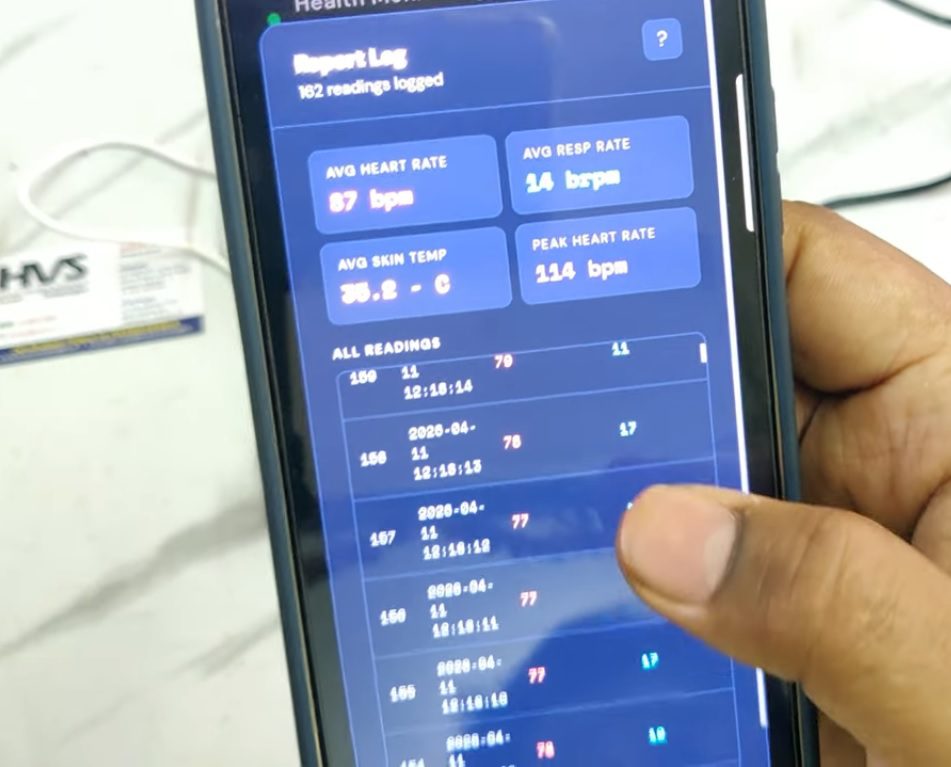
Non-invasive and continuous monitoring of cardiopulmonary parameters is critical for early detection of health abnormalities and real-time patient assessment. This work presents a sensor fusion–based system that integrates a 60 GHz human breathing and heartbeat radar sensor (MR60BHA2) with an MLX90640 infrared (IR) thermal imaging array, implemented on a Raspberry Pi 5 platform. The proposed system captures physiological signals such as respiration rate, heart rate, and temperature distribution without direct physical contact.
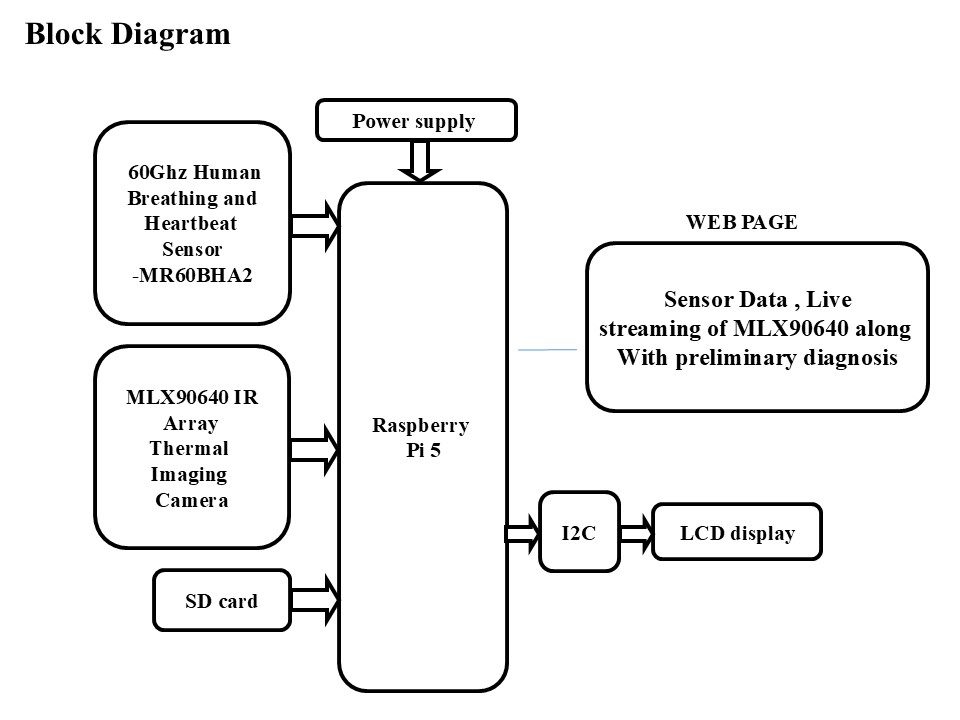
The radar sensor enables precise detection of micro-movements associated with breathing and cardiac activity, while the thermal camera provides complementary spatial temperature data useful for identifying abnormal heat patterns and enhancing diagnostic accuracy. Sensor data is processed and fused using embedded algorithms on the Raspberry Pi, improving robustness against noise and environmental variations. The processed data is stored locally via an SD card and transmitted to a web interface for real-time visualization, live streaming, and preliminary diagnosis.
Additionally, an I2C-connected LCD provides on-device feedback for immediate monitoring. The system is designed to be low-cost, portable, and suitable for applications such as remote health monitoring, elderly care, and contactless screening in clinical and home environments. Experimental results demonstrate that sensor fusion enhances measurement reliability compared to single-sensor approaches, making the system a promising solution for next-generation smart healthcare systems.
The main objectives of this project are:
 video:
- To measure respiration rate and heart rate using a 60 GHz radar sensor.
- To capture thermal images and temperature data using MLX90640.
- To implement sensor fusion algorithms for improved accuracy.
- To display real-time data on LCD and web interface.
- To store sensor data using SD card.
- To develop a low-cost, portable, contactless monitoring system.
- Power supply.
- Raspberry pi5.
- SD card.
- 60GHz mm Wave Human Breathing and Heartbeat Sensor-MR60BHA2
- MLX90640 IR Array Thermal Imaging Camera.
- LCD display.
- Raspbian OS.
- Express SCH for Circuit design.
- WEB application.
 video: