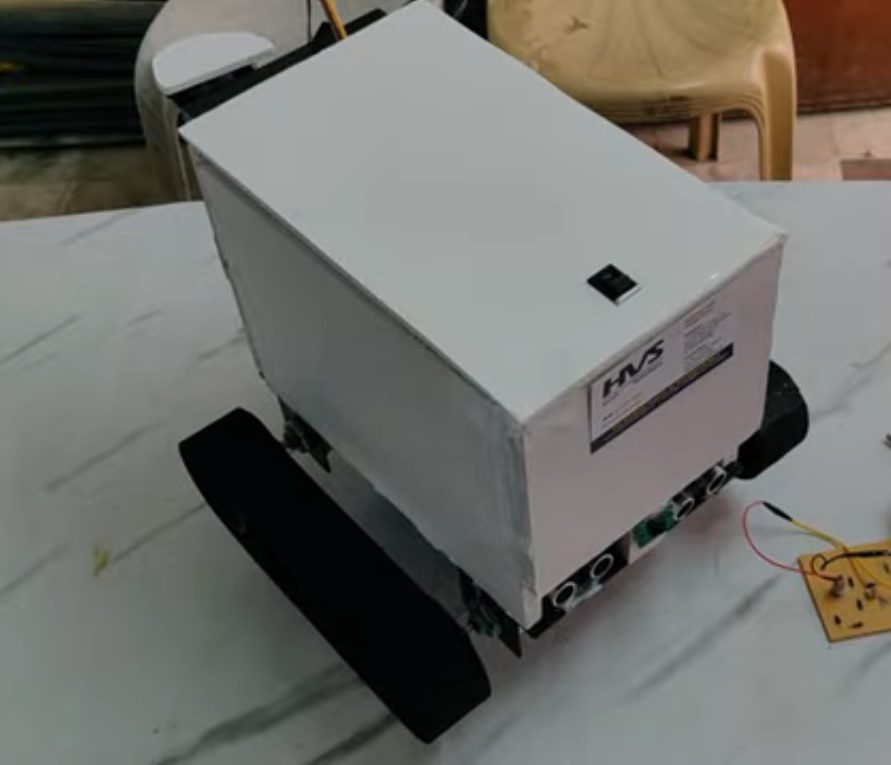
This project presents the design and development of an Autonomous Unmanned Ground Vehicle (UGV) for precision agriculture, capable of both manual and autonomous operation through a web-based interface. The system integrates an
Arduino Nano and a
Raspberry Pi 4 (4GB) to achieve efficient sensing, processing, and control.
The track wheel robot is equipped with multiple soil analysis sensors including
NPK sensor,
pH sensor, and
soil moisture sensor to collect real-time soil health data. These sensors are interfaced with the Arduino Nano, which processes and forwards the data to the Raspberry Pi for higher-level computation and web communication. A
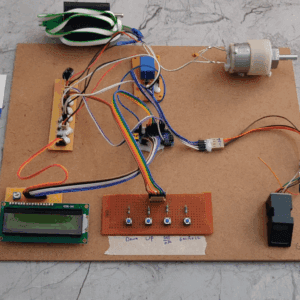
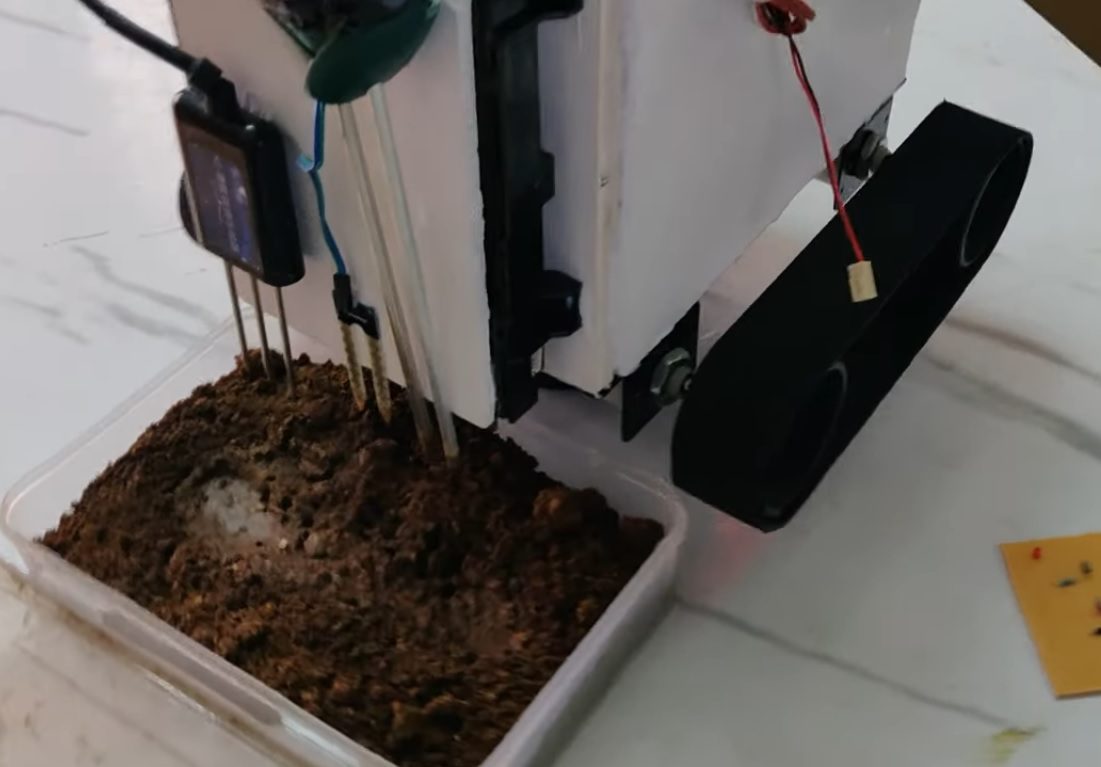
rack and pinion mechanism is implemented to physically insert the sensors into the soil when the test mode is activated via the web dashboard. This gives better grip and stability, especially on rough or muddy surfaces.
The system supports two modes of operation:
- Manual Mode: The robot is controlled remotely through a web dashboard, allowing directional movement, test activation, and monitoring.
- Autonomous Mode: The robot navigates based on predefined patterns received from the web. It uses GPS and a digital compass (MPU6050 gyroscope) for path tracking and orientation. Ultrasonic sensors are employed for obstacle detection; upon detecting an obstacle, the robot stops automatically and activates a buzzer for alert.
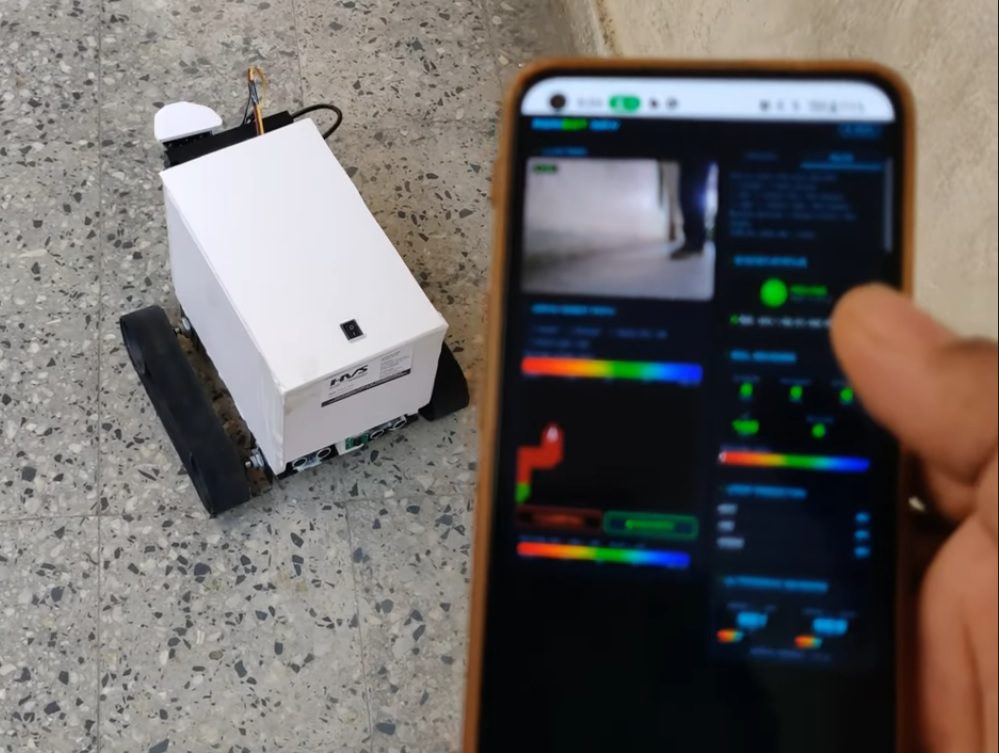
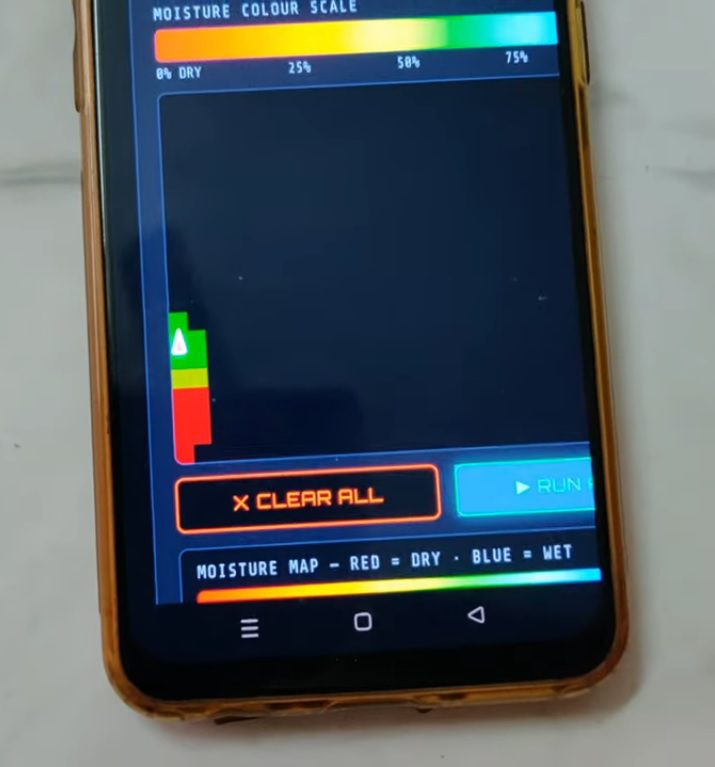
A Pi Camera provides live video streaming to the web interface, enabling real-time monitoring. The web dashboard displays sensor data, robot status, live feed, and allows mode selection, control commands, and test operations.
Additionally, Machine Learning techniques using TensorFlow and OpenCV are implemented on the Raspberry Pi to analyze soil parameters and estimate suitable crop recommendations such as corn, wheat, and soybean, along with a percentage-based suitability prediction will visually appears on web.
The system is powered by a Li-ion battery with voltage regulation using an LM2596 module, and motor control is handled via an L298 motor driver. This project demonstrates an efficient, intelligent, and scalable solution for smart farming, reducing human effort while improving decision-making through real-time data and automation.
The main objectives of this project are:
To design and develop an autonomous UGV robot for precision agriculture.
To measure soil parameters like NPK, pH, and moisture.
To control the robot manually using a web dashboard.
To implement autonomous navigation using GPS and a digital compass.
To detect obstacles using ultrasonic sensors and ensure safety.
To provide live video streaming using a Pi camera.
To automate soil testing using a rack and pinion mechanism.
To display real-time sensor data on a web interface.
To suggest suitable crops based on soil data using machine learning.
To improve farming efficiency and reduce manual effort.
To Moves easily in muddy farms using trach wheels.
The major building blocks of this project are:
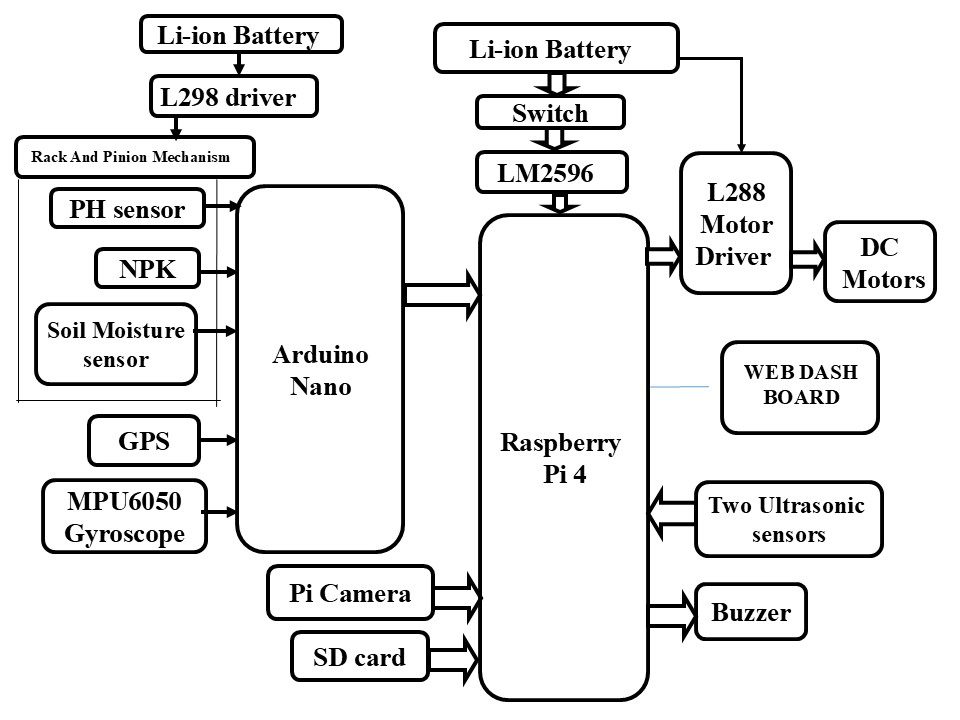
- LI-ION Battery power supply.
- LM2596.
- Raspberry pi4.
- SD card.
- Pi camera.
- Buzzer.
- L298 motor driver with DC motors.
- L298 with Rack and pinion mechanism.
- Arduino Nano.
- NPK sensor.
- PH sensor.
- Soil moisture sensor.
- GPS.
- MPU6050.
- TWO Ultrasonic sensors.
- Track wheel.
Software’s used:
- Raspbian OS.
- Machine learning algorithm.
- Express SCH for Circuit design.
- WEB application.
Block Diagram:
 video:
 video: