No products in the cart.


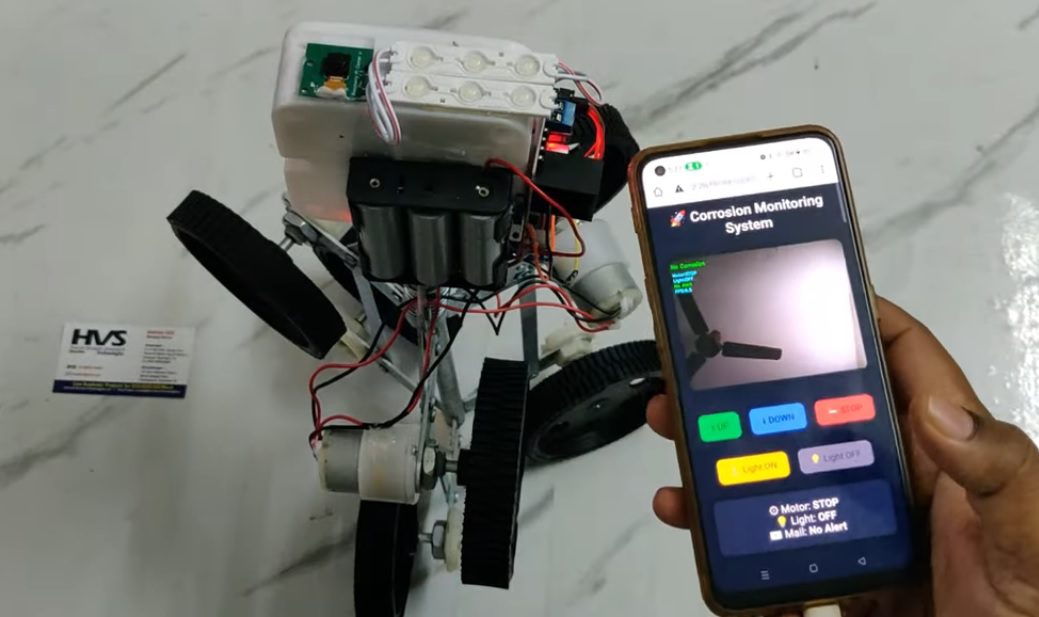
Pipelines used in industries such as oil, gas, and water supply are often exposed to harsh environmental conditions, which can lead to corrosion and pitting faults. These defects may cause leakage, system failure, and significant economic loss if they are not detected at an early stage. To address this issue, this project presents a Smart Pipeline Monitoring System for Corrosion Detection using Raspberry Pi 4 and IoT technology.
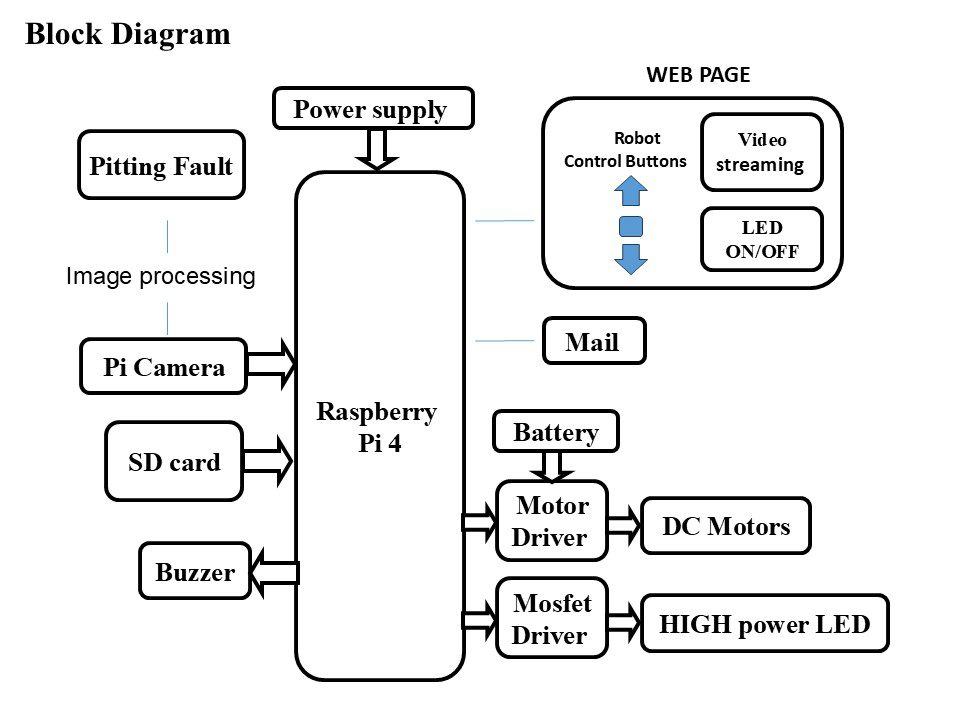
The proposed system uses a Raspberry Pi 4 as the main processing unit to perform image processing and control the robotic inspection system. A Pi Camera mounted on the robot continuously captures images and live video inside the pipeline. A high-power LED is used to provide sufficient illumination for clear visibility in dark pipeline environments. The captured images are analyzed using image processing techniques to identify corrosion and pitting faults on the inner surface of the pipeline.
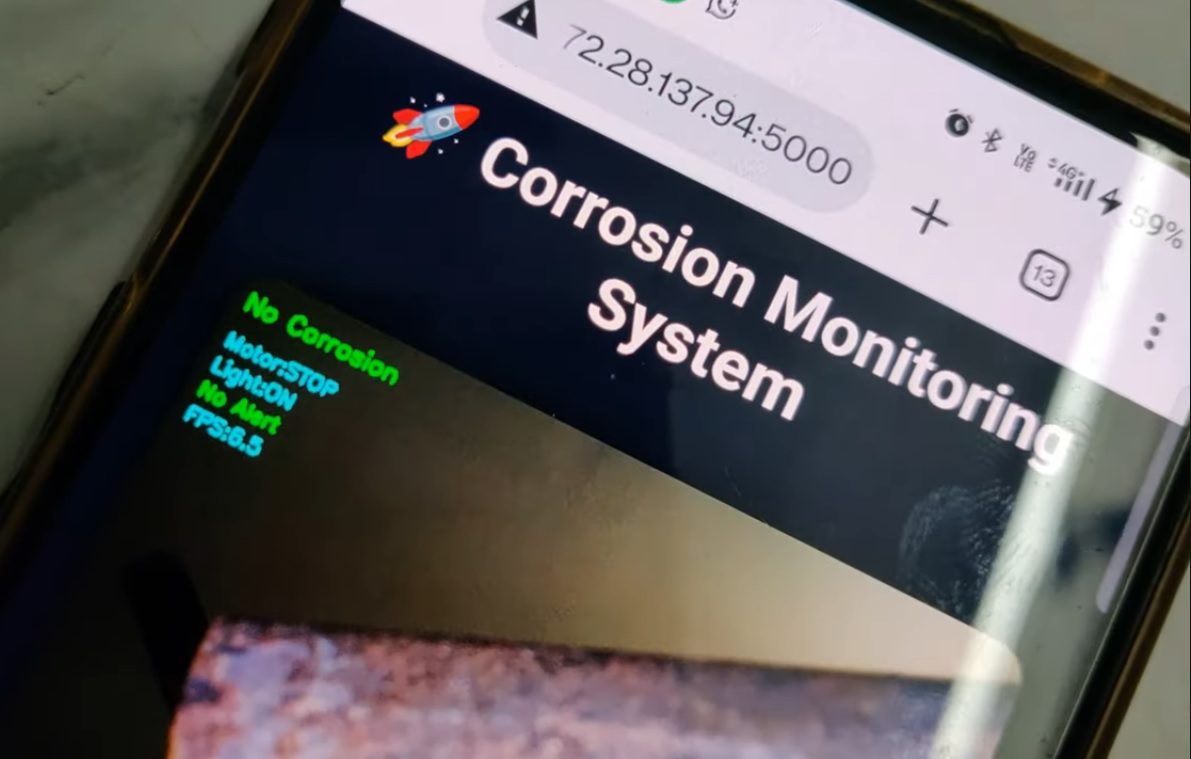
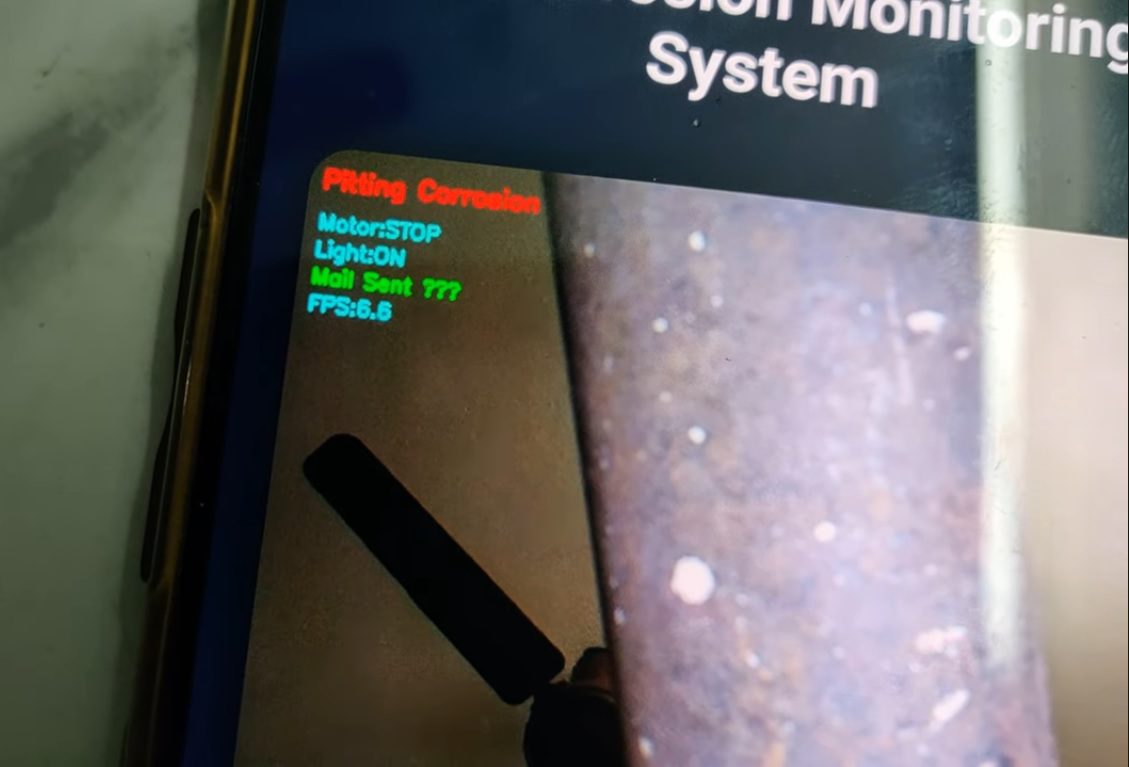
The robot can be controlled remotely through a mobile web application, which provides live video streaming and control buttons for robot movement such as forward and backward motion. When a pitting fault or corrosion is detected, the system automatically triggers a buzzer alert on the robot and also sends a visual fault alert to the mobile web interface. Additionally, the detected fault image is captured and automatically sent to the user via email for further inspection and record keeping.
The proposed system enables real-time monitoring, early fault detection, and remote inspection of pipelines, reducing the need for manual inspection and improving safety and maintenance efficiency. This smart IoT-based solution helps industries prevent pipeline failures and ensures reliable operation of pipeline infrastructure.
The main objectives of this project are:
 video:
To design a robotic pipeline monitoring system that can move inside pipelines for inspection purposes.
To use Raspberry Pi 4 as the main controller for processing images and controlling the overall system.
To capture real-time images and video of the inner pipeline surface using a Pi Camera.
To detect corrosion and pitting faults on pipeline surfaces using image processing techniques.
To provide sufficient illumination inside the pipeline using a high-power LED for clear visual monitoring.
To enable remote robot control through a mobile web application using IoT technology.
To provide live video streaming of the pipeline inspection to the user through the web interface.
To generate an alert when a fault is detected, including activating a buzzer and displaying a fault notification on the mobile interface.
To automatically capture the fault image and send it to the user through email for further analysis.
To reduce manual inspection efforts and improve pipeline safety by enabling continuous and smart monitoring.
The major building blocks of this project are:- Battery power supply.
- Raspberry pi4.
- SD card.
- Pi camera.
- Buzzer.
- Mosfet through High power LEDs
- L298 motor driver with DC motors.
- Raspbian OS.
- Express SCH for Circuit design.
- Image processing for pitting fault detection.
- IoT technology for sending mail.
- WEB application.
 video: