No products in the cart.


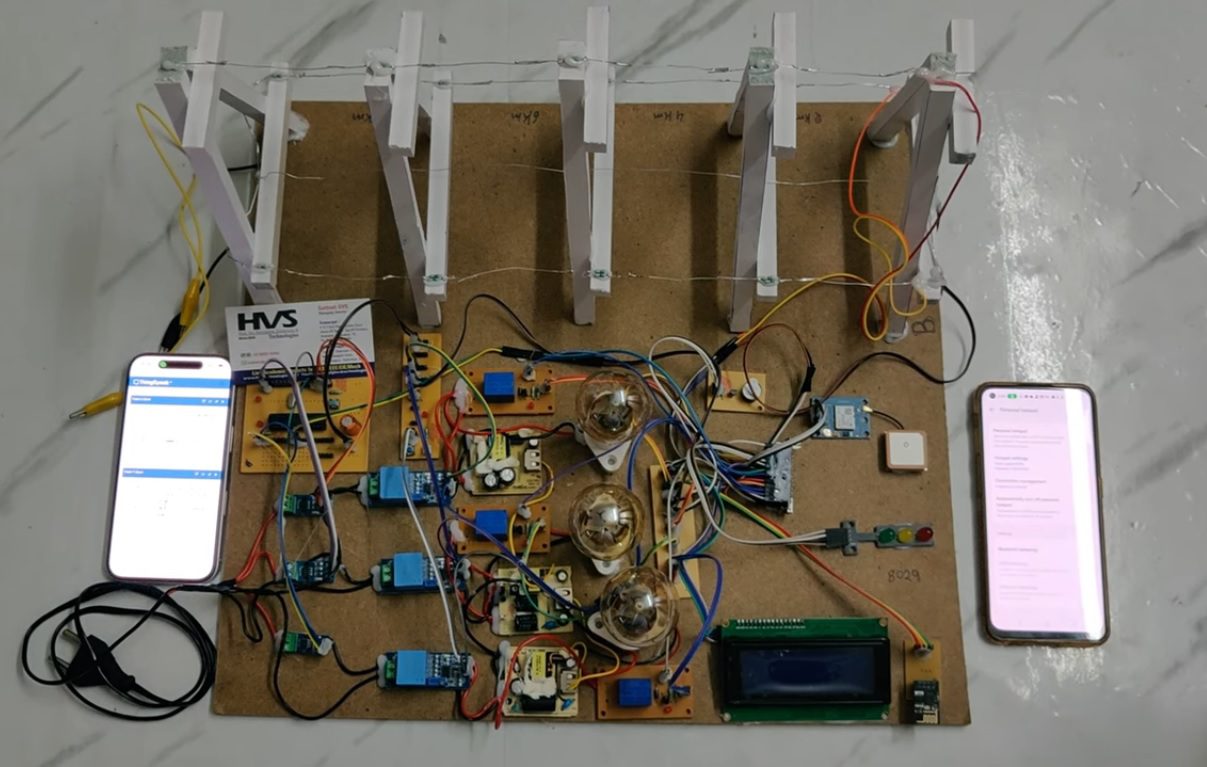
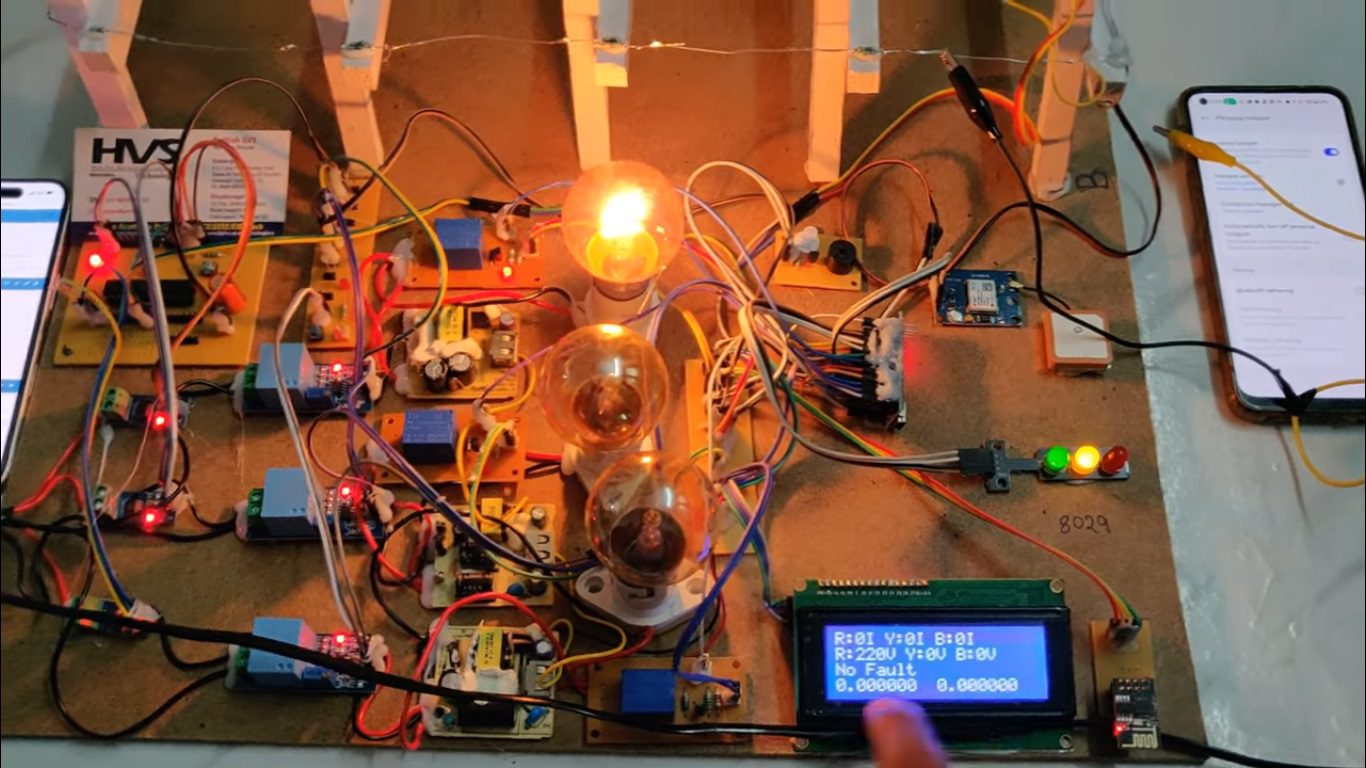
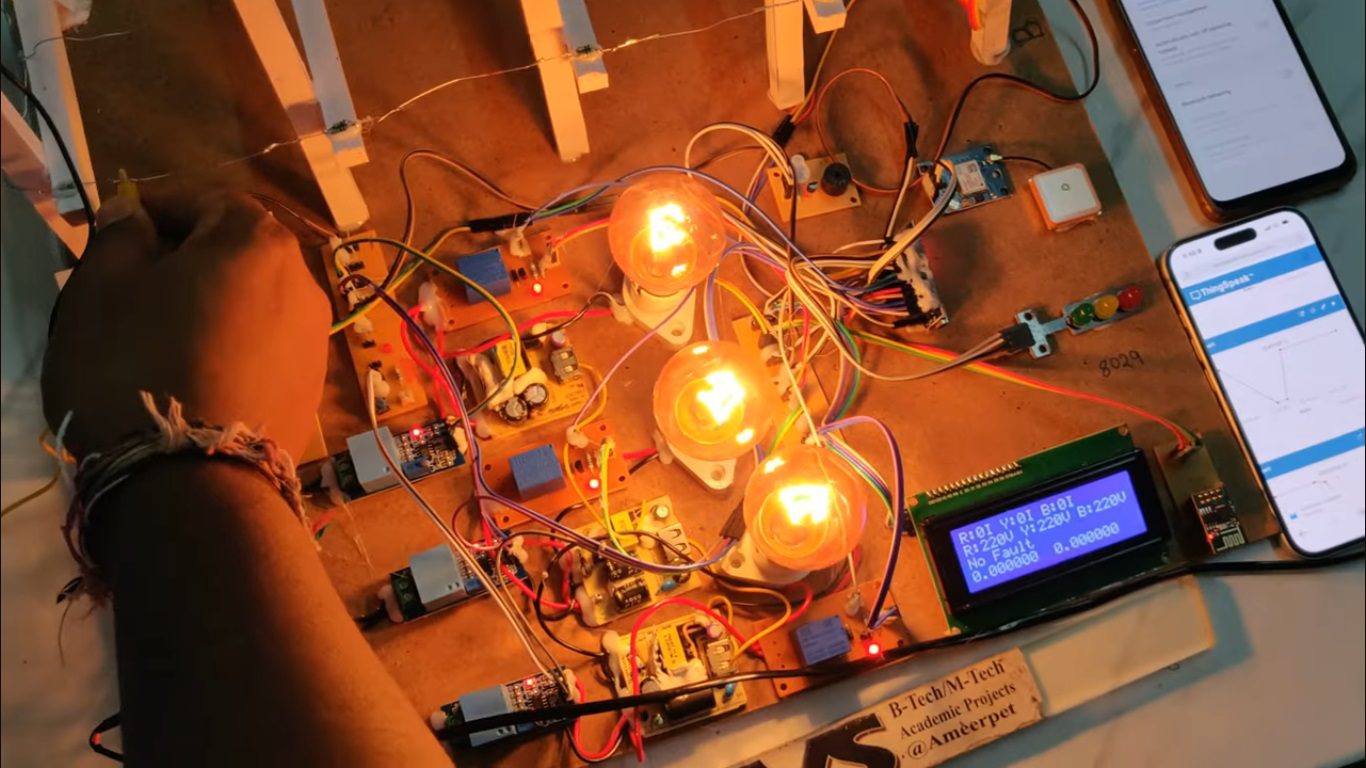
This project presents the design and implementation of an intelligent system for three-phase transmission line fault detection and analysis integrated with IoT and GPS technologies. The primary objective is to monitor and identify faults such as line-to-line (L-L) and line-to-ground (L-G) faults in real time, ensuring faster response and improved power system reliability.
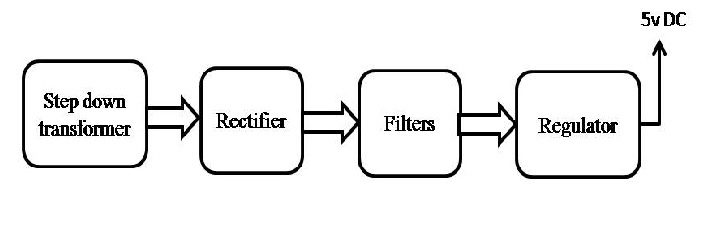
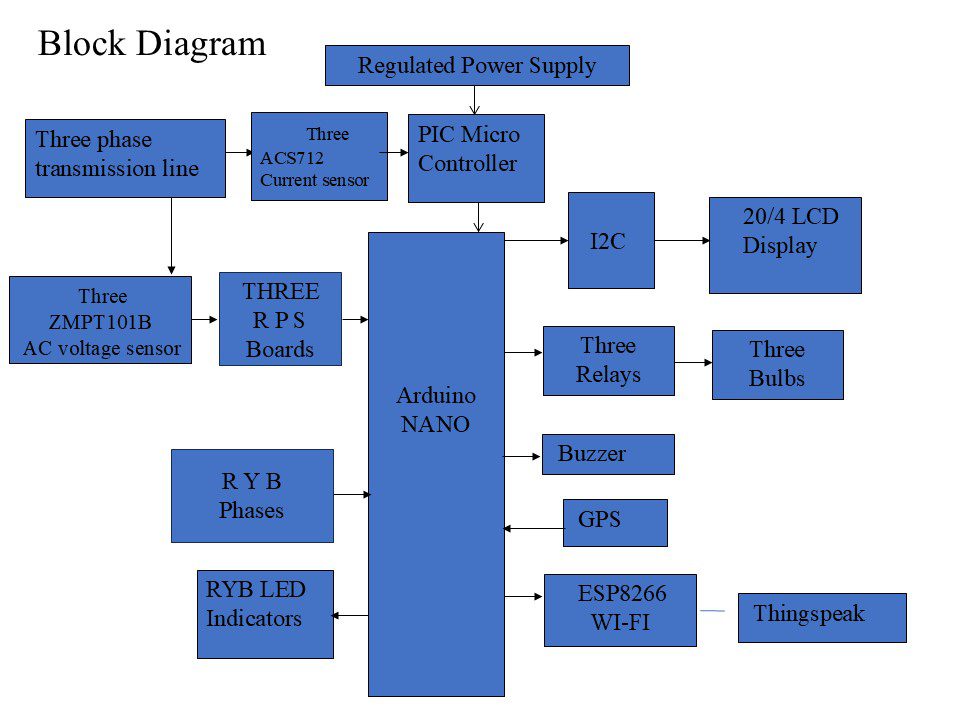
The system utilizes a PIC microcontroller to perform accurate analog-to-digital and digital to serial conversion of current signals obtained from ACS712 current sensors. These processed signals are then transmitted to an Arduino Nano, which acts as the central controller for data processing and decision-making. Voltage measurements using ZMPT101B sensors are connected to the Arduino Nano through RPS (Regulated Power Supply) boards for accurate operation. RPS boards ensure a constant supply, avoiding fluctuations that can affect readings.
In the event of a fault, characterized by abnormal drops in current and voltage across R, Y, and B phases, the Arduino Nano analyzes the data to determine the fault type, affected phase, and approximate fault distance between two poles (in kilometers). The system also integrates a GPS module to provide precise geographical coordinates of the fault location.
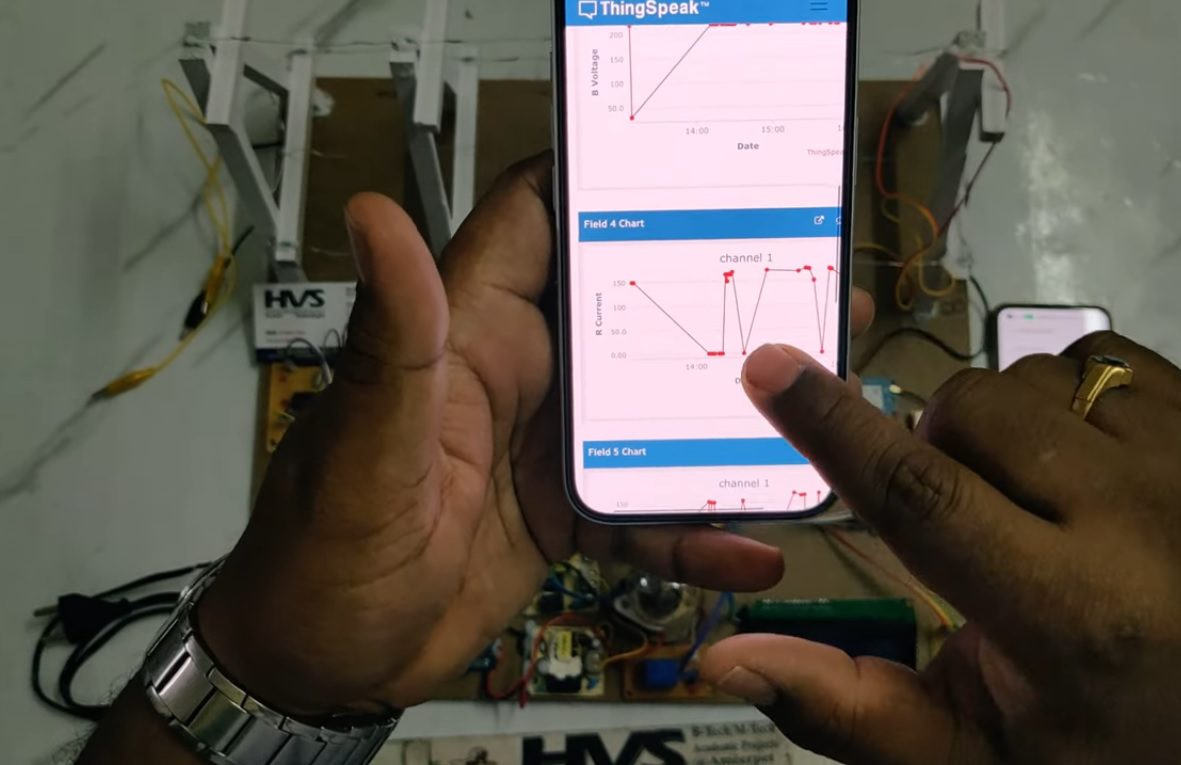
All critical parameters, including phase voltages, current values, fault type, and location details, are displayed locally on a 20x4 LCD using I2C communication. Simultaneously, the data is transmitted via an ESP8266 Wi-Fi module to the ThingSpeak cloud platform for remote monitoring and analysis. For immediate response, the system activates relays to isolate the faulty section, triggers a buzzer alarm, and provides visual indication through R-Y-B LED indicators. This ensures both automatic protection and user awareness.
Overall, the proposed system offers a cost-effective, real-time, and IoT-enabled solution for efficient fault detection, monitoring, and analysis in three-phase transmission lines, enhancing system reliability and reducing downtime.
Objectives:
 video:
- Real-time detection of transmission line faults
- Identification of fault type (L-L, L-G) and affected phase
- Estimation of fault distance between poles
- GPS-based fault location tracking
- IoT-based remote monitoring using ThingSpeak
- Display of parameters on 20×4 LCD
- Automatic isolation of faulty section using relays
- Alert generation using buzzer and LED indicators
- Improvement of system reliability and reduced downtime.
- Regulated power supply.
- Arduino nano Microcontroller.
- PIC Microcontroller.
- Three phase transmission line.
- Resistors.
- Three Relays.
- LCD with driver.
- Esp8266 Wi-Fi module.
- Buzzer
- GPS
- Three ZMPT101B voltage sensors.
- ACS712 current sensors.
- Arduino IDE for compiling and dumping code into Microcontroller
- Express SCH for Circuit design.
 video: