HVS-5014. Electric Vehicle to Vehicle Energy Transfer using on-board Bi-Directional Converter
₹9,000.00
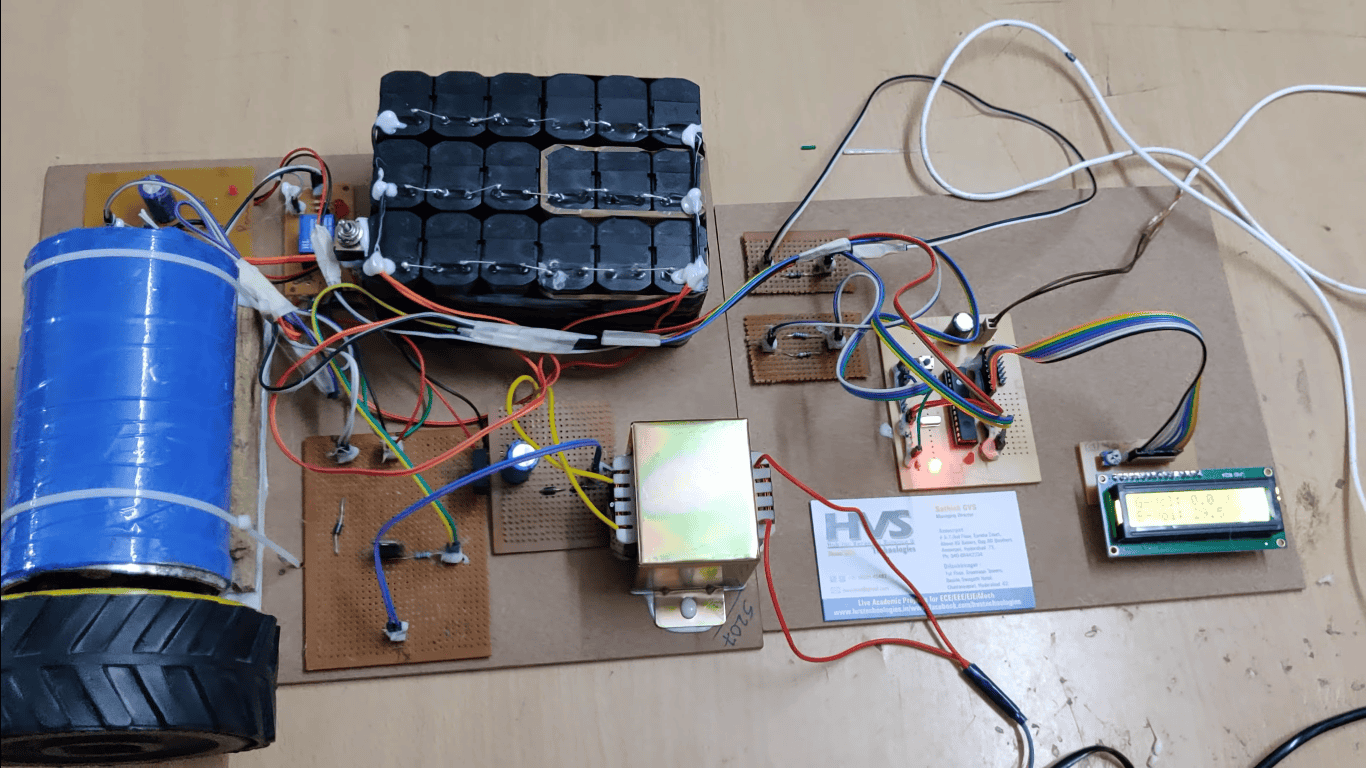
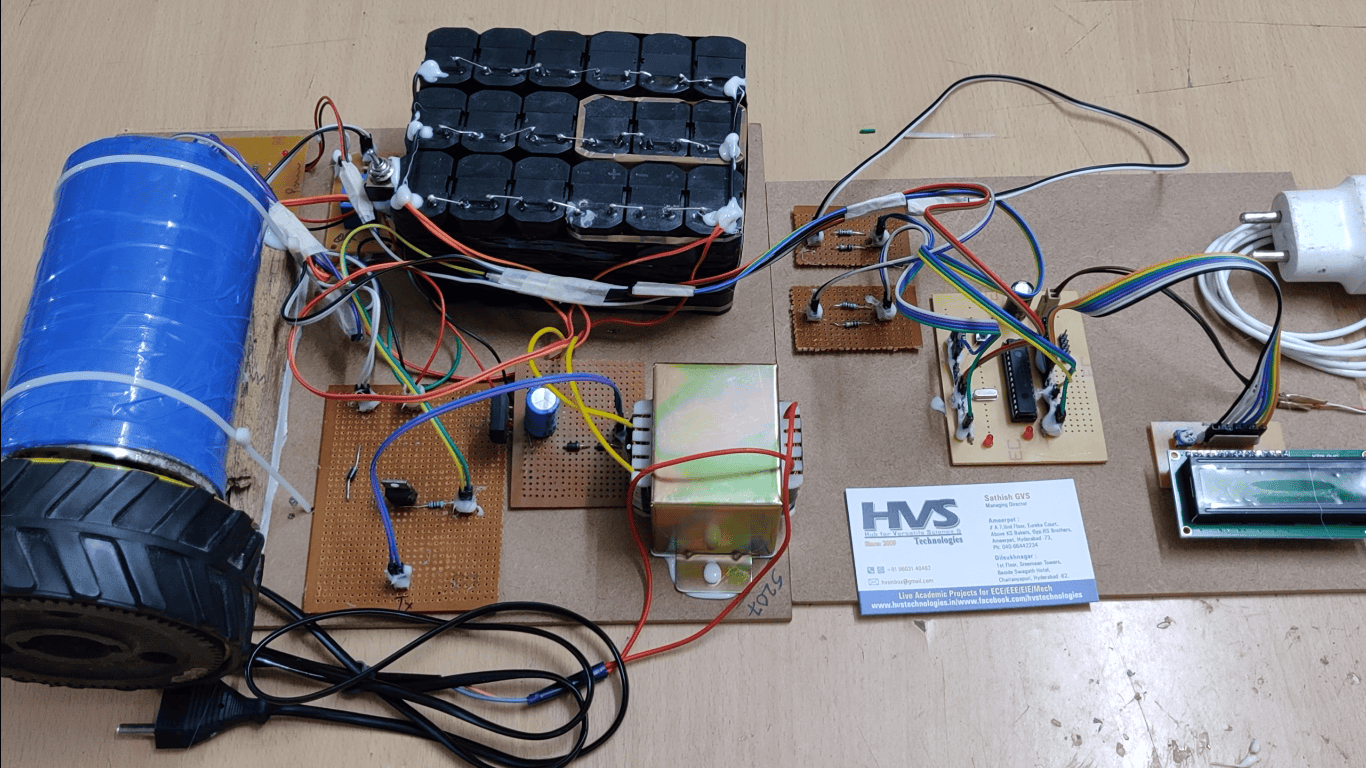
This project presents an intelligent Electric Vehicle-to-Vehicle (EV-to-EV) energy transfer system using a bidirectional DC-DC converter with automatic power flow control.
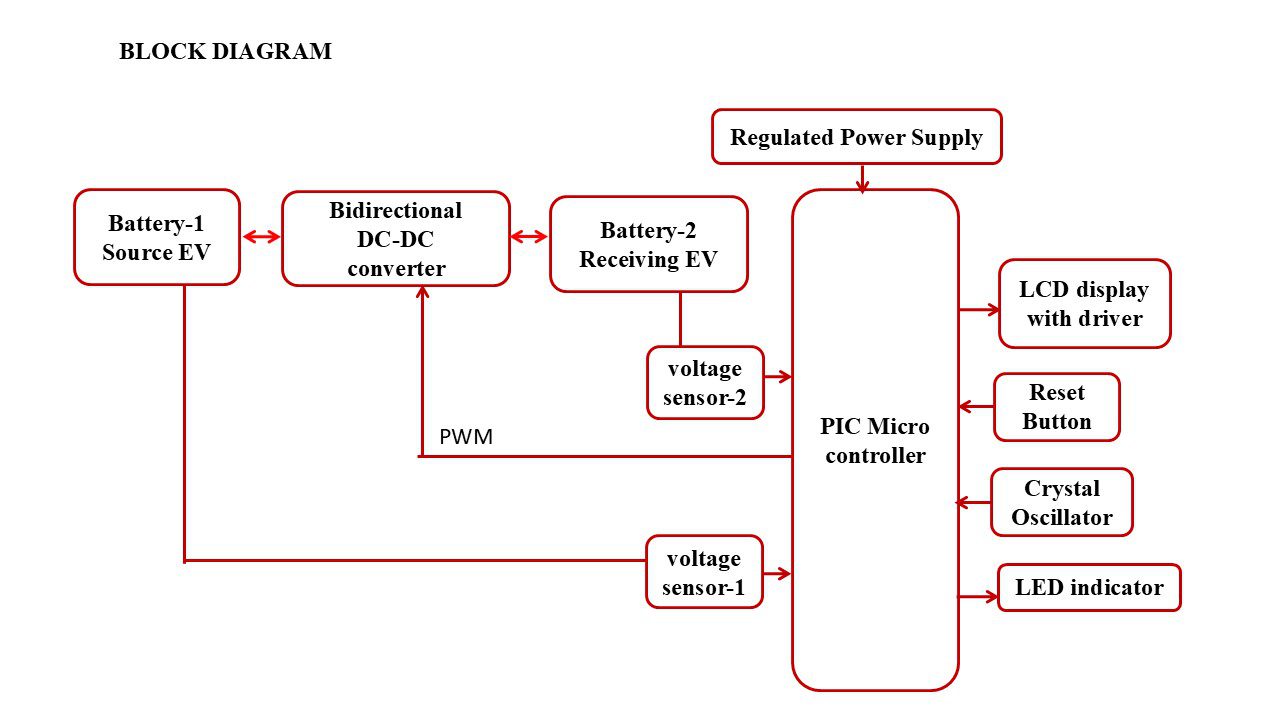
This project presents an intelligent Electric Vehicle-to-Vehicle (EV-to-EV) energy transfer system using a bidirectional DC-DC converter with automatic power flow control. The system consists of two batteries representing two electric vehicles (Battery-1 and Battery-2), where energy transfer is controlled based on their voltage levels.
A PIC microcontroller continuously monitors both battery voltages using voltage sensors. If the voltage of Battery-1 is lower than Battery-2, power flows from Battery-2 to Battery-1. Similarly, if Battery-2 voltage is lower, power is transferred from Battery-1 to Battery-2. This ensures dynamic and automatic balancing of energy between the two vehicles.
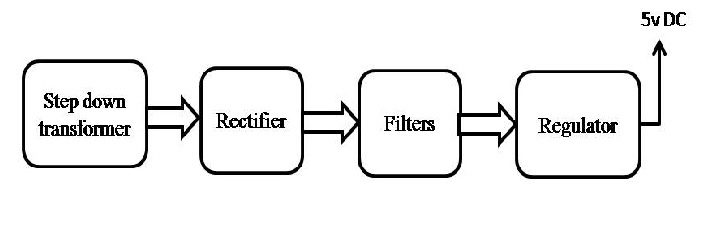
The bidirectional DC-DC converter is controlled using PWM signals generated by the microcontroller to regulate the direction and amount of power flow. A regulated power supply is used to power the control circuit.
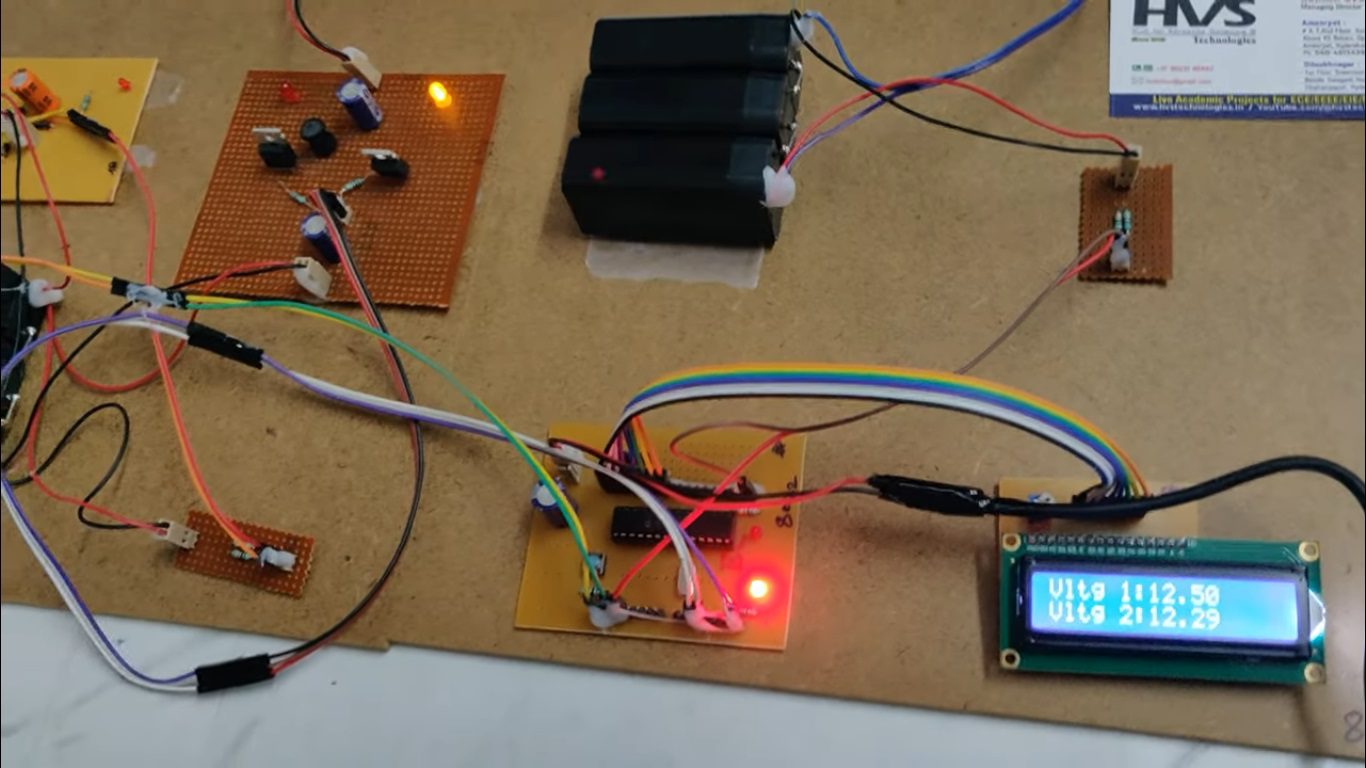
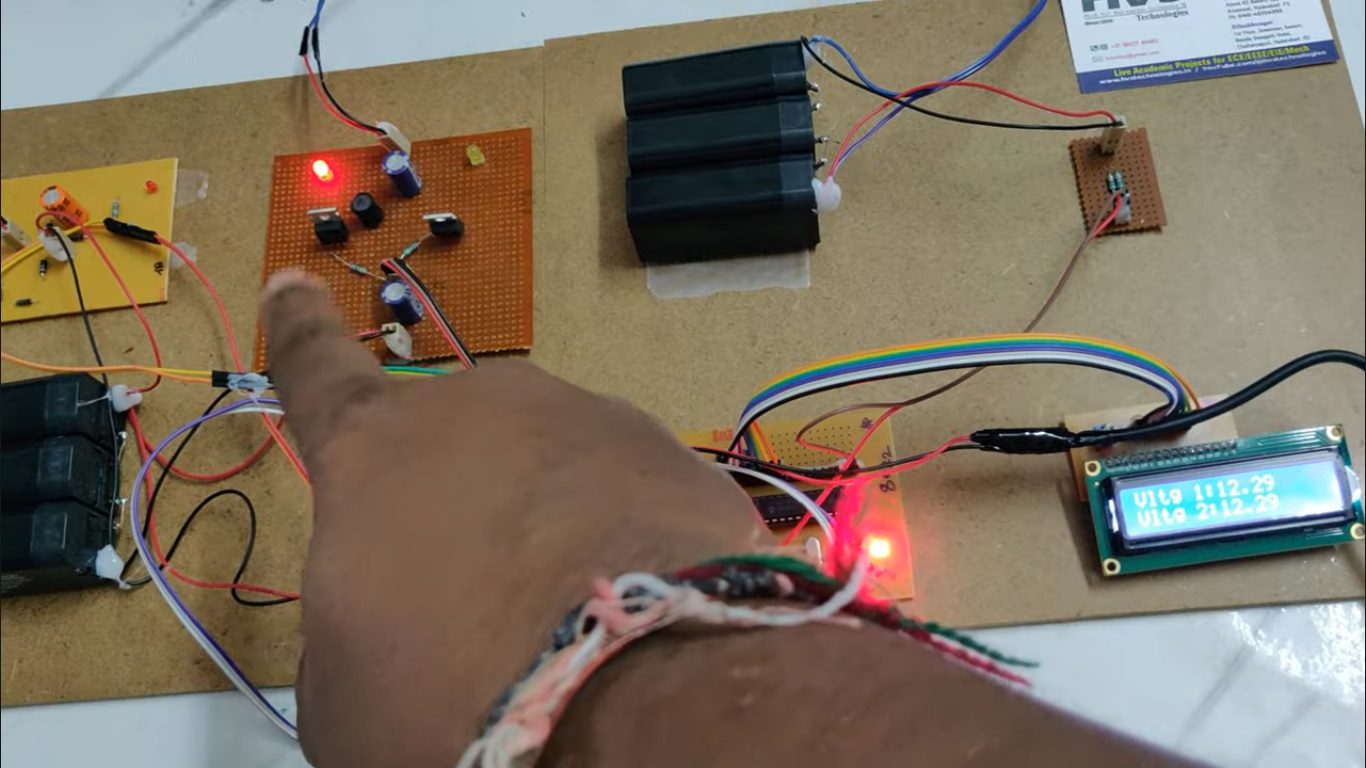
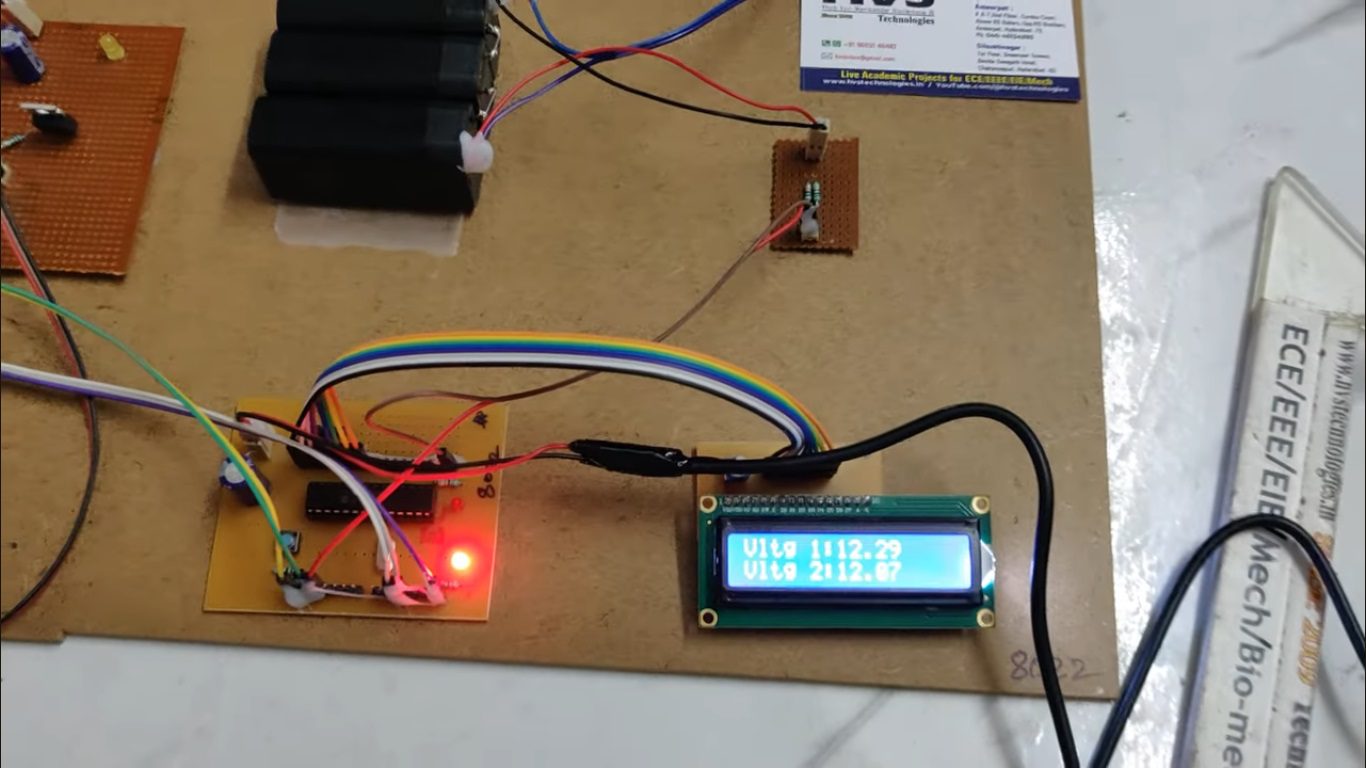
An LCD display is used to show real-time system status, including battery voltages and direction of power transfer. Additionally, LED indicators provide clear visual signals indicating the active power flow direction and system operation.
This system improves energy utilization, provides emergency charging capability, and enables efficient energy sharing between electric vehicles without the need for external charging infrastructure.
Objectives:
To develop an automatic EV-to-EV energy transfer system using a bidirectional DC-DC converter.
To monitor the voltage levels of two electric vehicle batteries continuously.
To transfer power automatically from the higher-voltage battery to the lower-voltage battery.
To control the direction and amount of power flow using a PIC microcontroller and PWM signals.
To display battery voltages and power transfer status on an LCD.
To indicate the direction of energy transfer using LED indicators.
To improve battery energy utilization and provide emergency charging between electric vehicles.
To reduce dependence on external charging stations through efficient energy sharing.
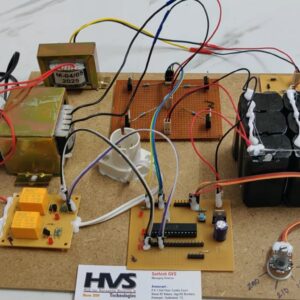
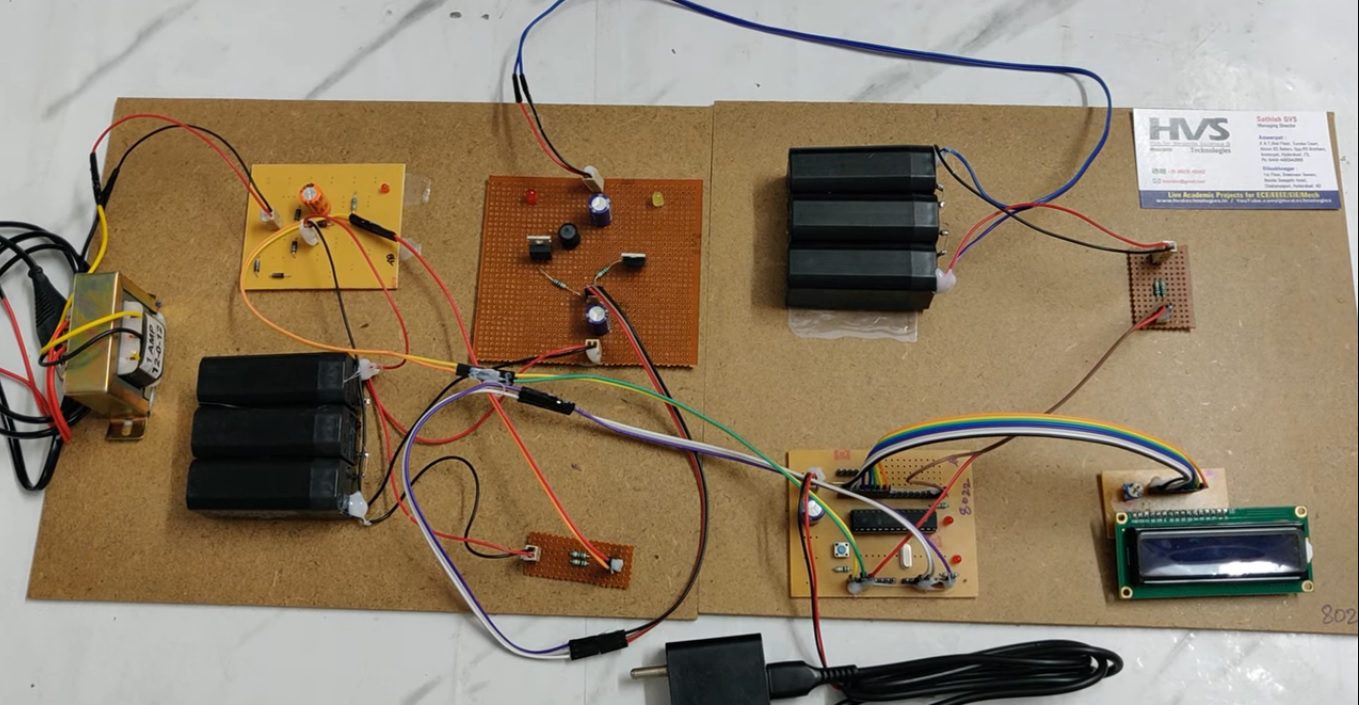
The major building blocks of this project are:
Regulated power supply
PIC Microcontroller.
TWO EV Batteries.
DC -DC Bidirectional converter.
LCD display.
Two voltage sensors.
LED Indicators.
Crystal oscillator
Reset button.
Software’s used:
PIC-C compiler for Embedded C programming.
PIC kit 2 programmer for dumping code into Micro controller.
 5 × ₹12,500.00
 video: