Subtotal ₹9,500.00


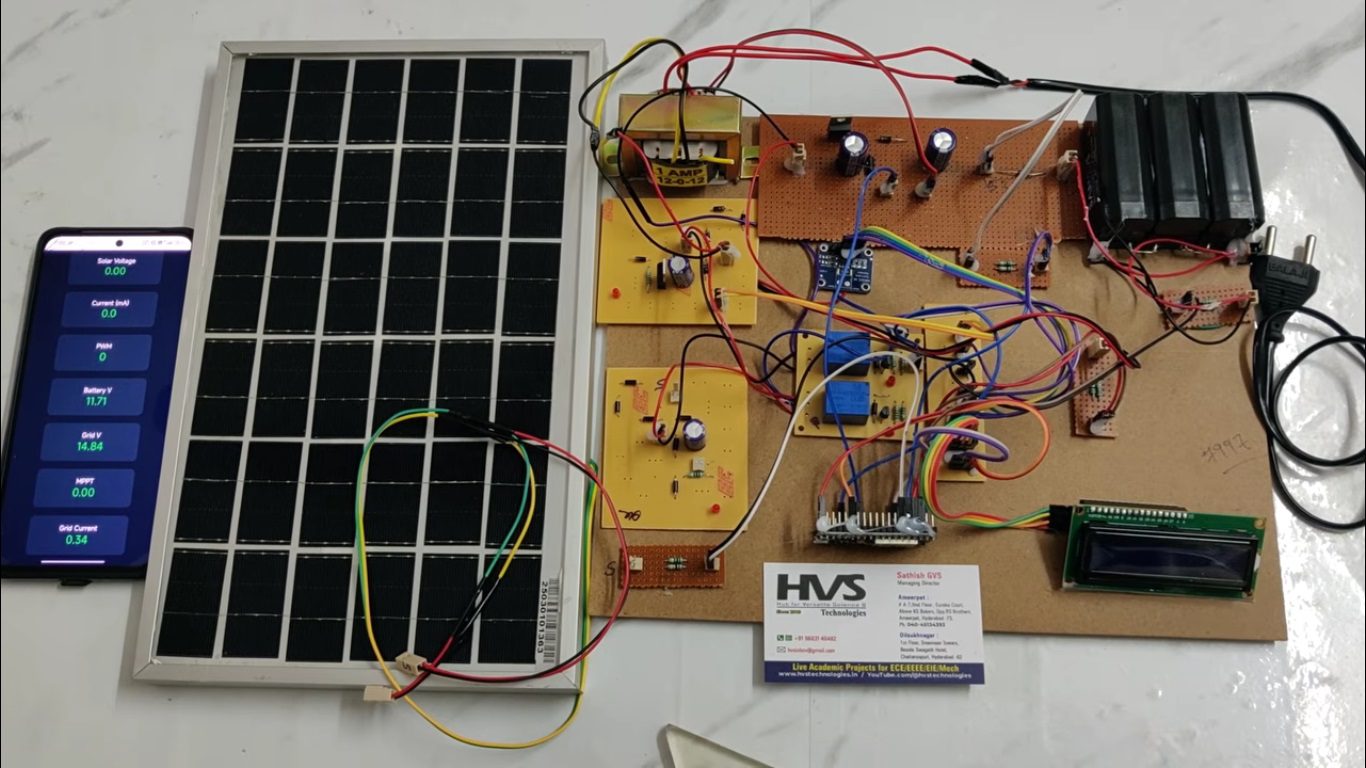
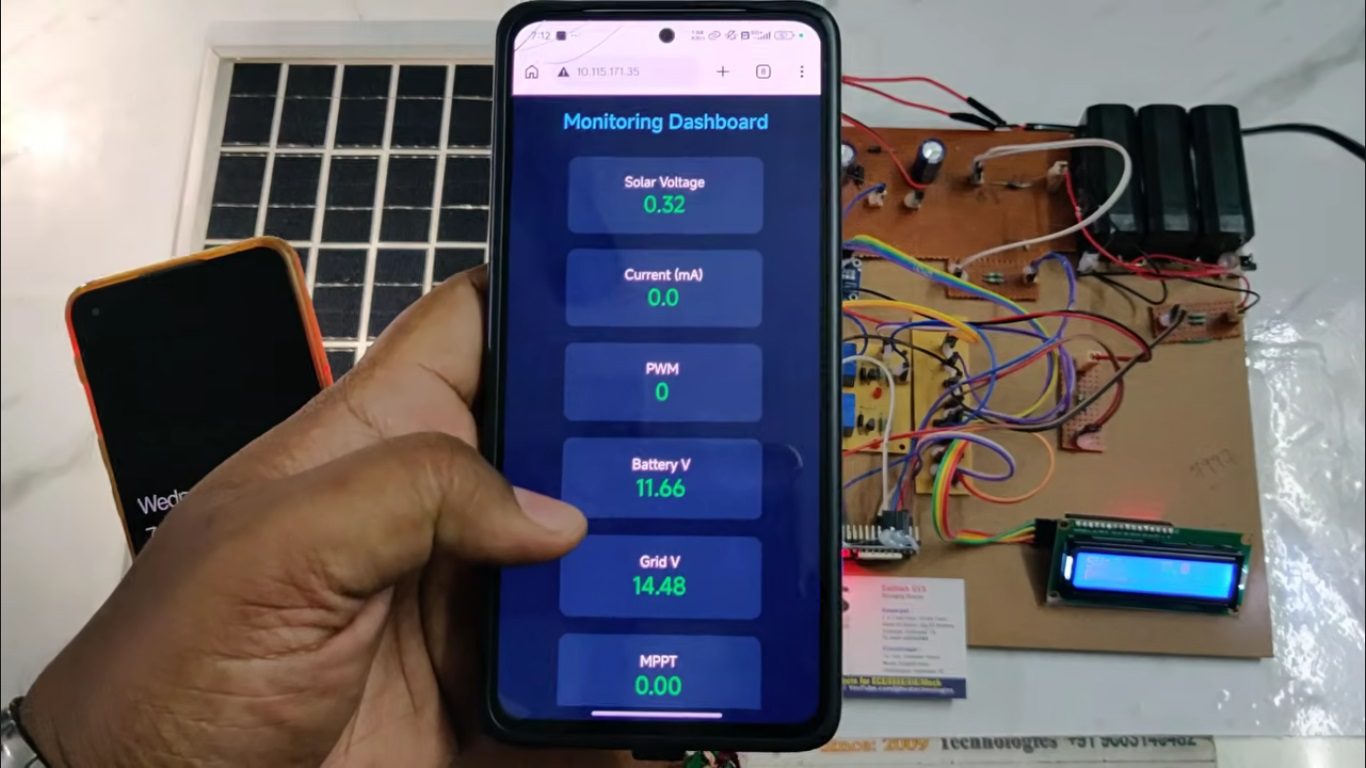
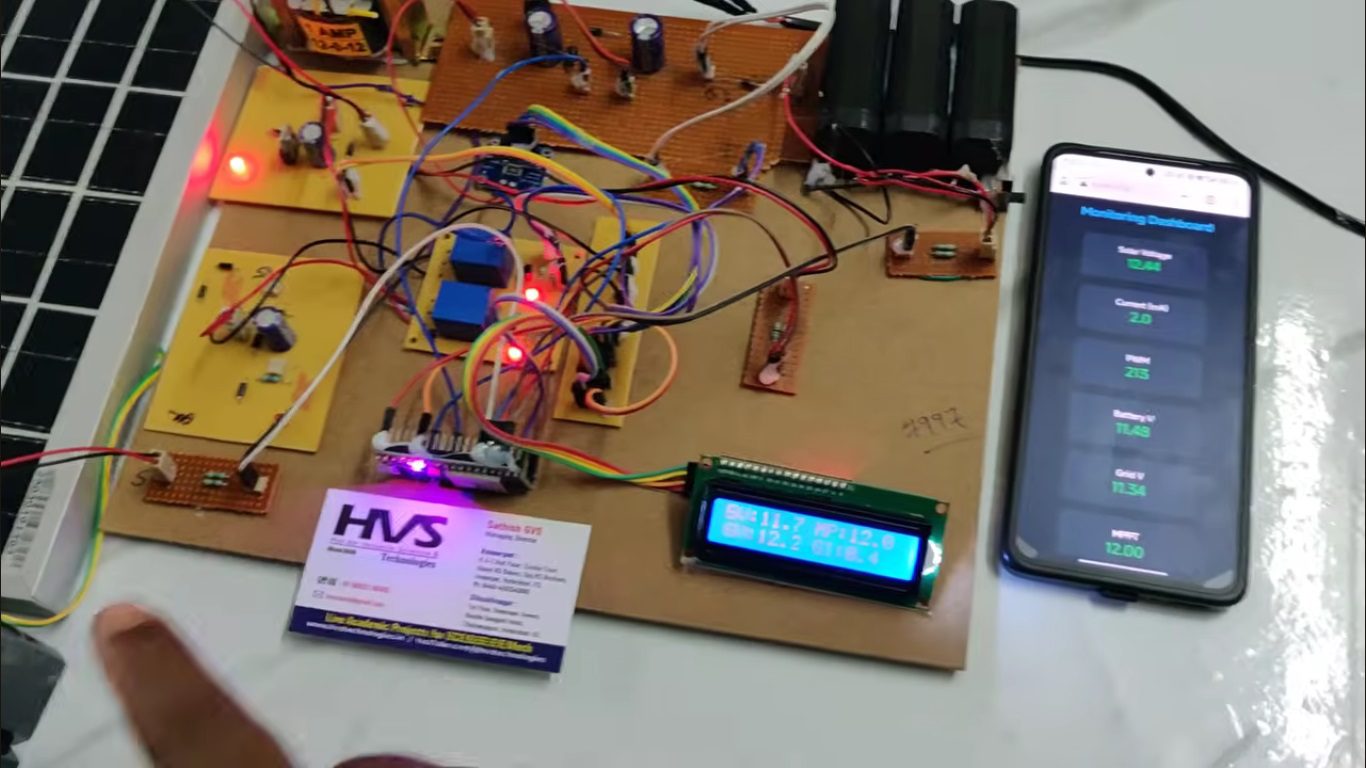
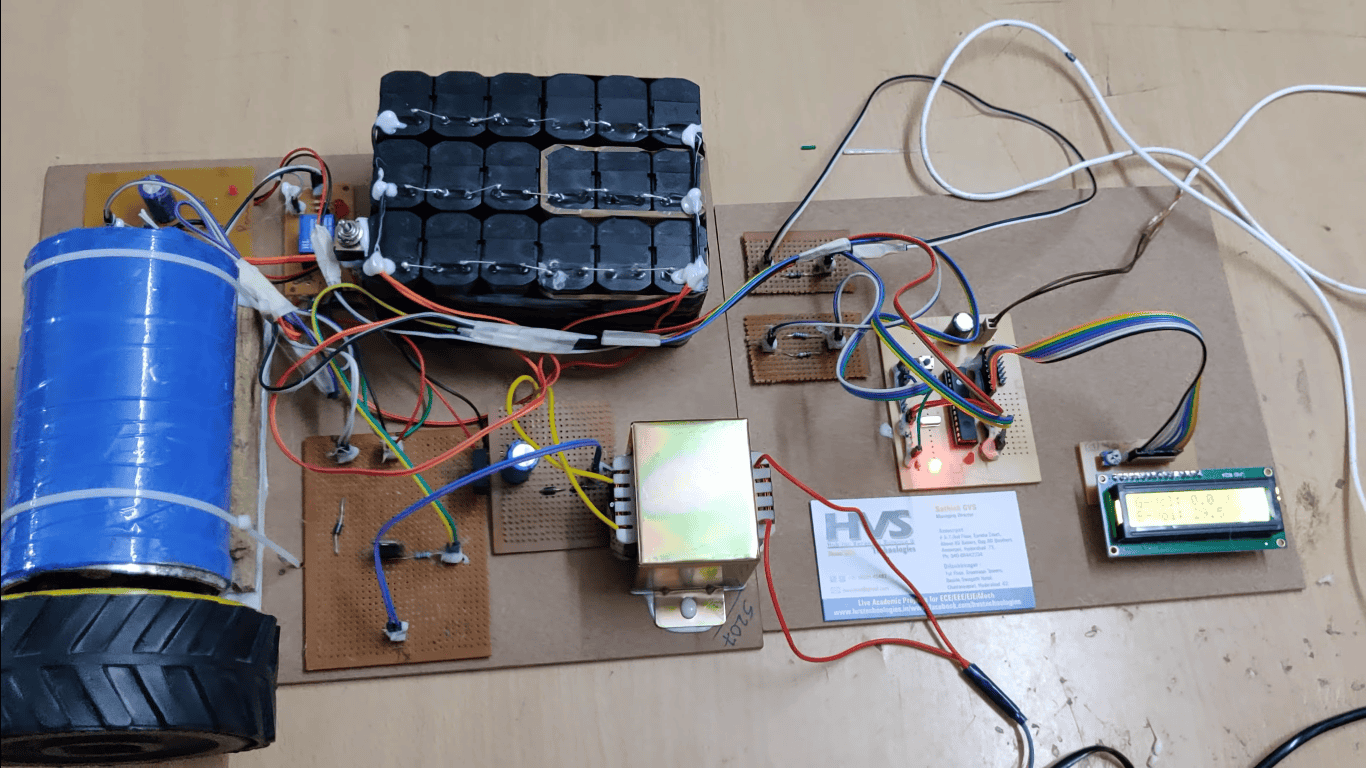
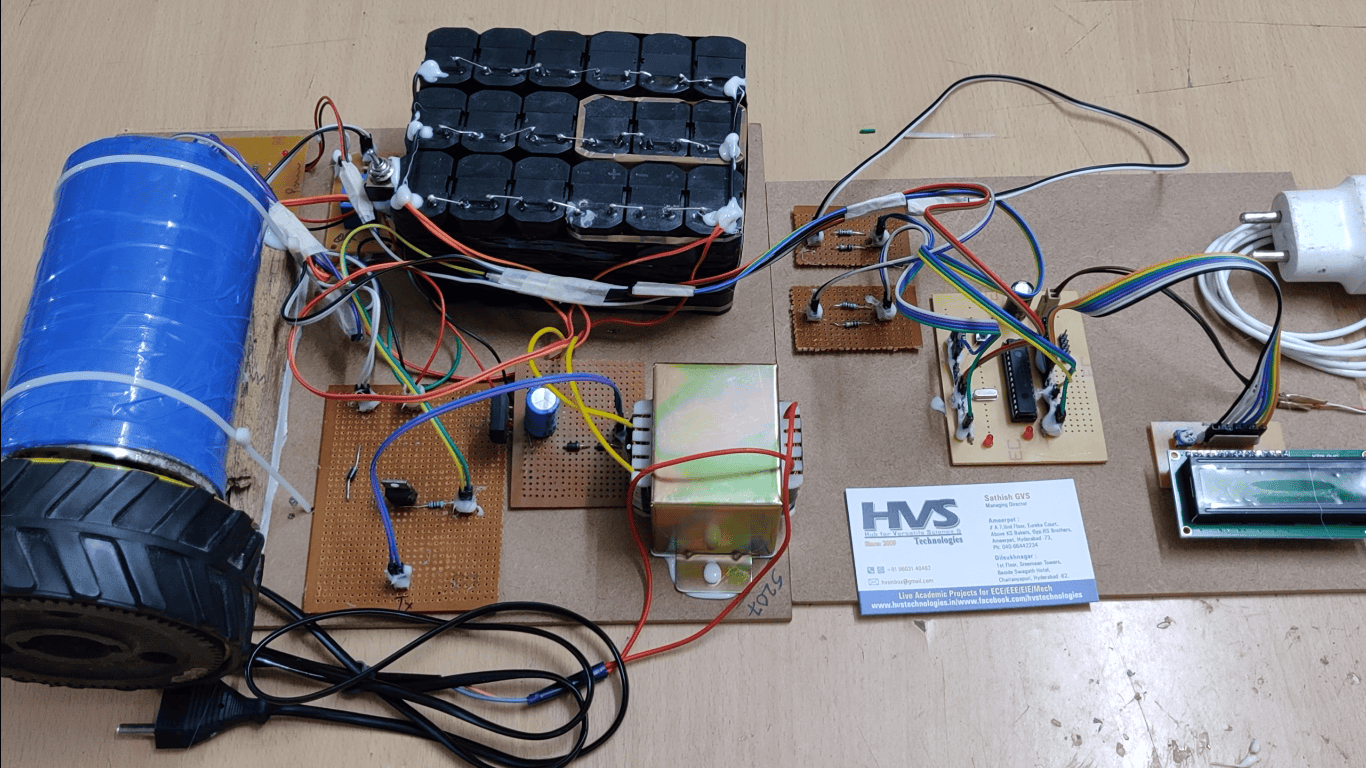
The increasing demand for efficient and sustainable electric vehicle (EV) charging systems has led to the integration of hybrid energy sources. This project presents the design and implementation of an optimized EV charging system using dual energy sources—solar and grid power. The system intelligently prioritizes solar energy for charging the battery whenever it is available, thereby reducing dependency on conventional grid power and promoting renewable energy utilization. In the absence of solar energy, the system automatically switches to grid supply to ensure uninterrupted charging.
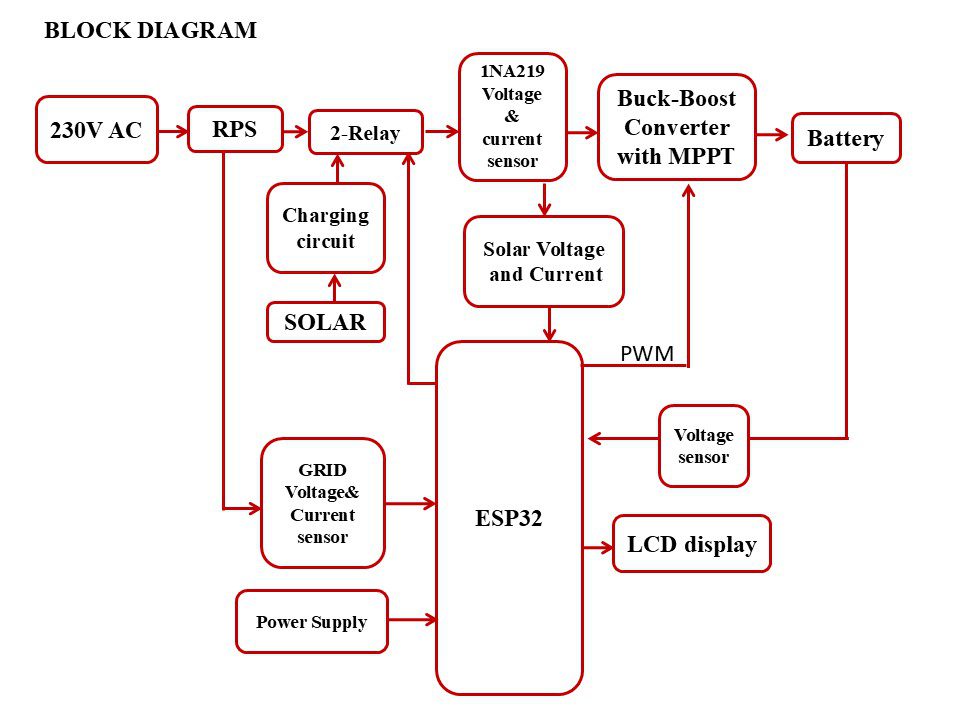
An ESP32 microcontroller acts as the central control unit, continuously monitoring solar voltage and current, grid voltage and current, and battery voltage through appropriate sensors, including the INA219 module. A dual-relay mechanism is employed to switch between solar and grid sources efficiently. The charging process is enhanced using a buck-boost converter integrated with Maximum Power Point Tracking (MPPT) to ensure optimal energy extraction and efficient battery charging under varying conditions.
All key parameters such as solar voltage and current, grid voltage and current, and battery voltage are displayed in real-time on an LCD screen for user monitoring. This system improves energy efficiency, ensures reliable charging, and supports sustainable energy practices, making it highly suitable for modern EV charging applications.
Objectives:
 video:
- To utilize solar energy as the primary power source
- To ensure uninterrupted charging using grid backup
- To implement automatic source switching using relays
- To monitor voltage and current using sensors
- To improve efficiency using MPPT-based buck-boost converter
- To display real-time parameters on LCD
- To enhance battery life and charging efficiency.
- Solar
- Grid.
- Charging circuits.
- Rechargeable Battery.
- Regulated power supply.
- ESP32 microcontroller.
- I2C through LCD display.
- Two Relays.
- Buck Boost converter.
- INA219 sensor.
- Voltage sensor.
- Power supply.
- Embedded C programming.
- Arduino IDE for dumping code into Micro controller.
- Express SCH for Circuit design.
 video: