No products in the cart.


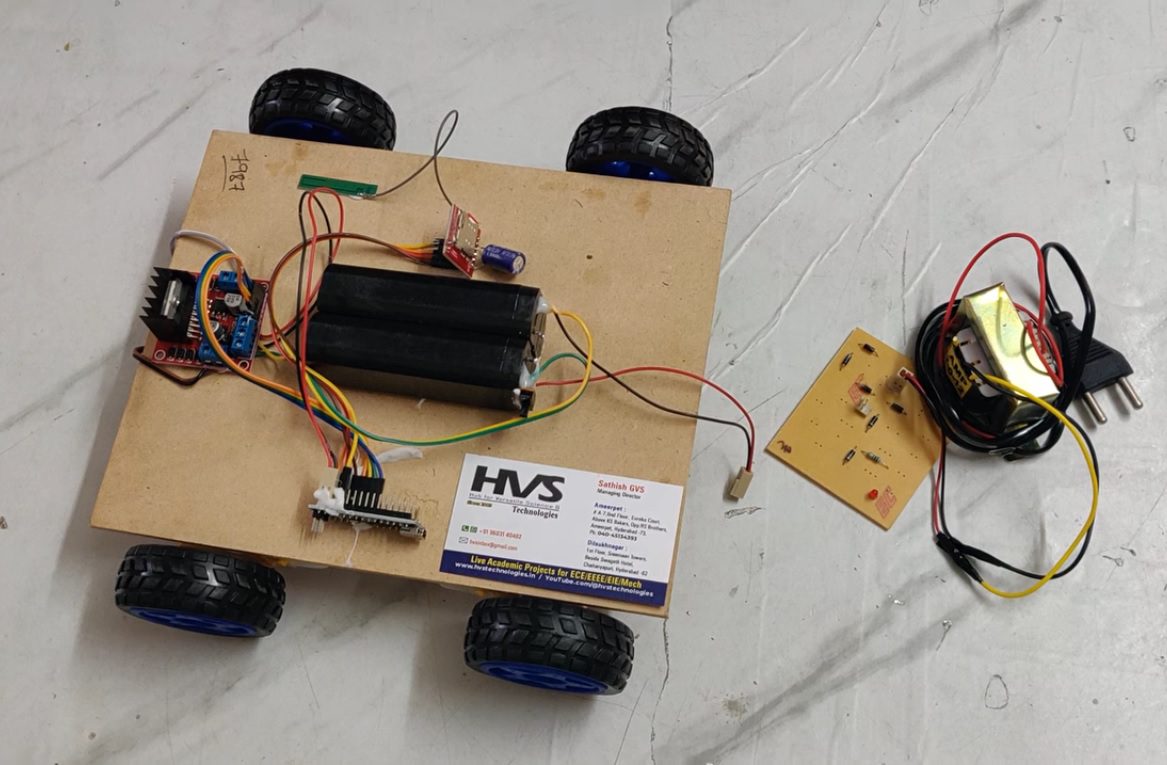
The Hospitality Control Robot using GSM Modem and DTMF Technology is designed to automate the delivery of medicines and essential items within hospital environments, reducing human effort and enhancing safety. This system is especially useful in situations where direct human interaction needs to be minimized, such as in infectious or restricted areas.
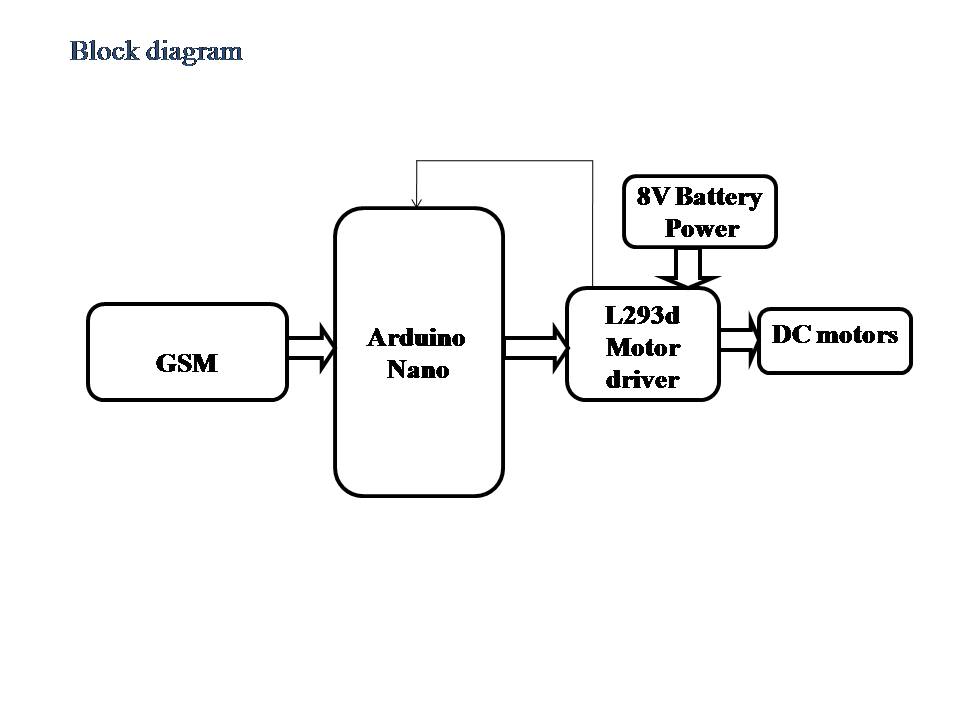
The robot operates through a GSM-based communication system, allowing users to control it remotely using a mobile phone. A GSM modem with an embedded SIM card receives incoming calls and automatically answers them. The keypad inputs from the user’s mobile phone generate DTMF (Dual Tone Multiple Frequency) signals, which are decoded and processed by an Arduino Nano microcontroller. Based on these signals, the robot performs directional movements such as forward, backward, left, right, and stop using an L298 motor driver.
The system is powered by a rechargeable battery and includes a simple charging circuit to ensure continuous operation. One of the key advantages of this robot is its ability to be controlled from any location without distance limitations, as long as GSM network coverage is available.
This project provides a low-cost, efficient, and reliable solution for automated material transport in hospitals, contributing to improved operational efficiency, reduced manpower, and enhanced patient care services.
 video:
Objectives:
- To design and develop a hospitality control robot using GSM and DTMF technology.
- To enable remote control of the robot using a mobile phone.
- To perform movements such as forward, backward, left, right, and stop.
- To transport medicines and essential items safely within hospitals.
- To reduce human effort and minimize direct human contact.
- To provide a low-cost, reliable, and efficient hospital assistance system.
- Arduino Nano.
- DC motor with L293D motor driver.
- GSM.
- Rechargeable Battery.
- Arduino IDE for compiling and dumping code into Microcontroller.
- Express SCH for Circuit design.
 video: