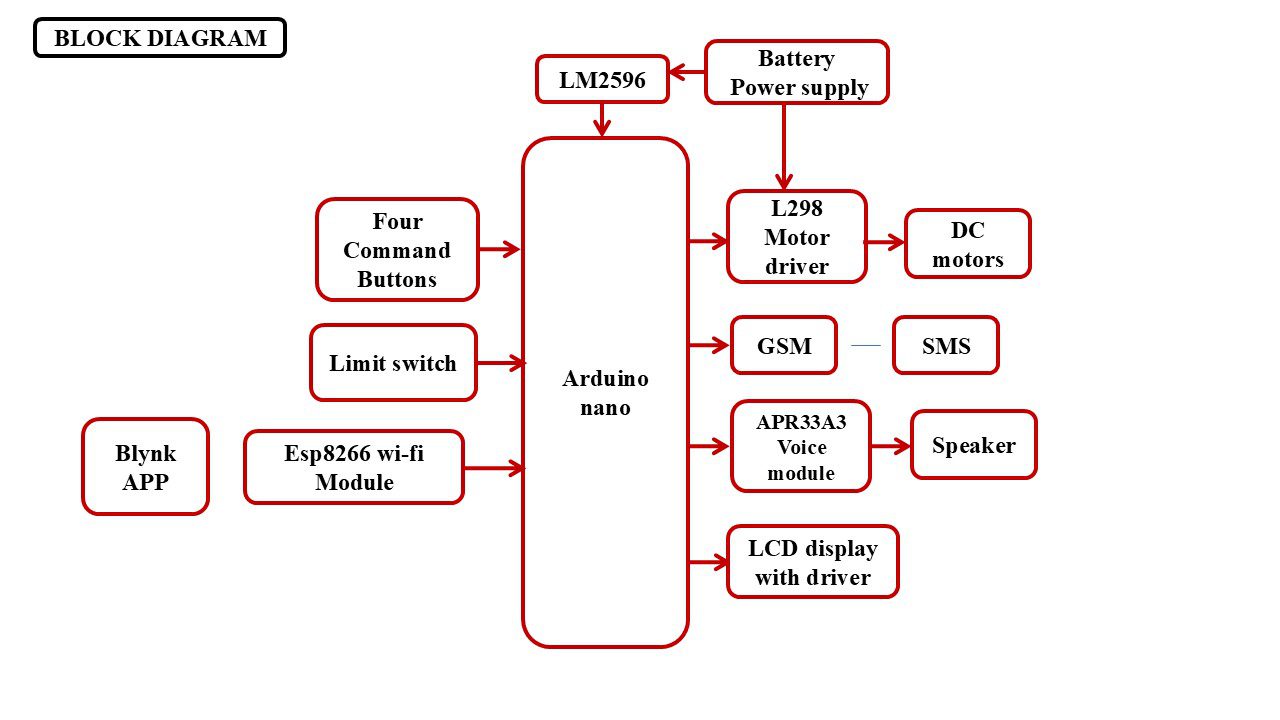
This project presents a smart wheelchair system with safety, speech communication, and IoT-based control designed to assist elderly and physically challenged people in daily mobility and communication. The system is built around an Arduino Nano microcontroller, which acts as the central control unit for all modules.
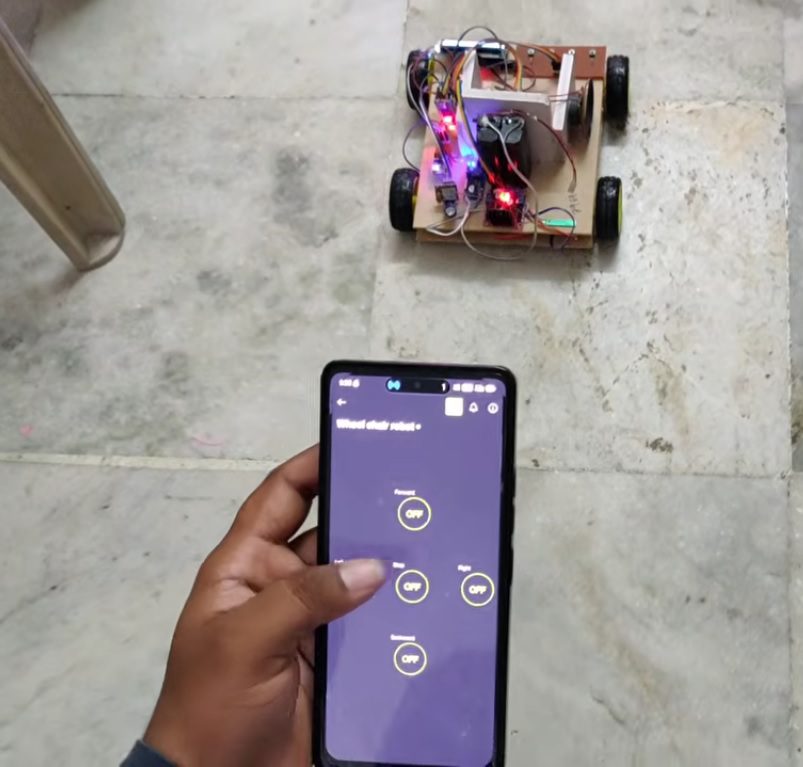
The wheelchair can be controlled wirelessly through a mobile application using the Blynk IoT platform with an ESP8266 Wi-Fi module. This allows the caretaker or user to monitor and control the wheelchair remotely, providing convenience and flexibility in operation. For safety purposes, a limit switch is used to detect any collision or damage to the wheelchair. When such an event occurs, the system automatically sends an alert message to the caretaker’s mobile phone using a GSM module via SMS, ensuring immediate notification in emergency situations.
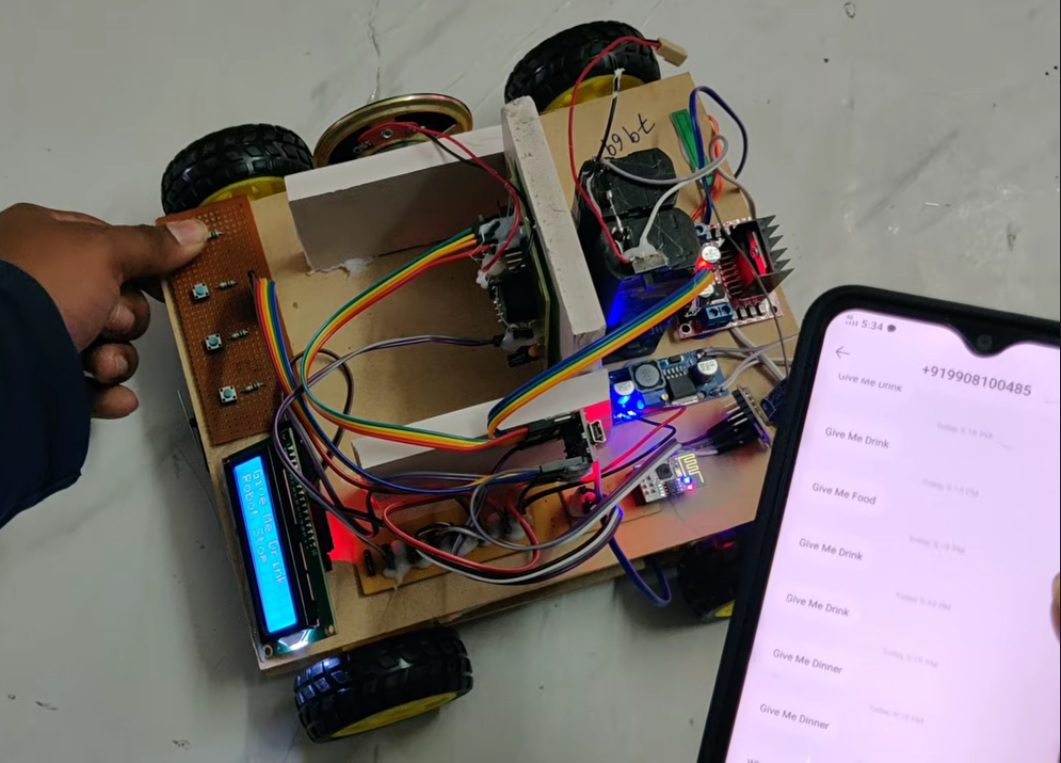
The system also includes a speech assistance feature for communication. Four command buttons are provided for the user to request help or basic needs such as food, water, medicine, or assistance. When a button is pressed, a pre-recorded voice message stored in the APR33A3 Voice Recording and Playback Module is played through a speaker, allowing the user to communicate easily. At the same time, the corresponding SMS notification is sent to the caregiver's mobile phone through the GSM module. An LCD display is included to show system status and commands. The wheelchair movement is controlled using an L298 motor driver, which drives the DC motors connected to the wheels.
Overall, this system integrates mobility control, safety monitoring, voice assistance, and IoT connectivity to create an intelligent wheelchair that improves independence, safety, and communication for physically challenged users.
The main objectives of the project are:
To design and develop a smart wheelchair system that assists elderly and physically challenged people in safe and easy mobility.
To implement IoT-based wireless control using an ESP8266 Wi-Fi module and mobile application for remote monitoring and operation.
To provide a speech assistance feature using the APR33A3 voice recording and playback module to help users communicate their basic needs such as food, water, medicine, or assistance.
To incorporate a safety mechanism using a limit switch for detecting collisions or abnormal conditions.
To send emergency alert messages through a GSM module to the caretaker’s mobile phone during emergency situations.
To control the wheelchair movement using DC motors and an L298 motor driver connected to the microcontroller.
To display system status and messages on an LCD display for easy monitoring.
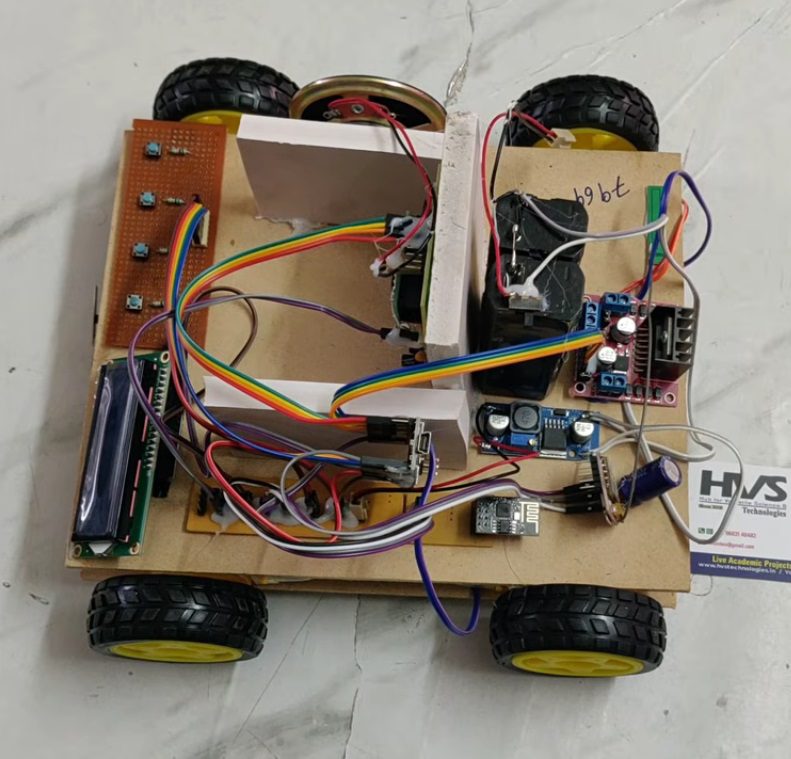
The major building blocks of this project are:
- Battery Power Supply.
- Arduino nano.
- Esp8266 wi-fi module.
- Four command buttons.
- DC motors with L298motor driver.
- Limit switch.
- GSM.
- LCD display.
- APR33A3 VOICE MODULE and speaker.
Software’s used:
- Embedded C programming.
- Arduino IDE for dumping code into Micro controller.
- Express SCH for Circuit design.
- IOT technology.
 video:
 2 × ₹12,500.00
 video: