HVS-4937. Smart Eyes with Voice - An Assistive system for blind Persons - Smart AI Glasses
₹27,000.00
Visual impairment makes it difficult for blind and visually challenged people to read printed text, recognize surrounding objects, detect obstacles, and identify individuals.
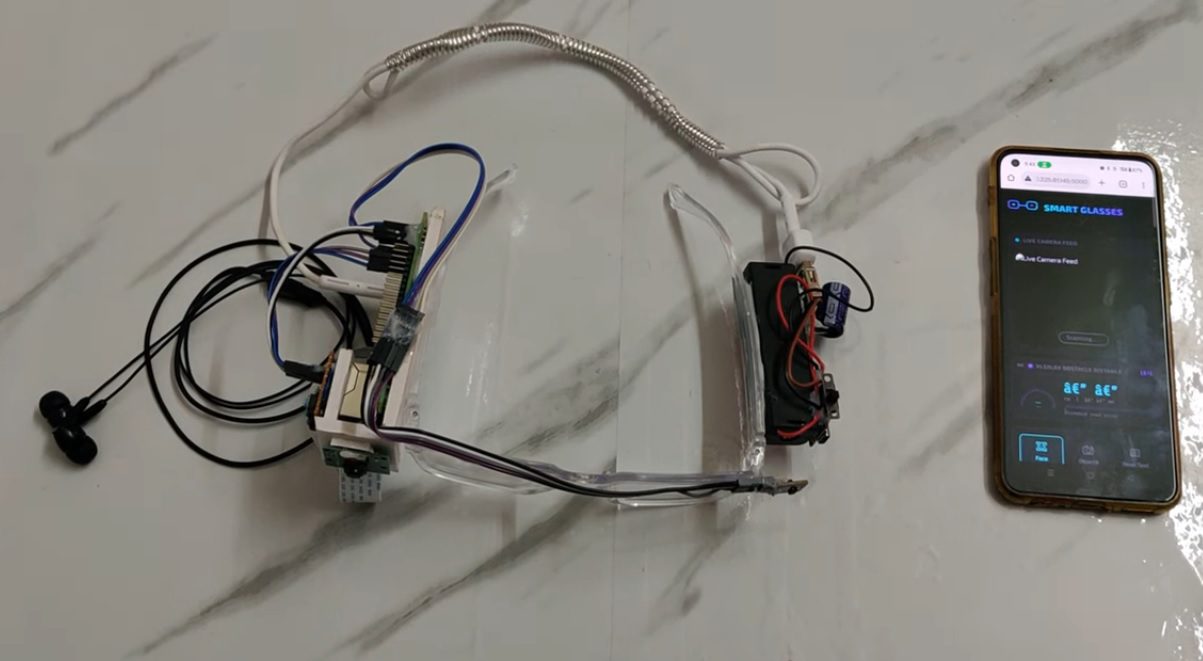
Visual impairment makes it difficult for blind and visually challenged people to read printed text, recognize surrounding objects, detect obstacles, and identify individuals. To address these challenges, this project presents a Raspberry Pi–based assistive system for blind persons that integrates text-to-speech conversion, object detection, face recognition, and obstacle detection with real-time voice feedback.
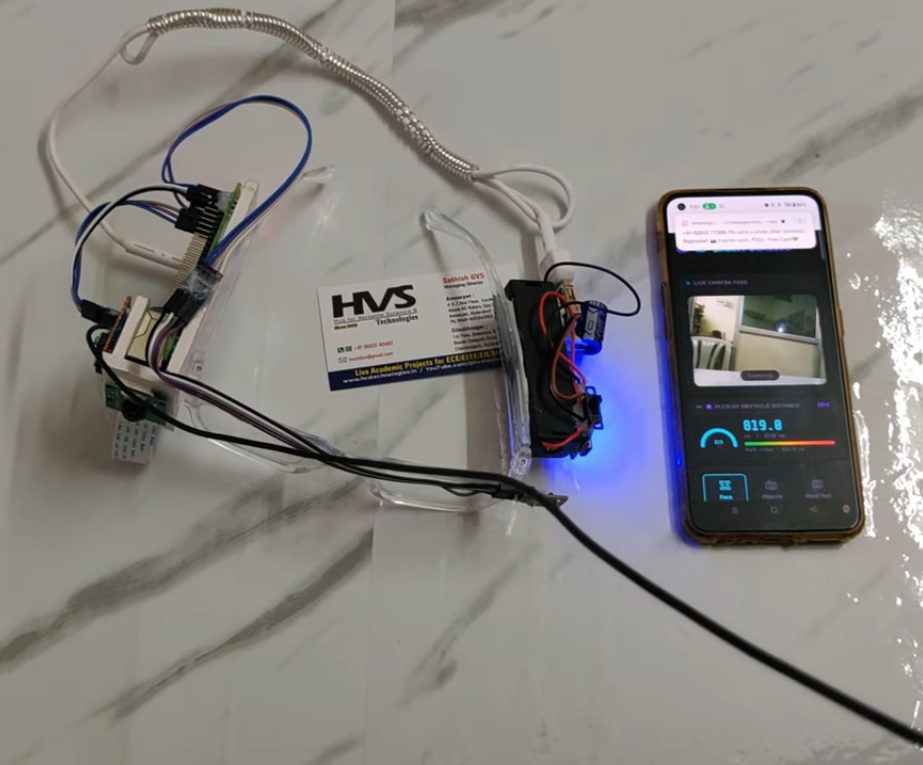
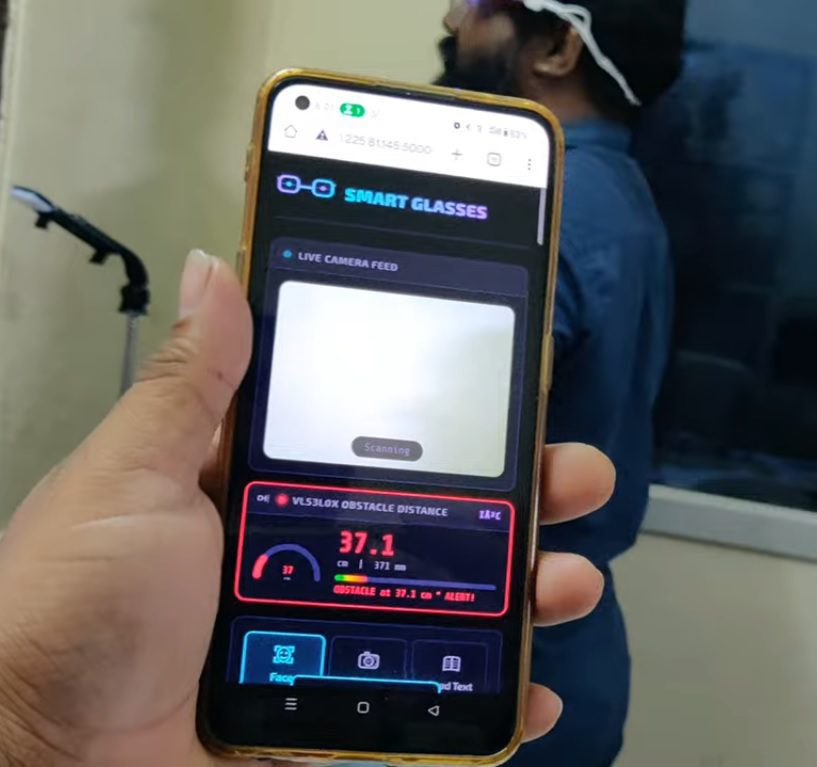
The proposed system uses a Raspberry Pi as the main processing unit along with a Pi Camera to capture images of printed text, objects, faces, and nearby obstacles. Python-Tesseract OCR is employed to extract text from captured images, which is then converted into audible speech using a text-to-speech (TTS) engine and delivered through a speaker or headphones. OpenCV-based image processing and machine learning techniques are used for object classification and face recognition, enabling the user to identify common objects and known individuals. An ultrasonic sensor (HC-SR04) is incorporated to detect obstacles and provide timely audio alerts to ensure safe navigation.
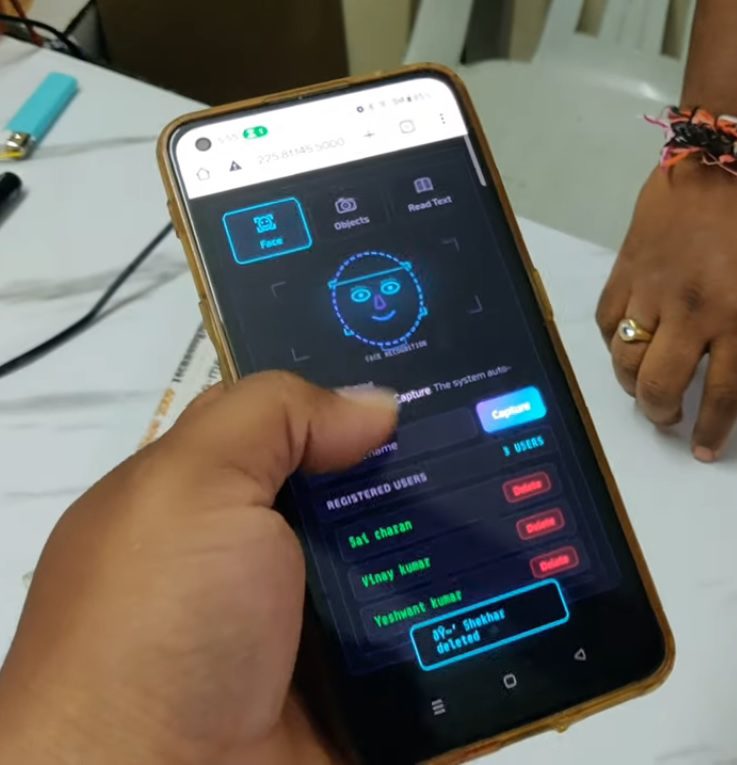
The system operates in multiple modes such as text reading, object recognition, face recognition, and obstacle detection, with dedicated push buttons used for mode switching, making it simple and user-friendly for visually impaired users. The portable, low-cost, and energy-efficient design makes the system suitable for real-world daily assistance. Overall, this project enhances independence, safety, and quality of life for blind individuals by providing reliable auditory guidance for their surroundings.
Objectives:
To capture printed text using a Pi Camera
To convert extracted text into speech using OCR and TTS
To recognize surrounding objects using image processing
To identify known faces using face recognition techniques
To detect obstacles using an ultrasonic sensor
To provide real-time voice feedback through a speaker
To implement simple button-based mode switching
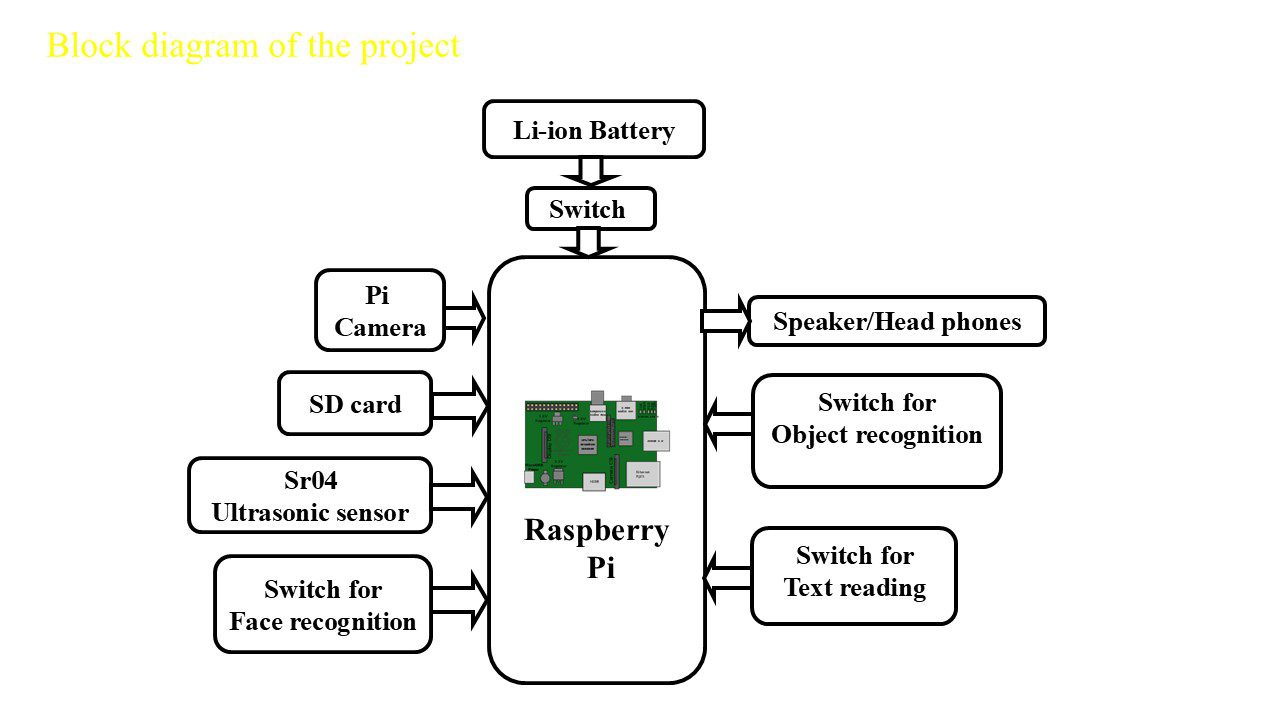
The major building blocks of the project are:
Li-ion Battery Power supply.
Raspberry Pi3 b+ processor.
Pi Camera.
SD card.
Speaker.
Ultrasonic sensor.
Three pushbuttons.
Software’s used:
Embedded Linux programming.
Express SCH for Circuit design.
Python-tesseract is an optical character recognition (OCR).
Espeak to read the English text.
OpenCV image processing for object & Face recognition.
 5 × ₹12,500.00
 video: