Subtotal ₹95,750.00


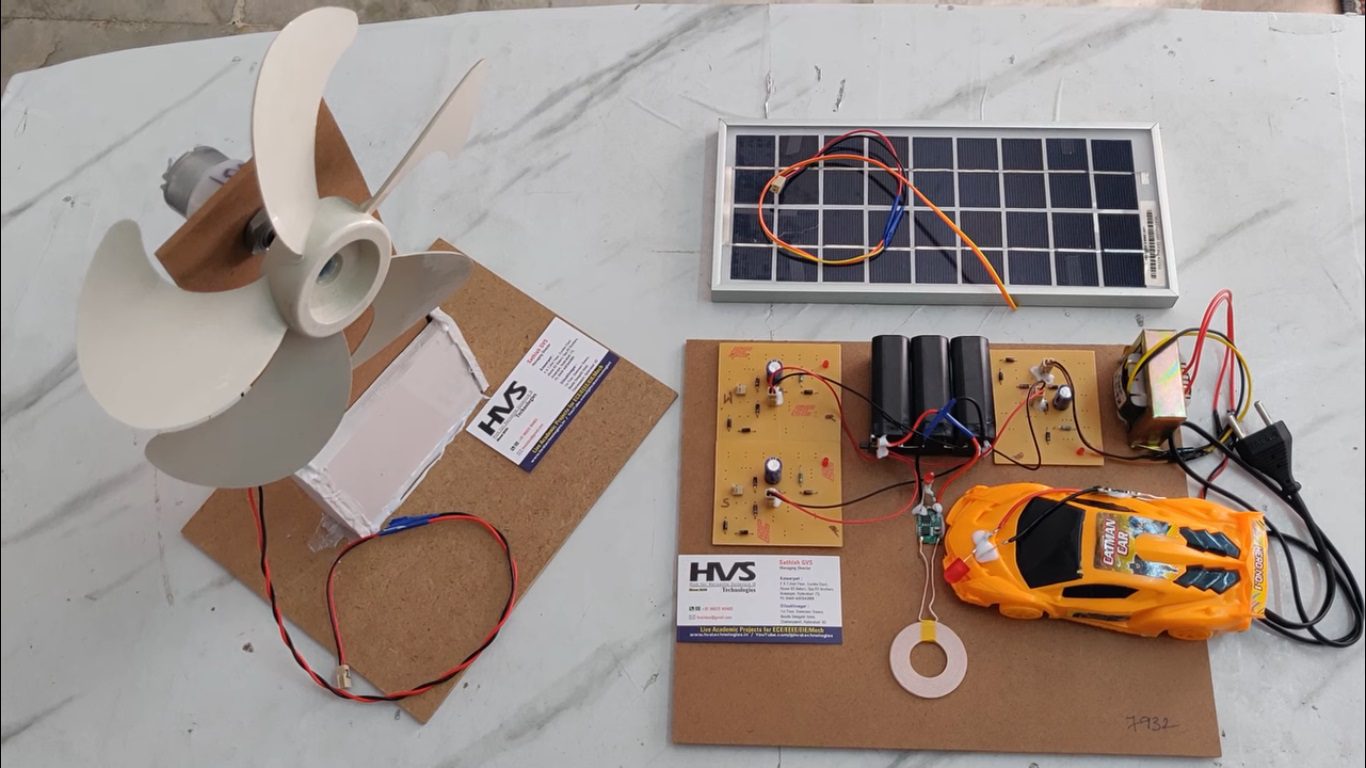
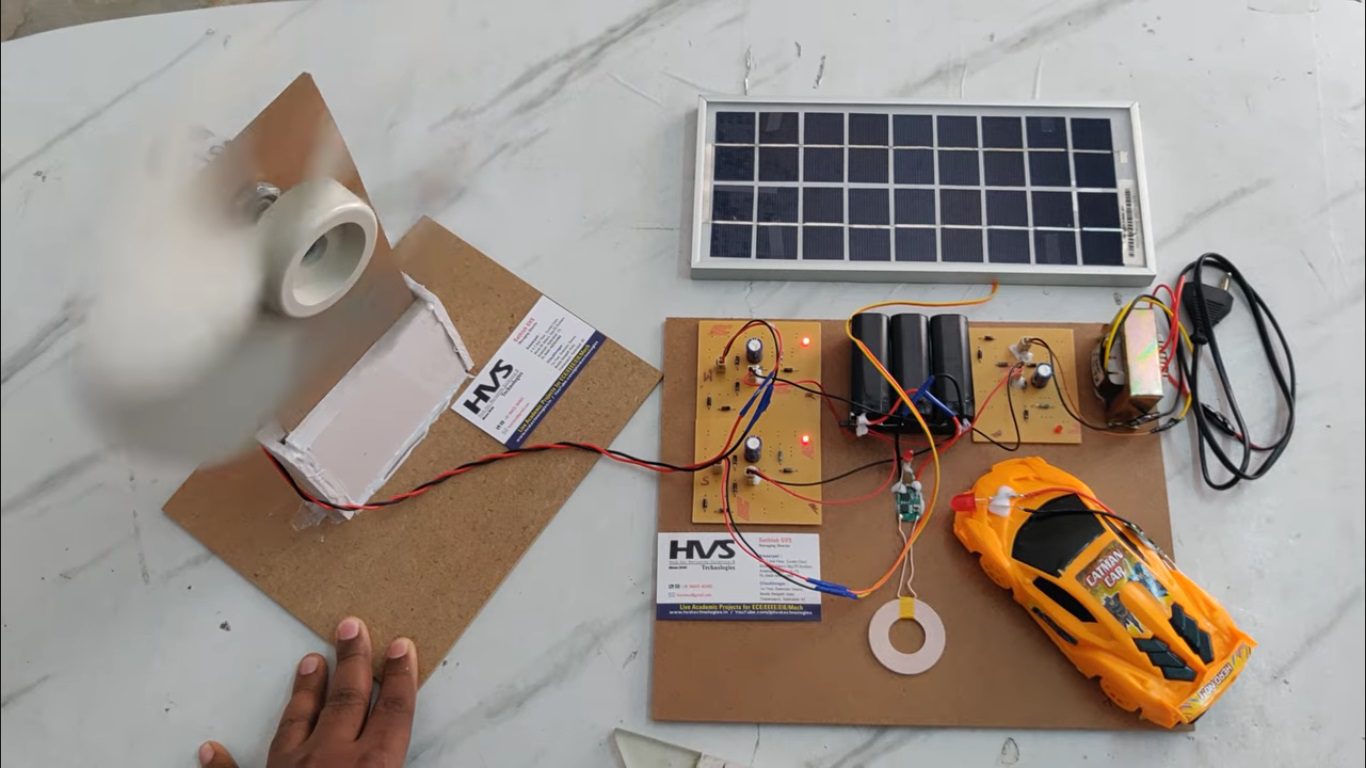
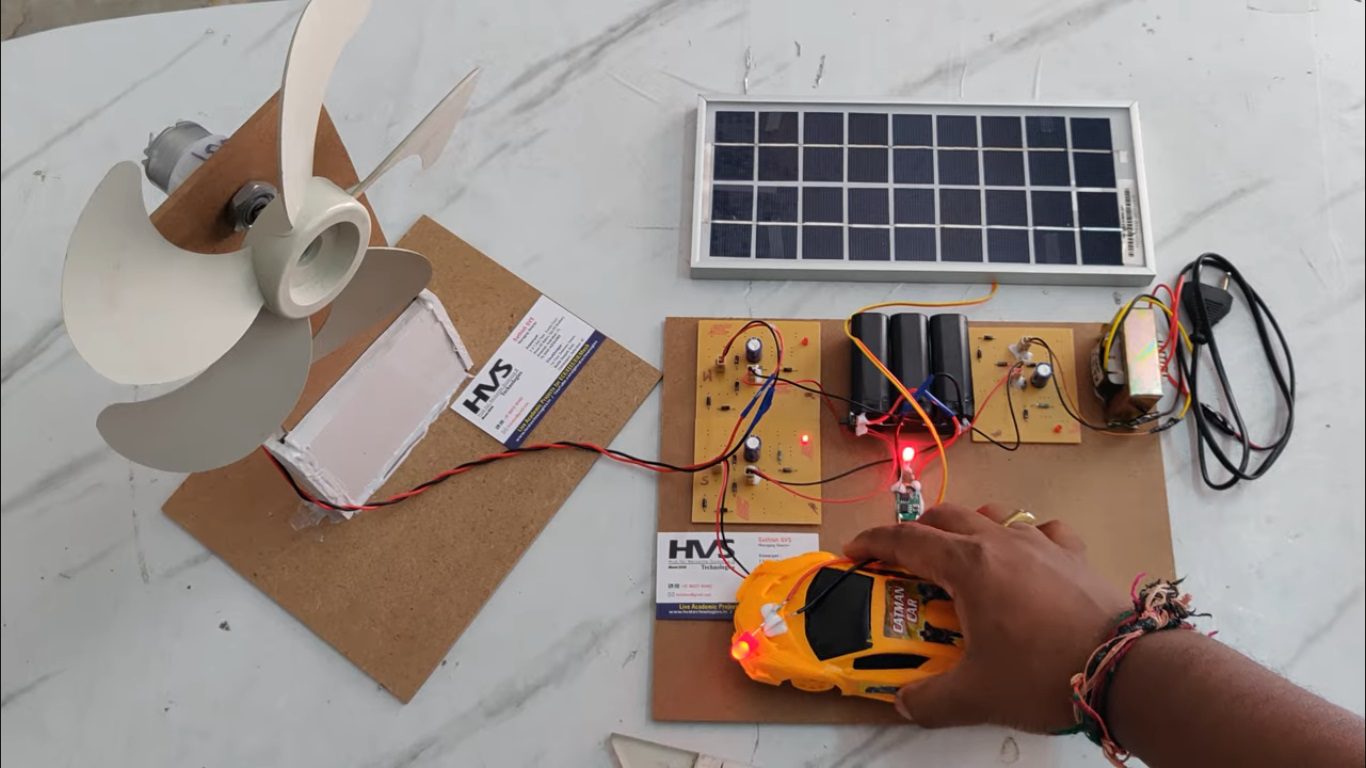
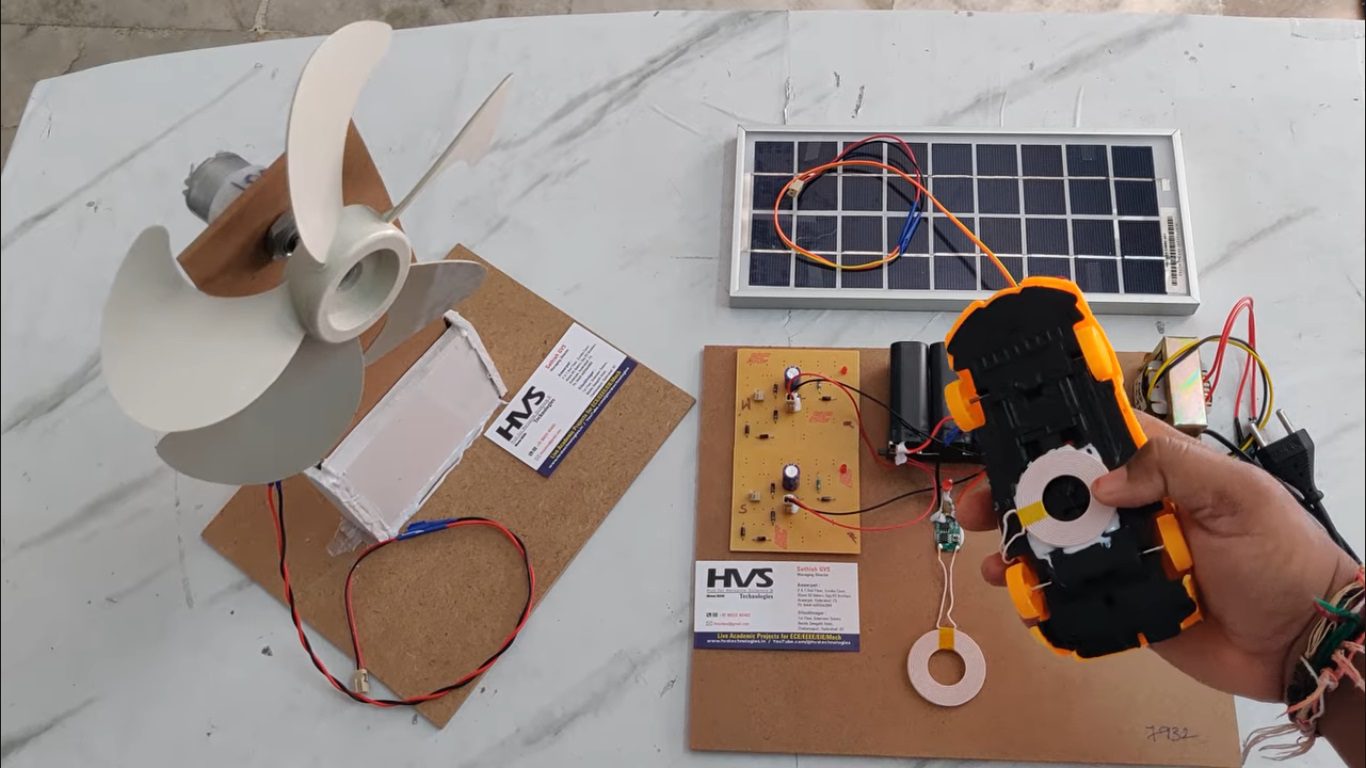
The project aims at developing an intelligent Electric vehicle which is powered from wireless power transmission.
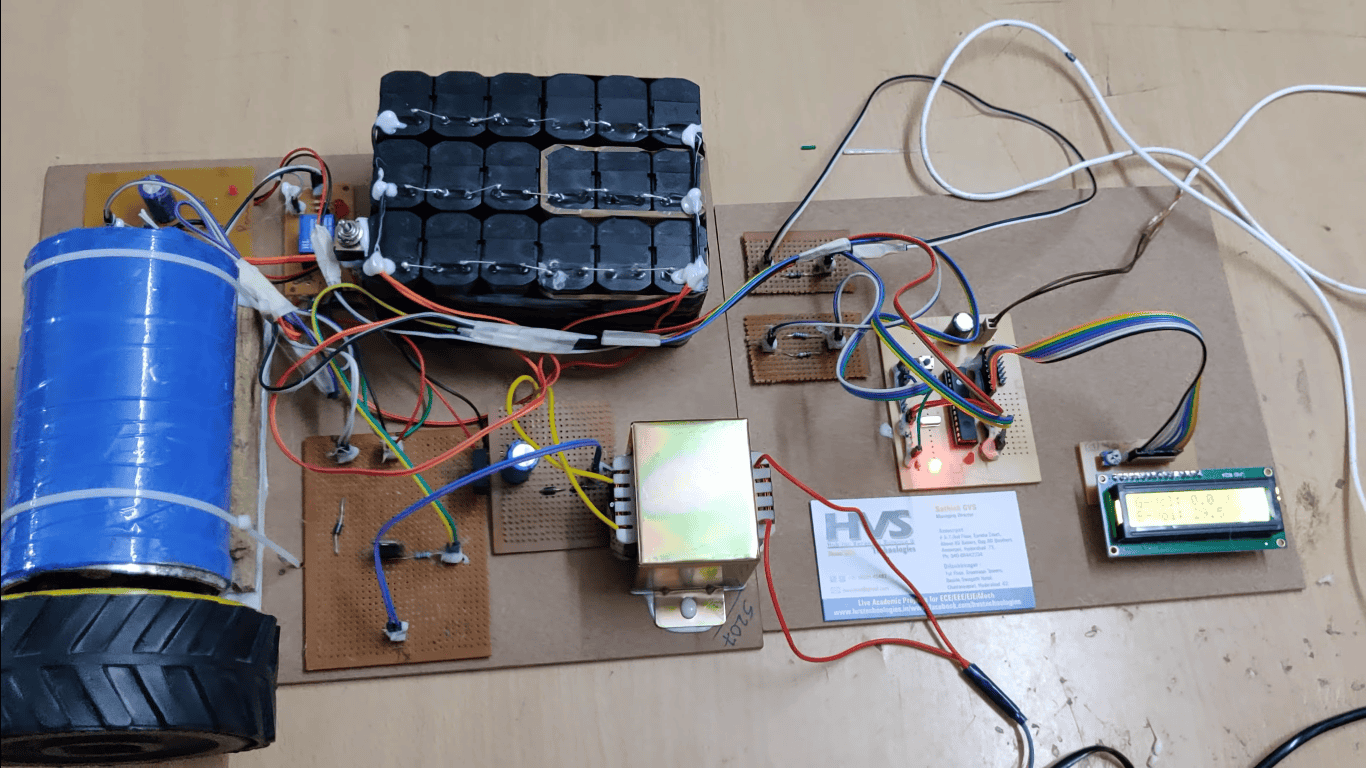
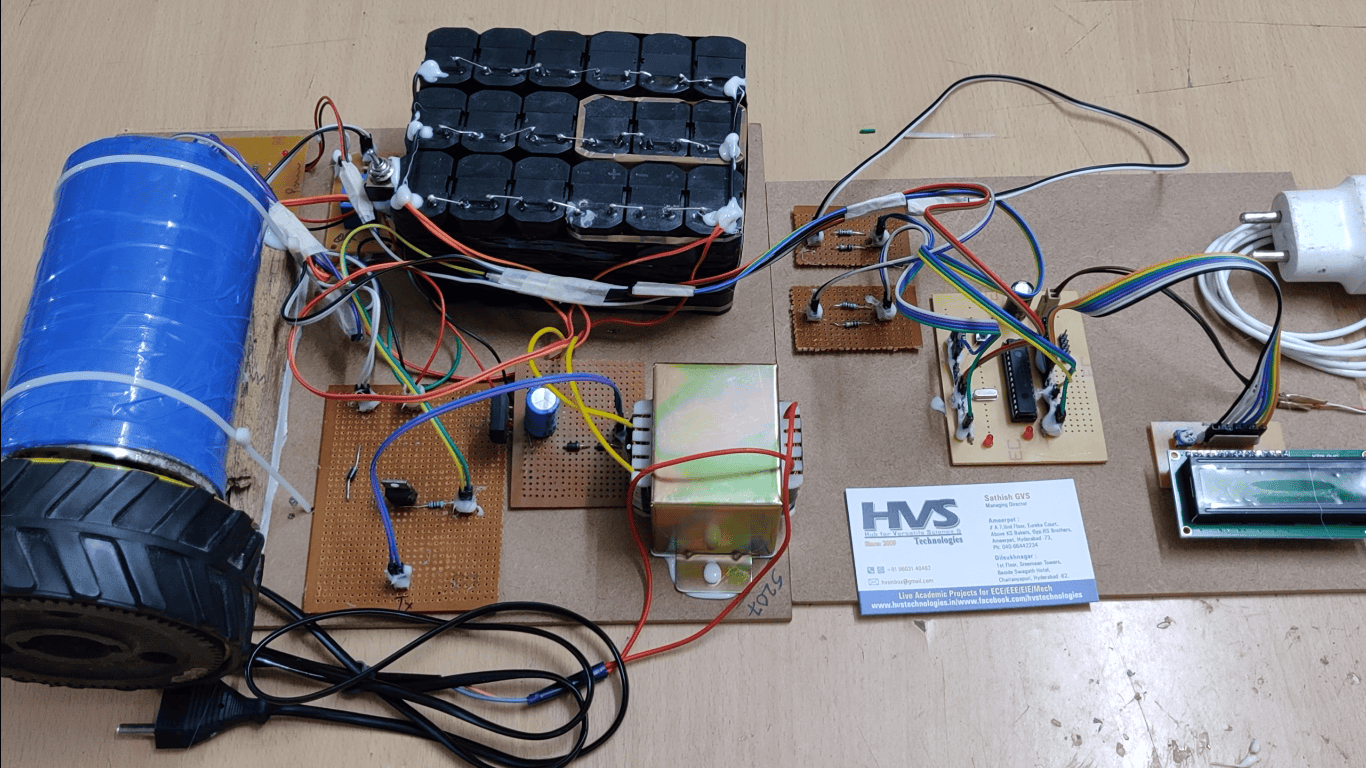
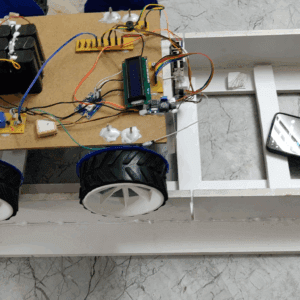
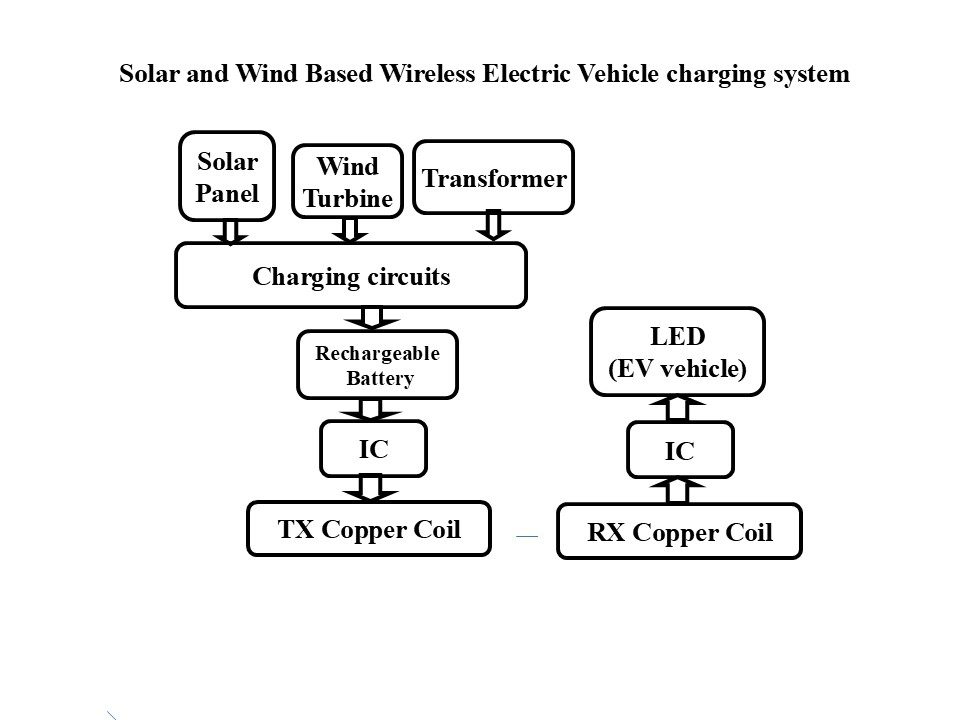
The transmission section of the system uses renewable energy sources such as solar and wind power. The energy generated from the solar panel and wind turbine is stored in a rechargeable battery through appropriate charging circuits to ensure safe and efficient charging. The stored DC power from the battery is then converted into AC power using a DC-to-AC converter (inverter) to energize the transmitting coil. This transmitting coil generates an alternating electromagnetic field for wireless power transfer. In the receiver section, which is mounted on the vehicle, a wireless power receiving coil is installed along with an LED indicator. As the vehicle moves over the transmitting coil, it receives power wirelessly through electromagnetic induction, and the received power is indicated by the glowing LED, demonstrating successful wireless energy transfer.
Wireless energy transfer or wireless power is the transmission of electrical energy from a power source to an electrical load without a conductive physical connection. Wireless transmission is useful in cases where interconnecting wires are inconvenient, hazardous, or impossible. The problem of wireless power transmission differs from that of wireless telecommunications, such as radio. In the latter, the proportion of energy received becomes critical only if it is too low for the signal to be distinguished from the background noise. With wireless power, efficiency is the more significant parameter. A large part of the energy sent out by the generating plant must arrive at the receiver or receivers to make the system economical. The most common form of wireless power transmission is carried out using direct induction followed by resonant magnetic induction.
Objectives:
 video:
To generate electrical power using renewable energy sources such as solar and wind energy.
To store the generated energy efficiently in a rechargeable battery using proper charging circuits.
To convert stored DC power into AC power using a DC–AC converter for wireless transmission.
To design and implement a wireless power transmitting coil system.
To develop a vehicle-mounted wireless receiving coil for contactless power transfer.
To demonstrate successful wireless power transfer through LED indication.
To promote clean, sustainable, and eco-friendly energy utilization in transportation systems.
Components used:- Solar panel.
- Wind.
- Dynamo.
- Charging circuits.
- Rechargeable battery.
- Wireless power transmitting and receiving coils
- LED.
- Toy vehicle.
 video: