No products in the cart.


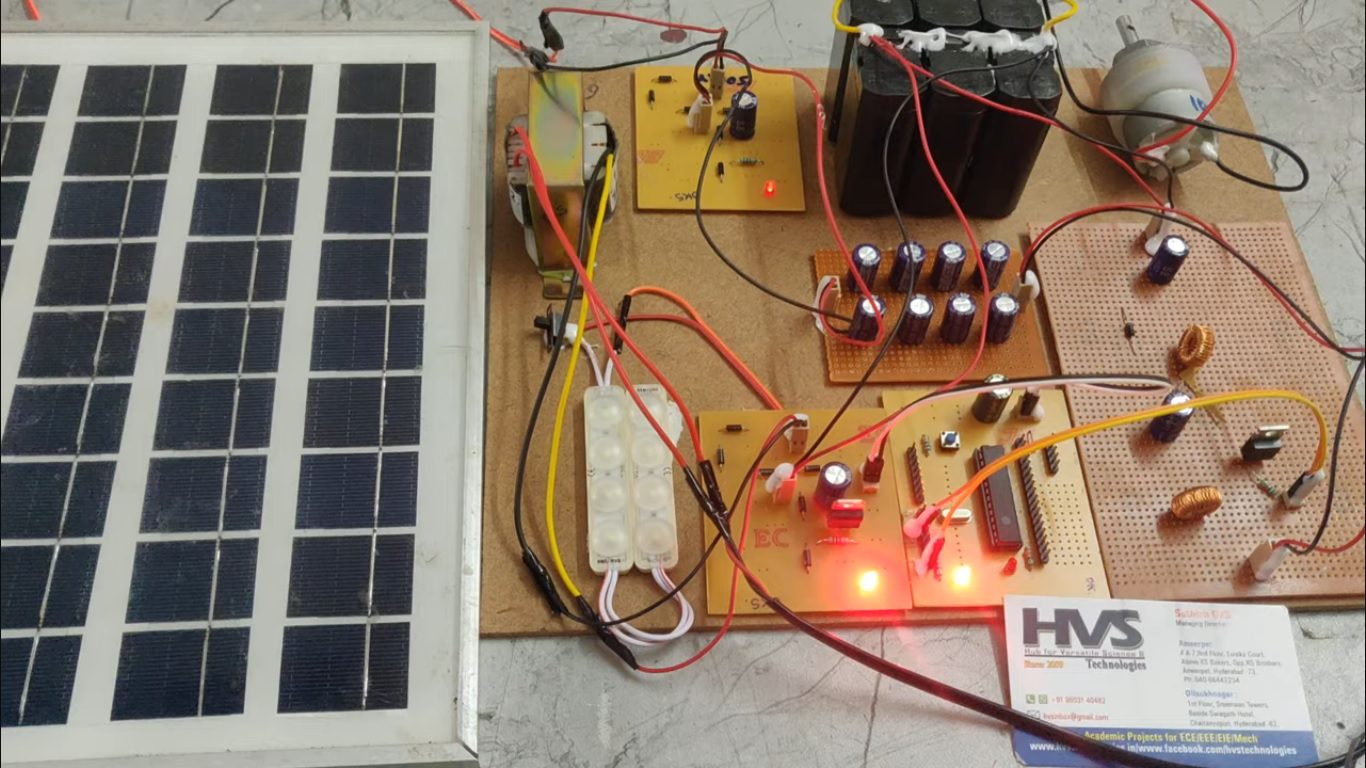
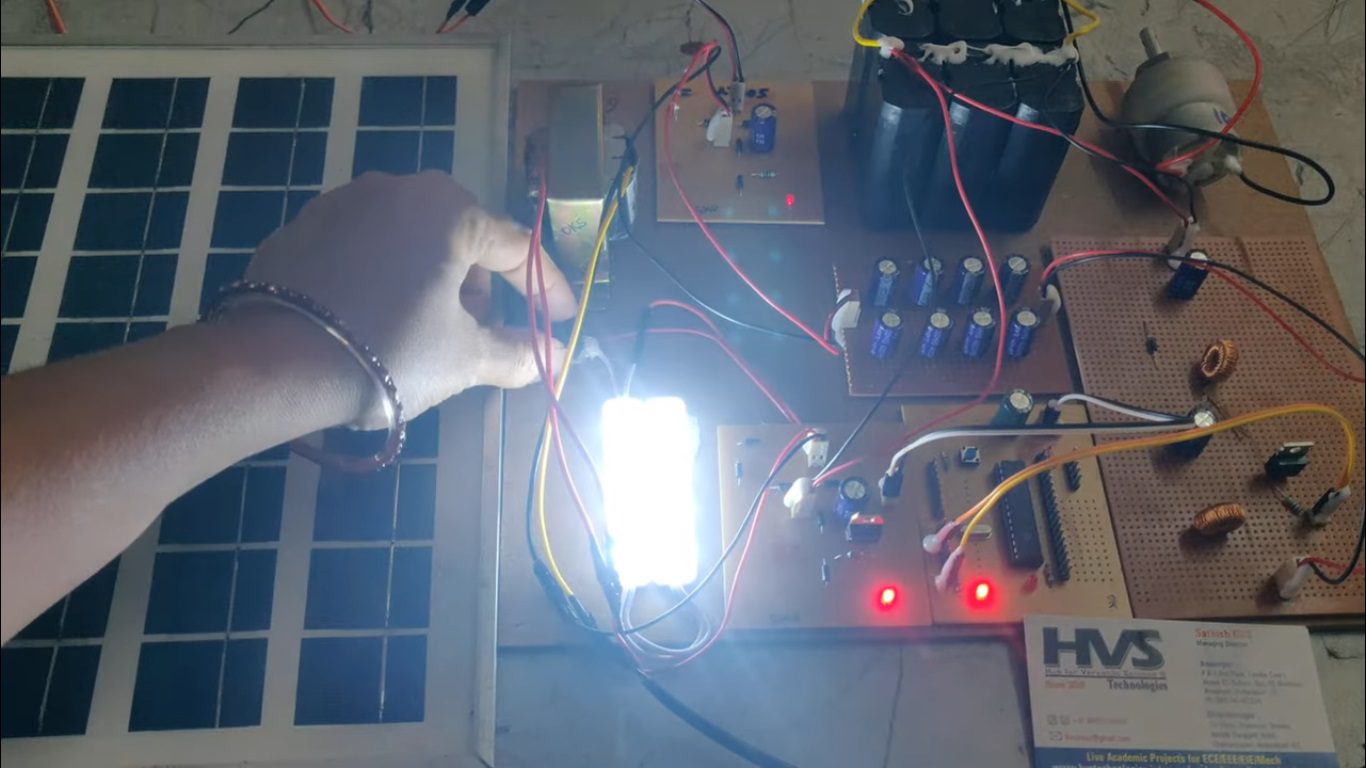
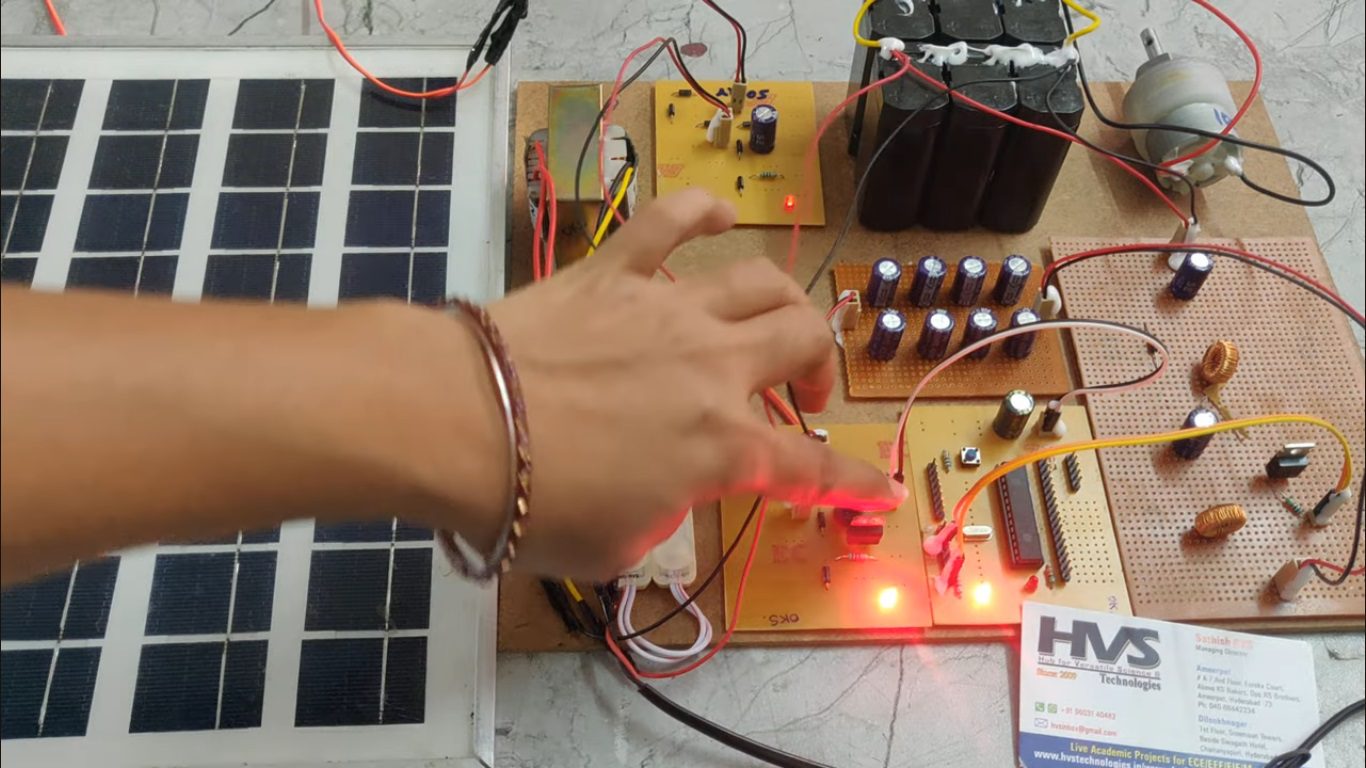
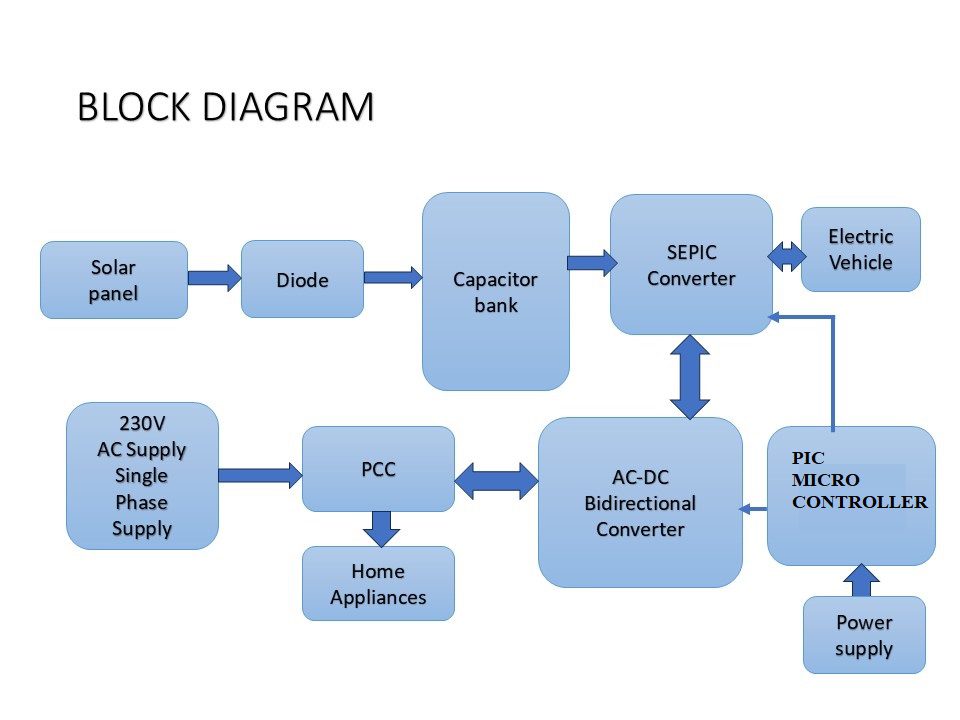
The proposed system integrates solar energy as the primary power source for electric vehicle (EV) charging, utilizing Solar Photovoltaic (PV) panels to capture sunlight and convert it into electrical energy. A SEPIC (Single-Ended Primary-Inductor Converter) is employed to efficiently interface between the variable output voltage of the solar panels and the stable voltage required to charge the EV battery. The system is controlled by a microcontroller that generates PWM signals to regulate the operation of MOSFETs, ensuring the delivery of sufficient voltage and current to the battery. The SEPIC converter’s ability to step up or step down the input voltage guarantees a stable output for efficient charging. Additionally, the stored energy in the EV battery is used to power home appliances through an AC-DC and DC-AC bidirectional single-phase inverter. The system supports dual charging modes—solar-to-EV via the SEPIC converter and grid-to-EV via the bidirectional inverter—offering flexibility, energy efficiency, and backup power for both the EV and home appliances.
Objectives:
 video:
- To develop a solar-powered charging system for electric vehicles (EVs).
- To use a SEPIC converter for stable battery charging.
- To regulate voltage and current using a microcontroller and PWM control.
- To efficiently transfer solar energy to the EV battery.
- To provide both solar and grid-based charging options.
- To ensure safe and reliable EV battery charging.
- To use the EV battery as a backup power source for home appliances.
- To improve energy efficiency and reduce electricity costs.
- To promote the use of renewable energy in EV charging.
- To reduce dependence on conventional power sources and lower carbon emissions.
- Rechargeable Battery.
- PIC Micro controller.
- SEPIC Device.
- Solar.
- Charging Circuit.
- Rechargeable Battery.
- AC-DC and DC -AC bidirectional converter.
- AC load.
- Crystal oscillator.
- Reset button.
- LED indicator.
- PIC-C compiler for Embedded C programming.
- PIC kit 2 programmer for dumping code into Micro controller.
- Express SCH for Circuit design.
 video: