No products in the cart.


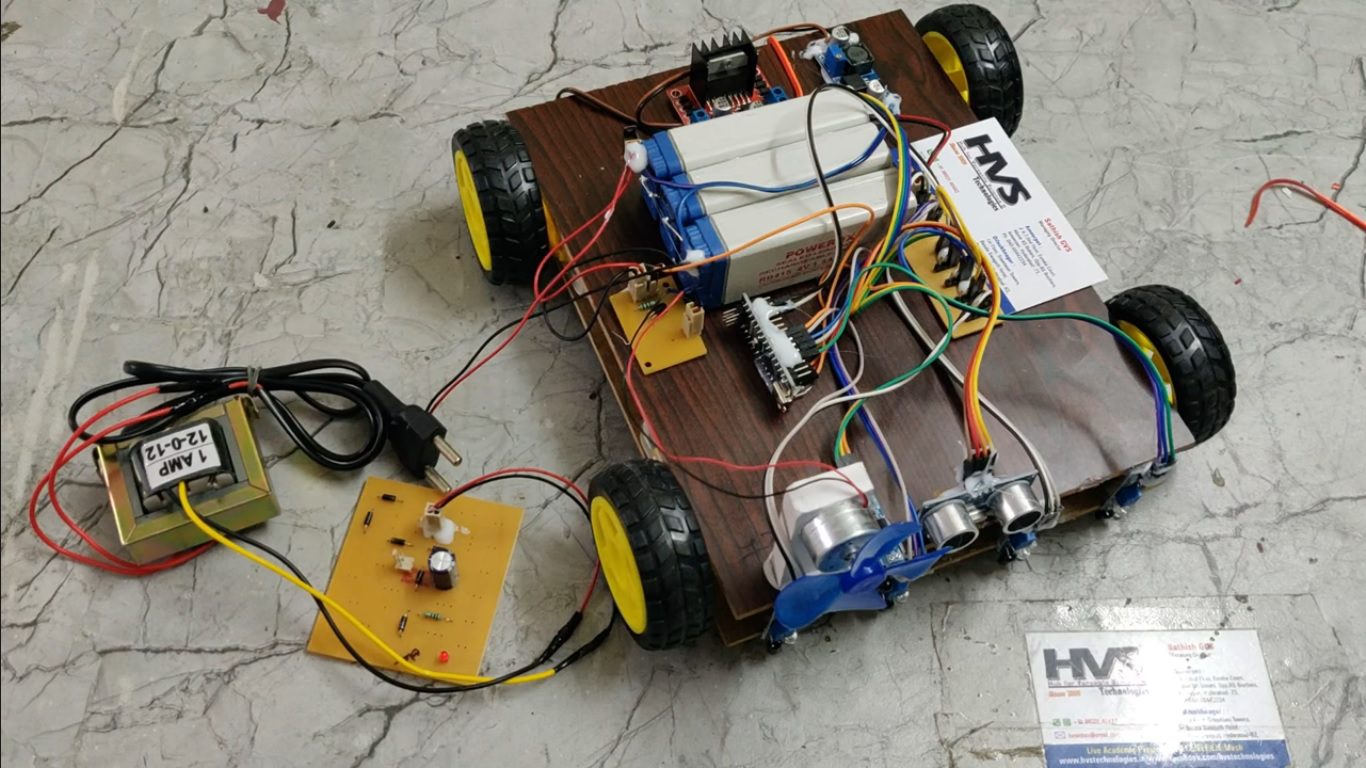
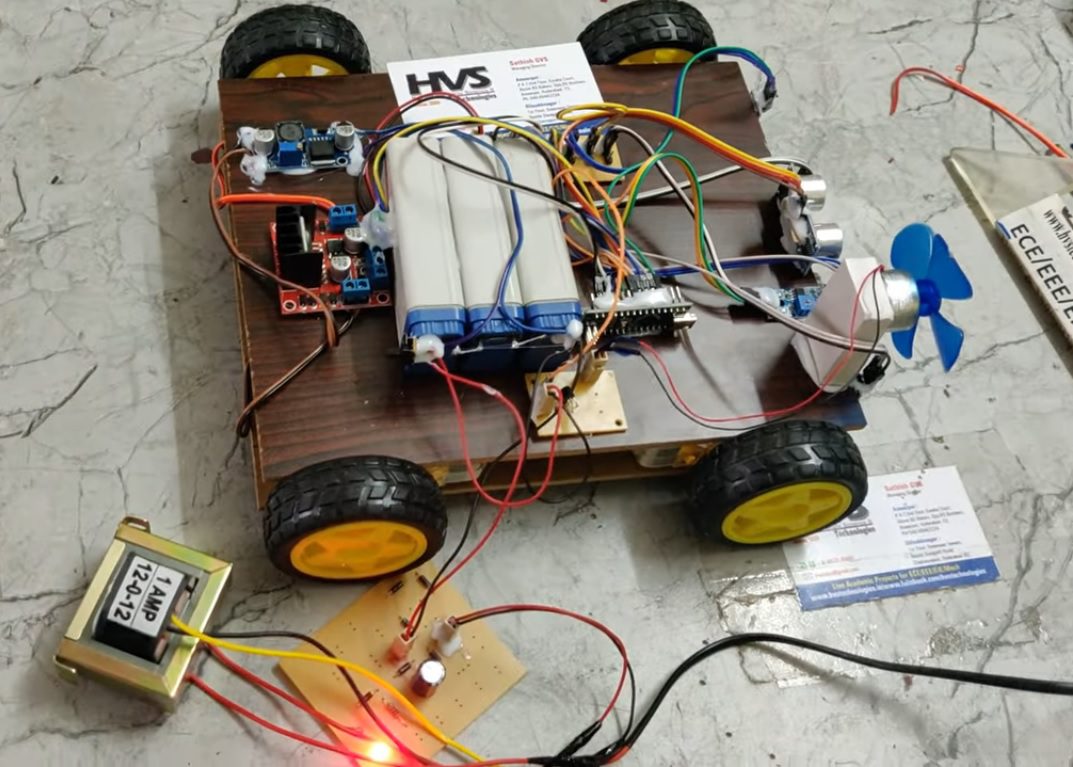
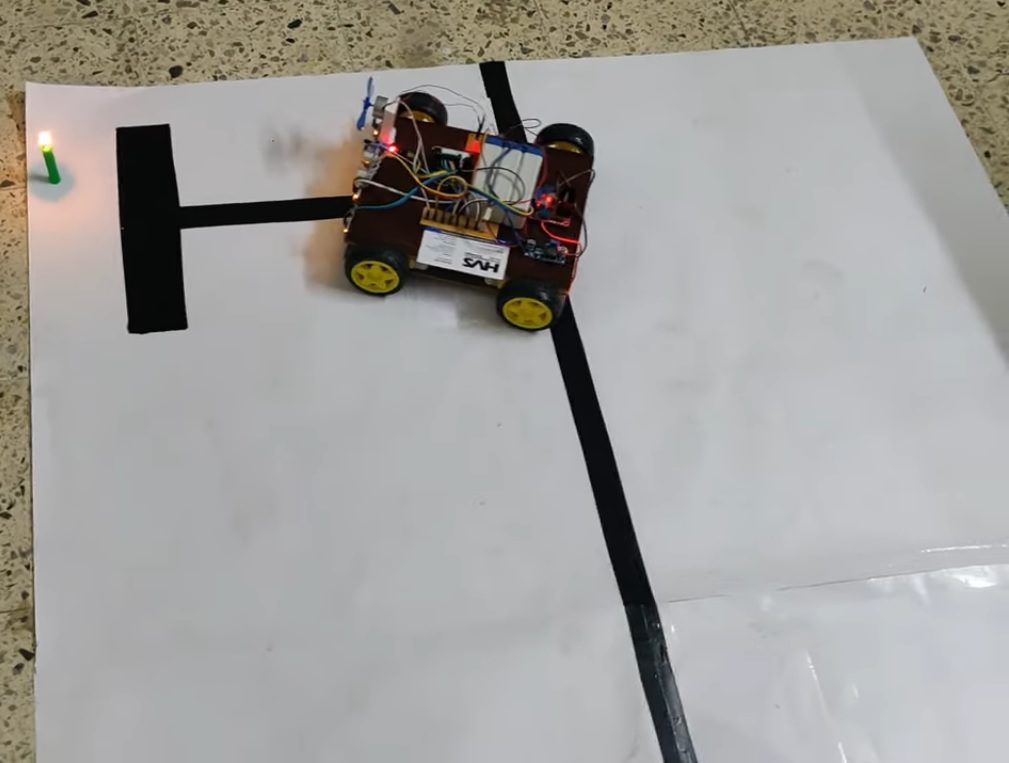
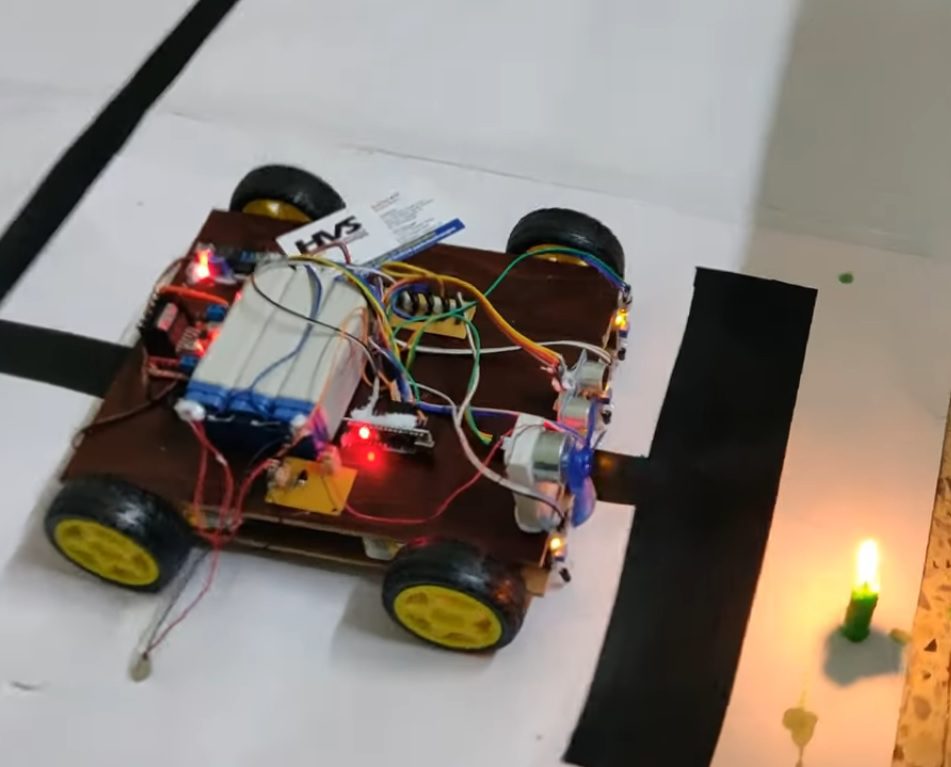
Fire accidents pose a significant threat to life and property, necessitating the development of intelligent and autonomous firefighting systems. This project presents an Advanced Fire Fighting Robot with Line Following capabilities, designed to navigate predefined paths and combat fire hazards effectively. The robot is equipped with flame sensors to detect fire, a DC fan mechanism for extinguishing flames.
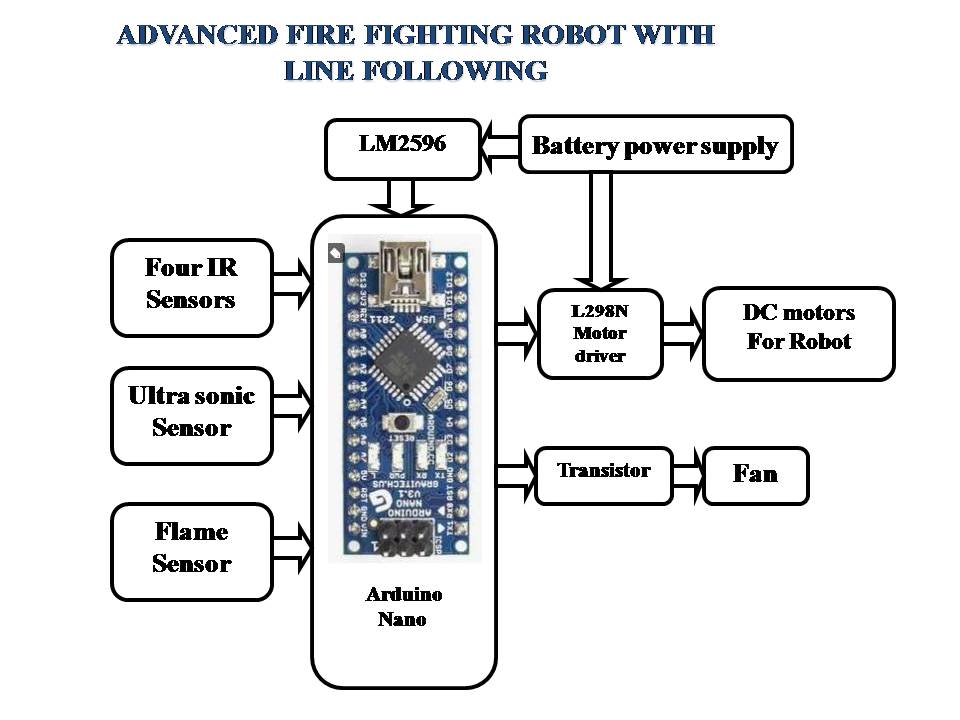
For autonomous navigation, the robot utilizes line-following technology, enabling it to follow a designated path using 4-IR sensors. This robot consist of Ultrasonic sensor is uses to detect the obstacle while moving. The main controlling device of the project is Arduino Nano microcontroller. To achieve this task microcontroller loaded program written in Embedded C language.
In emergency situations, the robot can autonomously detect fire, navigate towards the source, and deploy fire suppression mechanisms. Its compact design, real-time sensing capabilities, and autonomous decision-making make it a valuable asset for fire safety in industrial, commercial, and residential environments. This project aims to enhance firefighting efficiency while minimizing human risk in hazardous conditions.
Objectives:
 video:
- To design an autonomous fire-fighting robot using Arduino Nano.
- To detect fire using flame sensors.
- To follow a predefined path using IR line-following sensors.
- To avoid obstacles using an ultrasonic sensor.
- To extinguish fire automatically using a DC fan.
- To reduce human risk during fire emergencies.
- To improve firefighting efficiency and response time.
- To provide a low-cost and reliable fire safety solution.
- Battery power supply.
- LM2596.
- ARDUINO Nano Micro controller.
- Fire sensor.
- DC motor along with L298N driver.
- DC fan.
- 4-IR sensors.
- Ultrasonic sensor.
- Embedded C program.
- ARDUINO IDE studio.
 video: