No products in the cart.


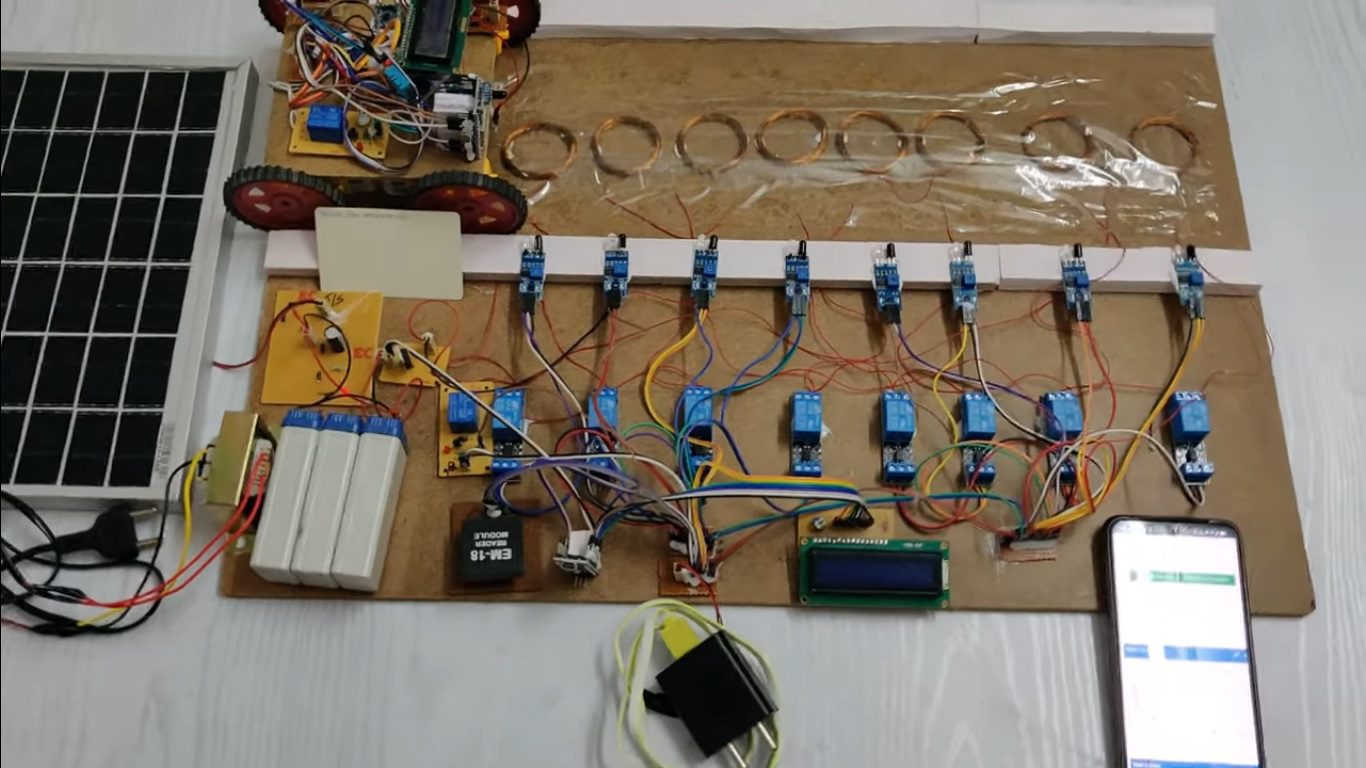
The growing adoption of electric vehicles (EVs) necessitates an efficient and sustainable charging infrastructure. This project presents a solar-based wireless power transfer system for on-road EV charging, integrating IoT for monitoring and control. The system comprises two main sections: transmission and receiving units.
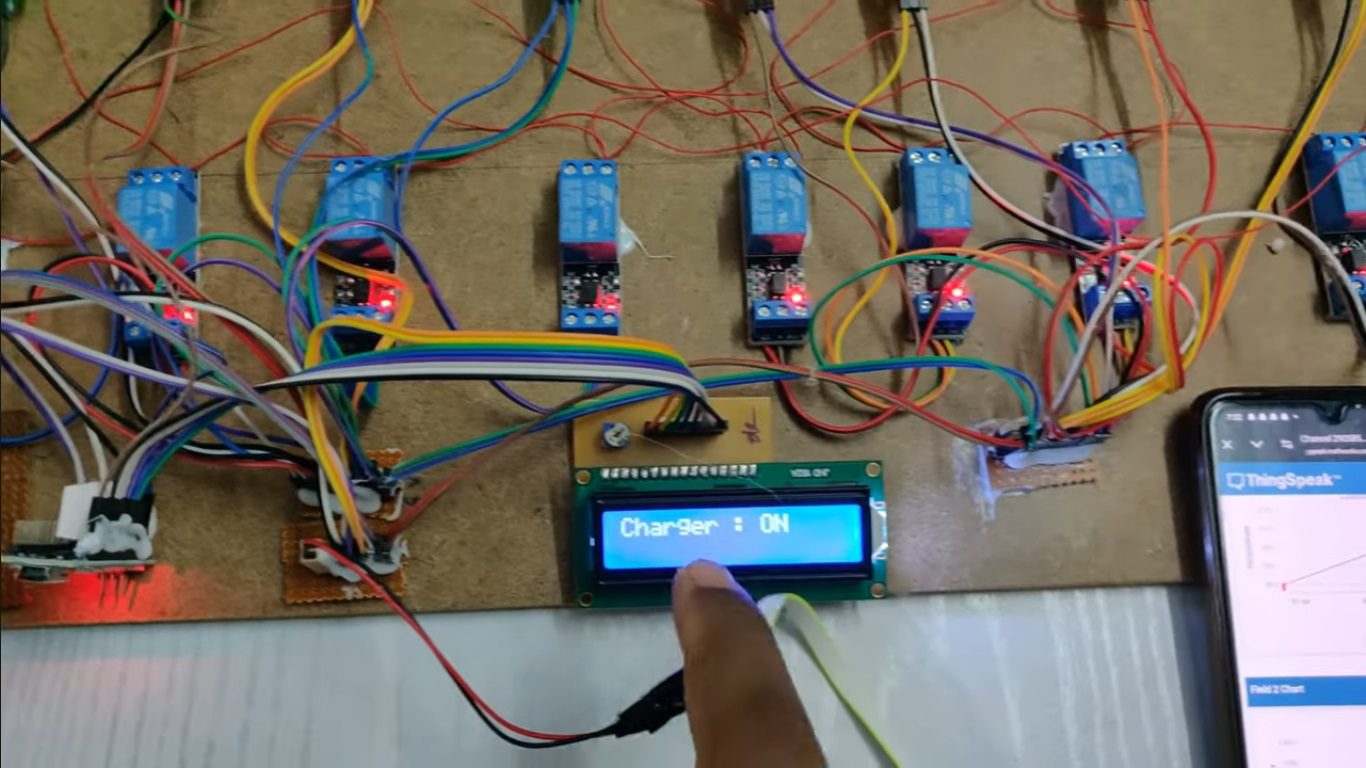
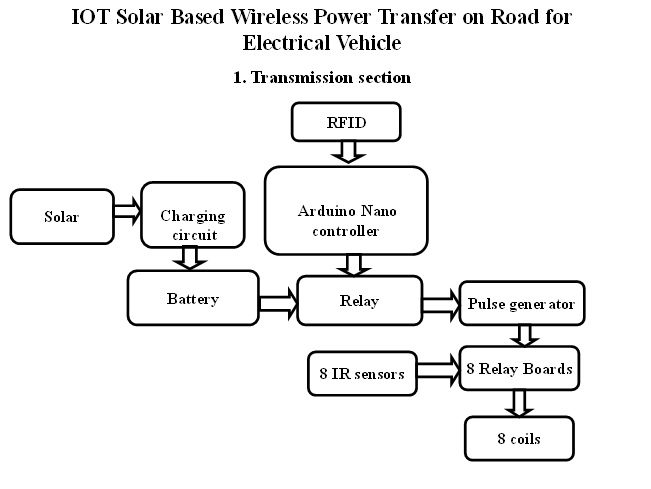
The transmission section is powered by solar energy, stored in a battery, and managed by a Arduino Nano microcontroller. An RFID system ensures authorized vehicle access. The power is wirelessly transmitted through eight relay-controlled coils, activated by infrared (IR) sensors and a pulse generator.
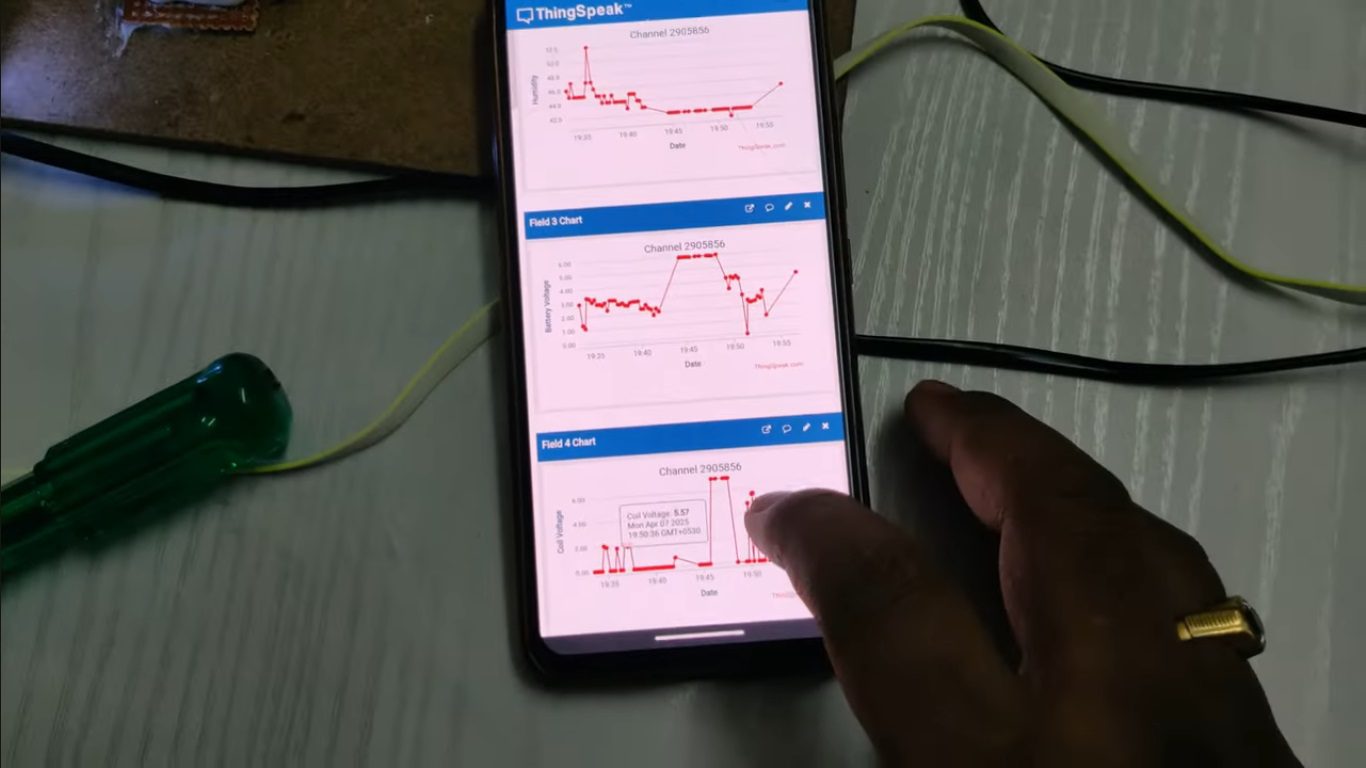
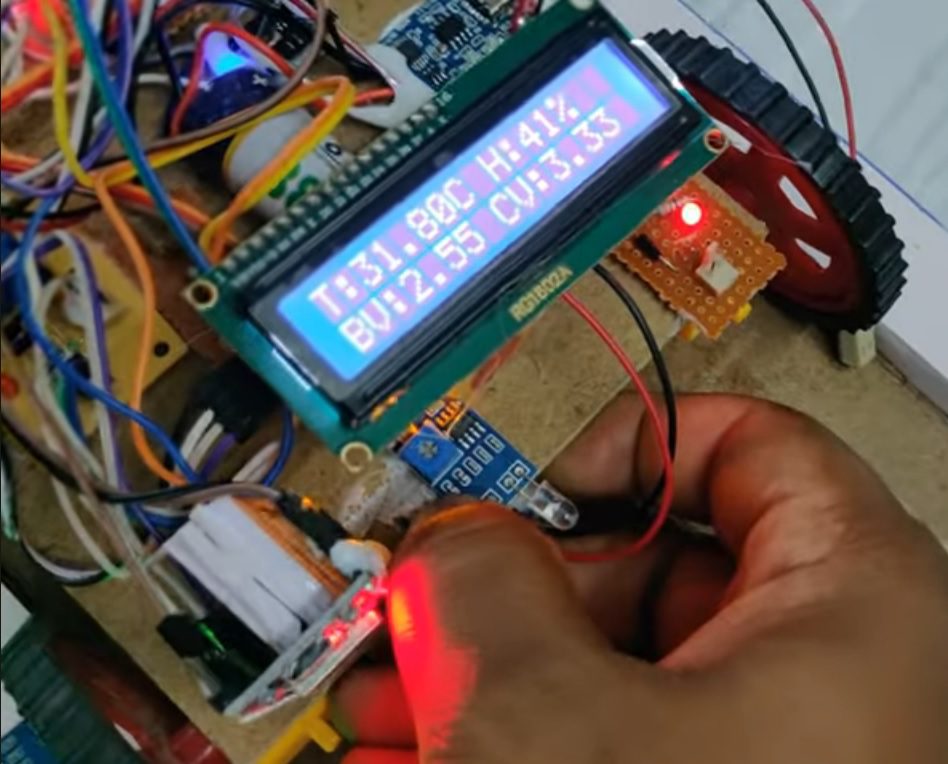
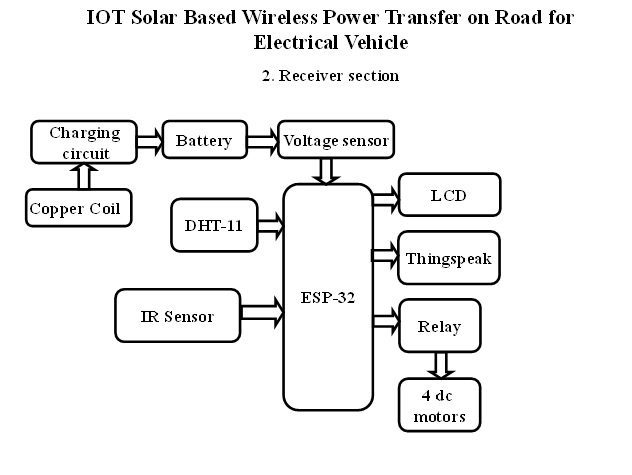
The receiving section is embedded in the EV and includes a copper coil connected to a charging circuit that transfers energy to the vehicle’s battery. An ESP-32 microcontroller monitors voltage levels via a voltage sensor, while an IR sensor detects the presence of charging zones. The DHT-11 sensor measures environmental conditions. A relay circuit manages power to four DC motors, and data is uploaded to ThingSpeak for remote monitoring.
This innovative IoT-enabled wireless charging system eliminates the need for frequent plug-in charging, offering a seamless and sustainable solution for electric vehicle users. The status of the project will display on LCD. To achieve this task Arduino Nano microcontroller loaded program written in embedded C language.
Features:
 video:
- Solar-Powered Charging: Uses solar energy for sustainable power generation.
- Wireless Power Transfer: Eliminates the need for physical charging cables.
- RFID Authentication: Ensures only authorized vehicles receive power.
- IR Sensor-Based Activation: Detects vehicle presence to activate charging coils.
- IoT-Based Monitoring: Uses ESP-32 and ThingSpeak for real-time data tracking.
- Arduino Microcontroller Control: Manages power distribution and relay operation.
- Pulse Generator & Relays: Controls power transfer to charging coils.
- DHT-11 Sensor: Monitors environmental conditions during charging.
- Voltage Sensor Feedback: Ensures safe and efficient charging.
- DC Motor Control: Enables powered vehicle movement during charging.
- Solar Panel: 12V–24V output for renewable energy.
- Arduino Microcontroller: 5V operation, multiple I/O pins.
- ESP-32: 3.3V, built-in Wi-Fi & Bluetooth for IoT.
- RFID Module: 13.56 MHz frequency for authentication.
- IR Sensors: 3.3V–5V, detects vehicle presence.
- DHT-11 Sensor: 0°C–50°C, 20%–90% RH humidity range.
- Voltage Sensor: 0V–25V range for battery monitoring.
- Relay Modules: 5V/12V for power control.
- Pulse Generator: Activates charging coils.
- Copper Coils: Enables inductive power transfer.
- ThingSpeak IoT: Real-time data logging & monitoring.
- DC Motors (4x): 6V–12V, powers vehicle movement.
 video: