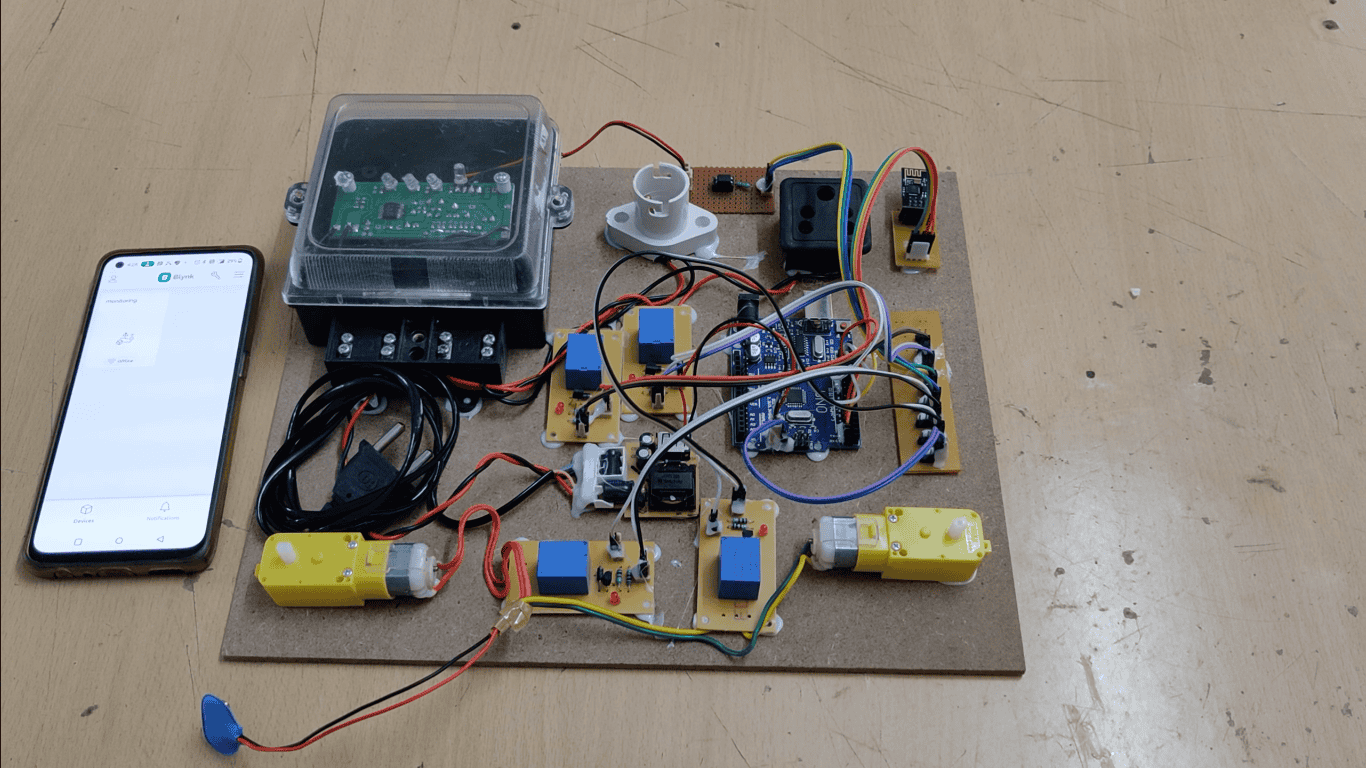
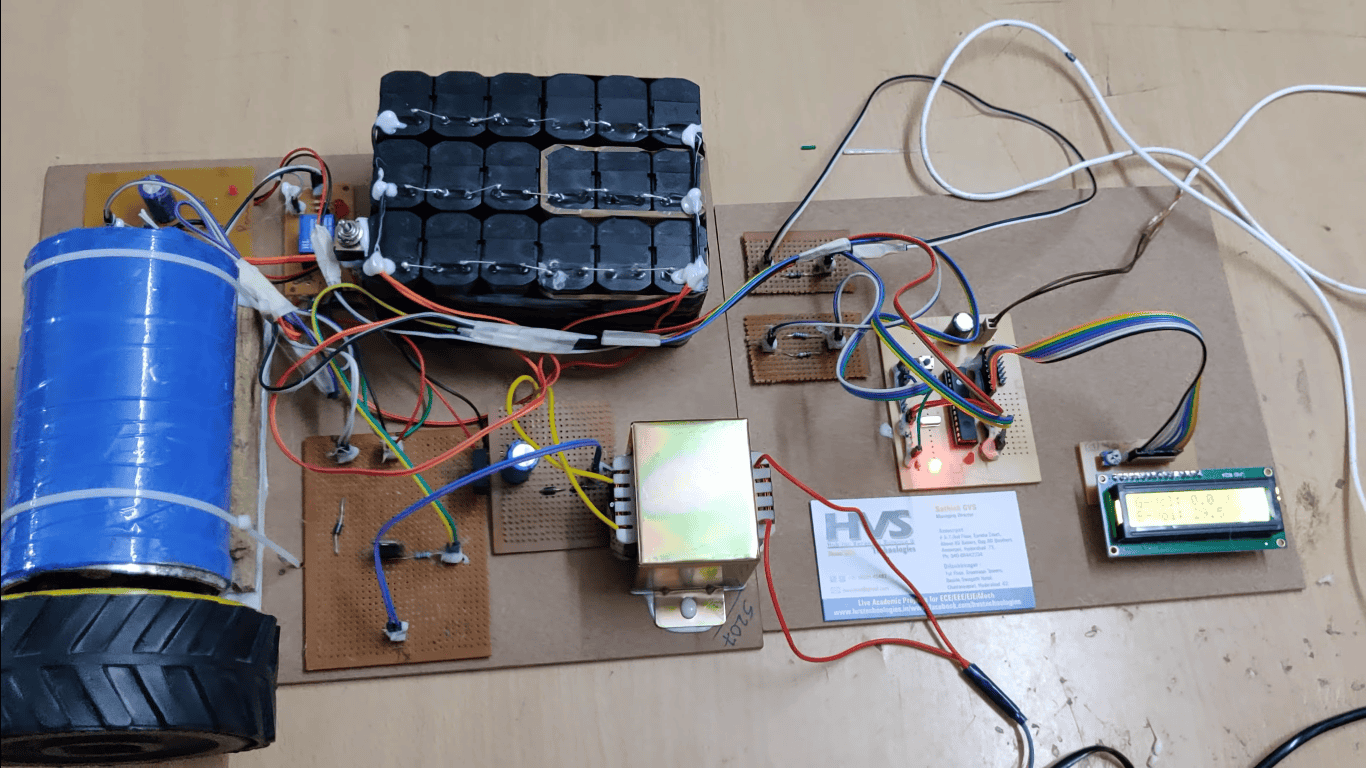
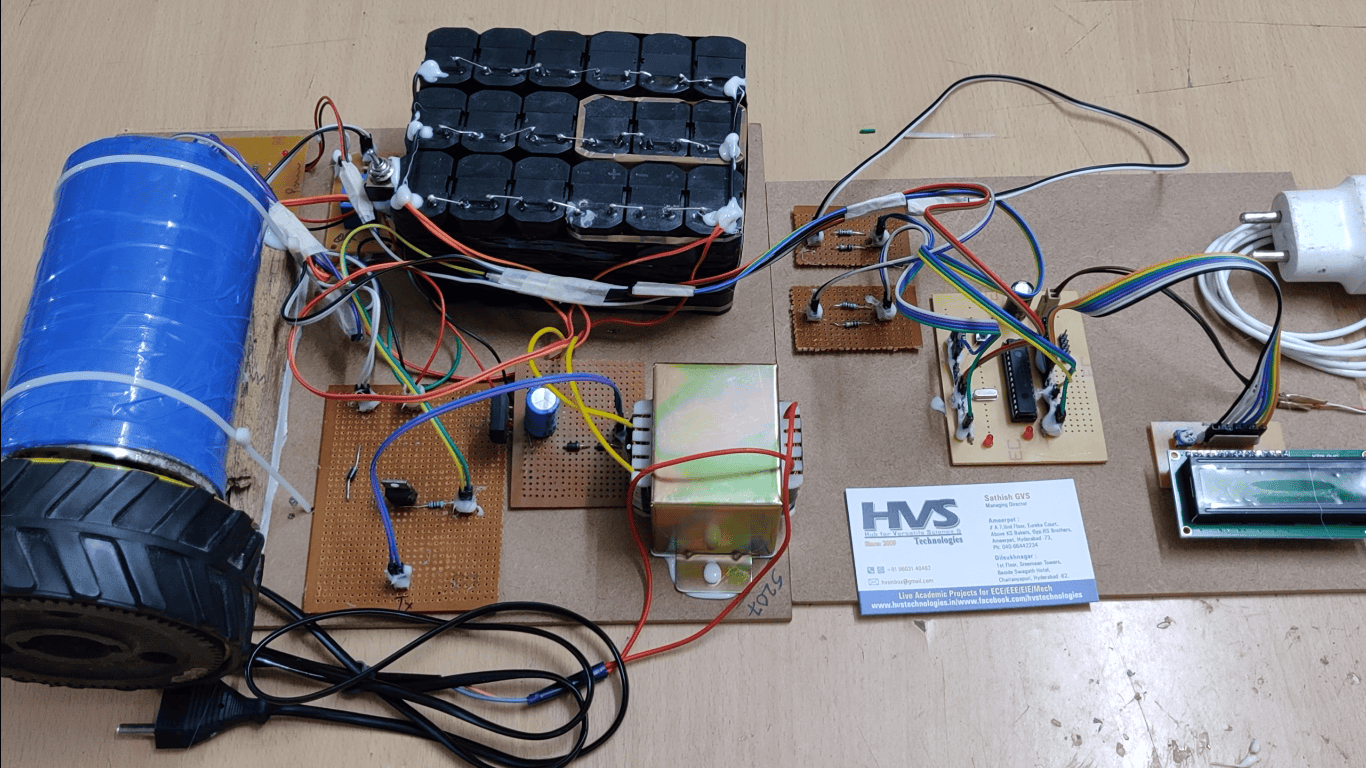
Wireless Power Transfer (WPT) technology enables the transmission of electrical energy without physical connectors, reducing wear, improving safety, and enhancing user convenience. This project presents the design and implementation of a wireless power transfer system for mobile phone charging using inductive coupling principles.
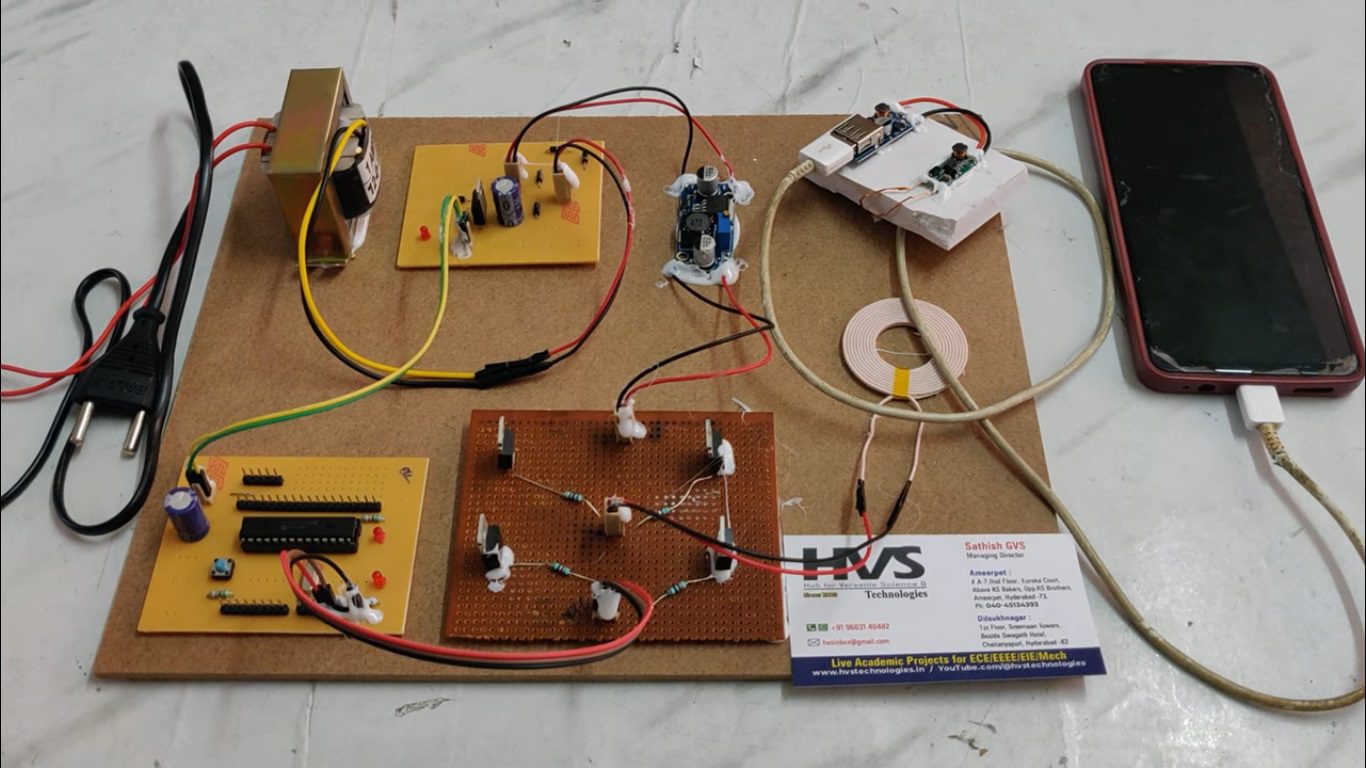
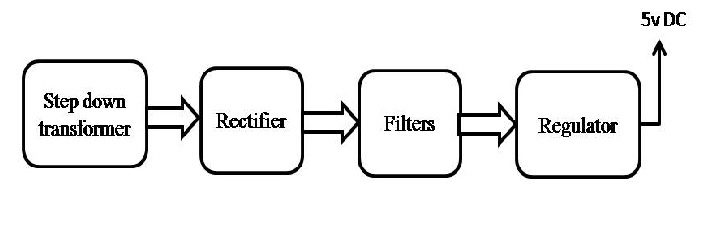
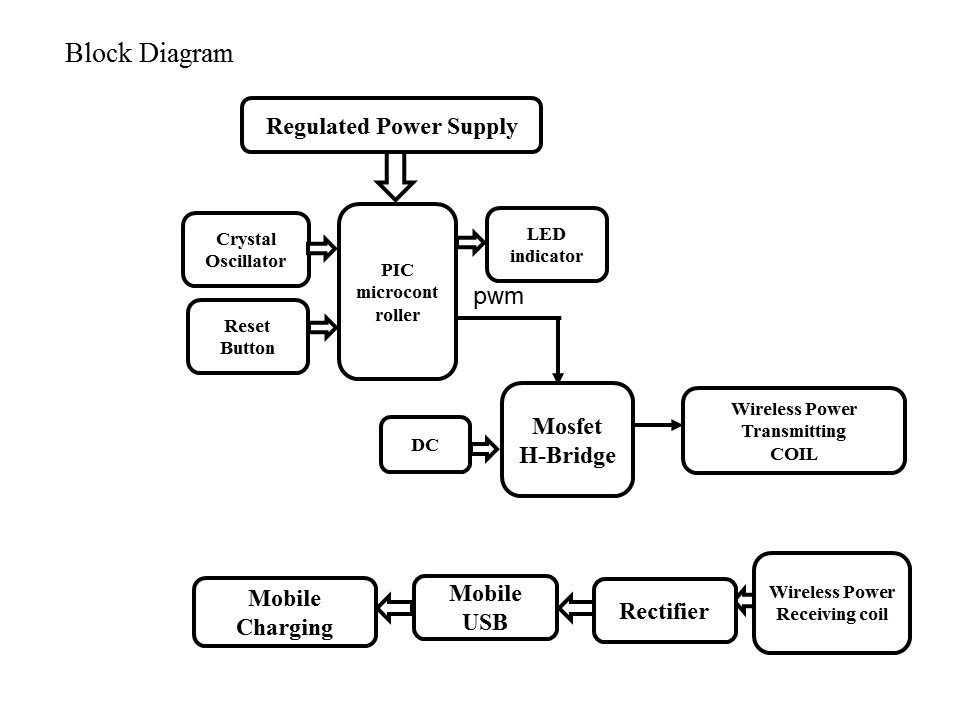
The proposed system consists of a PIC microcontroller–based transmitter unit and a receiver unit. A regulated power supply provides stable voltage to the PIC microcontroller, which generates a high-frequency PWM signal. This signal drives a MOSFET H-bridge circuit, converting DC input into high-frequency AC power. The AC signal energizes the wireless transmitting coil, creating an alternating magnetic field.
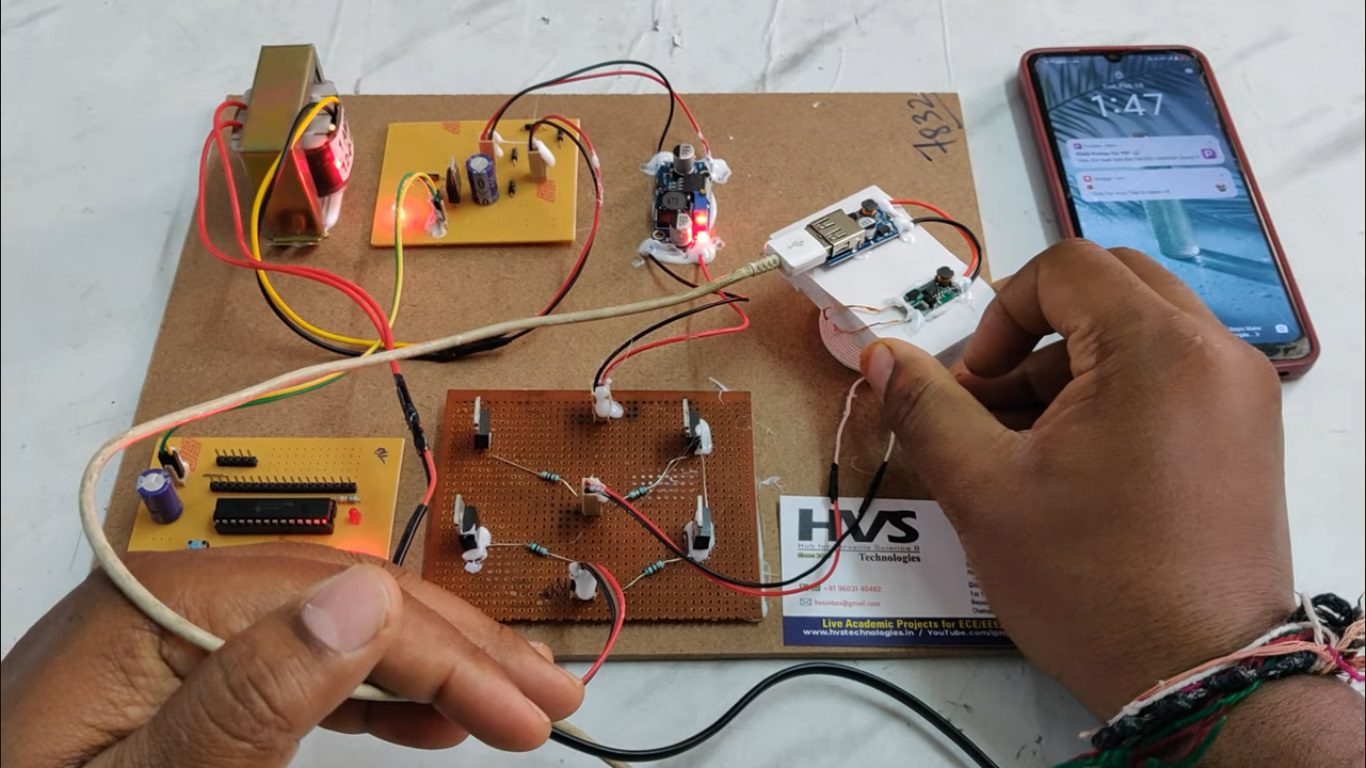
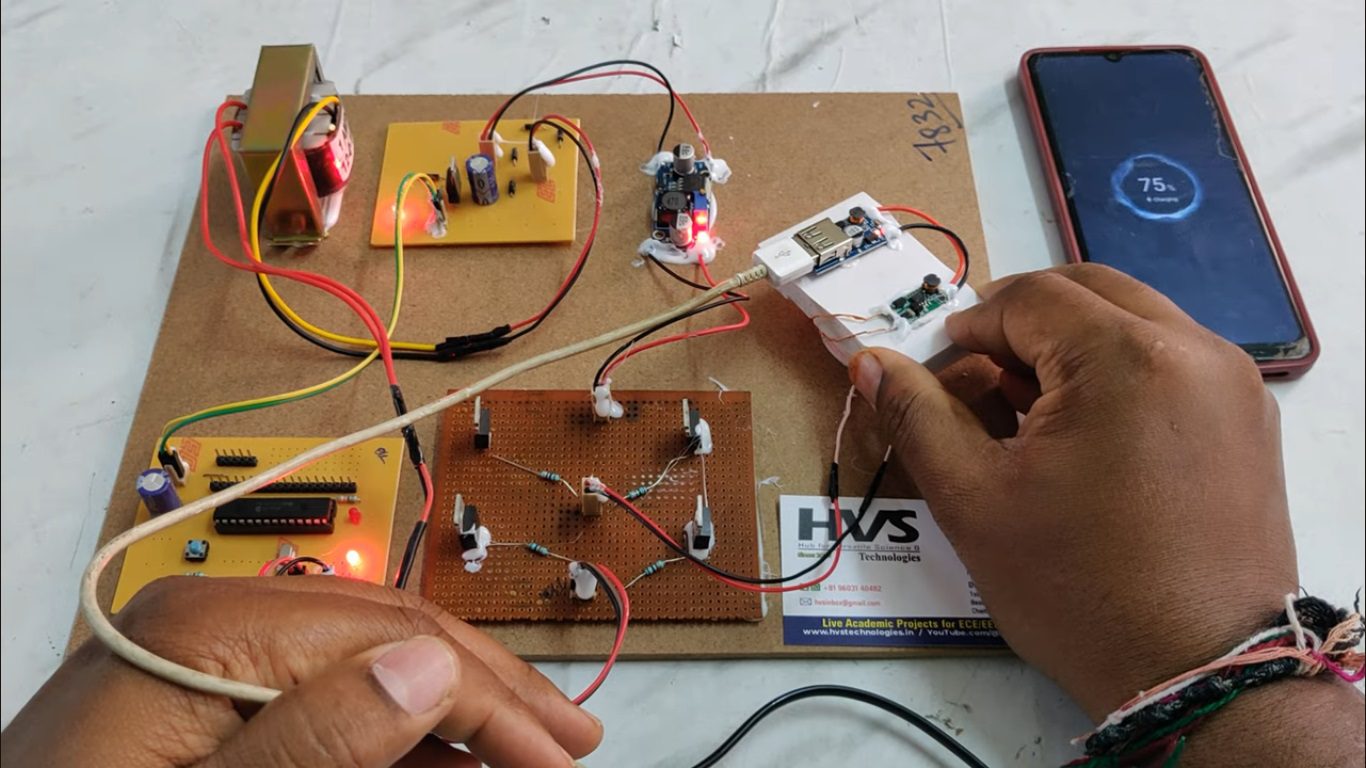
At the receiver side, a wireless receiving coil captures the magnetic field and induces an AC voltage. This voltage is then converted into DC using a rectifier circuit, regulated, and supplied through a USB interface for mobile phone charging. An LED indicator is used to display system operation status.
The developed system demonstrates efficient short-range wireless power transfer suitable for low-power devices such as mobile phones. This technology eliminates the need for conventional charging cables and has potential applications in consumer electronics, medical devices, and industrial automation.
Objectives:
To design and develop a wireless power transfer system for charging mobile devices without physical connectors.
To implement inductive coupling for efficient short-range power transmission.
To generate high-frequency AC power using a PIC microcontroller and PWM technique.
To drive the transmitting coil using a MOSFET H-bridge circuit for efficient power conversion.
To receive wireless power through a receiver coil and rectifier circuit and convert it into usable DC power.
To provide a USB output suitable for mobile phone charging.
To improve user safety and convenience by eliminating exposed wires and connectors.
To demonstrate a low-cost and reliable wireless charging prototype for practical applications.
Components:
Regulated power supply.
H-bridge Mosfet drivers. (IRFZ44N)
Two copper coils.
LED.
PIC microcontroller.
Crystal Oscillator.
Reset button.
LED indicator.
Rectifier.
Software’s used:
PIC-C compiler for Embedded C programming.
PIC kit 2 programmer for dumping code into Microcontroller.
 1 × ₹14,500.00
 video: