No products in the cart.


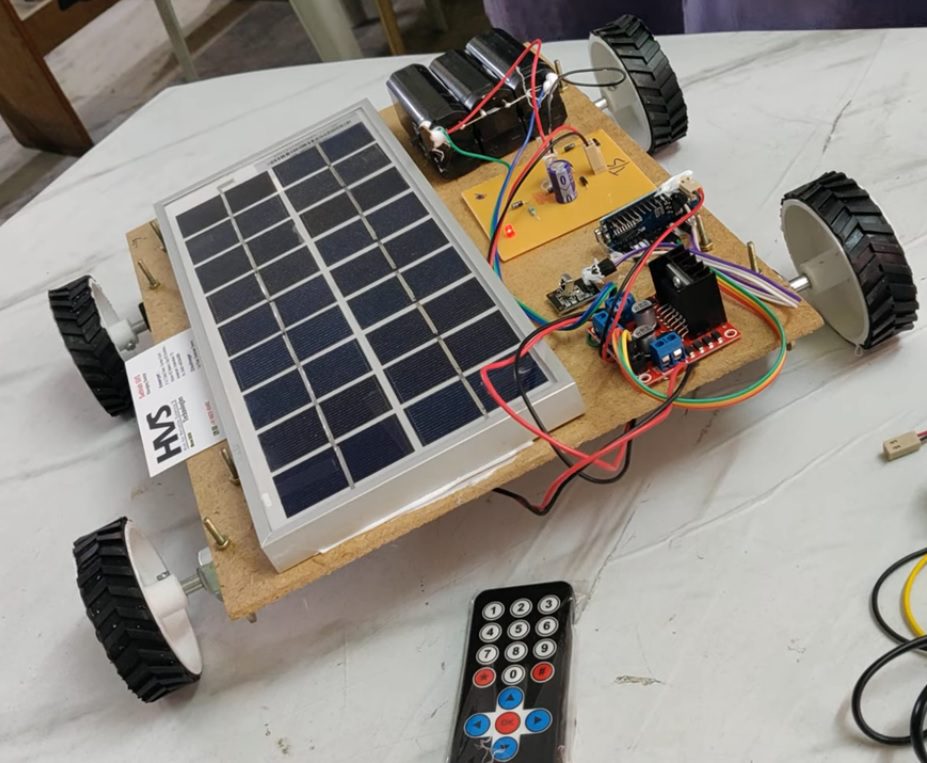
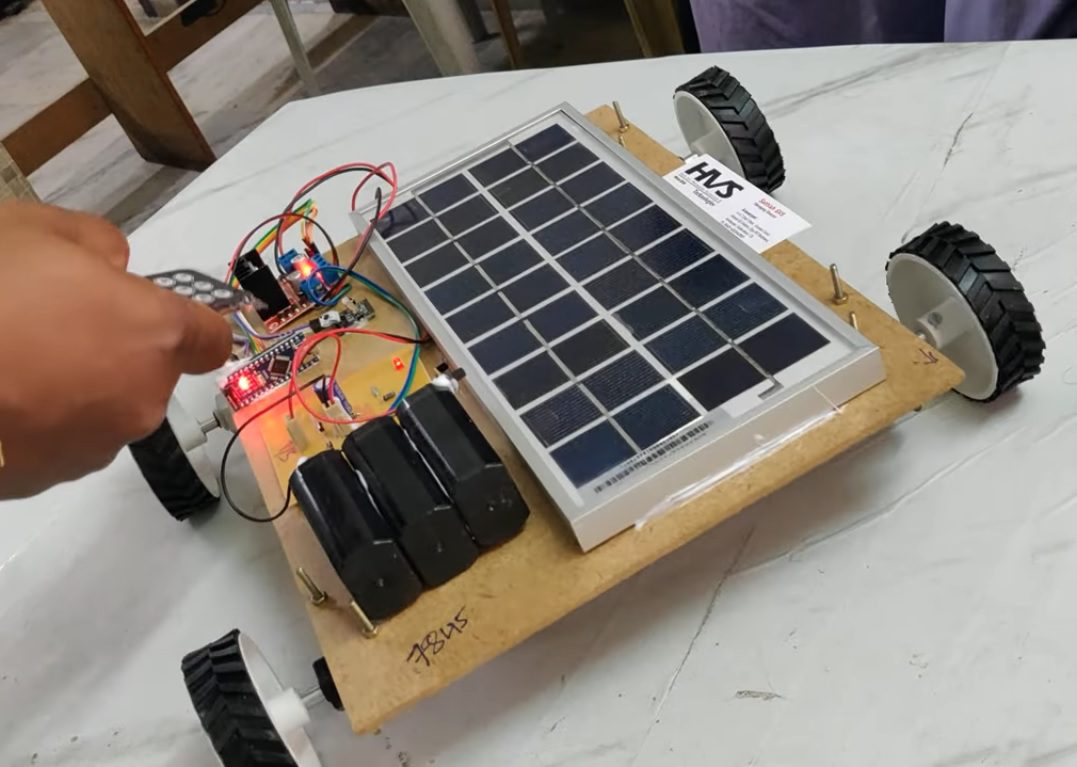
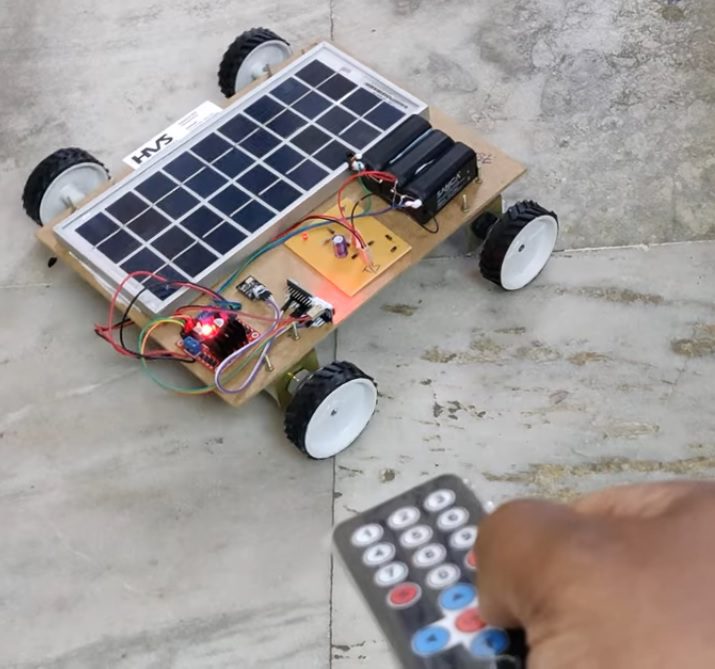
The growing demand for electric vehicles (EVs) and the need for sustainable energy solutions have encouraged the integration of renewable energy sources into transportation systems. This project presents the design and development of a Hybrid Solar Power EV Charging System with Remote Control, aimed at improving energy efficiency and reducing dependency on conventional power sources.
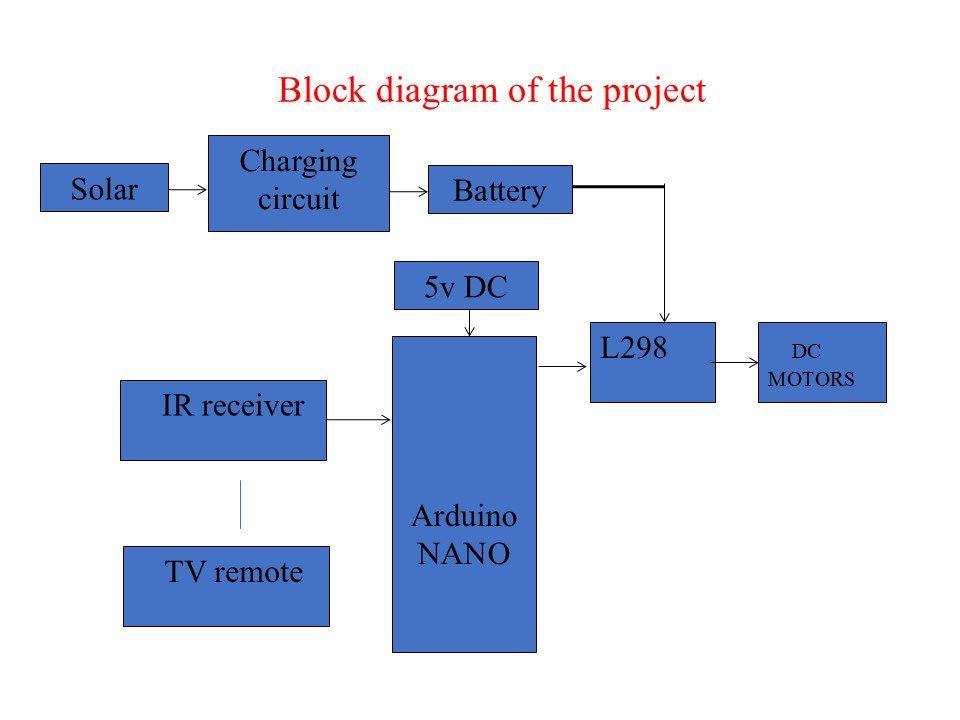
The proposed system utilizes a solar panel as a renewable energy source to charge an onboard battery, which supplies power to an electric vehicle’s drive system. An Arduino Nano acts as the central control unit, managing power distribution and motor control. Vehicle movement is controlled using a TV remote, with commands received through an IR receiver. Based on the received signals, the Arduino drives the L298 motor driver, which controls the DC motors for vehicle motion.
The hybrid approach allows the battery to be charged using solar energy, ensuring eco-friendly operation and extended vehicle runtime. Remote-controlled operation enhances user convenience and demonstrates intelligent control capabilities. This system is suitable for small-scale EV applications and serves as a prototype for future smart and sustainable electric transportation solutions.
The main objectives of the project are:
 video:
- To design and develop a hybrid solar-powered electric vehicle (EV) charging system for efficient energy utilization.
- To utilize solar energy as a renewable source to charge the onboard battery and reduce dependence on conventional power.
- To control the vehicle’s movement using an Arduino Nano–based control system.
- To implement remote-controlled operation using a TV remote and IR receiver for user-friendly control.
- To drive DC motors efficiently using an L298 motor driver module.
- To demonstrate an eco-friendly and cost-effective EV prototype suitable for small-scale applications.
- To improve energy efficiency and operational reliability of electric vehicles using hybrid charging techniques.
- Solar.
- Battery.
- Arduino NANO Microcontroller.
- Dc motors with L298N Driver.
- IR TV Remote.
- IR receiver.
- Arduino IDE for compiling and dumping code into controller
- Express SCH for Circuit design.
 video: