No products in the cart.


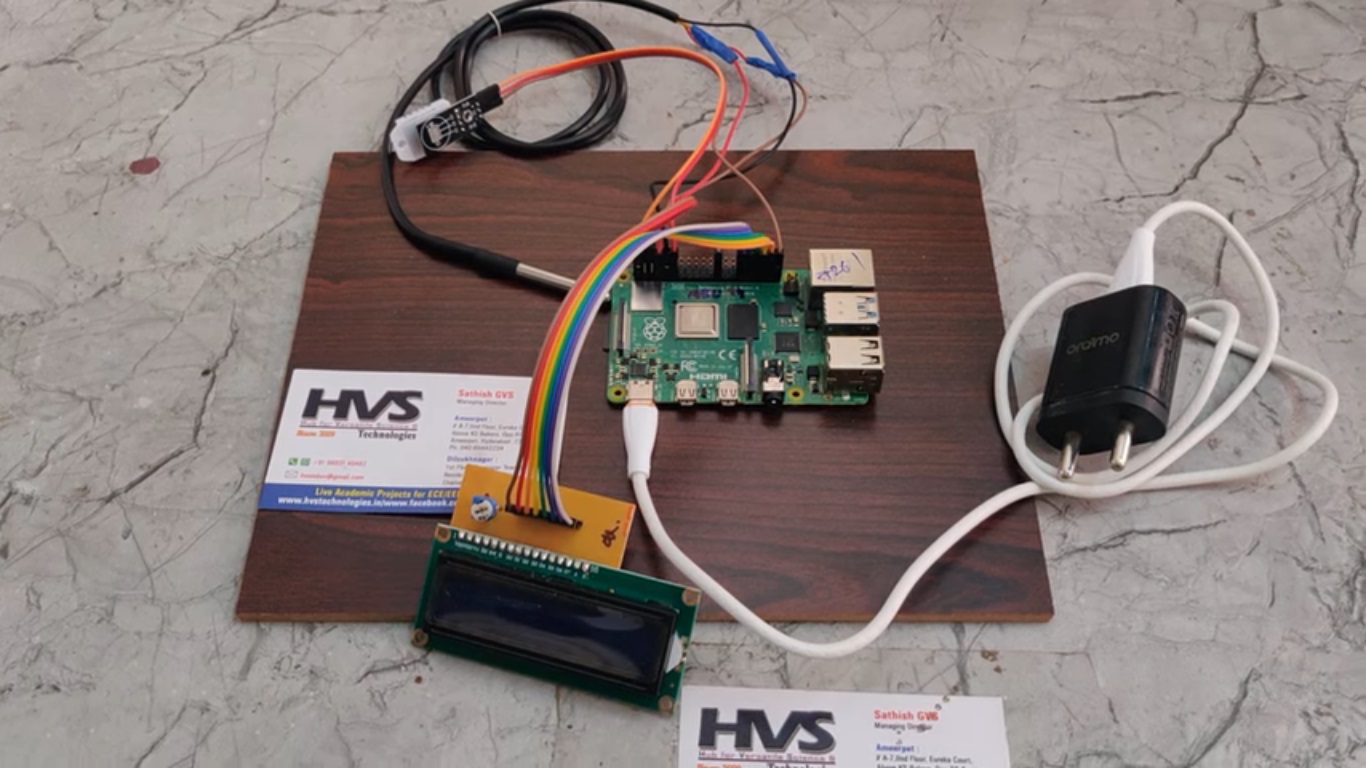
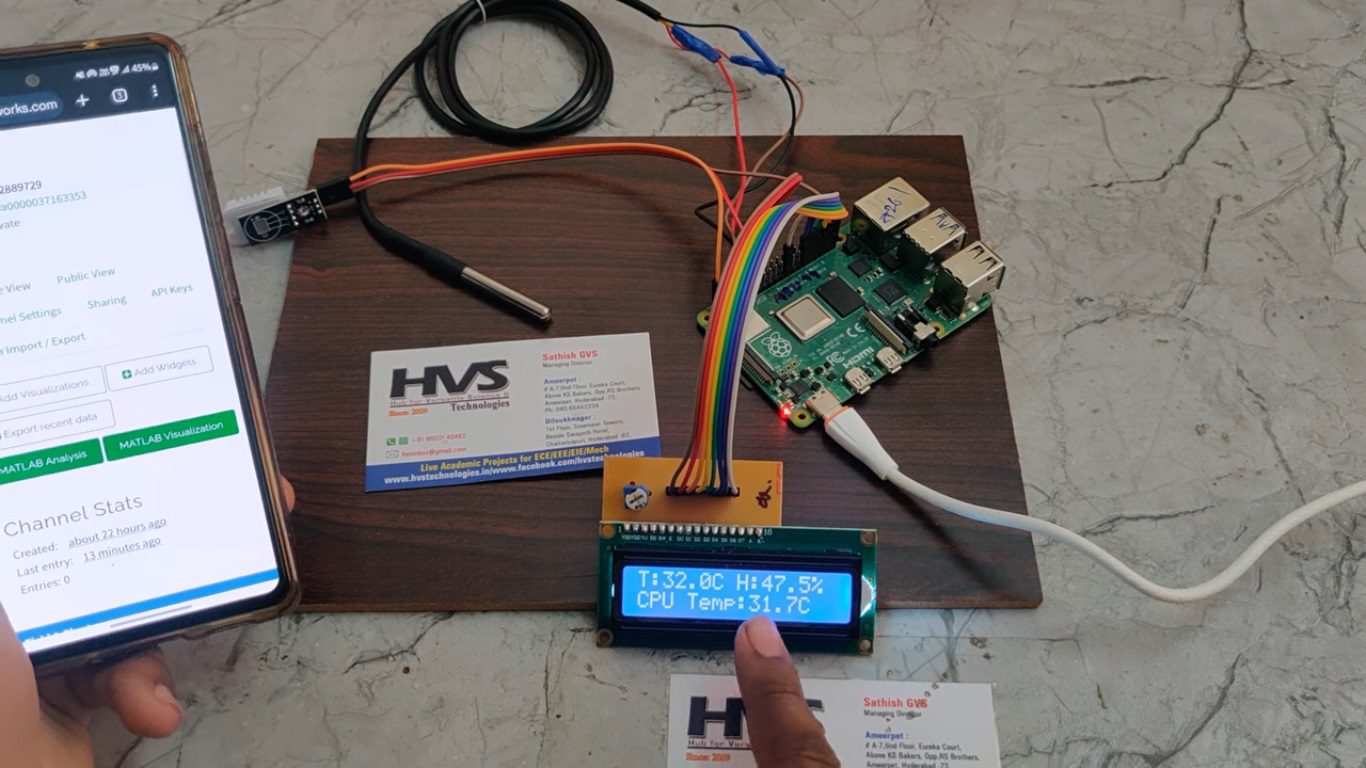
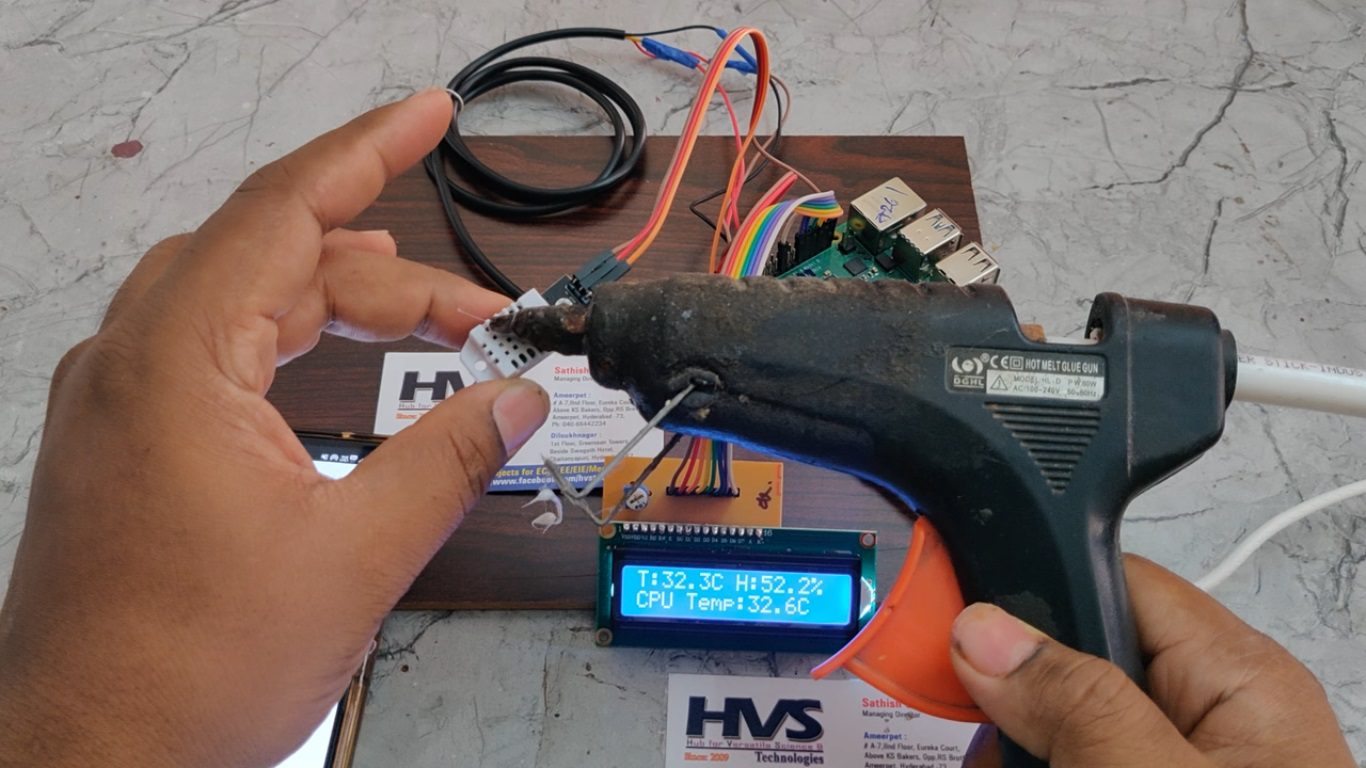
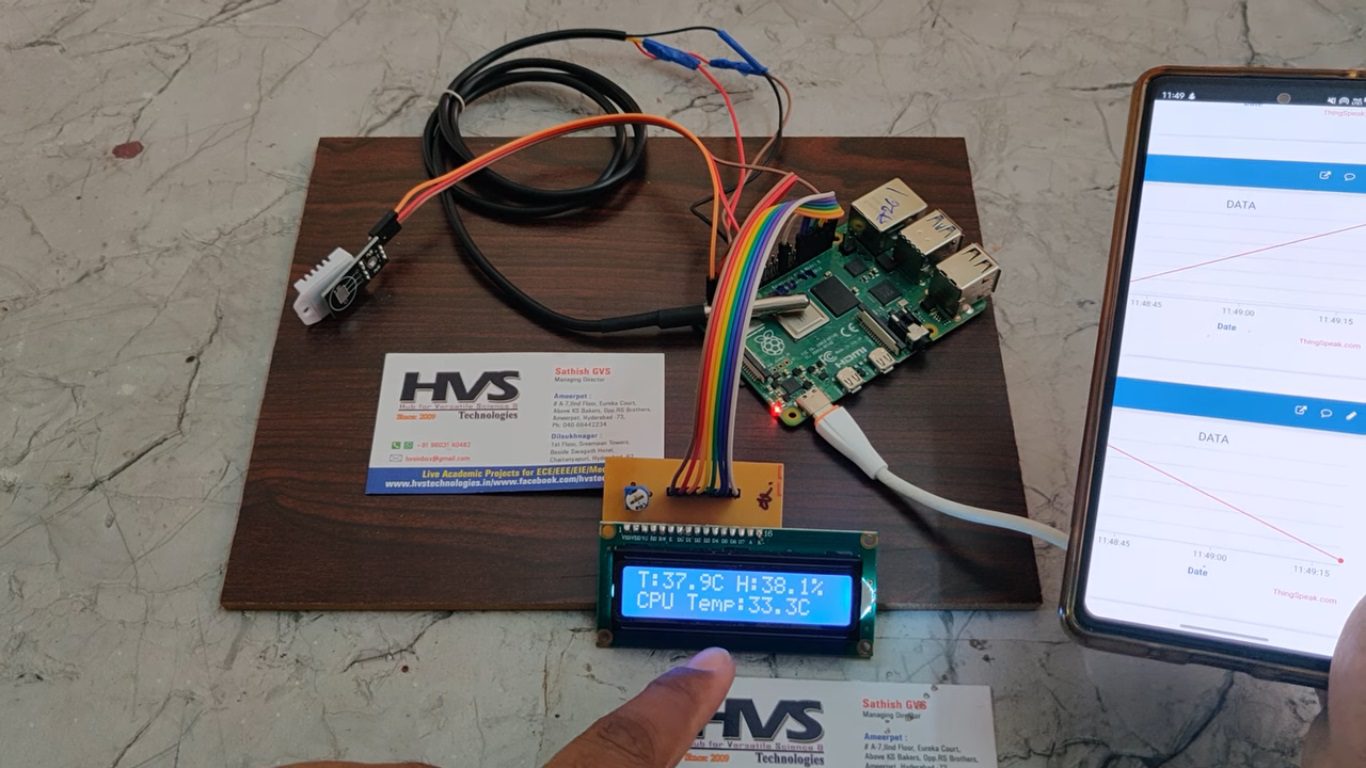
Efficient thermal management is crucial for maintaining the performance and longevity of embedded systems like the Raspberry Pi 4. This project implements a PID (Proportional-Integral-Derivative) control system to regulate the CPU temperature of the Raspberry Pi, ensuring optimal operation. The system uses a temperature sensor to monitor the CPU temperature and a DHT-11 sensor to measure ambient temperature and humidity. The collected data is displayed on an LCD screen for real-time monitoring and uploaded to ThingSpeak for remote tracking and analysis. A battery power supply ensures continuous operation, making the system suitable for portable and remote applications. By dynamically adjusting cooling mechanisms based on PID control, this system enhances the efficiency and reliability of the Raspberry Pi, preventing overheating and performance degradation.
The major features of this project are:
 video:
PID-Based Temperature Control – Implements a PID controller to regulate the Raspberry Pi 4's CPU temperature efficiently.
Real-time Temperature Monitoring – Uses a temperature sensor to continuously monitor CPU temperature.
Ambient Condition Measurement – Integrates a DHT-11 sensor to measure surrounding temperature and humidity.
LCD Display – Displays real-time temperature readings and system status.
IoT-Based Data Logging – Sends temperature data to ThingSpeak for remote monitoring and analysis.
Enhanced System Performance – Prevents overheating, ensuring stable and efficient Raspberry Pi operation.
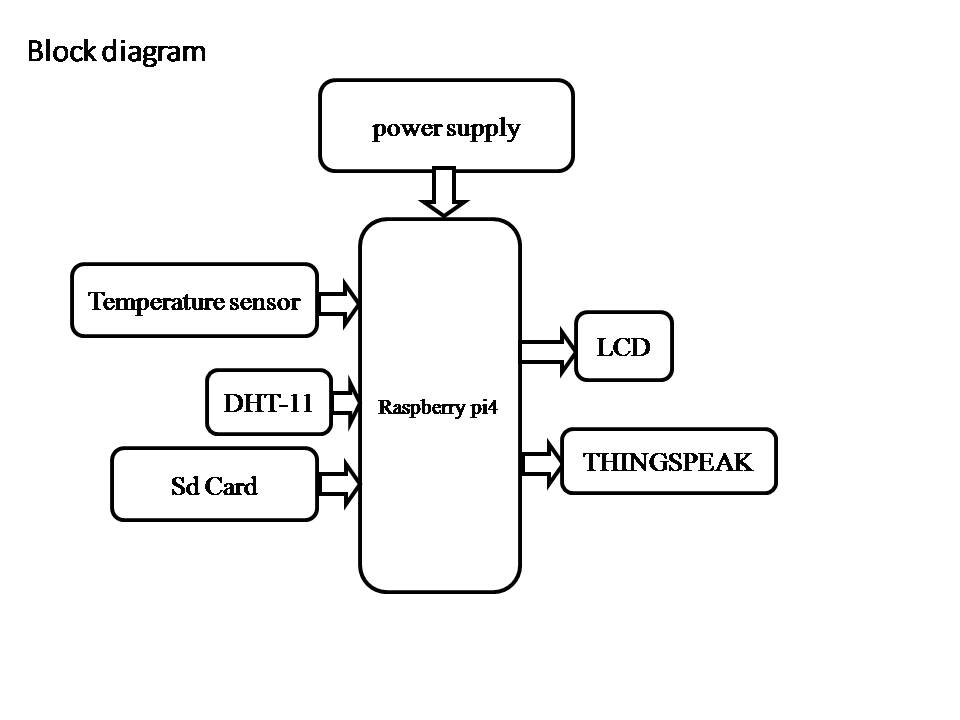
The major building blocks of this project are:- Battery power supply.
- Raspberry Pi4 Processor.
- DHT-11.
- LCD Display.
- Temperature sensor.
- Thingspeak.
- SD card.
- Python language.
- Linux OS.
- Express SCH for Circuit design.
 video: