No products in the cart.


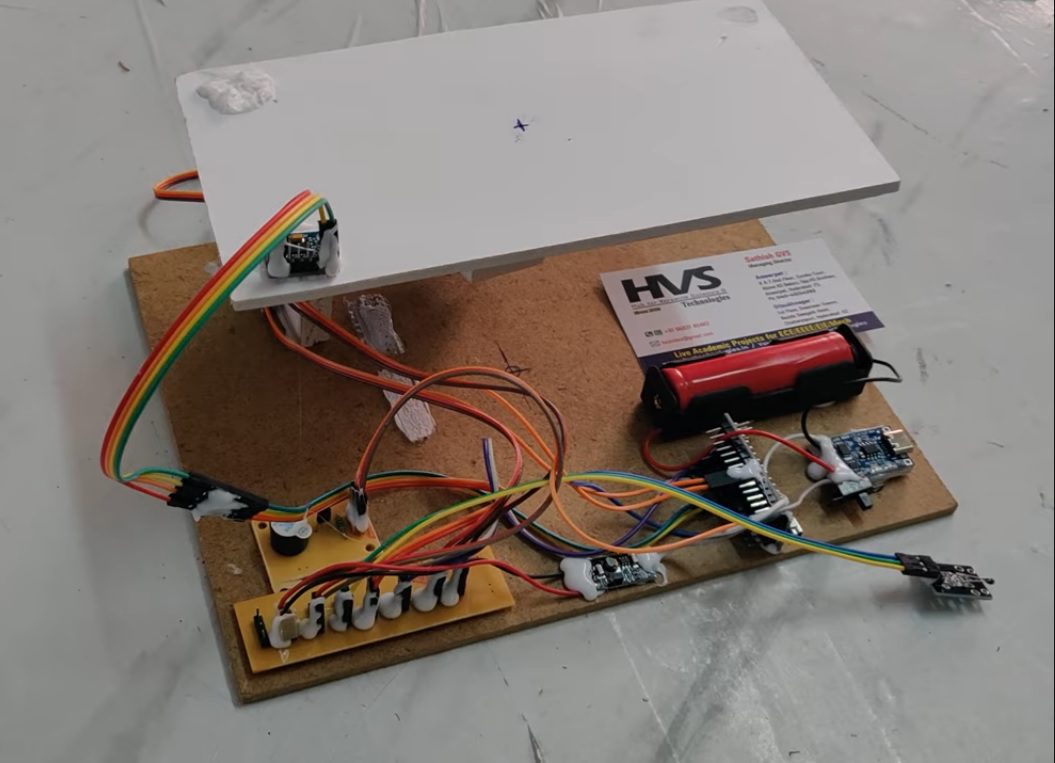
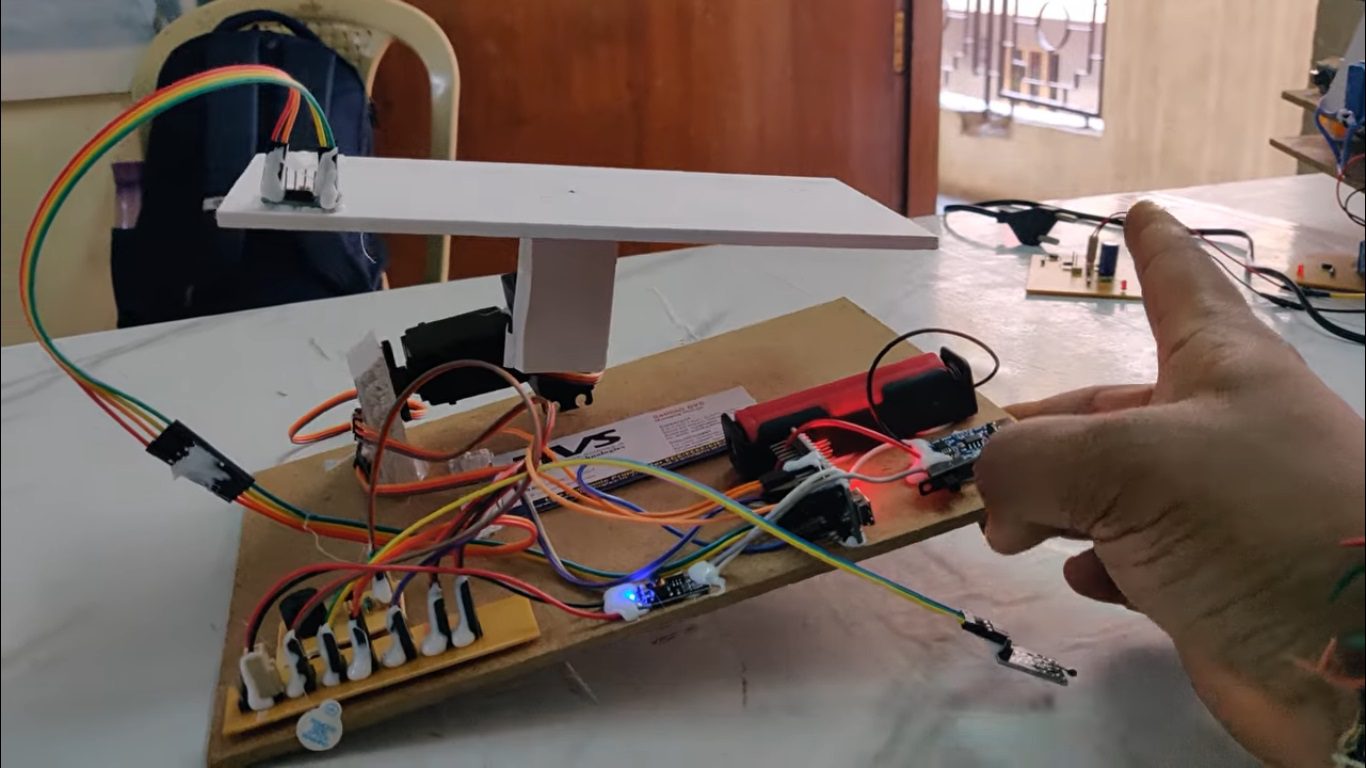
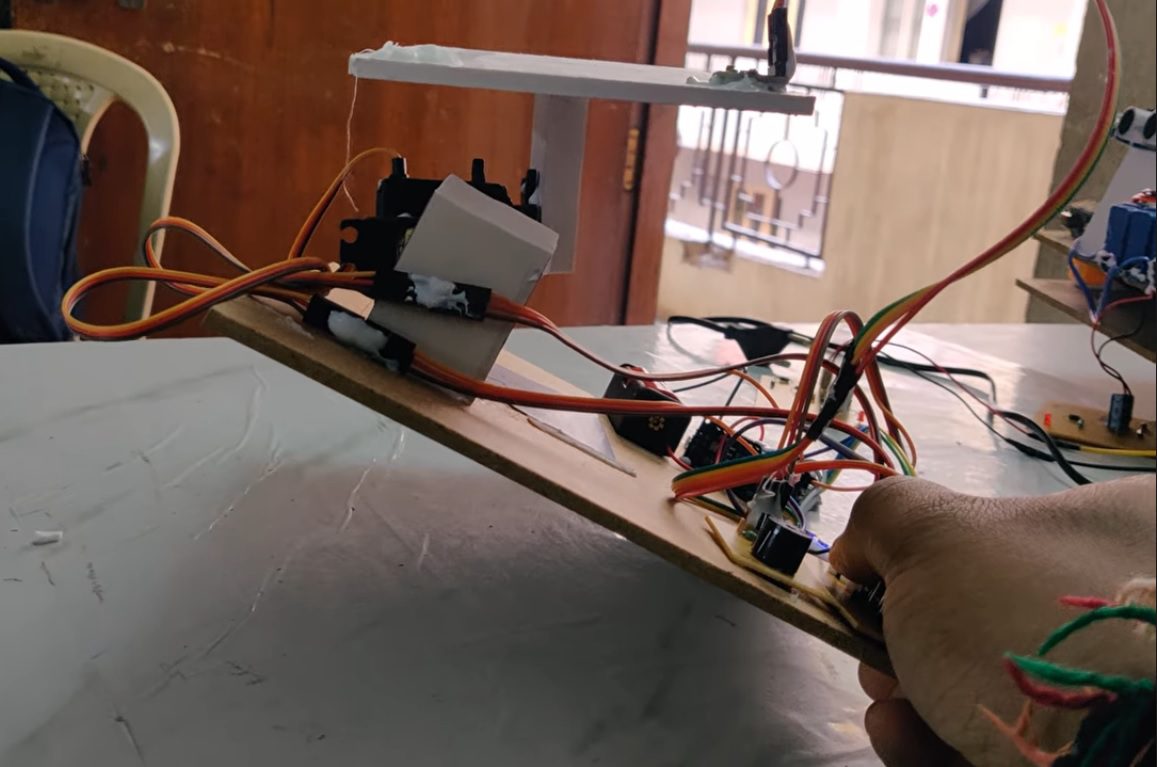
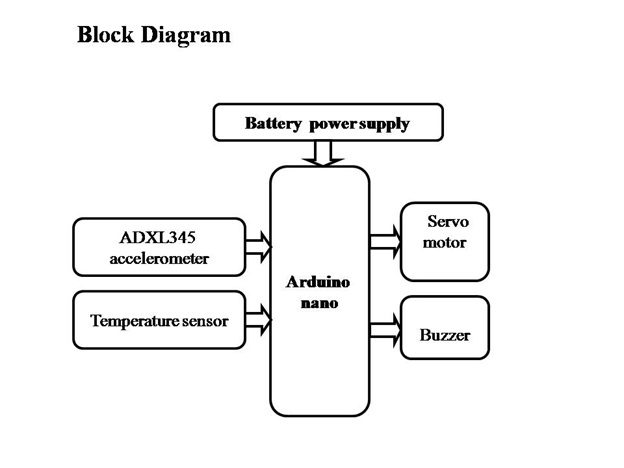
This project presents a prototype of a self-balancing stretcher designed to maintain a stable and level position during movement, thereby improving patient safety and comfort. The system is built around an Arduino Nano microcontroller and uses an ADXL345 accelerometer sensor to continuously monitor the tilt and orientation of the stretcher. Based on the sensor readings, two servo motors mounted at the base automatically adjust the structure to counteract disturbances and keep the stretcher balanced even when moved by a helper. The setup is powered by 3.7 V lithium-ion batteries, with a booster module providing a regulated 5 V supply, while a TP4056 Type-C charging module ensures safe and efficient battery charging. Additionally, a temperature sensor is integrated to monitor the patient’s body temperature, and a buzzer provides an audible alert whenever the temperature exceeds a predefined threshold, switching off automatically when normal conditions are restored. This project demonstrates a compact, low-cost, and efficient embedded solution for developing intelligent and responsive medical transport systems.
Objectives of Self-Balancing Stretcher System: To design a self-balancing stretcher that maintains a stable and level position during movement.
To improve patient safety and comfort by minimizing tilting and sudden movements while transporting patients.
To monitor the stretcher's orientation using the ADXL345 accelerometer sensor.
To automatically correct tilt angles using servo motors controlled by an Arduino Nano.
To develop a compact and low-cost embedded healthcare solution for patient transportation.
To monitor the patient's body temperature continuously using a temperature sensor.
To provide an audible warning through a buzzer when the patient's temperature exceeds the preset limit.
To ensure reliable portable operation using rechargeable lithium-ion batteries with a charging and voltage-boosting system.
To enhance emergency and hospital transport systems through intelligent automation.
To demonstrate the application of sensors, microcontrollers, and actuators in modern medical assistance devices.
The main objectives of the project:- ARDUINO NANO Microcontroller.
- Battery power supply.
- ADXL345 accelerometer.
- Buzzer.
- Servo motor.
- Temperature sensor.
- Arduino ide studio compiler for dumping code into Microcontroller.
- Embedded C language.
 video: