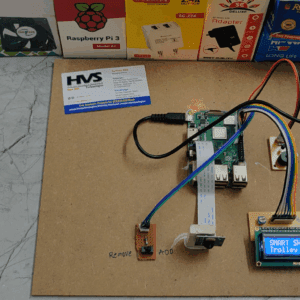
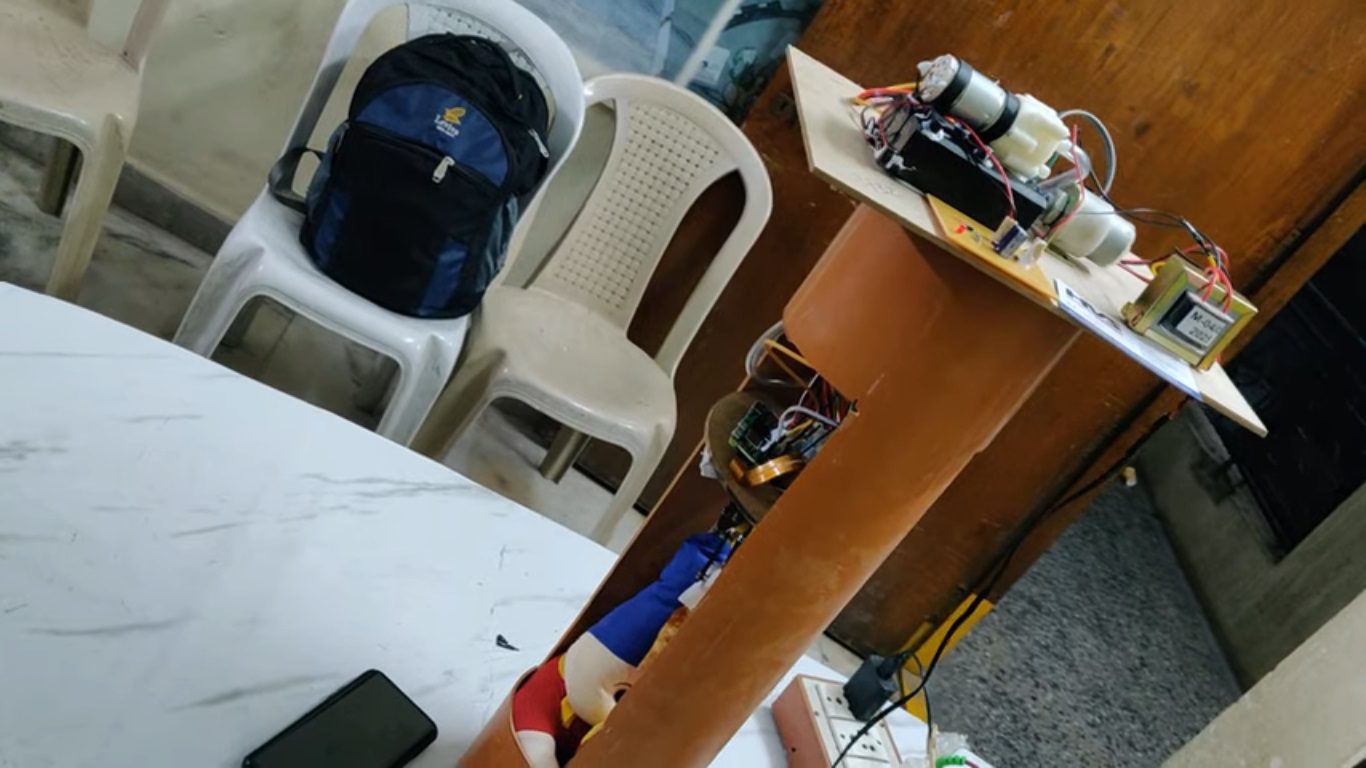
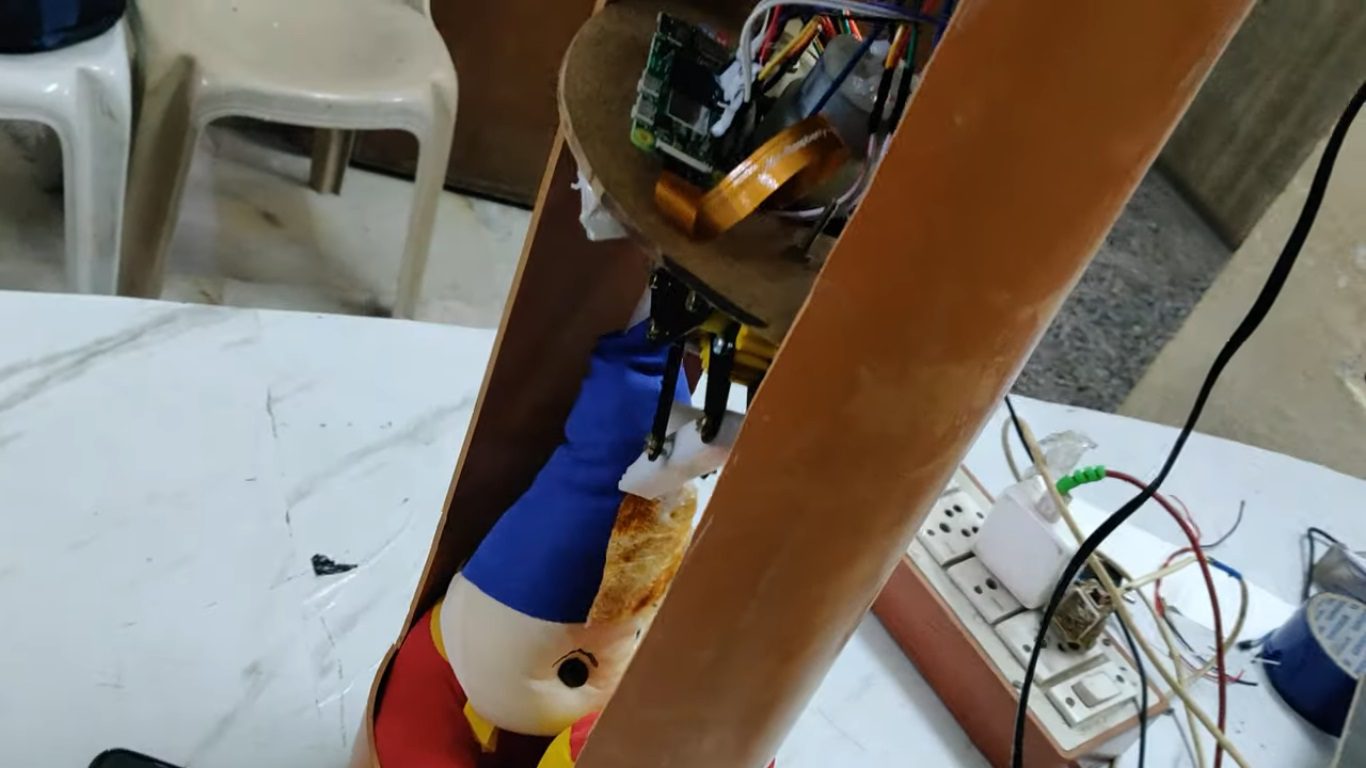
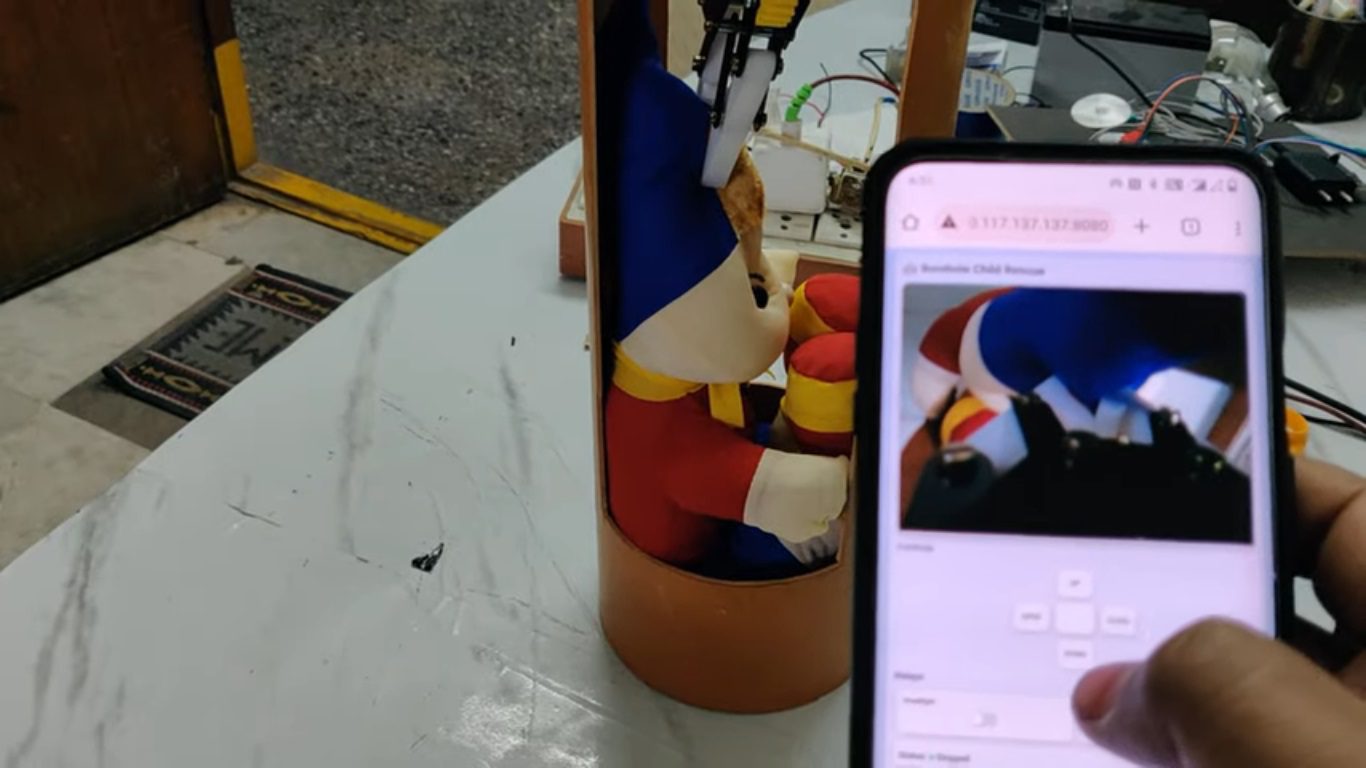
Rescuing children trapped in bore wells is a critical and time-sensitive challenge, often hindered by narrow spaces and lack of oxygen. This project presents an AI-based robotic rescue system designed to assist in borewell rescue operations using a Raspberry Pi Zero 2W as the main controller. The system integrates a Pi camera for real-time video streaming, ultrasonic sensors for distance measurement, and Wi-Fi communication for remote operation through a web interface.
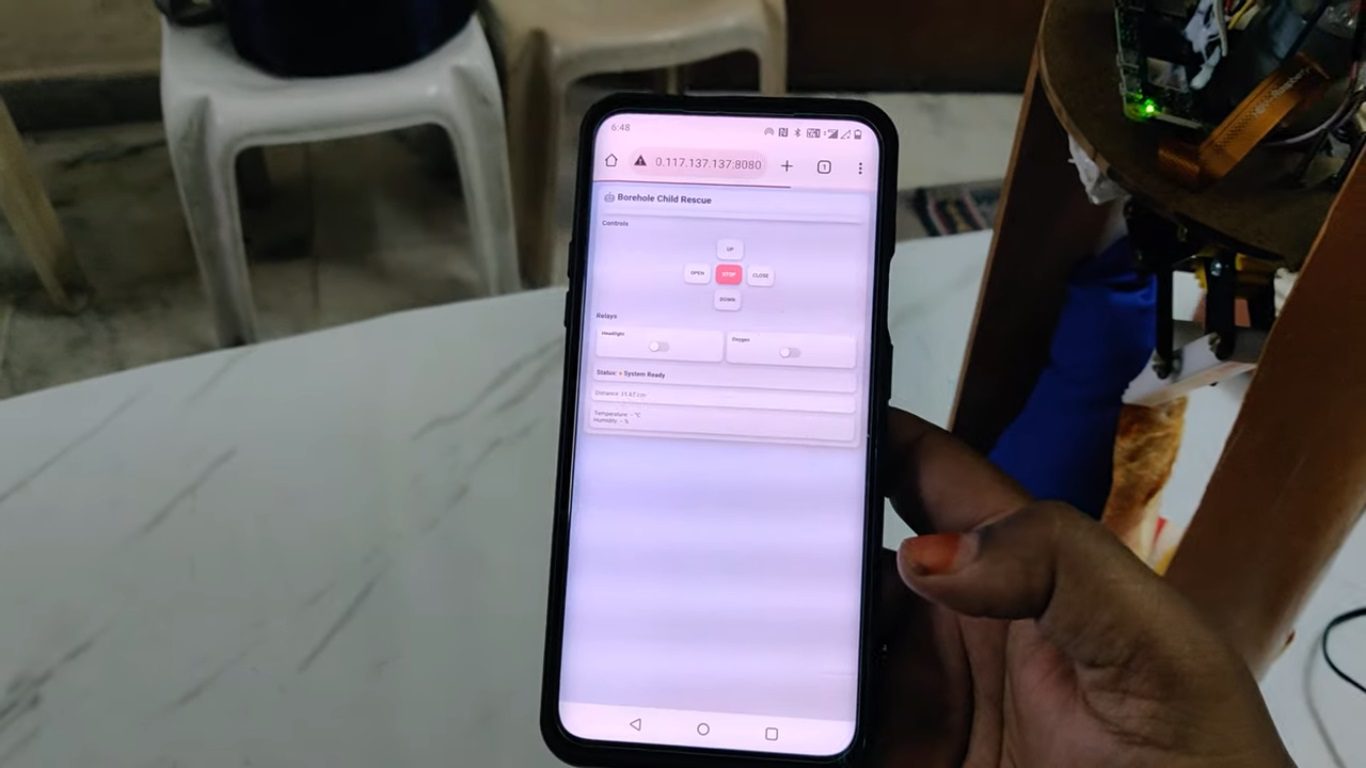
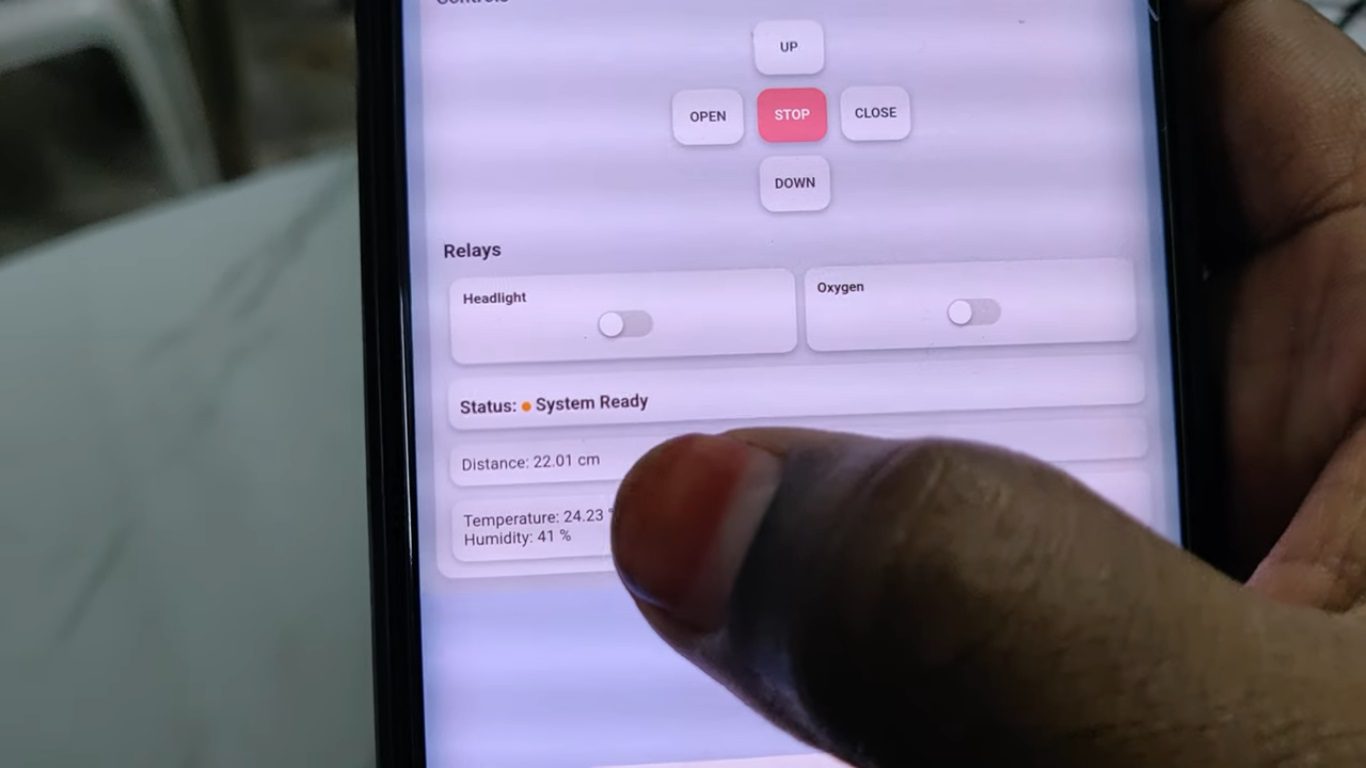
While viewing the live video feed, the user can remotely control the robot’s movement, including up and down motion, as well as the gripper mechanism for opening and closing to securely hold the victim. The robot uses L298 motor drivers to control DC motors for precise movement and gripping actions.
High-power LEDs are used as headlights to provide illumination in dark underground conditions, and both the headlights and oxygen supply system can be controlled via the web interface. An oxygen pump, operated through a relay, ensures continuous oxygen supply to the trapped child, increasing survival chances.
Additionally, a DHT11 sensor is used to monitor temperature and humidity levels inside the borewell, and along with distance data, these parameters are displayed in real time on the web dashboard. This provides better situational awareness for rescue teams.
Artificial Intelligence techniques can be integrated for object detection and victim identification to enhance rescue efficiency. The system is powered by a battery with voltage regulation using an LM2596 module.
Overall, this project offers a safer, faster, and more efficient solution compared to traditional rescue methods, reducing risks to both victims and rescuers while demonstrating the practical application of robotics, IoT, and AI in emergency rescue operations.
The Objectives of the project include:
To design a robot for rescuing children from bore wells safely.
To provide live video monitoring using a camera.
To control robot movement (up/down) and gripper (open/close) through a web interface.
To supply oxygen to the trapped child using an oxygen pump.
To control headlights and oxygen system remotely via the web.
To measure distance using an ultrasonic sensor.
To monitor temperature and humidity using a DHT11 sensor.
To display all sensor data on a web dashboard in real time.
To reduce rescue time and improve safety using automation and remote control.
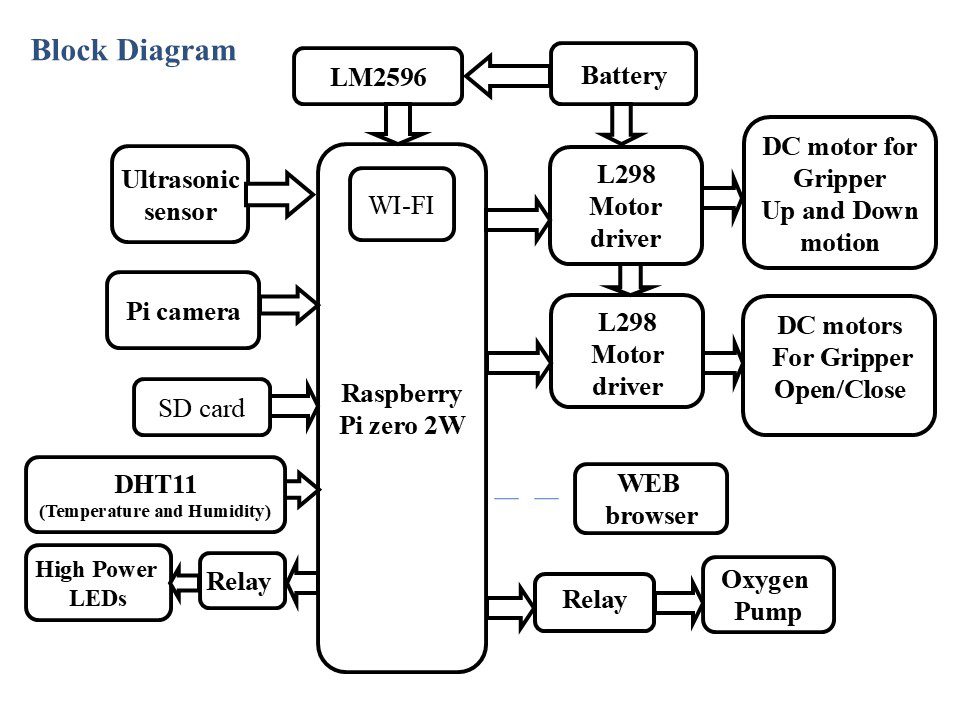
The major building blocks of this project are:
- Battery.
- LM2596.
- SD card.
- Raspberry pi zero 2W.
- DC Motors with L298 driver. (UP/DOWN)
- Pi camera.
- Ultrasonic sensor.
- DHT11.
- Gripper.
- L298 driver with DC motors (OPEN/LOSE).
- High power LEDs.
- Oxygen Pump.
Software’s used:
- Python language.
- Linux OS.
- Image processing.
- WEB technology.
 video:
 video: