No products in the cart.


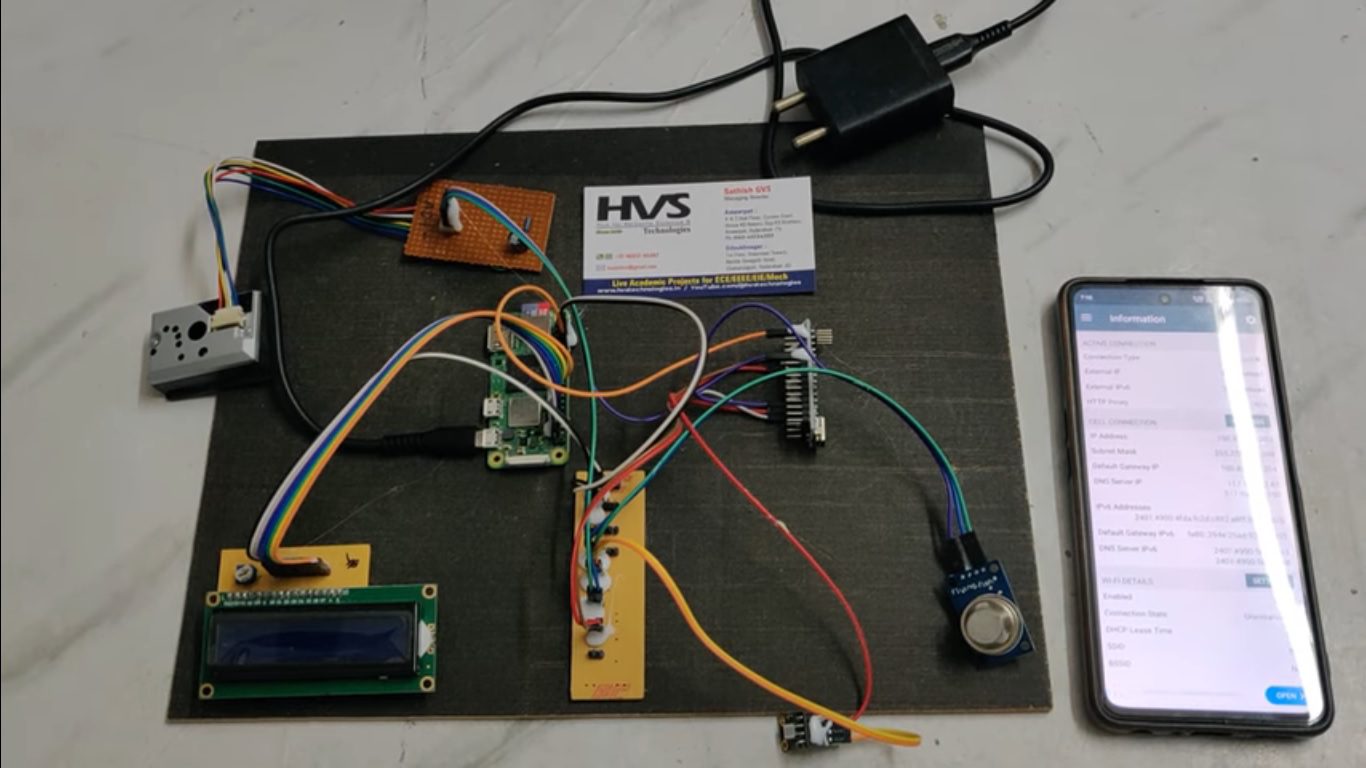
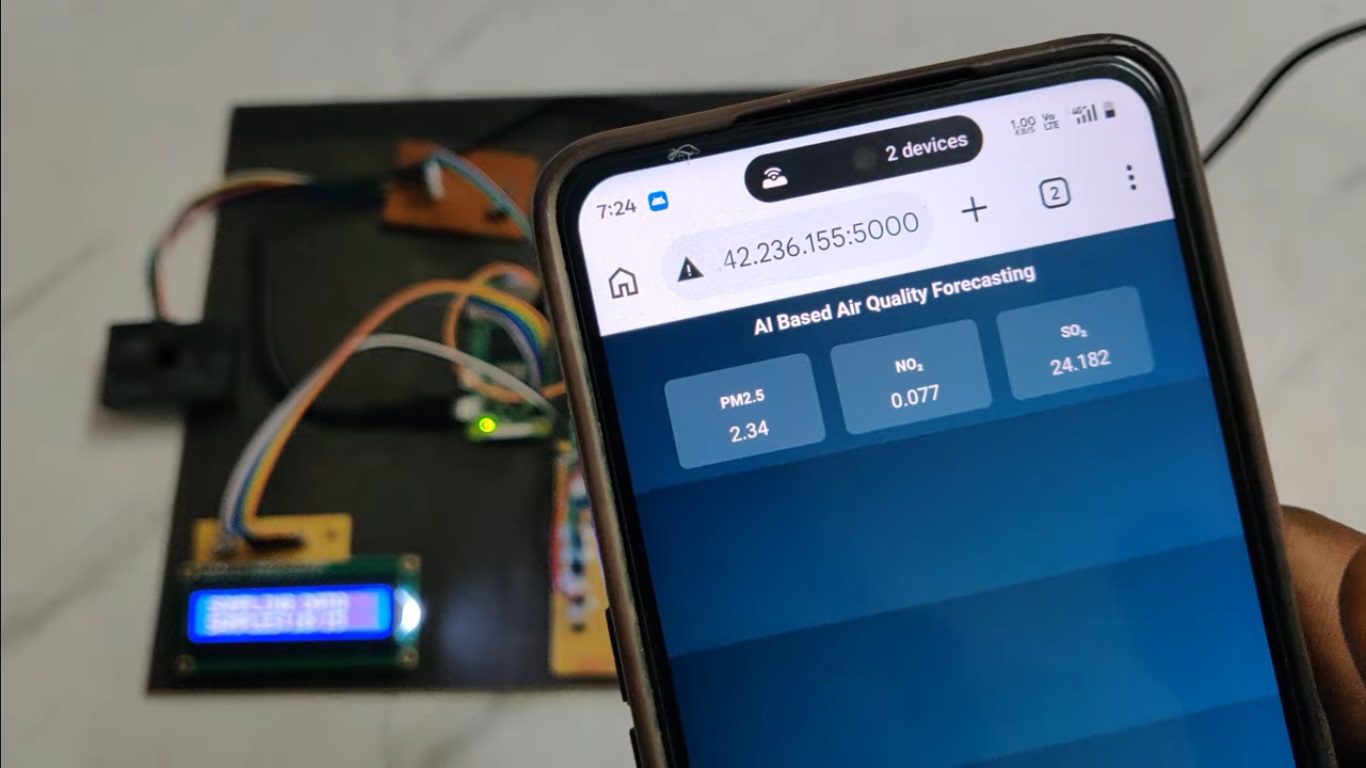
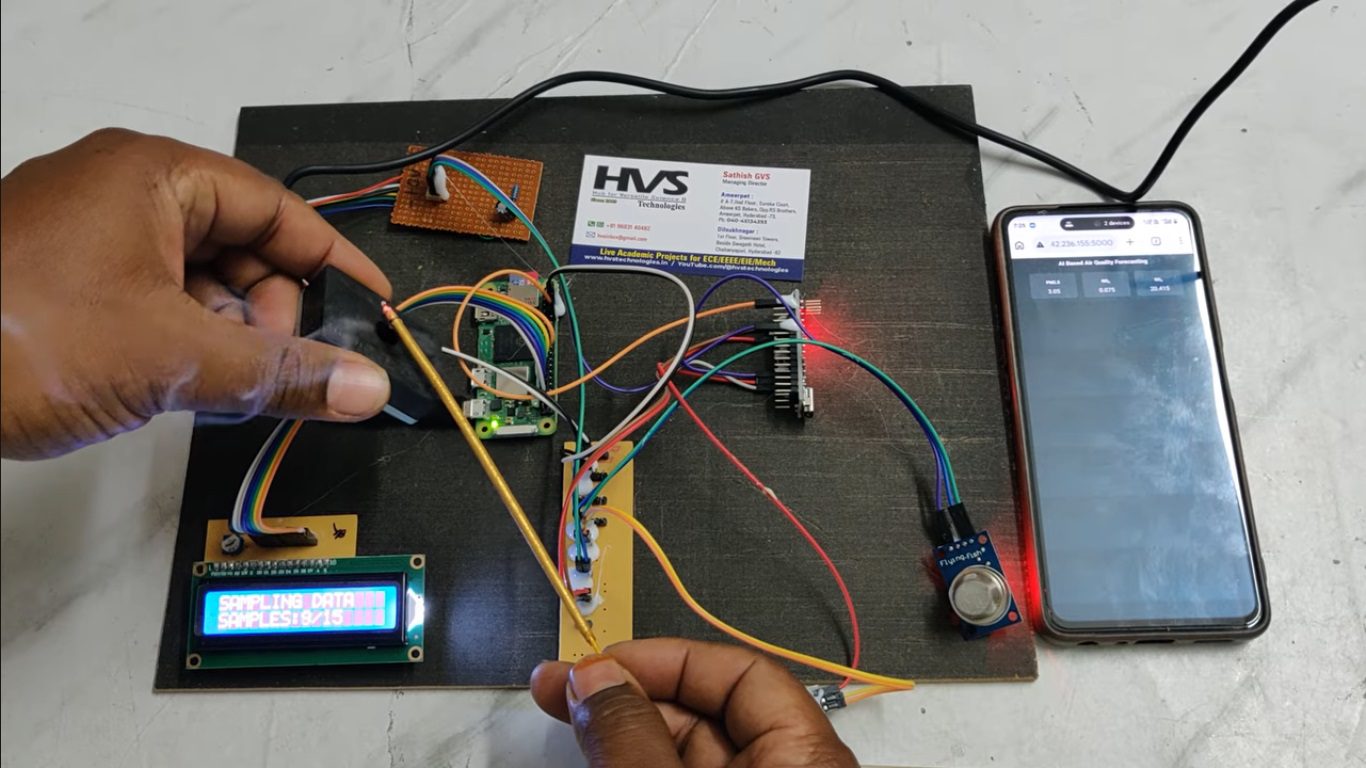
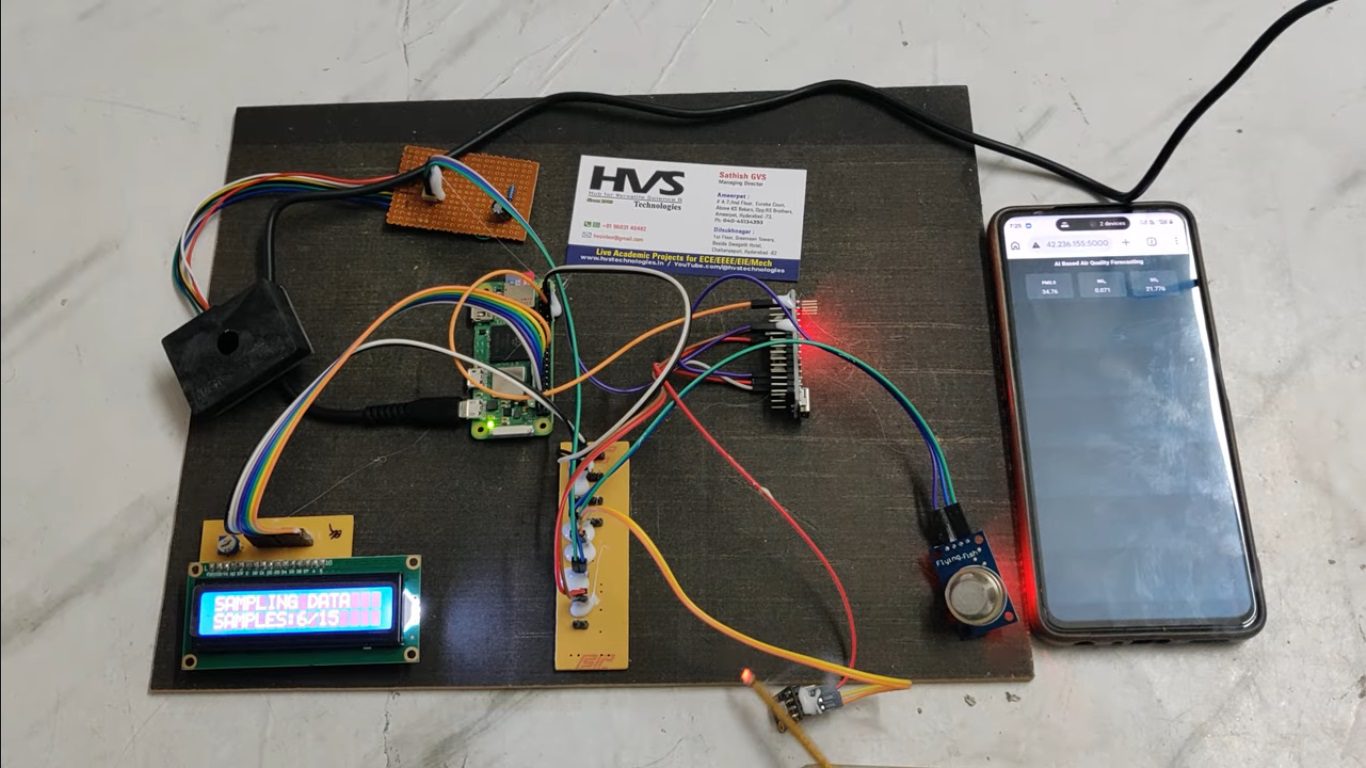
This project presents an AI-powered system for intelligent air pollution detection, estimation, and forecasting using a hybrid fusion of satellite data and ground-based sensor measurements. The system utilizes a Raspberry Pi Zero Was the main processing and communication unit, along with an Arduino microcontroller acting as an analog-to-digital converter (ADC) to interface with various environmental sensors.
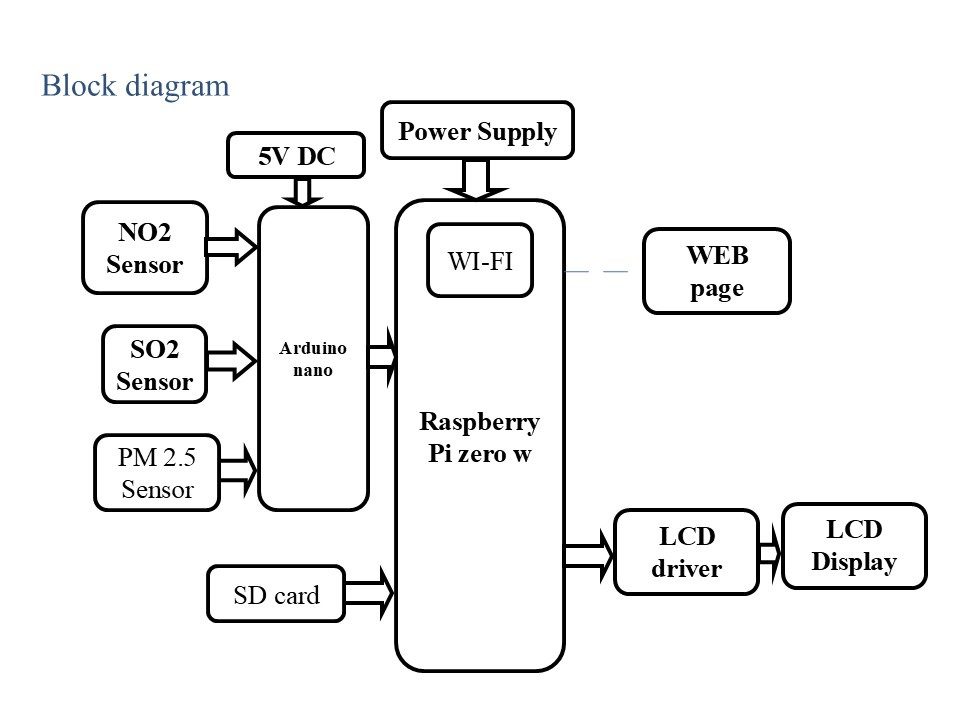
Air quality sensors measure real-time pollutant concentrations such as PM2.5, NO₂, and SO₂. Since the Raspberry Pi lacks built-in analog input capability, the Arduino collects analog sensor data, converts it into digital form, and transmits it to the Raspberry Pi. The Raspberry Pi processes and stores the data locally while also transmitting it via Wi-Fi to cloud-based platforms for further analysis.
An LCD display is integrated into the system to show real-time sensor values and system status, providing immediate visual feedback to the user. In addition to ground sensor data, satellite remote-sensing data, meteorological parameters, and traffic density patterns are incorporated in the data integration layer to improve estimation accuracy, especially in regions with limited monitoring infrastructure.
A dual-stage machine learning framework is employed for environmental intelligence. A Random Forest or Gradient Boosting model performs real-time pollution estimation at the user’s location, while a CNN–LSTM hybrid deep learning model analyzes spatial and temporal patterns to forecast future pollution levels and identify high-risk zones.
The system supports interactive dashboards, real-time alerts, and long-term data analysis for users, researchers, and policymakers. With scalable cloud storage, IoT connectivity, and advanced AI-based prediction capabilities, the proposed system offers a reliable, adaptive, and cost-effective solution for air quality monitoring, enabling timely interventions to reduce pollution exposure and improve public health.
The objectives of the project include:
 video:
To design and develop an intelligent air pollution monitoring system using Raspberry Pi and Arduino.
To measure real-time air quality parameters such as PM2.5, NO₂, and SO₂ using sensors.
To use Arduino as an ADC converter for collecting analog sensor data and sending it to the Raspberry Pi.
To display real-time sensor data and system status on an LCD.
To transmit collected data to the cloud using Wi-Fi for IoT-based monitoring.
To integrate satellite data, weather data, and traffic information with sensor data for improved accuracy.
To implement machine learning models (Random Forest / Gradient Boosting) for real-time pollution estimation.
To develop a CNN–LSTM model for predicting future air pollution levels.
To identify high-risk pollution zones using AI-based analysis.
To provide real-time alerts and notifications to users.
To create an interactive dashboard for visualization and long-term analysis.
To build a scalable, cost-effective, and reliable system for smart environmental monitoring.
The major building blocks of this project are:- Power supply.
- SD card.
- Raspberry pi zero 2w.
- Arduino Nano.
- No2 sensor.
- So2 sensor.
- Pm.2.5 sensor.
- LCD display.
- Python language.
- Raspbian OS.
- Machine Learning.
- Cloud technology.
 video: