No products in the cart.


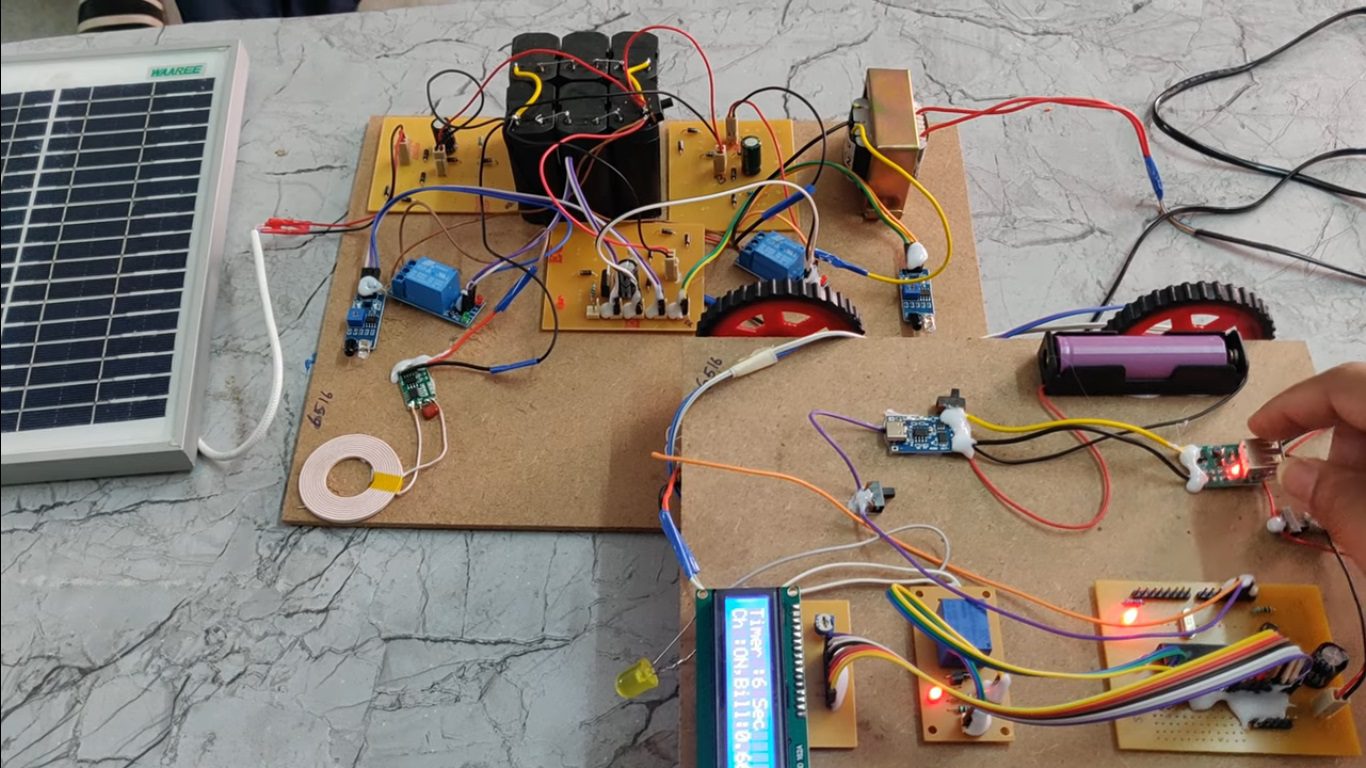
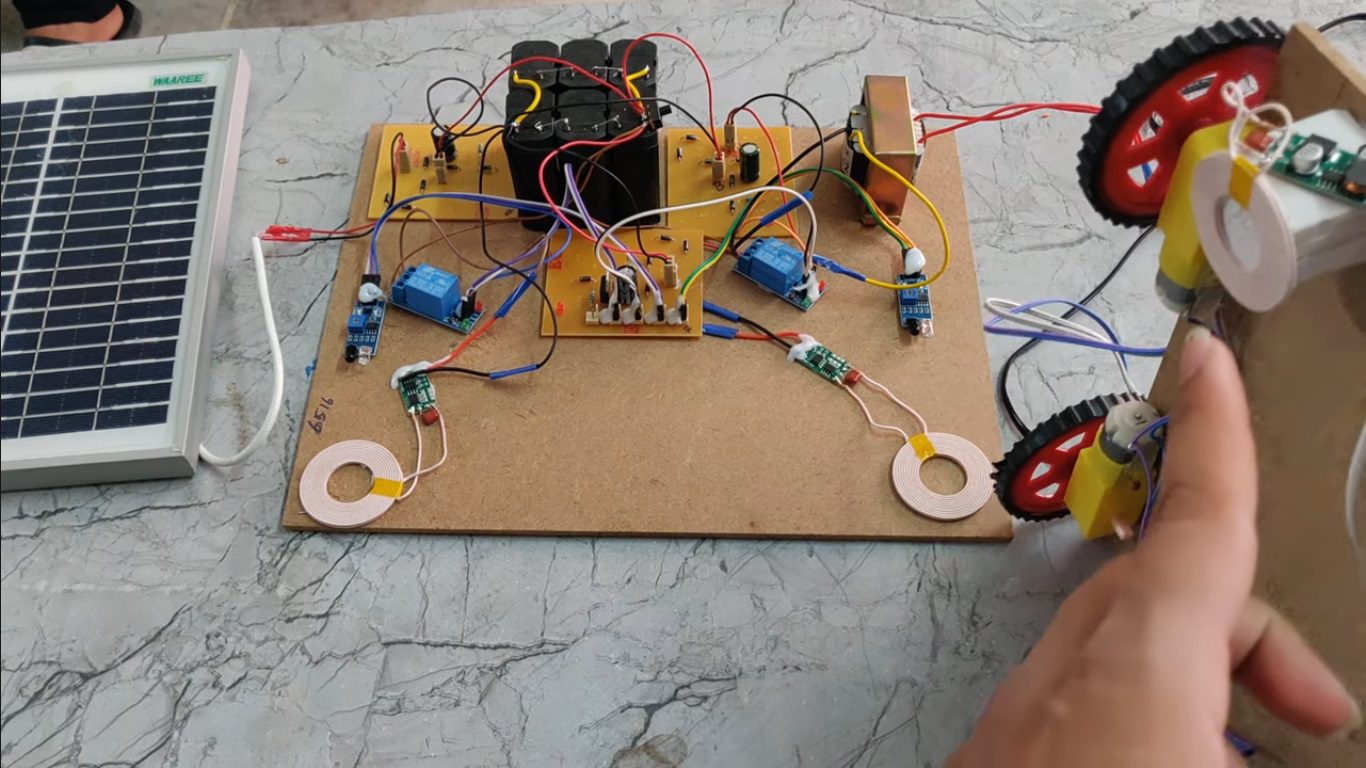
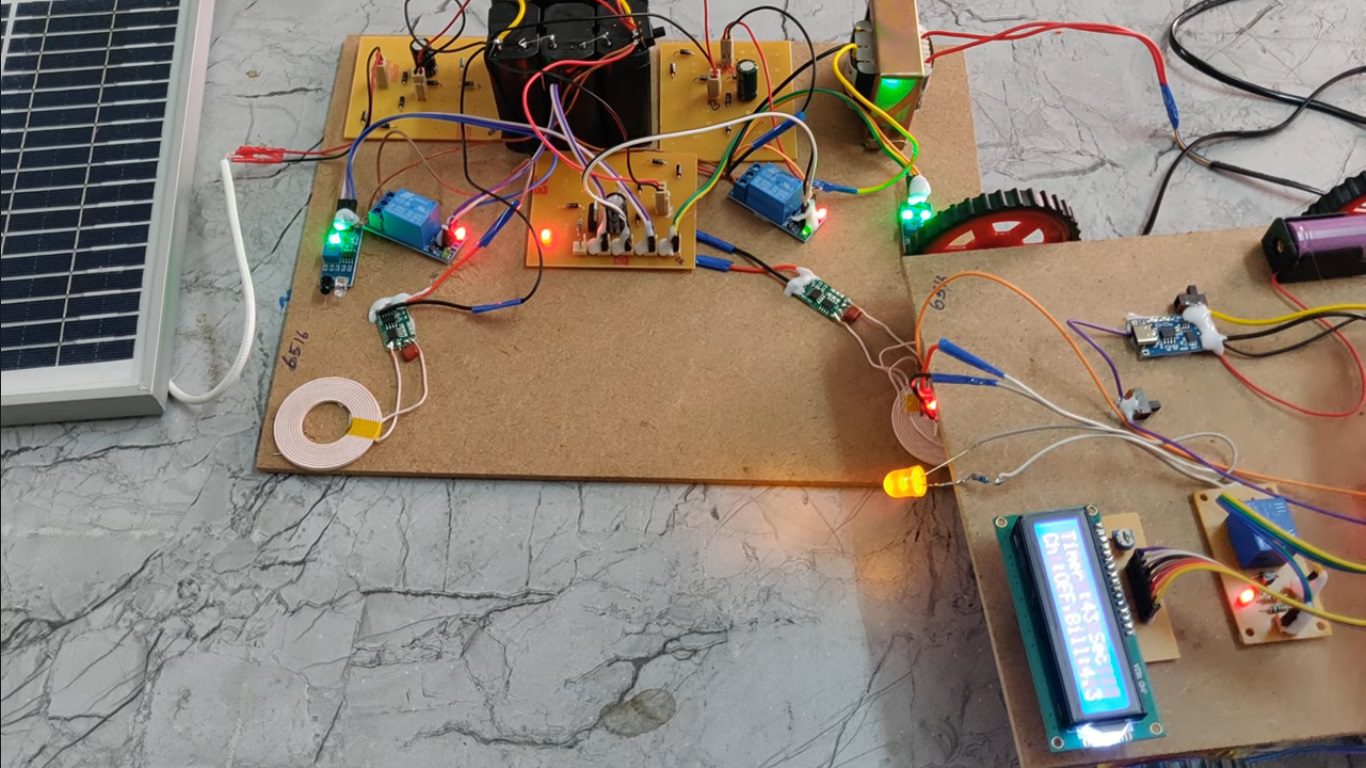
Wireless energy transfer or wireless power is the transmission of electrical energy from a power source to an electrical load without a conductive physical connection. Wireless transmission is useful in cases where interconnecting wires are inconvenient, hazardous, or impossible. The problem of wireless power transmission differs from that of wireless telecommunications, such as radio. In the latter, the proportion of energy received becomes critical only if it is too low for the signal to be distinguished from the background noise. With wireless power, efficiency is the more significant parameter. A large part of the energy sent out by the generating plant must arrive at the receiver or receivers to make the system economical. The most common form of wireless power transmission is carried out using direct induction followed by resonant magnetic induction.
The project consists of two self-resonating copper coils of same resonating frequency of about 100KHZ. One copper wire is connected to the power source (transmitter), while the other copper wire is connected to the device (Receiver).The electric power from the power source causes the copper coil connected to it to start oscillating at a particular (KHz) frequency. Subsequently, the space around the copper coil gets filled with nonmagnetic radiations. This generated magnetic field further transfers the power to the other copper coil connected to the receiver. Since this coil is also of the same frequency, it starts oscillating at the same frequency as the first coil. This is known as 'coupled resonance' and is the principle of Tesla.
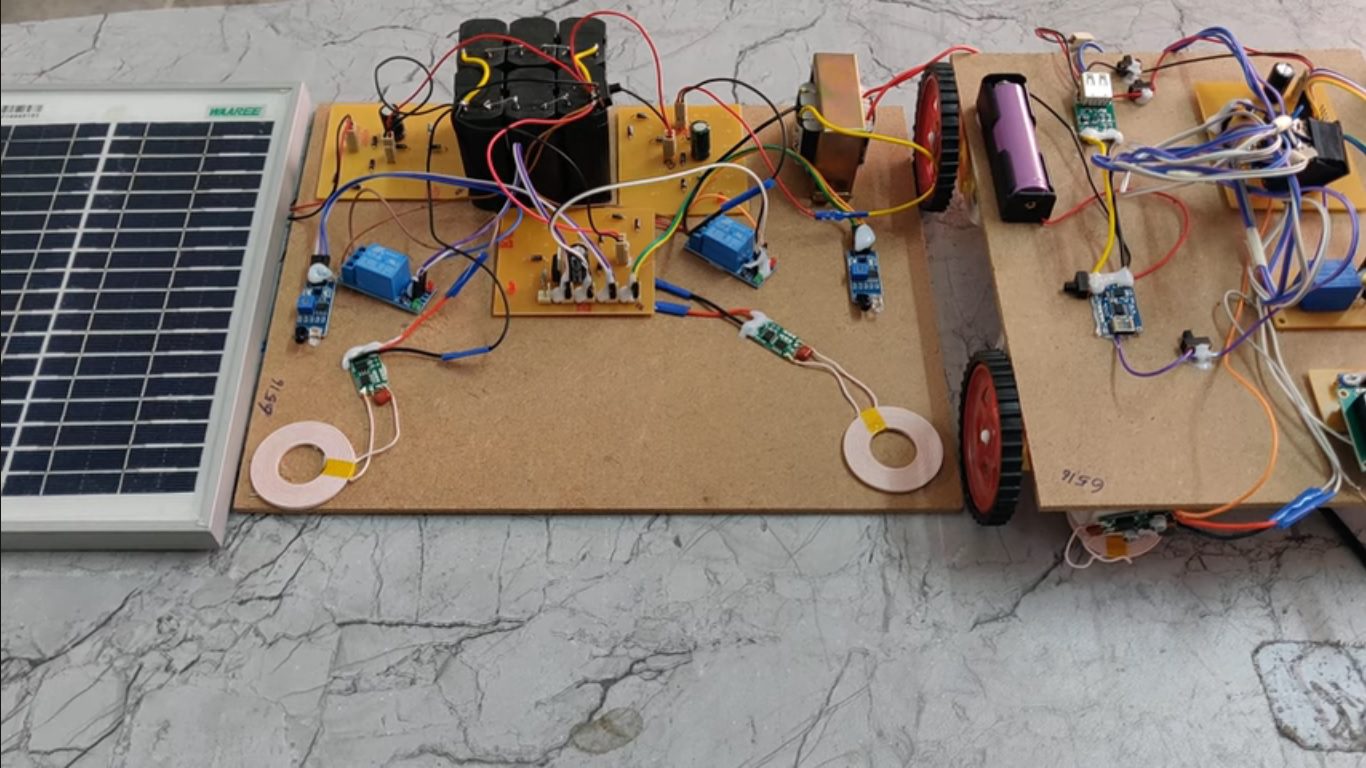
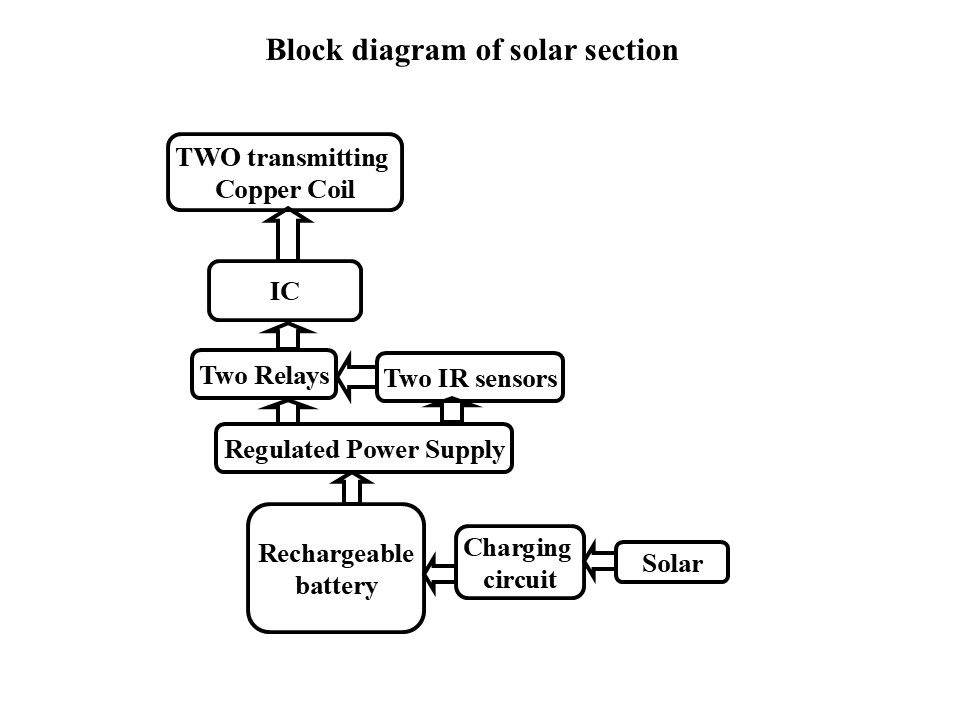
This project presents a solar-based wireless charging system for electric vehicles (EVs) integrated with battery monitoring and control using a PIC microcontroller. The system utilizes a solar panel to generate energy, which is stored in a rechargeable battery through a charging circuit. The stored energy is then transmitted wirelessly using transmitting copper coils.
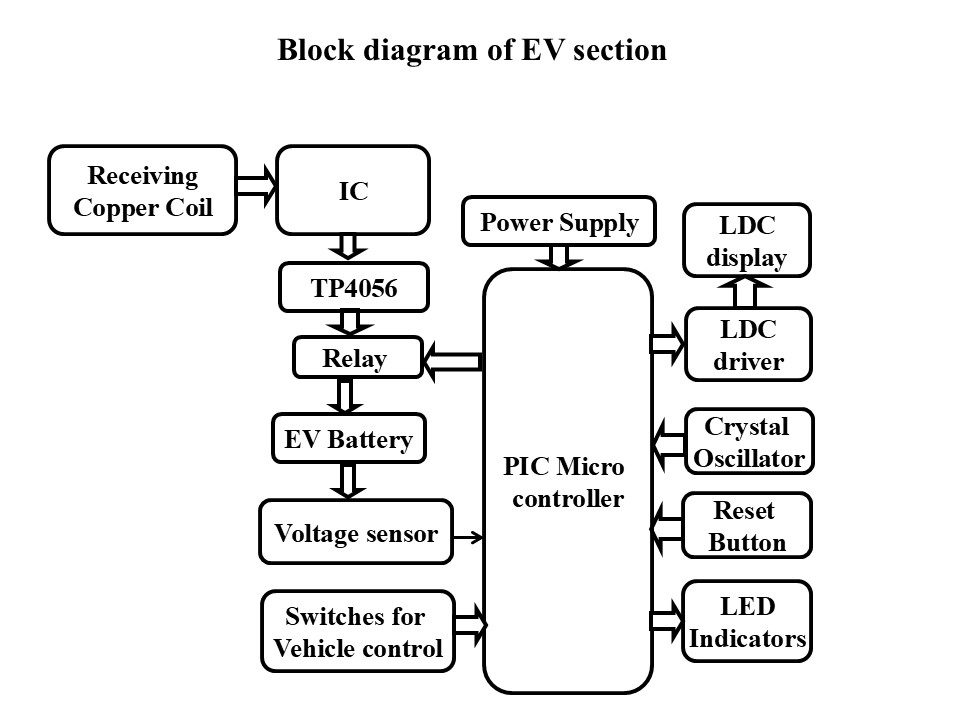
At the EV section user will control the vehicle through switches, power is received through a receiving coil and regulated using appropriate circuits, including a TP4056 charging module, to safely charge the EV battery. The PIC microcontroller continuously monitors battery parameters such as voltage and controls the charging process using relays. Additionally, IR sensors are used for detection and efficient power transfer control. The system displays real-time information on an LCD and provides indications through LEDs. This integrated system ensures efficient energy utilization, safe wireless charging, and reliable operation, making it suitable for modern, eco-friendly electric vehicle applications.
Features:
 video:
Solar Energy Utilization – Uses renewable solar power for eco-friendly operation
Wireless Power Transfer – Transfers energy without physical connections using copper coils
Automatic Charging Control – Charging starts/stops automatically using relays
Battery Protection – Prevents overcharging and unsafe conditions
Real-Time Monitoring – Displays voltage and system status on LCD
Microcontroller-Based Control – Uses PIC microcontroller for intelligent operation
IR Sensor Detection – Detects vehicle presence for efficient power transfer
LED Indications – Provides system status through LEDs
Dual Section Operation – Works with both solar (power generation) and EV (receiving) sections
Energy Efficient System – Reduces power loss and improves efficiency
The major building blocks of this project are:- Two Transmitting Copper coils.
- One Receiving Coil.
- Solar panel.
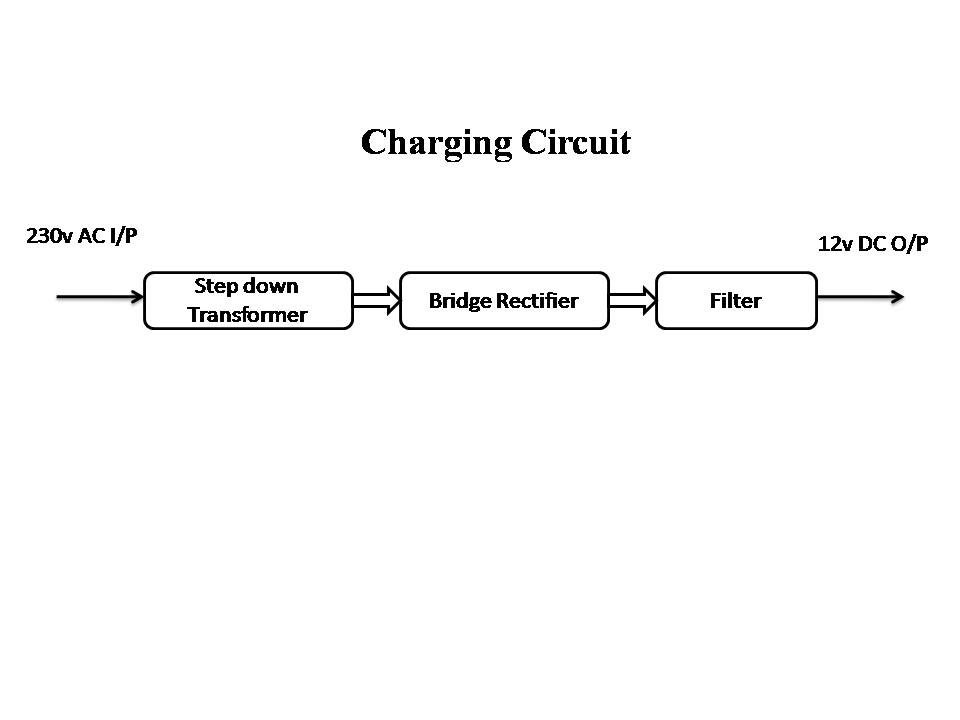
- Charging circuit.
- Rechargeable battery.
- Rectifiers.
- Capacitors.
- Relays.
- IR sensors.
- Tp4056 IC.
- PIC Microcontroller.
- LCD display.
- Voltage sensor.
- PIC-C compiler for Embedded C programming.
- PIC kit 2 programmer for dumping code into Micro controller.
- Express SCH for Circuit design.
 video: