HVS-4624. Wireless power transmission with multiple energy sources along with BMS
₹13,500.00
The proposed system integrates solar and wind energy sources to enable wireless power transmission for electric vehicle (EV) charging while incorporating a Battery Management System (BMS) with State of Charge (SOC) and State of Health (SOH) monitoring. The system consists of a transmission and reception unit.
The proposed system integrates solar and wind energy sources to enable wireless power transmission for electric vehicle (EV) charging while incorporating a Battery Management System (BMS) with State of Charge (SOC) and State of Health (SOH) monitoring. The system consists of a transmission and reception unit.
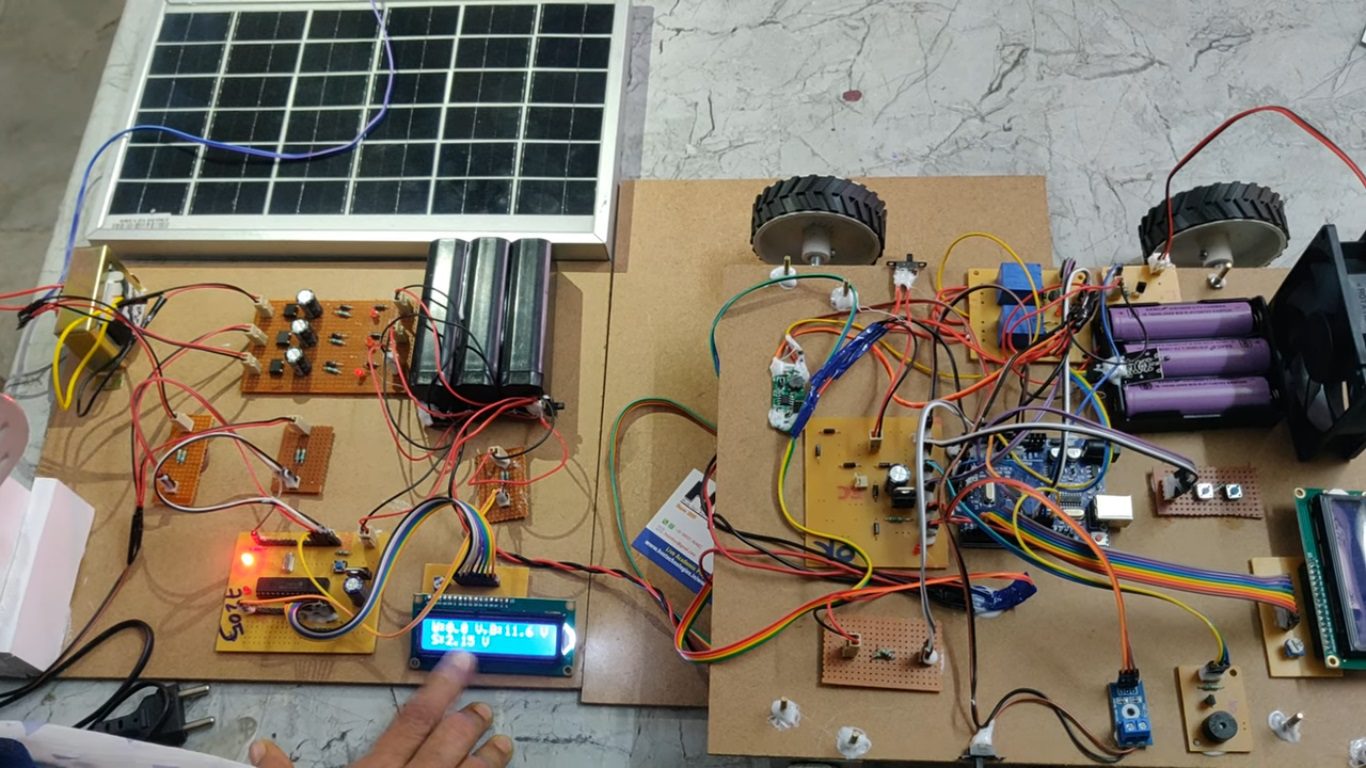
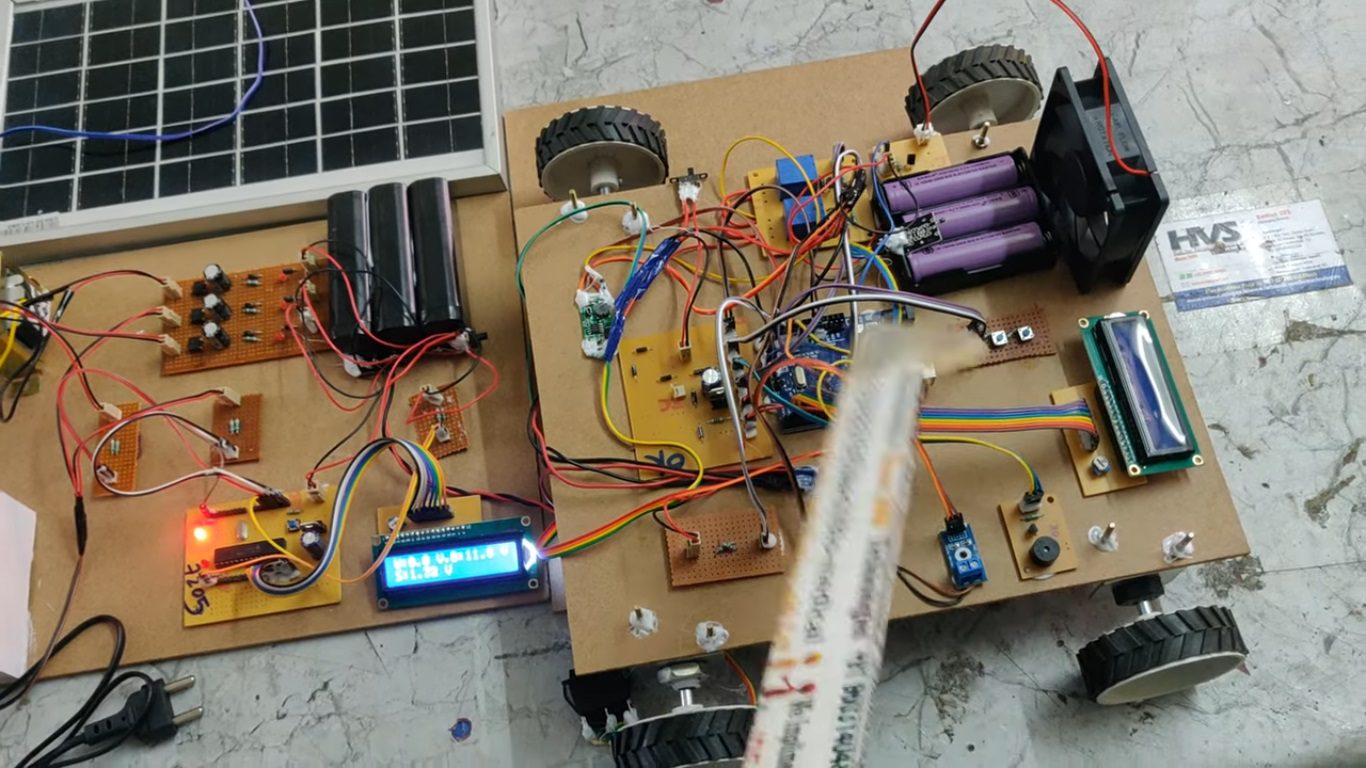
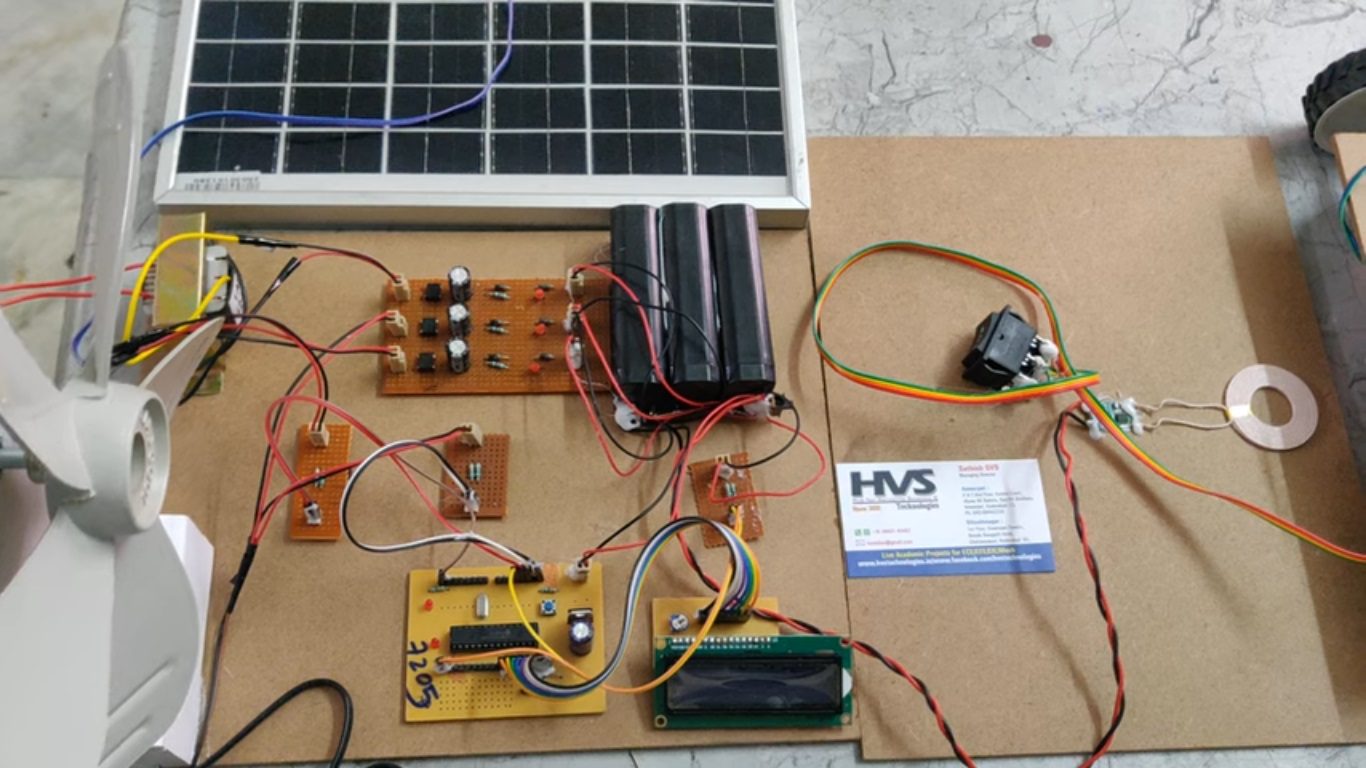
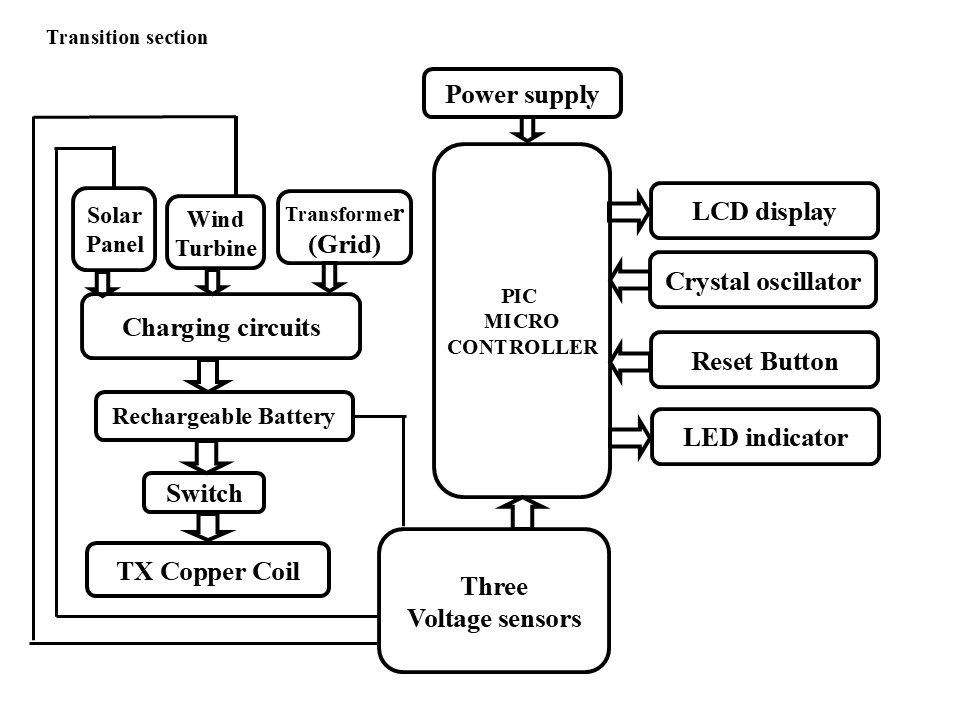
On the transmission side, energy is harvested using a solar panel and a wind turbine and then regulated through a charging circuit. A PIC microcontroller monitors the power input from multiple voltage sensors and controls a MOSFET driver to regulate energy transfer via a transmitter copper coil. The system also includes an LCD display, LED indicators, a reset button, and a crystal oscillator for system control. Control buttons are used to drive the vehicle.
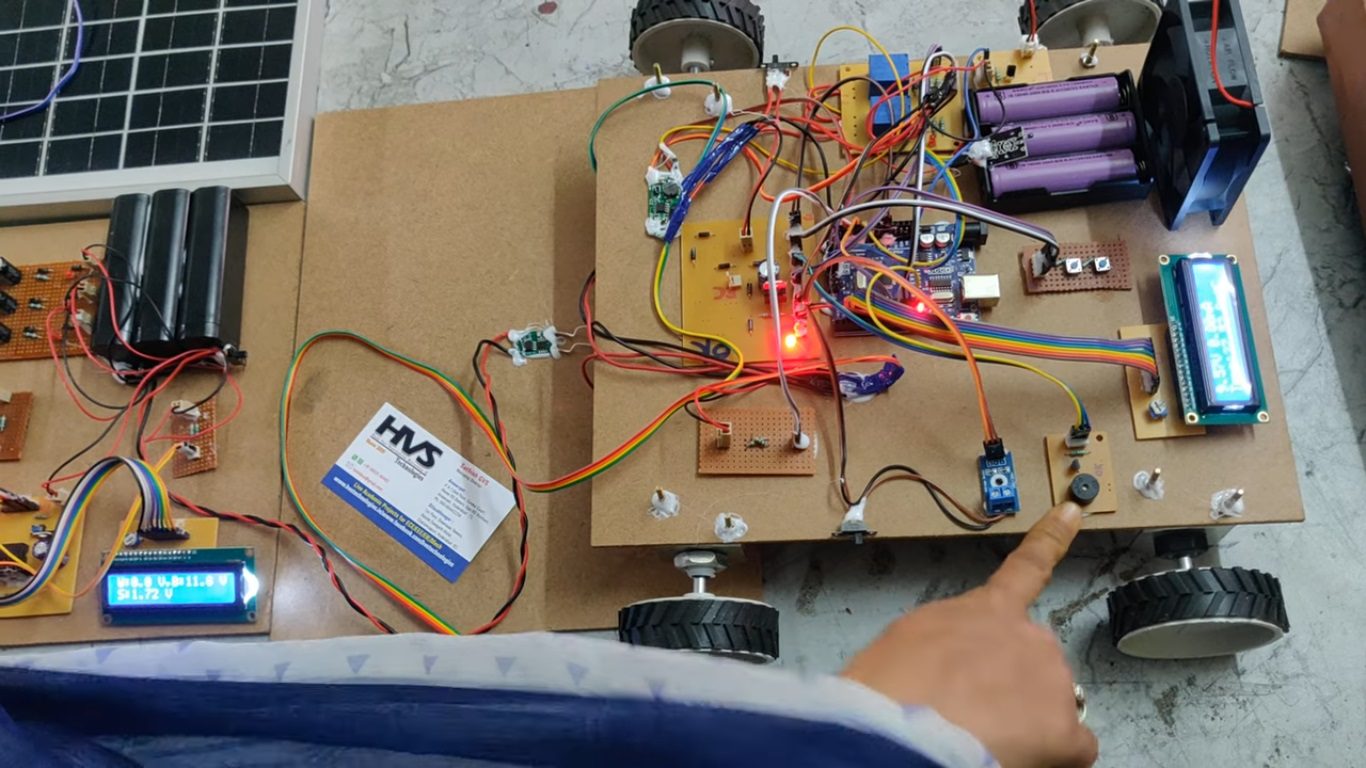
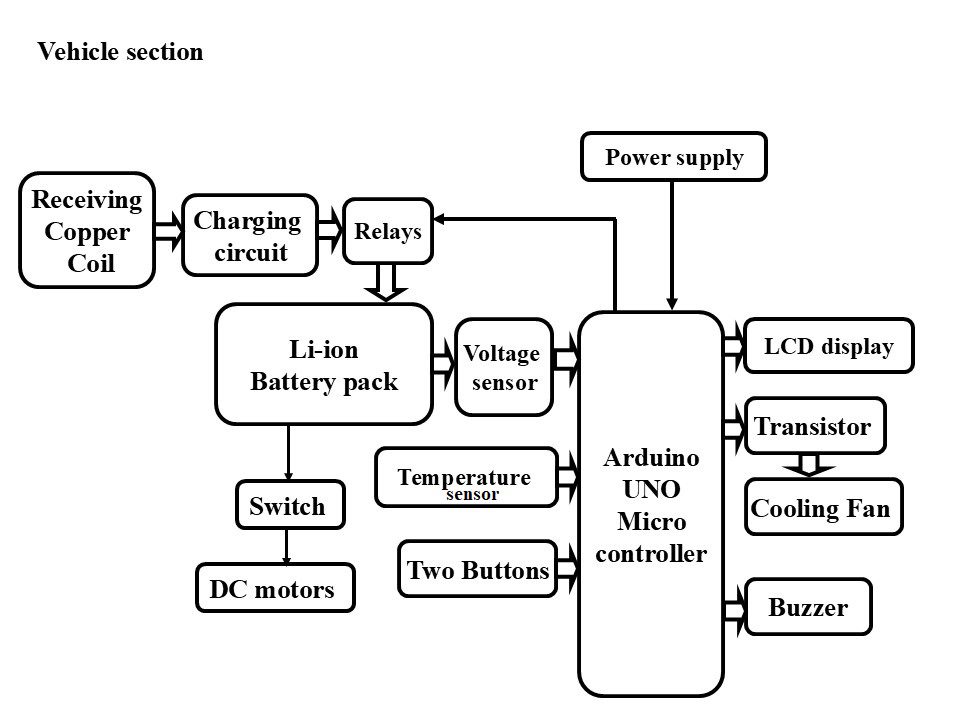
On the receiving side, a receiving copper coil captures the transmitted power, which is then processed by a charging circuit to charge a Li-ion battery pack. A relay system manages power distribution, while a voltage sensor and temperature sensor provide real-time battery status monitoring. The Arduino microcontroller processes this data and displays it on an LCD screen, along with indications from an LED indicator and an alert system using a buzzer. Two buttons are used for fast and slow charging of vehicle battery. If the battery temperature is high then microcontroller turn ON the cooling fan to cool the battery.
The BMS is responsible for monitoring SOC, which indicates the available battery capacity, and SOH, which tracks the battery's overall health and efficiency. This ensures the system operates optimally, prevents overcharging or overheating, and enhances battery lifespan.
This smart, sustainable, and wireless charging approach eliminates the need for physical charging connections, making EV charging more efficient and convenient while leveraging renewable energy sources for a greener future.
Features:
Renewable Energy Sources – Uses solar and wind power for sustainable charging.
Wireless Power Transmission – Transfers energy without physical cables using copper coils.
Battery Management System (BMS) – Monitors battery health and efficiency.
State of Charge (SOC) Monitoring – Displays the remaining battery capacity.
State of Health (SOH) Monitoring – Tracks battery lifespan and performance.
PIC and Arduino Microcontrollers – Controls and automates the system.
Voltage & Temperature Sensors – Ensures safe charging by monitoring battery conditions.
LCD Display & LED Indicators – Provides real-time system status updates.
Buzzer Alert System – Alerts for low battery conditions.
Efficient Charging Circuit – Regulates power to avoid overcharging or overheating.
The major specifications of the modules used in the project are:
SOLAR
WIND
Step down transformer.
Charging circuit.
Rechargeable battery.
PIC micro controller.
Arduino UNO.
Two copper coils.
Li-ion battery.
Relay.
Voltage sensors.
LCD display.
DC motors with switch.
Control Buttons
Temperature Sensor.
Buzzer.
Crystal oscillator.
Reset button.
LED indicator.
Cooling Fan.
Software’s used:
Arduino IDE for dumping code into arduino Micro controller.
PIC-C compiler for Embedded C programming.
PIC kit 2 programmer for dumping code into PIC Micro controller.
 1 × ₹4,500.00
 video: