No products in the cart.


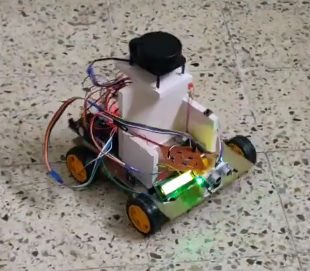
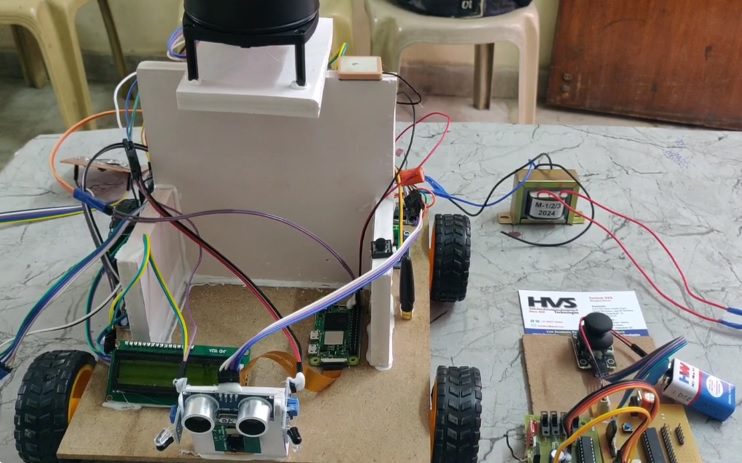
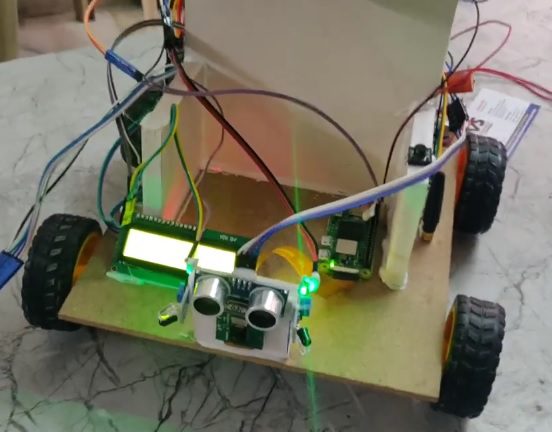
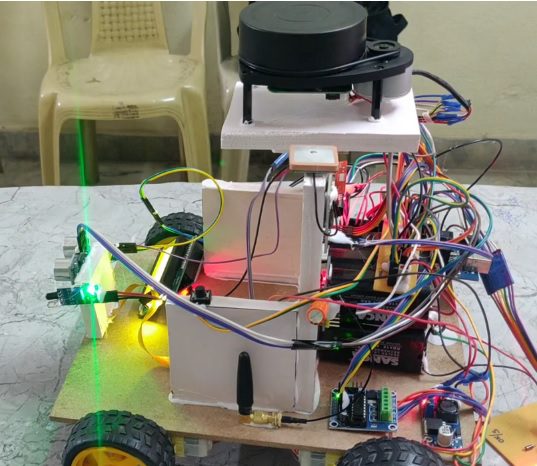
The main aim of this project is to design and develop a smart wheelchair that can be operated in three different modes: manual control using a joystick, autonomous navigation using LiDAR and GPS, and automatic human following using IR transmitter and receiver technology. This system is designed to help physically challenged and elderly people move safely and independently with minimum assistance.
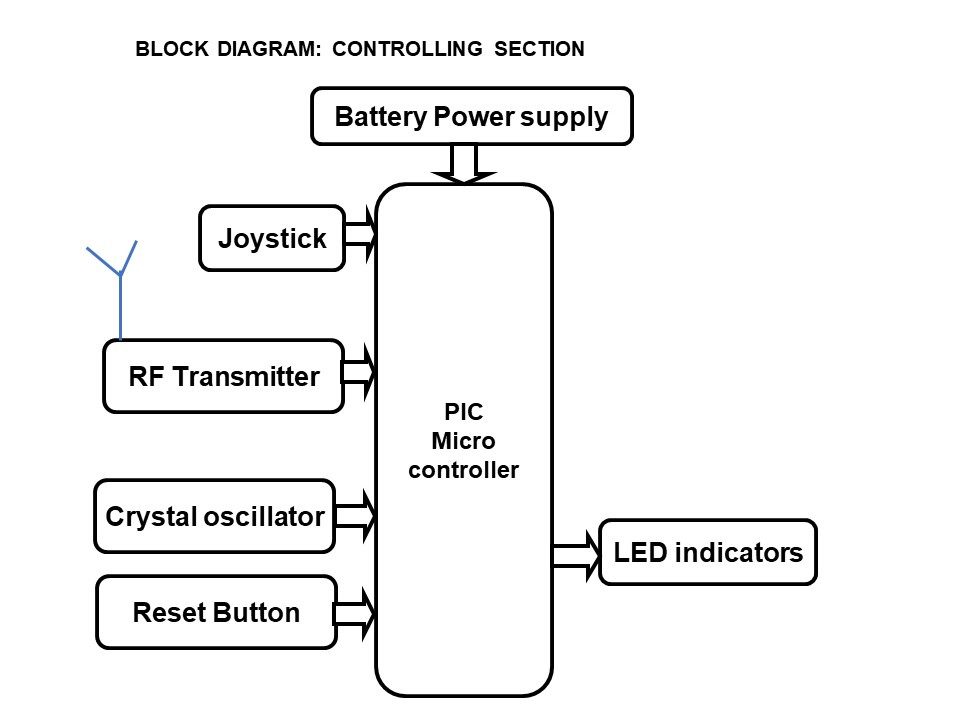
In manual mode, the wheelchair can be controlled using a joystick that provides four-direction movement. The wheelchair can move in forward, reverse, left, and right directions and can be stopped using the joystick. A PIC microcontroller is used to read the joystick signals and transmit the control commands to the Raspberry Pi Zero W through wireless RF technology. The Raspberry Pi processes these commands and controls the DC motors through a motor driver circuit.
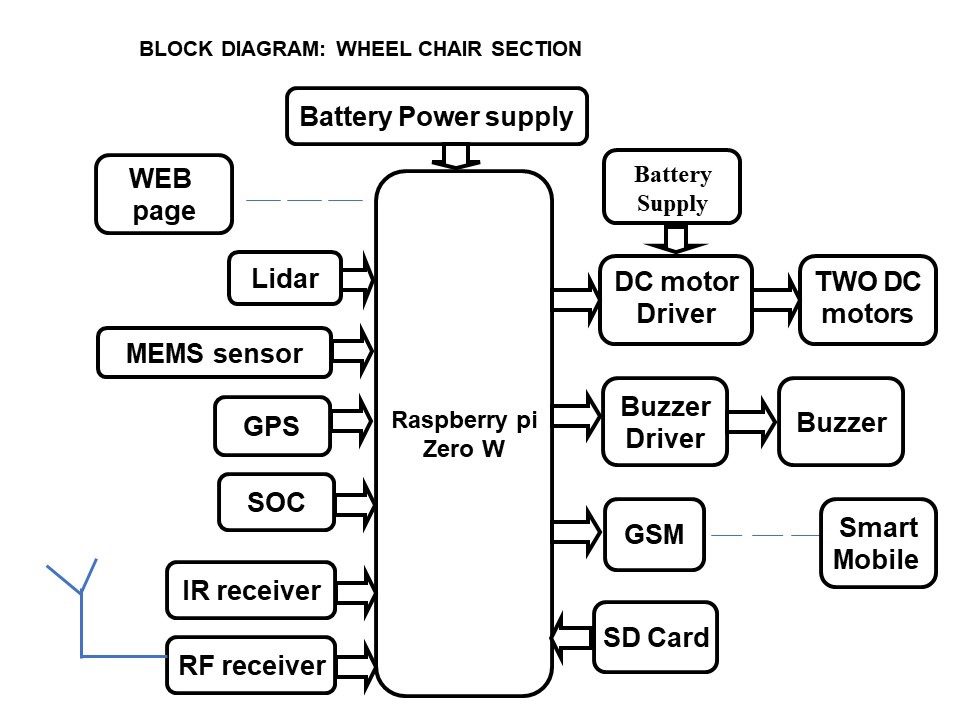
In autonomous mode, LiDAR is used to detect obstacles and support navigation. The user can select a desired destination through a web page using the built-in Wi-Fi facility of the Raspberry Pi Zero W. Based on the selected destination, the wheelchair navigates towards the target while avoiding obstacles. GPS is used to track the wheelchair's geographical location and monitor its movement.
In human-following mode, an IR transmitter carried by the person sends signals to the IR receiver mounted on the wheelchair. Based on the received signals, the wheelchair automatically follows the person. A MEMS sensor is also incorporated to detect abnormal movement or possible tilting of the wheelchair.
For emergency protection, a dedicated SOS push button is provided. When the user presses the SOS button, the wheelchair stops automatically, the buzzer is activated, and an emergency alert is sent to a predefined mobile number through the GSM module. The entire system operates using battery power, and the Raspberry Pi Zero W is programmed using Python to perform navigation, motor control, obstacle detection, and communication functions.
Thus, this project provides a smart, user-friendly, and reliable wheelchair system with multiple operating modes to improve the mobility, safety, and independence of physically challenged people.
Features:
 video:
- Design a hand gesture control prototype wheel chair.
- Autonomous navigation and obstacle avoidance using LIDAR.
- Wireless controlling of wheel chair using JOYSTICK technology.
- Automatic fall detection using MEMS technology.
- Automatic intimation using GSM technology.
- GPS based location tracking system.
- IR based human following wheel chair.
- Audible alerts using BUZZER.
- Wheel chair stops Automatically if the person presses the SOC switch.
- To achieve this task Raspberry pi and PIC Microcontroller.
- Battery power supply.
- Raspberry pi zero W.
- SD card.
- IR sensor.
- Lidar.
- GSM.
- GPS.
- Buzzer.
- PIC Microcontroller.
- DC motors with driver.
- Joystick.
- MEMS.
- RF transmitter and receiver.
- SOC switch.
- PIC C compiler for dumping code into PIC Microcontroller.
- Raspbian OS.
- Python language.
- Express SCH for Circuit design.
 video: