No products in the cart.


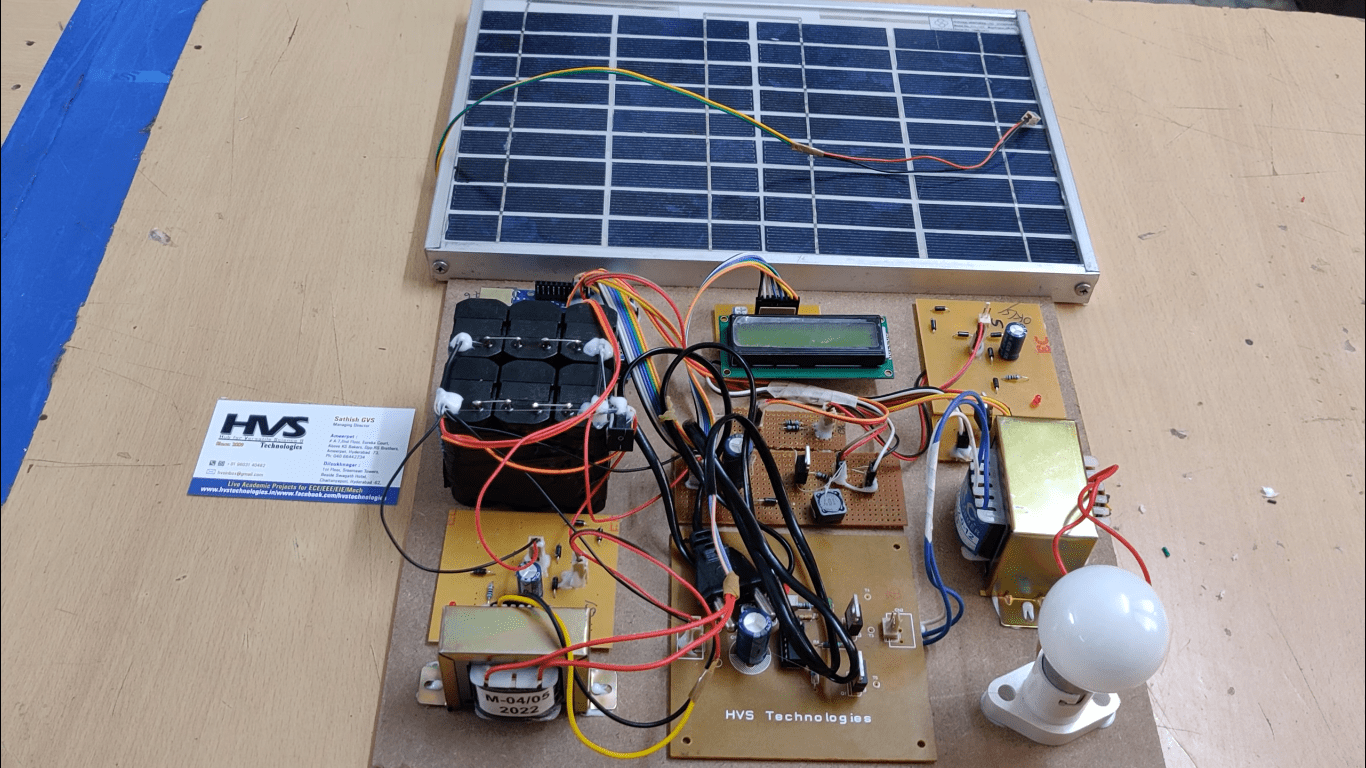
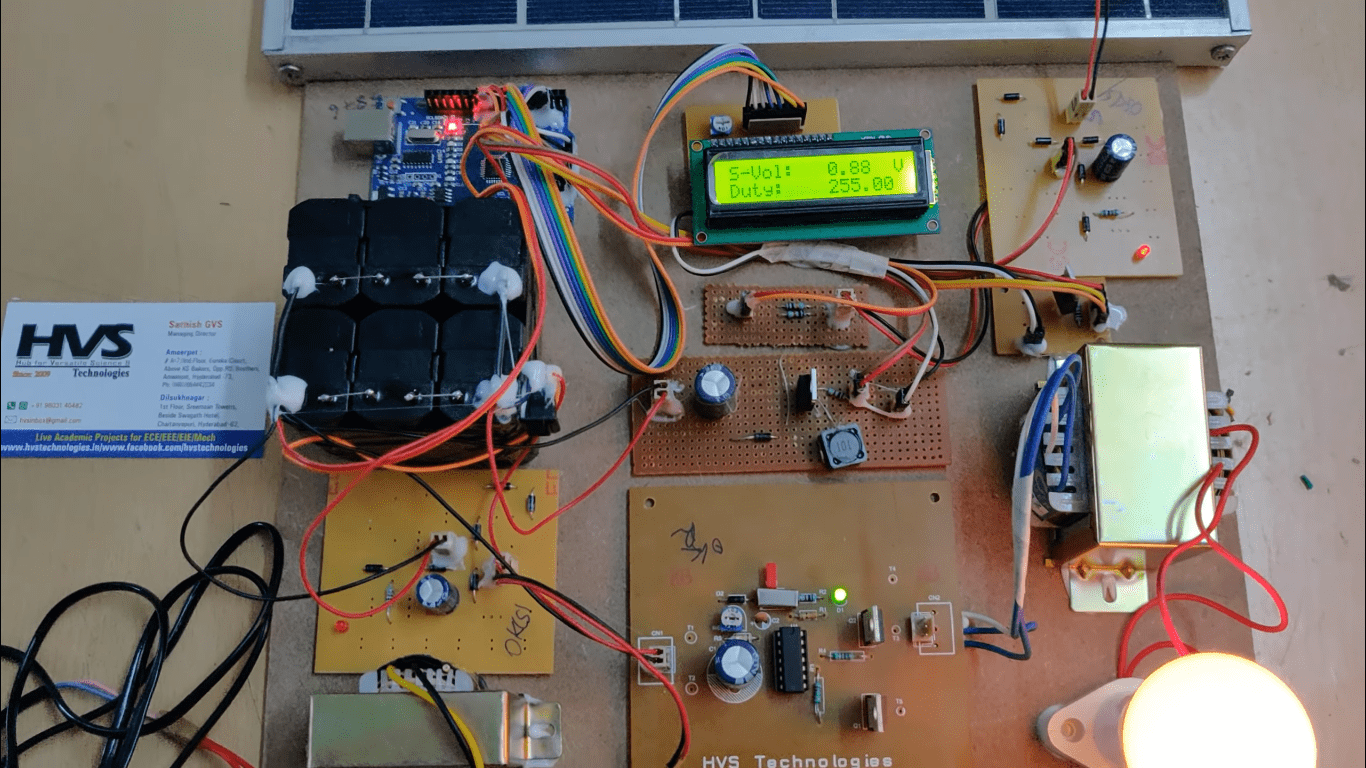
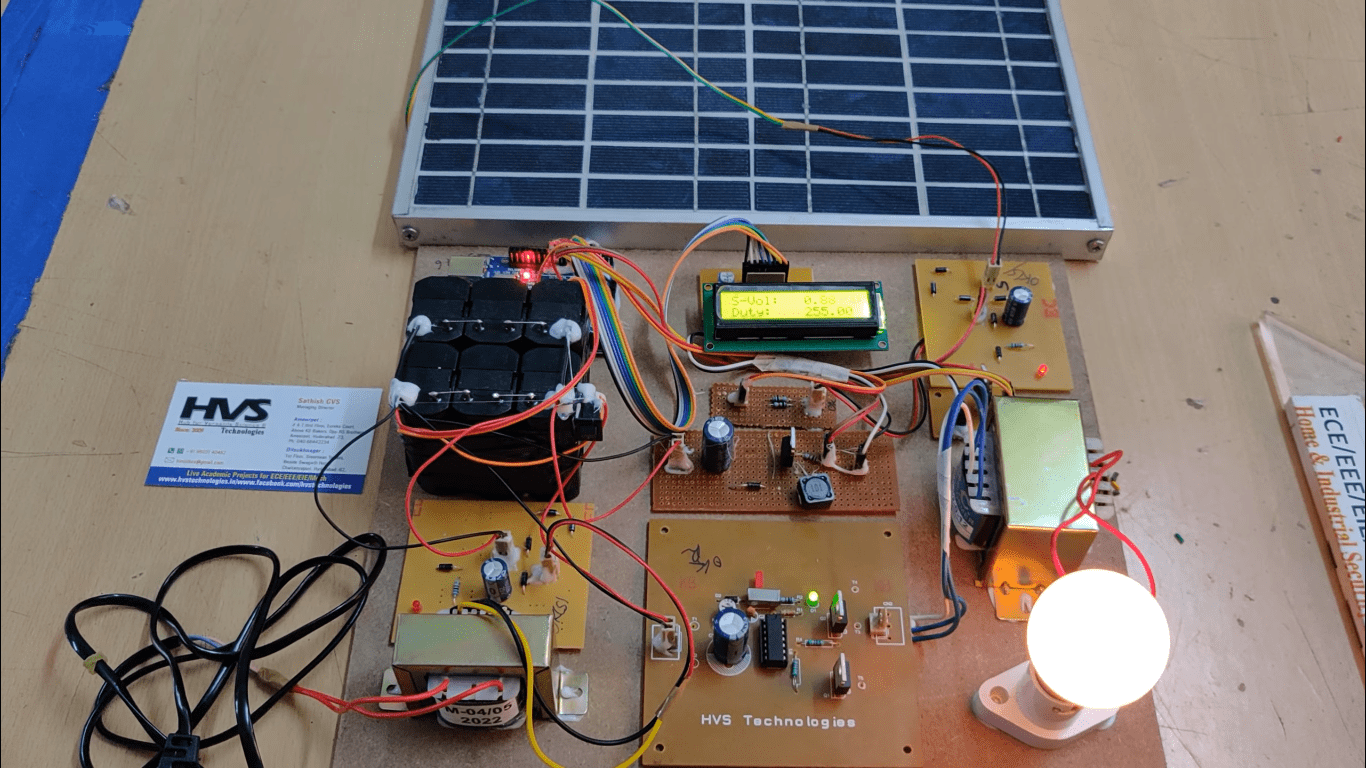
Renewable energy resources such as Solar, wind and hydro are pollution free, easily erectable, and limitless so they represent reliable alternatives to conventional energy sources e.g. oil and natural gas. However, the efficiency and the performance of these systems are still under development. Among them, Photovoltaic systems are mostly used as they are light, clean and easily installable. This systems connection to the grid requires special conditions to obtain a high-quality electric power system. This project presents interfacing of single-phase grid connected PV system. DC-DC buck boost converter with maximum power point tracking (MPPT) is used to extract the maximum power obtained from the sun and transfer it to the grid. In any PV based system, the inverter is a critical component responsible for the control of electricity flow between the dc source, and loads or grid so a cd4047inverter is used to convert the dc power into AC power before injecting it into the grid.
Maximum Power Point Tracking, frequently referred to as MPPT, is an electronic system that operates the Photovoltaic (PV) modules in a manner that allows the modules to produce all the power they are capable of. MPPT is not a mechanical tracking system that “physically moves” the modules to make them point more directly at the sun. MPPT is a fully electronic system that varies the electrical operating point of the modules so that the modules are able to deliver maximum available power.
This project makes a use of voltage sensor to measure the voltage of solar panel. DC-DC Buck-Boost converter is uses to produce the sufficient voltage, current to charge the battery if the solar panel voltage is LOW(<12,>8). Mosfets are uses to generate the low voltage 12Vac pulse are gives to the step-up transformer which converts 12v AC to 230V AC is uses to switches on the LOAD.
The main controlling device of the project is ARDUINO UNO Microcontroller. Microcontroller continuously read the solar voltage through voltage sensor. Based on solar voltage microcontroller will generate the PWM signals to the BUCK BOOST converter in order to maintain the constant voltage and current. The voltage values of buck and boost modes will be display on LCD module. To achieve this task microcontroller loaded program written in embedded C language.
The main objectives of the project are:
 Block Diagram:
video:
Block Diagram:
video:
- This system is capable of having an inertial response to frequency deviations.
- It regulates the voltage and limits the current in unbalanced conditions.
- This system is followed by a more dependent unit called a grid-following inverter.
- Design a buck boost converter to boost and buck the voltage and current based on the input voltage.
- Monitoring BUCK-BOOST voltage values on LCD display.
- LOW cost.
- Bringing out maximum energy from solar panel without mechanical tracking using MPPT.
- Regulated power supply.
- Buck Boost converter.
- Arduino UNO Micro controller.
- Solar panel.
- Charging circuit.
- Rechargeable battery.
- Voltage sensor.
- Inverter.
- Step up transformer.
- Load.
- Embedded C programming.
- Arduino IDE for dumping code into Micro controller.
- Express SCH for Circuit design.
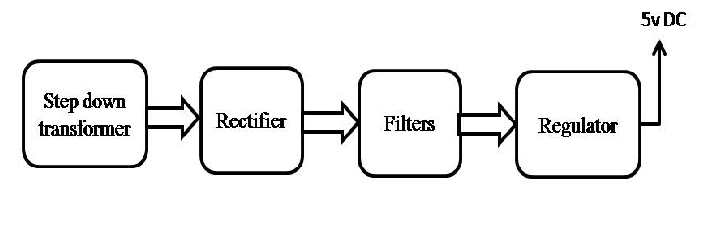 Block Diagram:
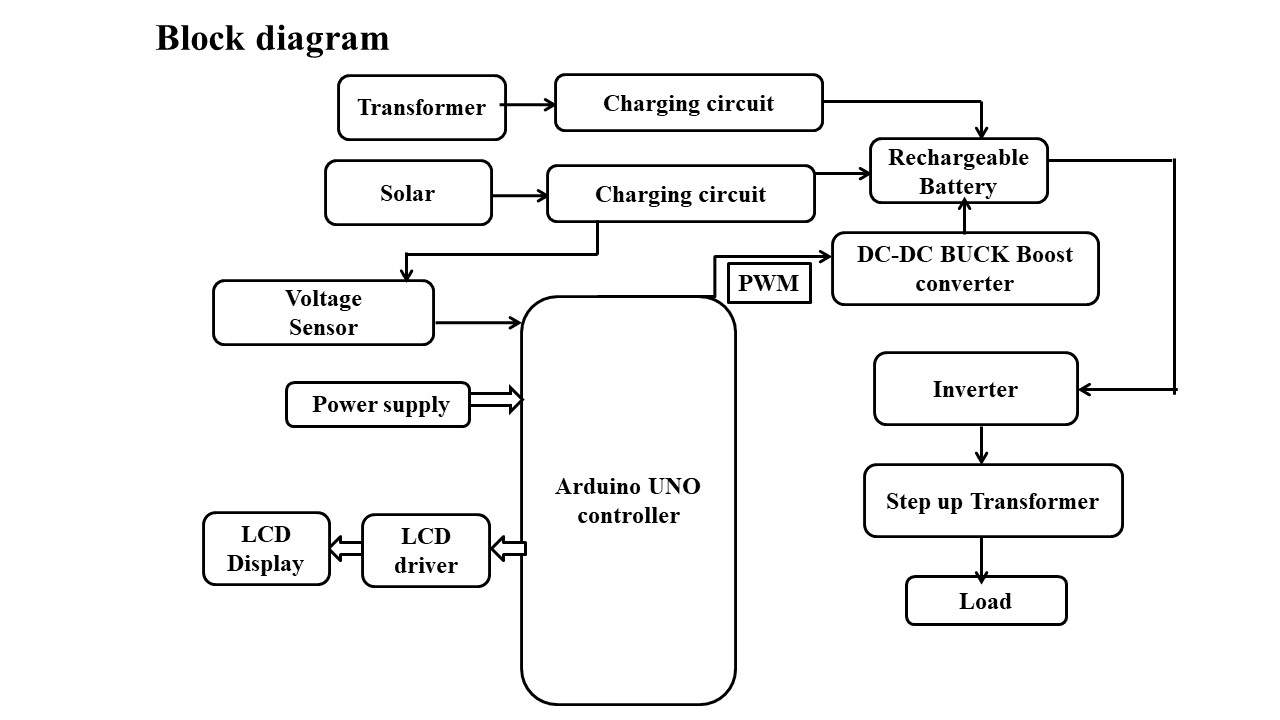 video: