No products in the cart.



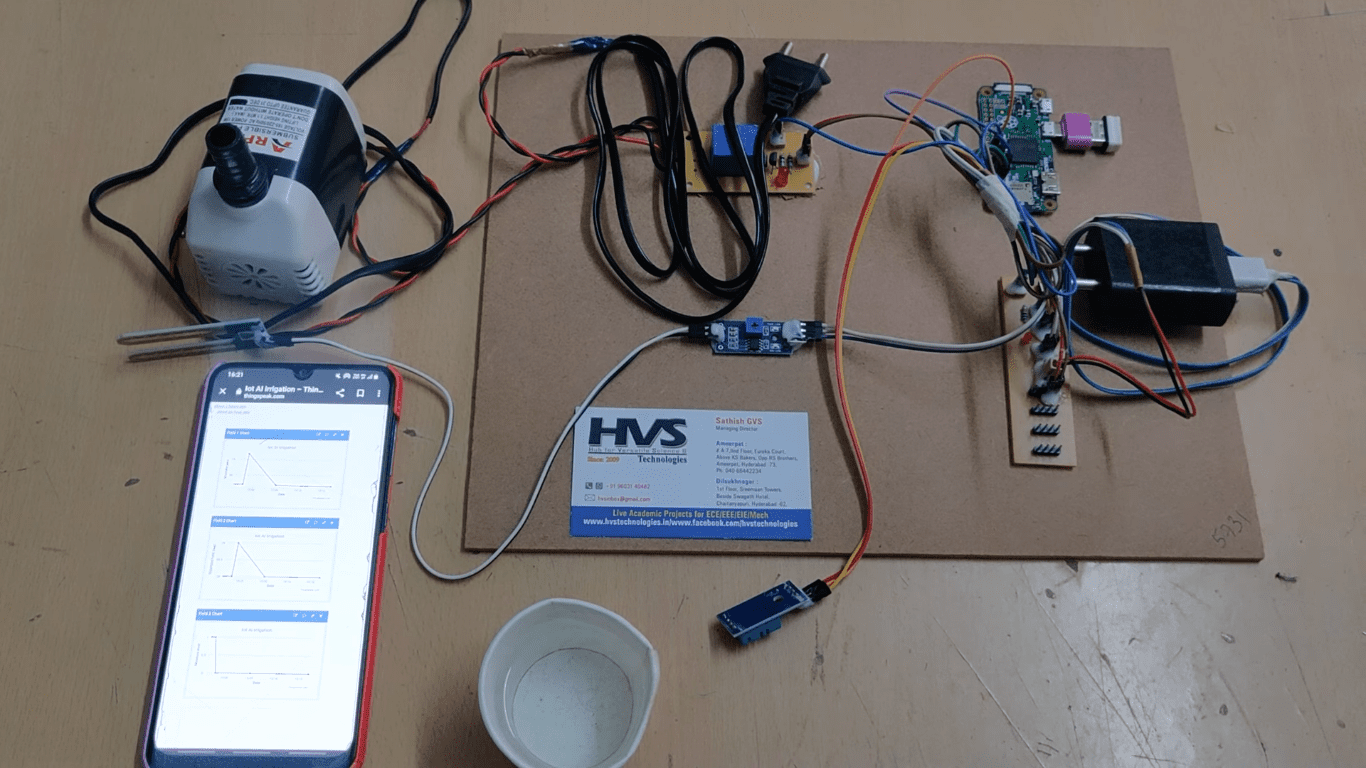
Agriculture plays a significant role in the economy and its contribution is based on measurable crop yield which is highly dependent upon irrigation. In a country like India, where agriculture is largely based on the unorganized sector, irrigation techniques and patterns followed are inefficient and often lead to unnecessary wastage of water. This calls for the need of a system which can provide an efficient and deployable solution. In this projectwe provide an Automatic Irrigation System based on Artificial Intelligence and Internet of Things, which can autonomously irrigate fields using soil moisture data.Artificial Intelligence is a way of making a computer, a computer-controlled robot, or a software think intelligently, in the similar manner the intelligent humans think.
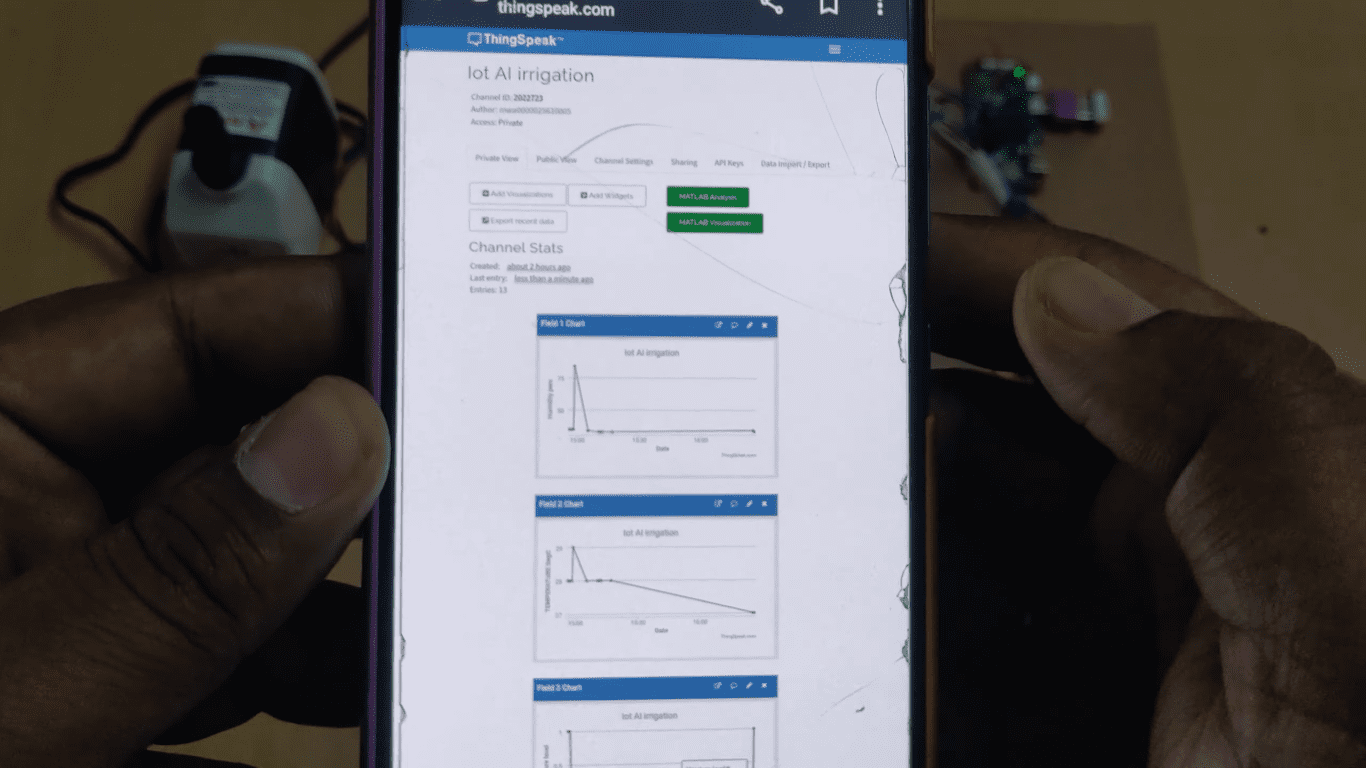
The communication among the sensors, microcontroller and farmer is established by their respective Login ID using Internet of Things (IoT). In this project the farmer can communicate to this irrigation system through IOT application. The farmer can check the status of their land at any time using Thingspeak Web Cloud.
The implementation of a sensible irrigation system in a very land is simple and therefore the value to put in is additionally less. In this system we need of soil sensors, DHT11 (humidity & temperature) according to the size of the agriculture land. Equally irrigated land is monitored through thinkgspeakusing IOT. IoT plays an important role for the communicating the system and farmers. The most contribution of this project is to develop hardware and software for the farmer’s irrigation system.
The Proposed system is to eliminate the manual operation and to implement an entire automatic irrigation system. By the implementation of this system, the farmers can able to know about their crops health in all seasons by login with their respective user id into the thingspeakcloud to check the status of their irrigation system. This helps in minimization of water wastage, a better understanding of crop water capacity and patterns required for efficient irrigation.
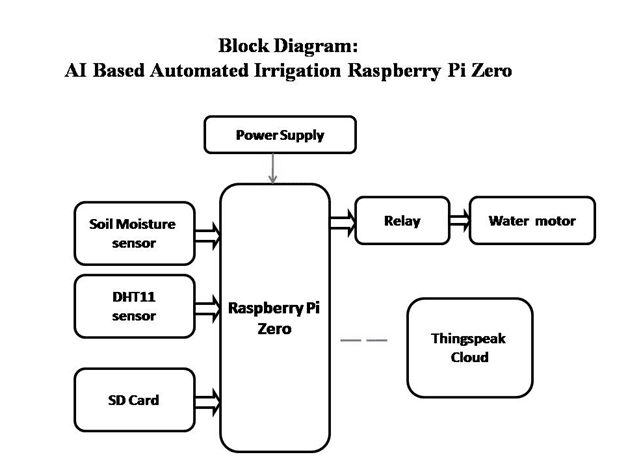
The main controlling device of the whole system is raspberry pi zero. Soil moisture sensor, DHT11 sensor, water motor along with relay is fed to the raspberry pi. The Raspberry pi continuously read the data from sensors and takes the necessary action upon the motor also sending sensors data into thethingspeak cloud through esp8266 wi-fi. Here relay works as a switch to ON/OFF the irrigation motor.To perform this task, raspberry pi is programmed using python language and Software israspbian OS.
Features:
 video:
- Soil moisture based automatic switching ON/OFF irrigation motor.
- DHT11 based temperature and humidity monitoring system.
- UsingThingspeak technology to upload the sensor data.
- Using AI for more accuracy.
- To achieve this task using raspberry pi processor.
- Powersupply.
- Raspbery pi zero.
- AC water Motor with relay driver.
- Soil moisture sensor.
- DHT11.
- ESP8266 WI-FI Module.
- SD card.
- Embedded Linux programming.
- Express SCH for Circuit design.
- Python Language.
- Artificial Intelligence.
 video: