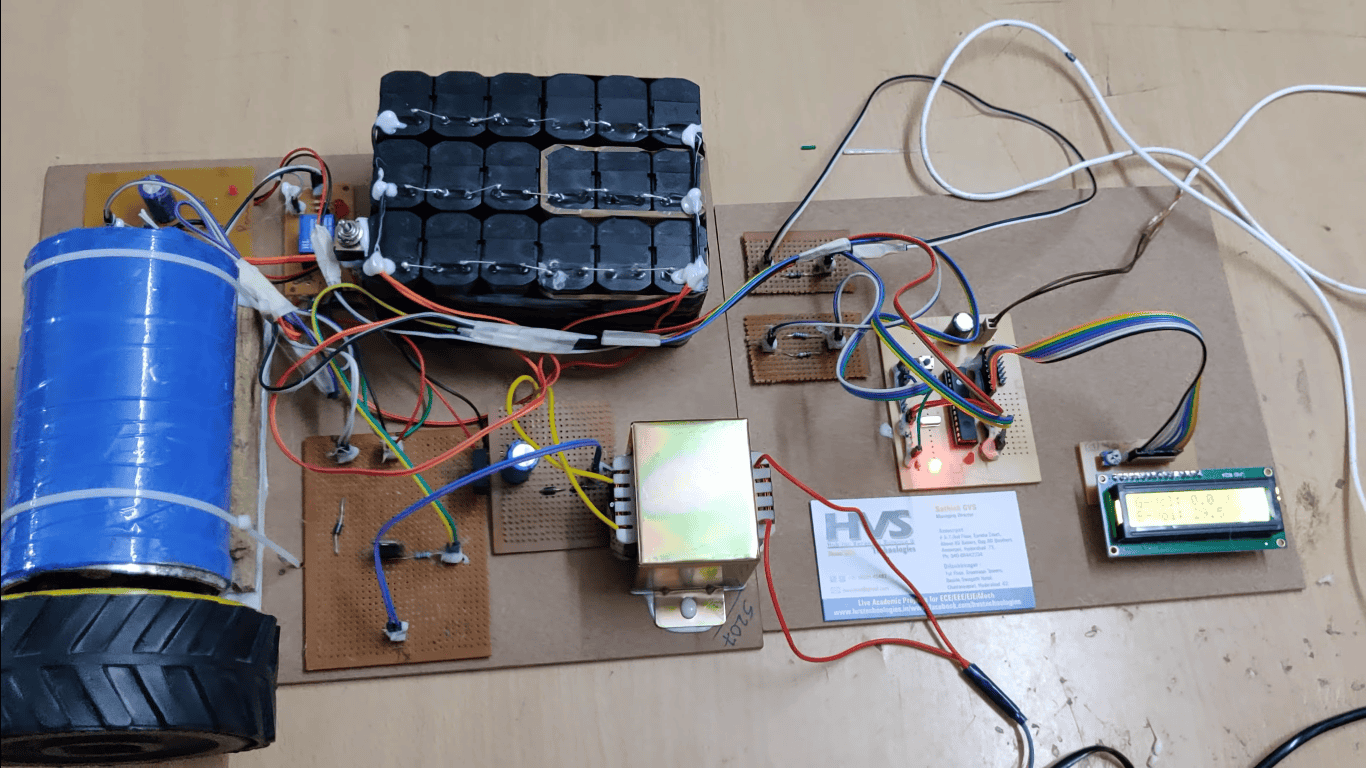
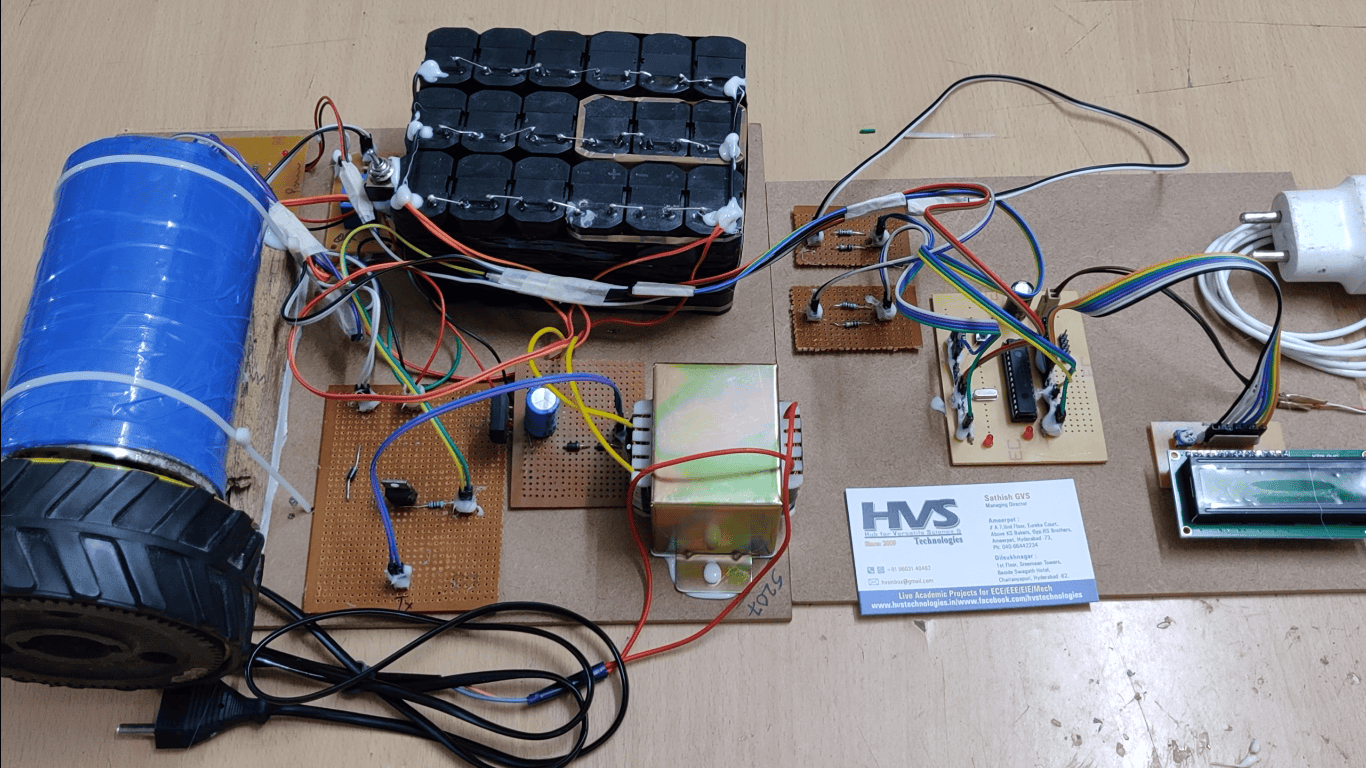
This project presents the design and implementation of a DC-Link Quasi-Switched Boost Inverter (QSBI) incorporating a Zero Voltage Switching (ZVS) Quasi-Resonant Boost Converter and a single-phase H-Bridge inverter with an improved PWM control strategy. The system is developed to achieve high efficiency, reduced switching losses, and improved power quality in DC to AC conversion.
This project presents the design and implementation of a DC-Link Quasi-Switched Boost Inverter (QSBI) incorporating a Zero Voltage Switching (ZVS) Quasi-Resonant Boost Converter and a single-phase H-Bridge inverter with an improved PWM control strategy. The system is developed to achieve high efficiency, reduced switching losses, and improved power quality in DC to AC conversion.
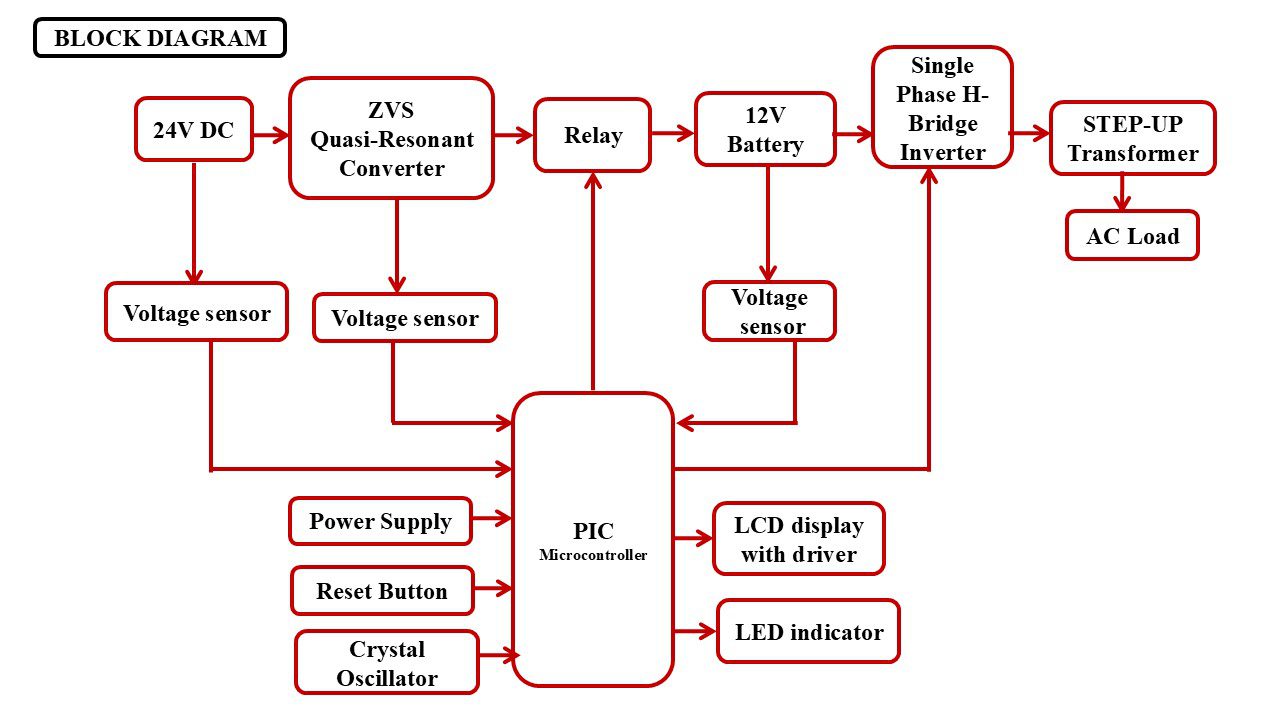
The input 24V DC supply is first processed through a ZVS quasi-resonant boost converter, which increases the voltage level efficiently while ensuring soft switching. By operating under zero-voltage switching conditions, the converter significantly reduces switching losses, electromagnetic interference (EMI), and stress on power devices, thereby enhancing overall system performance and reliability.
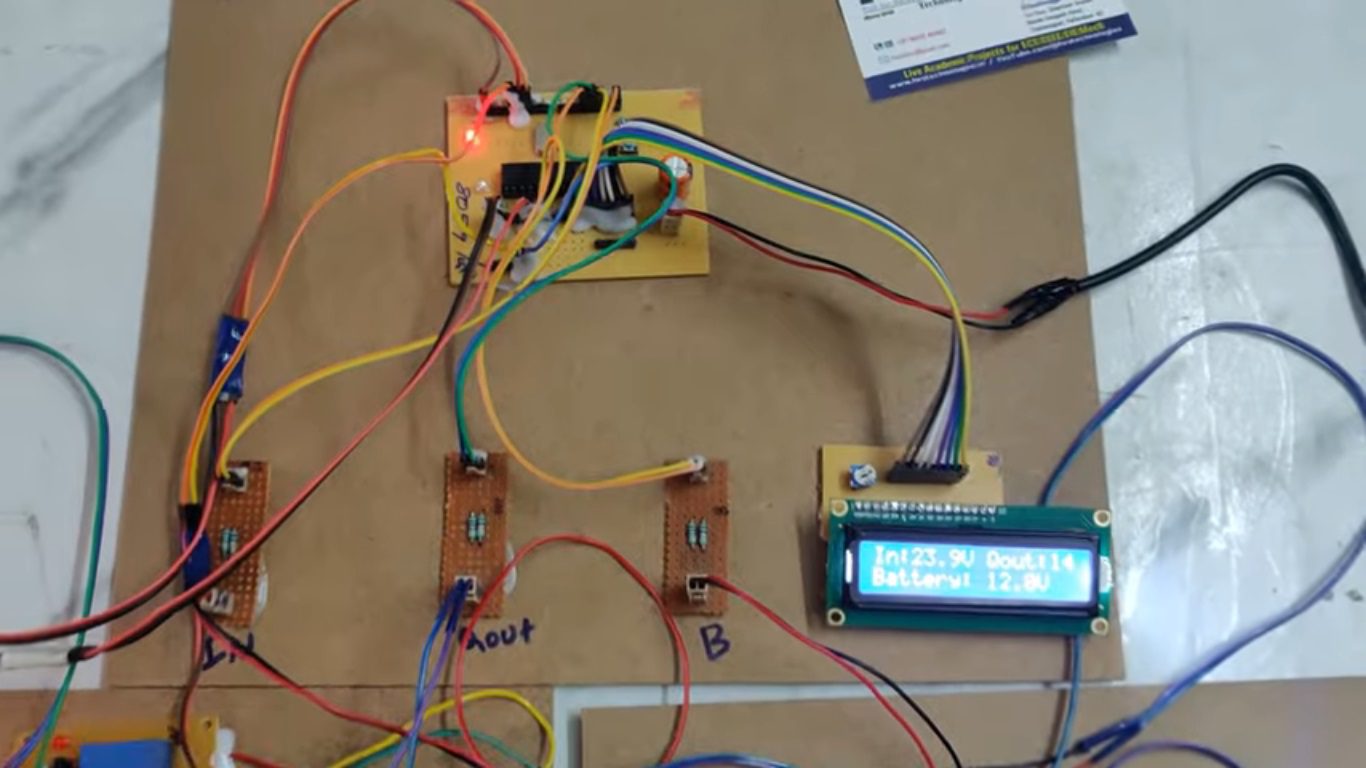
The boosted DC output is regulated and stored in a 12V battery through a relay-based control mechanism. Voltage sensors continuously monitor different stages of the system to maintain safe and stable operation. A microcontroller generates optimized PWM signals using an improved modulation technique to control the H-Bridge inverter.
The single-phase H-Bridge inverter converts the DC-link voltage into AC output, which is further stepped up using a transformer to drive AC loads. The improved PWM strategy helps in reducing harmonic distortion and improving waveform quality. Additional features such as LCD display and LED indicators provide real-time monitoring and system status.
The proposed system offers advantages such as high voltage gain, reduced switching losses due to ZVS operation, improved efficiency, and enhanced output quality. This makes it suitable for applications in renewable energy systems, battery-powered inverters, and low-cost power conversion systems.
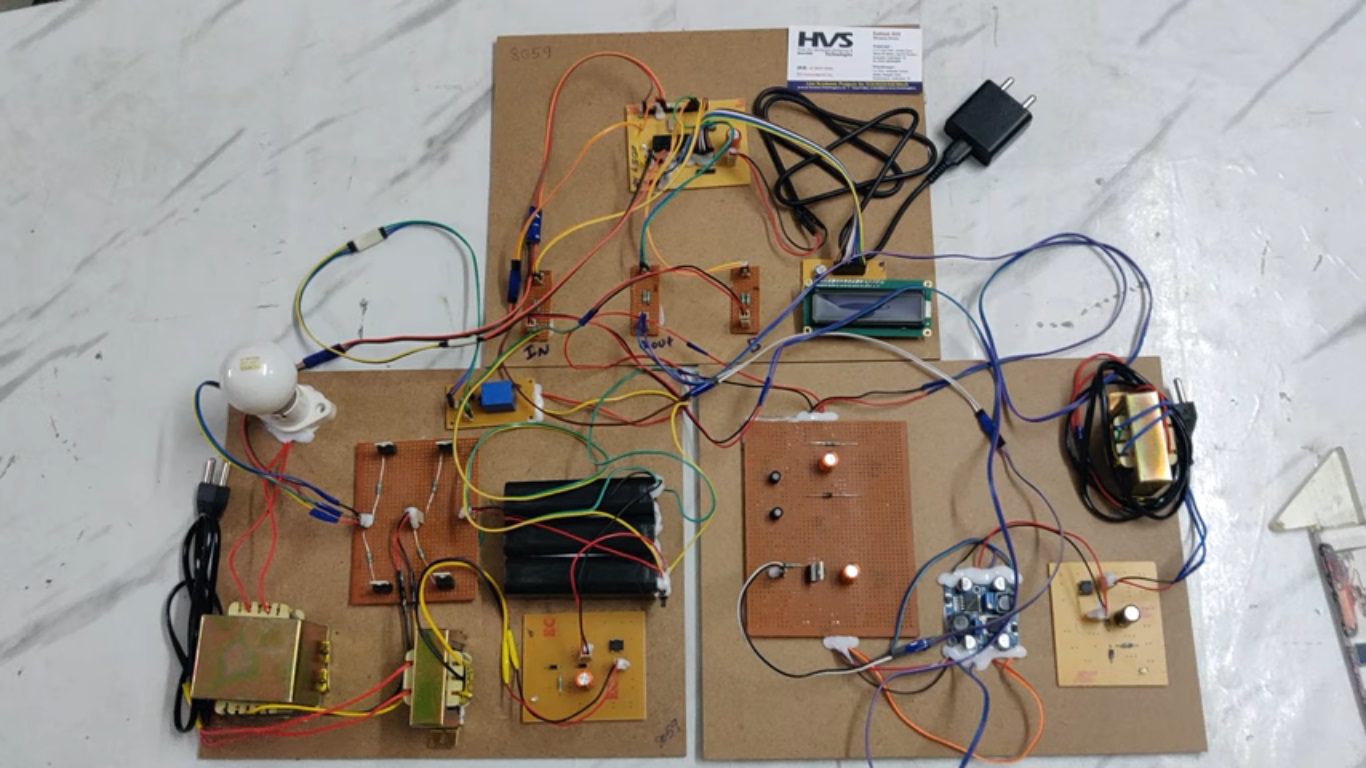
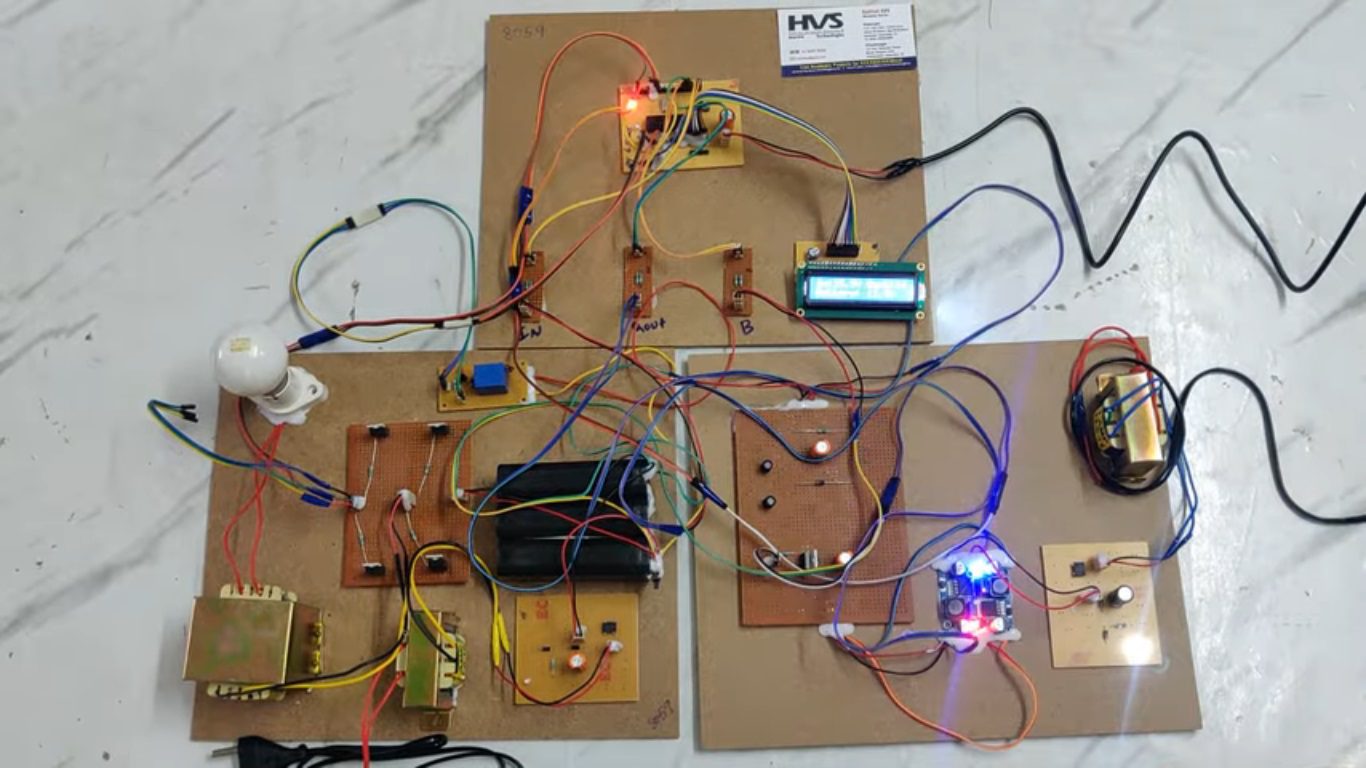
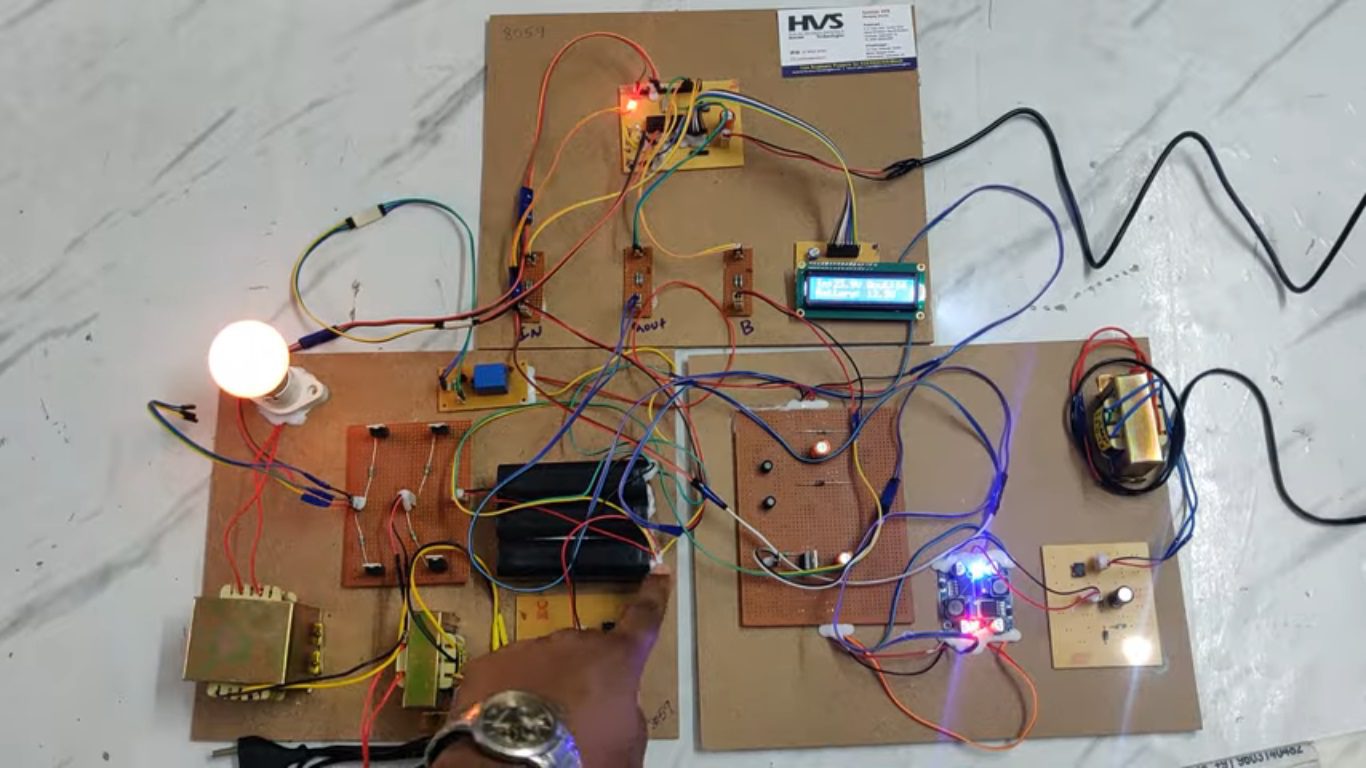
The major building blocks of this project are:
24V DC Power supply
PIC Microcontroller.
Voltage sensors.
ZVS Quasi-resonant DC–DC converter.
12V Li-ion Battery pack
Relay.
LCD display.
H-Bridge inverter.
Step up Transformer.
AC Bulb.
Crystal Oscillator.
Reset Button.
LED Indicators.
Software’s used:
PIC-C compiler for Embedded C programming.
PIC kit 2 programmer for dumping code into Micro controller.
 2 × ₹4,500.00
 1 × ₹5,500.00
 video: