Subtotal ₹10,300.00


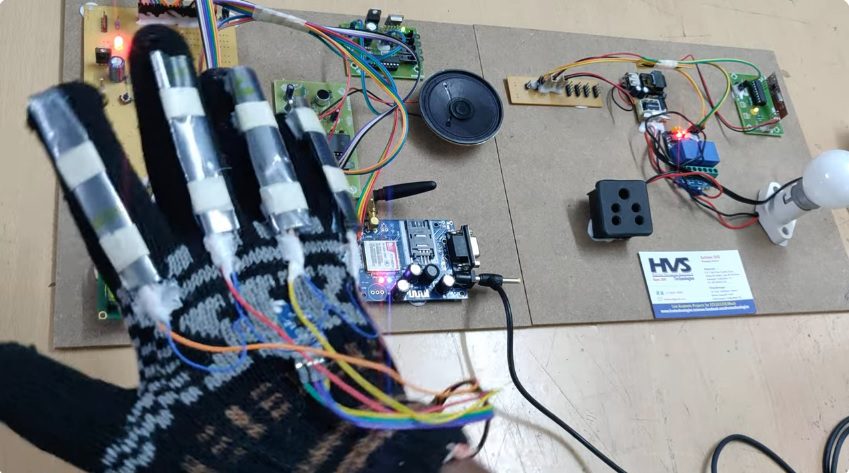
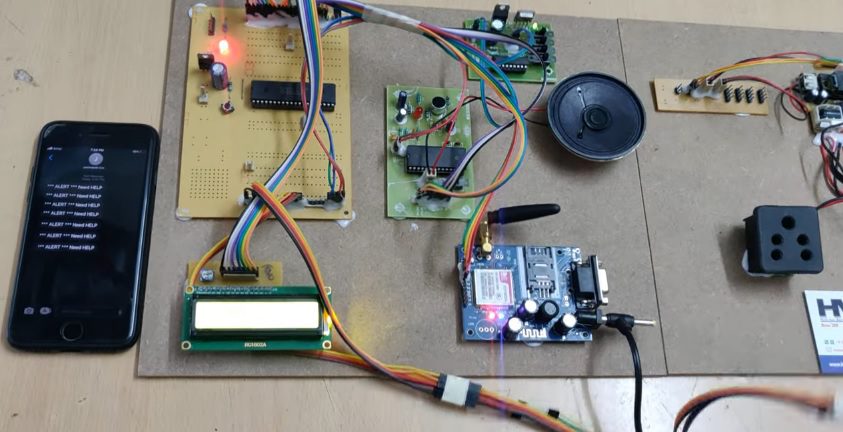
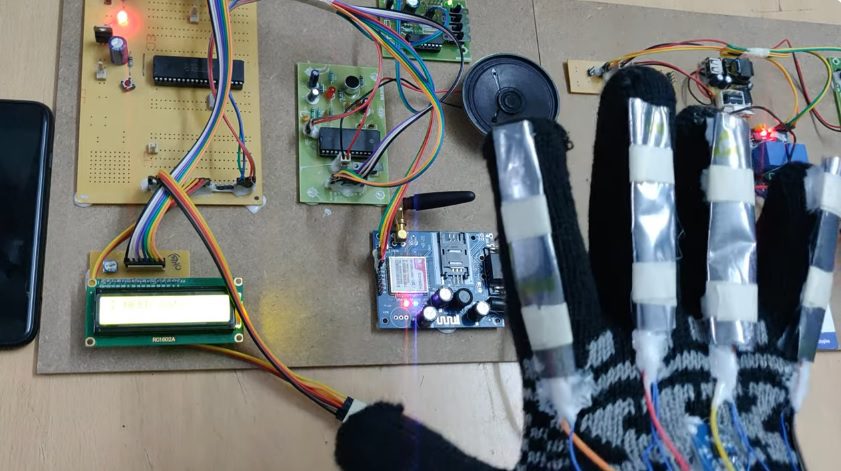
The project aims to design and develop a Flex Sensor-Based Smart Glove for Voice Communication and Home Automation Using Wireless RF Communication and GSM Emergency Alerts. The proposed system helps paralyzed and physically challenged people communicate their basic needs through hand gestures and control home appliances wirelessly. The system uses MEMS technology to select the required mode of operation, such as voice mode or home automation mode. GSM technology is used to send emergency alert messages to a predefined mobile number.
Flex sensors are special components whose resistance changes according to the degree of bending. When the sensor is in a flat position, it has a nominal resistance, and its resistance increases as it bends. These sensors are attached to the glove to detect different finger movements and gestures.
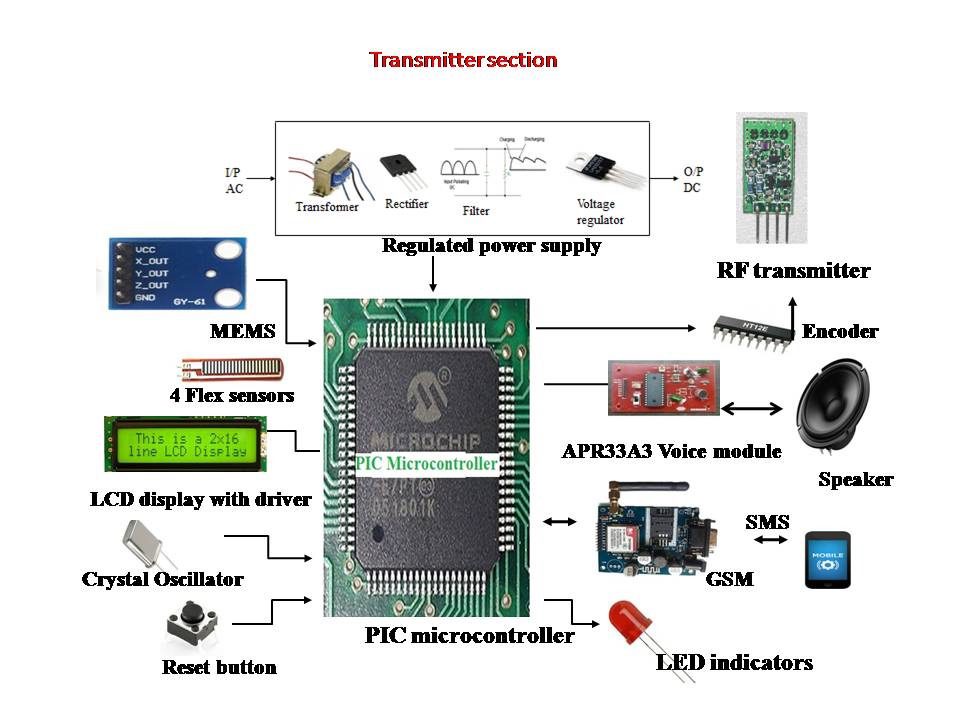
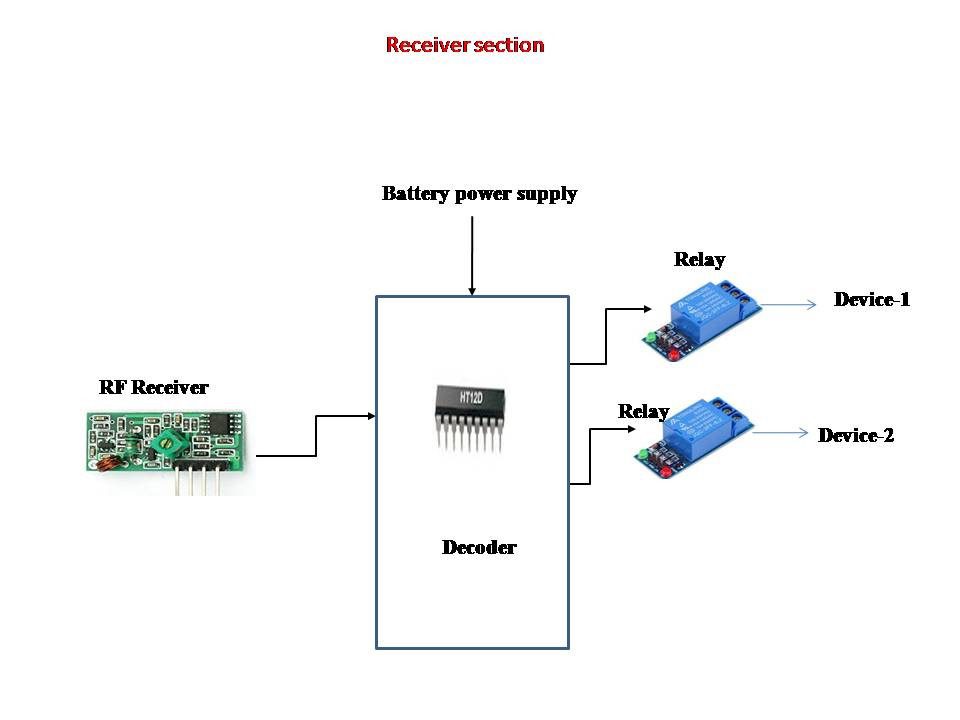
The entire system is controlled by a PIC microcontroller and consists of two sections: transmitter and receiver. The transmitter section consists of a PIC microcontroller, MEMS sensor, four flex sensors, RF transmitter, GSM module, and voice playback module. The receiver section consists of an RF receiver, another PIC microcontroller, and two electrical devices for home automation. Both sections communicate wirelessly through RF communication.
When the user wears the glove, the MEMS sensor is used to select either voice mode or home automation mode. In voice mode, different finger movements are detected using flex sensors, and the corresponding predefined voice messages are announced through the voice module so that other people can understand the user's needs. In home automation mode, the detected hand gestures are transmitted wirelessly to the receiver section to control electrical appliances. Additionally, an emergency message is sent to the predefined mobile number through the GSM module whenever assistance is required.
The PIC microcontroller is programmed using Embedded C to process the sensor signals and perform the required operations. This system provides an effective and user-friendly solution for improving communication, independence, and safety for physically challenged and paralyzed people.
The main objectives of the project are:
 video:
-
To develop a smart glove for physically challenged people.
-
To detect finger movements using four flex sensors.
-
To select voice and home automation modes using a MEMS sensor.
-
To announce basic needs through predefined voice messages.
-
To control home appliances wirelessly using RF communication.
-
To send emergency alert messages through GSM.
-
To improve the communication and independence of paralyzed people.
- Power supply.
- PIC Microcontroller.
- GSM.
- Flex sensors.
- Voice circuit.
- Relay.
- Devices
- RF Transmitter and RF Receiver.
- Crystal
- Reset.
- LED indicators.
- PIC C compiling and dumping code into Microcontroller
- Express SCH for Circuit design.
 video: