No products in the cart.


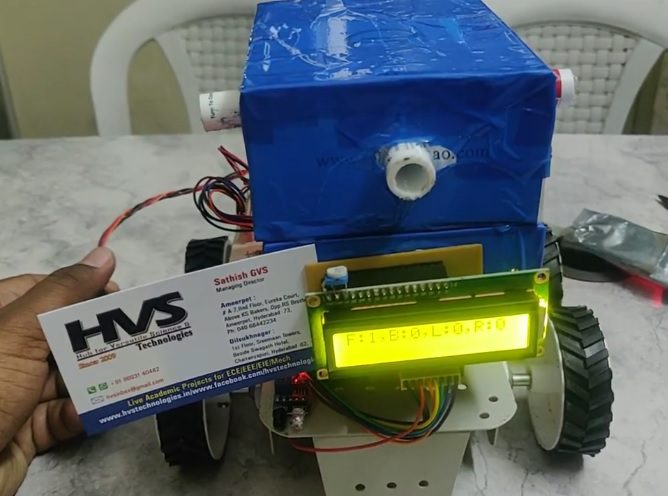
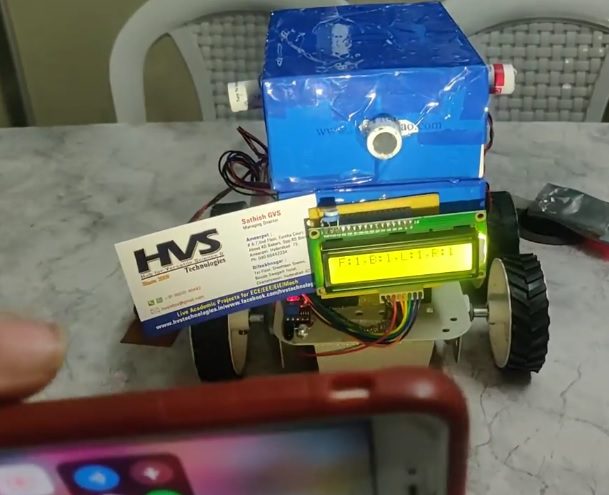
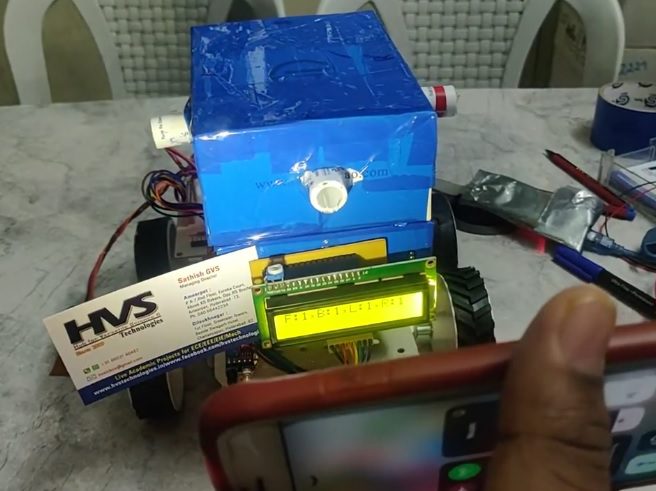
The project aims of the project to design a “neural network" based system which used Hebbian Learning to train a robot to respond to the environment.
Hebbian learning is seen in Pavlov’s experiment with his dog. In this experiment, when food was offered to the dog, it caused the dog to salivate. At first the sound of a doorbell elicited no such response. However, Pavlov decided to sound the bell when he offered food to the dog. After a few repetitions of this experiment, the dog began to salivate at the sound of the bell even when no food was present. Here food was the unconditioned stimulus, and the doorbell was the conditioned stimulus. In similar way our project Robot is trained
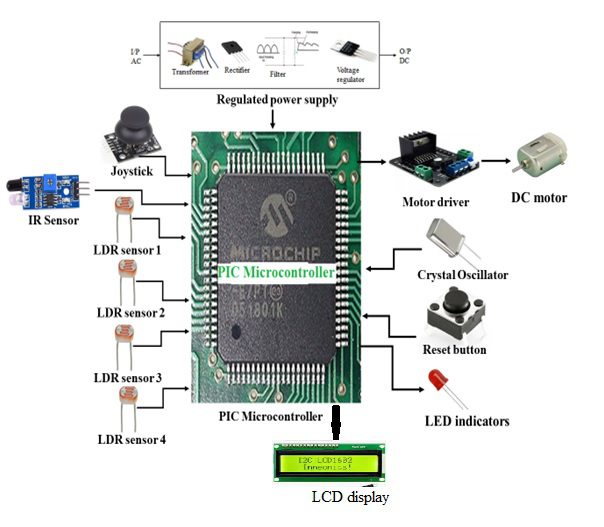
The controlling device of the entire system is a PIC microcontroller. The proposed intelligent robot consists of an IR sensor, four LDR sensors, a joystick, and DC motors interfaced with the PIC microcontroller. The IR sensor is used for obstacle detection, and whenever an obstacle is detected, the microcontroller automatically stops the robot to avoid collision. Four LDR sensors are placed in four different directions—front, back, left, and right—to detect the direction of light. The joystick is used during the training process to provide movement commands to the robot. Initially, shining light on the LDR sensors does not produce any movement. During training, the user operates the joystick in a particular direction while simultaneously shining light on the corresponding LDR sensor. The intelligent algorithm programmed into the PIC microcontroller learns the relationship between the light input and the joystick movement. After training, the robot automatically responds to the direction of light based on the learned pattern. The entire system is controlled through an intelligent program developed in Embedded C language, enabling light-guided movement, obstacle detection, and motor control.
Objectives:
 video:
- To design and develop an intelligent robot based on a neural network and Hebbian learning concept.
- To implement a training mechanism that enables the robot to learn the relationship between environmental light signals and joystick movement commands.
- To use four LDR sensors for detecting light from different directions, namely front, back, left, and right.
- To train the robot using a joystick so that it can associate a particular light input with a corresponding direction of movement.
- To enable the robot to automatically respond to environmental light stimuli after completing the training process.
- To implement obstacle detection using an IR sensor and automatically stop the robot when an obstacle is detected.
- To control the movement of the robot using DC motors interfaced with the PIC microcontroller.
- To develop and implement the intelligent control algorithm using Embedded C language.
- Regulated Power Supply.
- PIC microcontroller
- IR sensor
- FOUR LDRs.
- Joystick.
- Motor driver
- DC Motor.
- PIC-C compiler for Embedded C programming.
- PIC kit 2 programmer for dumping code into Micro controller.
- Express SCH for Circuit design.
 video: