Subtotal ₹81,500.00


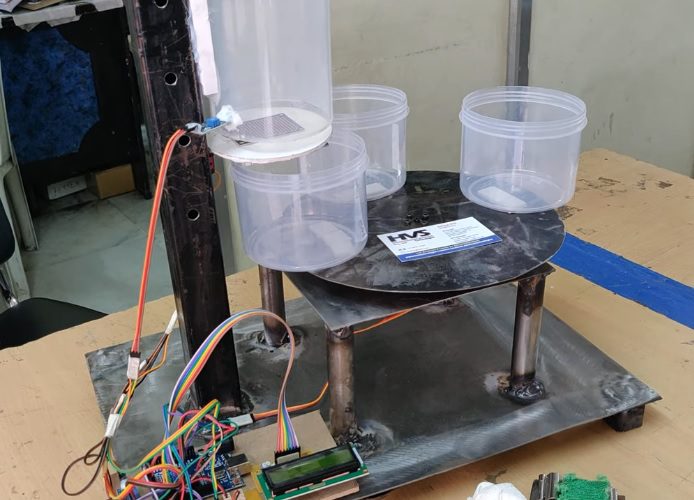
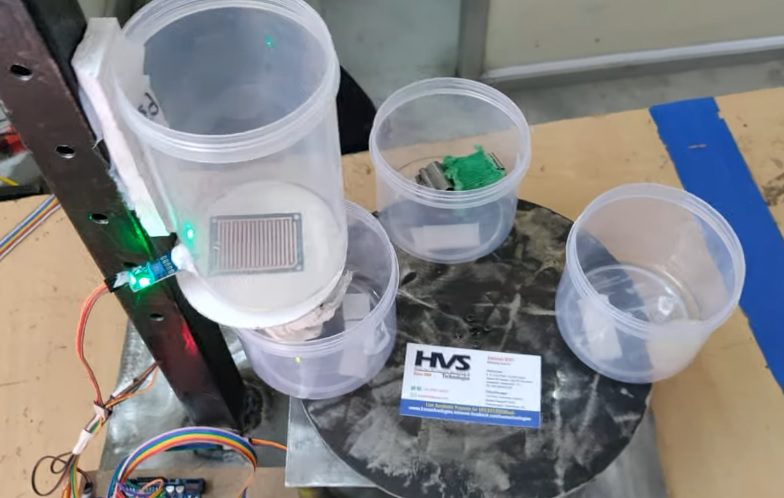
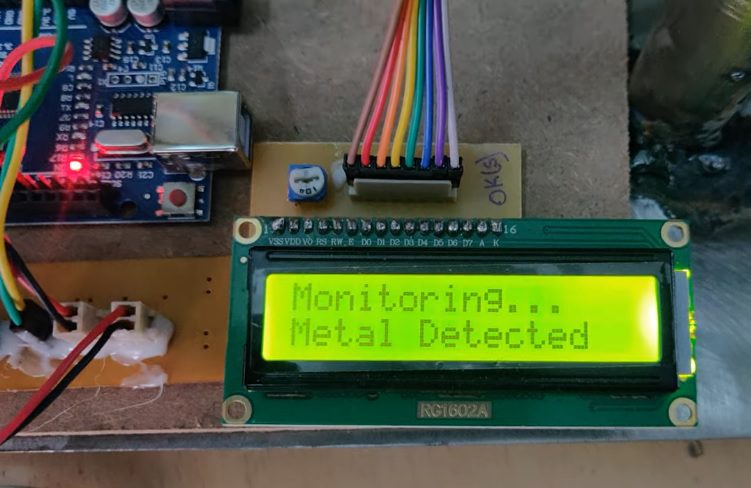
Rapid increase in volume and types of solid and hazardous waste due to continuous economic growth, urbanization and industrialization, is becoming a burgeoning problem for national and local governments to ensure effective and sustainable management of waste. It is estimated that in 2006 the total amount of municipal solid waste generated globally reached 2.02 billion tones, representing a 7% annual increase since 2003 (Global Waste Management Market Report 2007). The segregation, handling, transport, and disposal of waste needs to be properly managed to minimize the risk to the health and safety of patients, the public, and the environment. The economic value of waste is best realized when it is segregated. Currently, there is no such system of segregation of dry, wet and metallic wastes at the household level. This paper proposes an Automated Waste Segregator (AWS) which is a cheap, easy to use solution for a segregation system for household use, so that it can be sent directly for processing. It is designed to sort the refuse into metallic waste, wet waste and dry waste. The AWS employs parallel resonant impedance sensing mechanism to identify metallic items, and capacitive sensors to distinguish between wet and dry waste. Experimental results show that the segregation of waste into metallic, wet and dry waste has been successfully implemented using the AWS.
Objectives:
The main objectives of the Automated Waste Segregator are:
 video:
- To design and develop an automatic waste segregation system for household and public waste management.
- To separate waste into three categories: metallic waste, wet waste, and dry waste.
- To detect metallic objects using an appropriate metal sensing mechanism.
- To distinguish wet and dry waste using moisture or capacitive sensing technology.
- To reduce manual handling of waste and improve hygiene and safety.
- To promote efficient recycling and proper disposal of different types of waste.
- To minimize environmental pollution caused by improper waste mixing and disposal.
- To develop a low-cost, simple, and easy-to-use waste segregation system.
- To reduce the workload involved in manual waste sorting.
- To encourage sustainable and effective solid waste management practices.
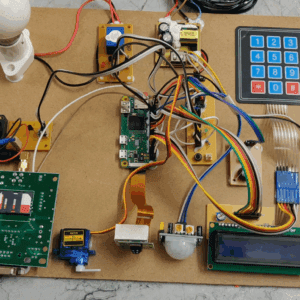
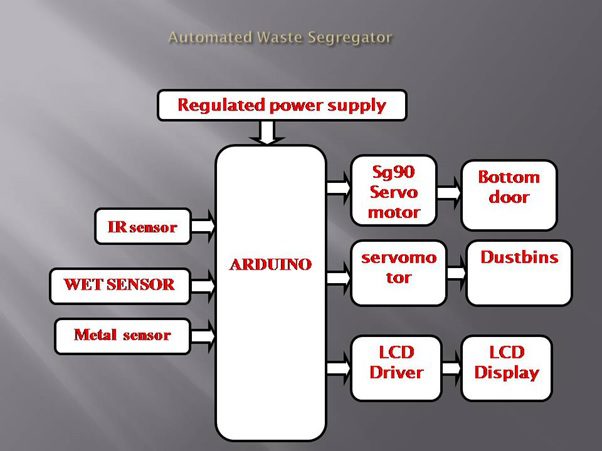
- Regulated Power Supply.
- Arduino Microcontroller.
- IR Sensor.
- Wet Sensor.
- Metal sensor.
- Servo motors.
- LCD display.
- MS Steel Metal Frame.
- Arduino IDE for compiling and dumping code into Microcontroller
- Express SCH for Circuit design.
 video: