No products in the cart.


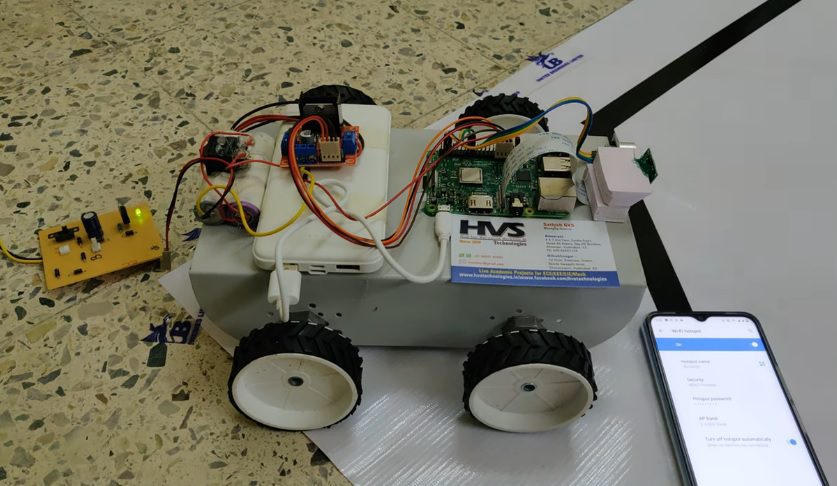
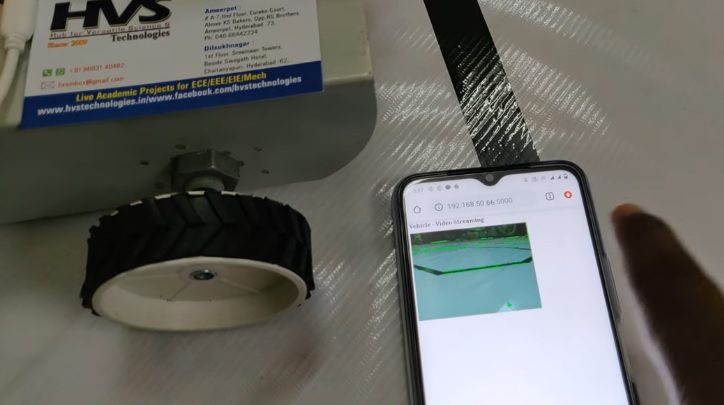
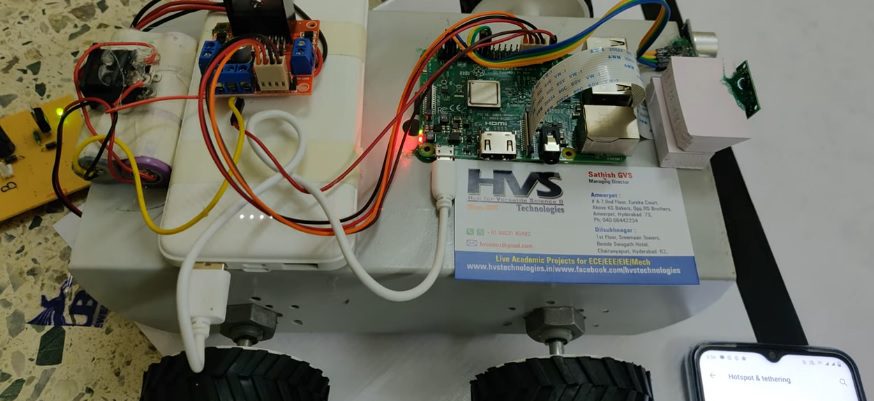
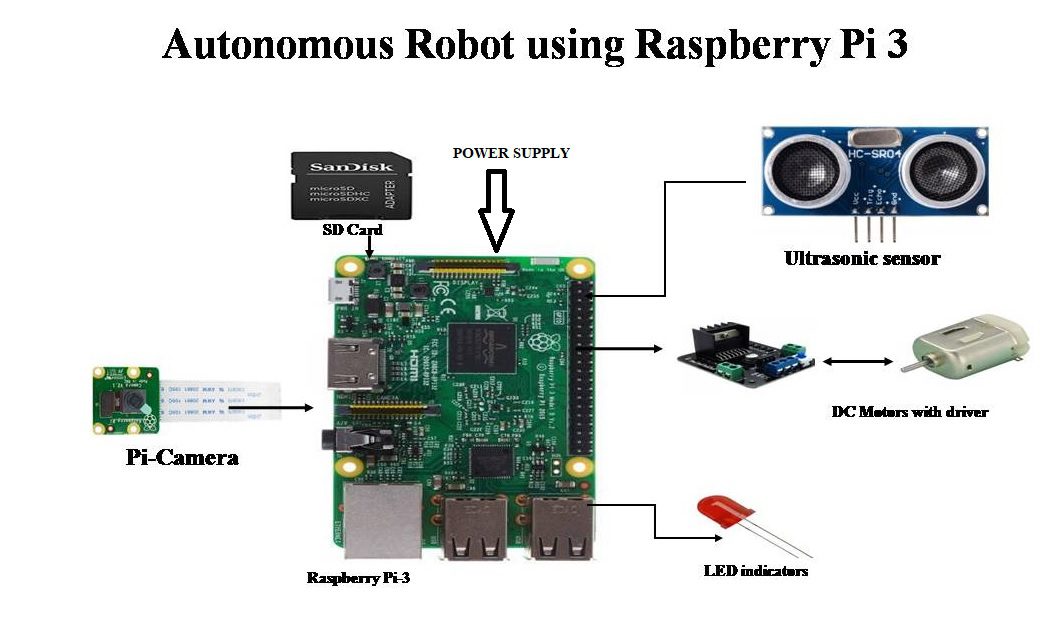
The purpose of this project is to develop an autonomous robot that can follow a lane, detect obstacles, and perform emergency braking to avoid collisions. A Pi Camera is used to capture the road or lane, and OpenCV processes the camera images to identify and follow the lane. An ultrasonic sensor is used to detect obstacles in front of the robot, and when an obstacle is detected within a predefined distance, the system automatically stops the motors to provide emergency braking. The project uses a Raspberry Pi 3 as the main controlling unit, which receives inputs from the Pi Camera and ultrasonic sensor, processes the information, and controls the robot motors accordingly. Python programming language is used to implement the control and image-processing algorithms. OpenCV provides real-time image-processing and computer-vision capabilities, while Python offers a simple and flexible platform for developing the application. The Raspberry Pi 3 provides a 64-bit quad-core ARM Cortex-A53 processor, 1 GB RAM, Wi-Fi, Bluetooth, and Ethernet connectivity, making it suitable for real-time robotic applications. Based on the sensor and camera inputs, the Raspberry Pi intelligently controls the movement of the robot and activates emergency braking whenever an obstacle is detected.
The major features of this project are:
 video:
Autonomous lane following using Pi Camera.
Lane detection and tracking using OpenCV.
Obstacle detection using an ultrasonic sensor.
Automatic emergency braking when an obstacle is detected.
Raspberry Pi 3 as the main controller.
Python-based control and image processing.
Real-time camera-based monitoring.
Automatic motor control according to lane position.
Collision avoidance for improved safety.
Suitable for autonomous vehicle and robotic applications.
The major building blocks of this project:- Battery power supply.
- Raspberry Pi3 Processor.
- SD Card.
- Ultrasonic sensor.
- Pi camera.
- LED indicators.
- DC motors with driver.
- Python Programming.
- OpenCV Image processing.
- Embedded Linux operating system.
- Express SCH for Circuit design.
 video: