No products in the cart.


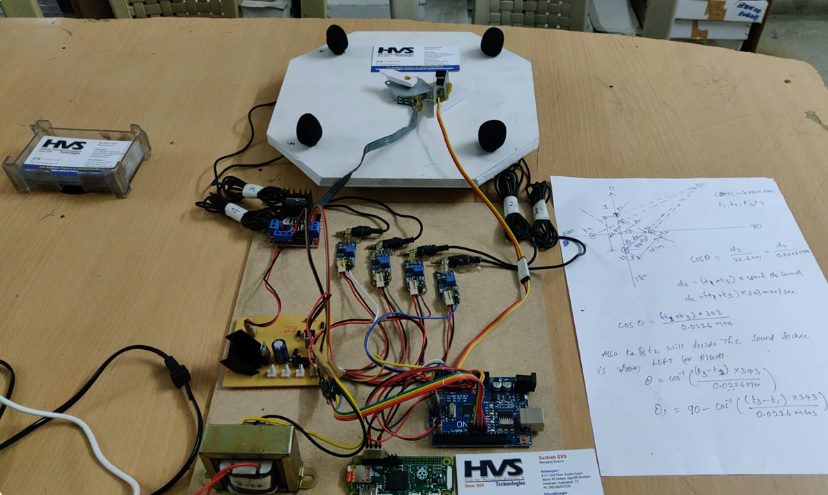
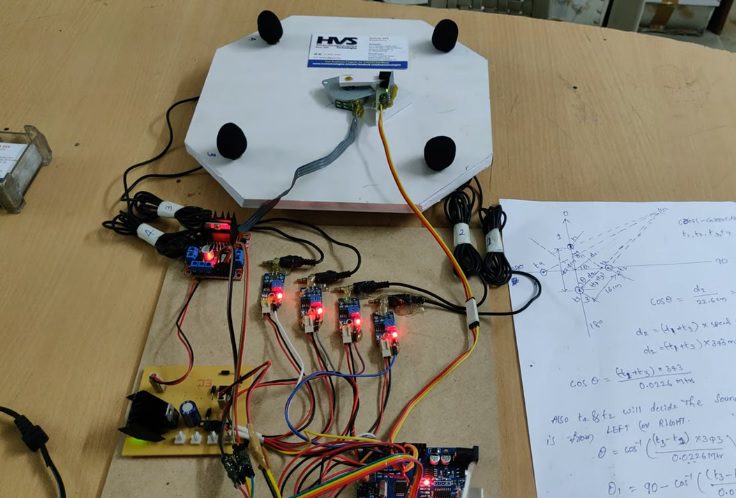
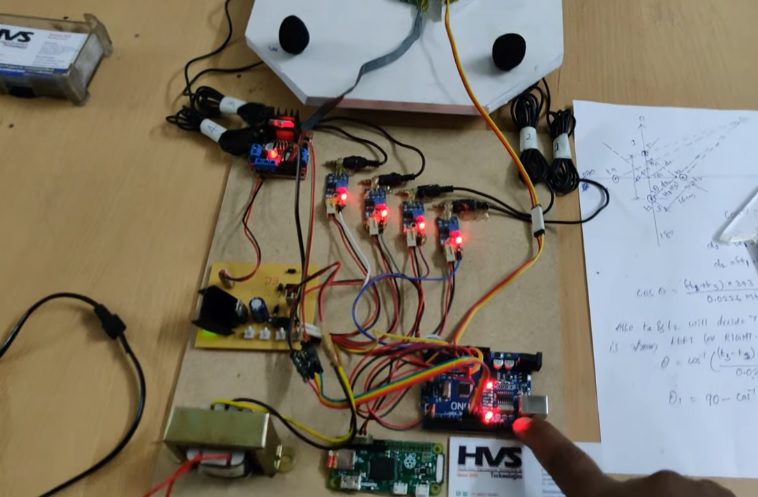
The project aims to design a sound source direction detection system using an array of microphones, Arduino, and Raspberry Pi. The system is designed to detect the direction or angle from which a sound originates and automatically point a device toward the detected sound source.
Automation is one of the most important technologies in the field of electronics and embedded systems. This project uses a Raspberry Pi Zero as the main processing unit. It acts as the heart of the system and communicates with the input and output modules to perform sound detection and direction calculation.
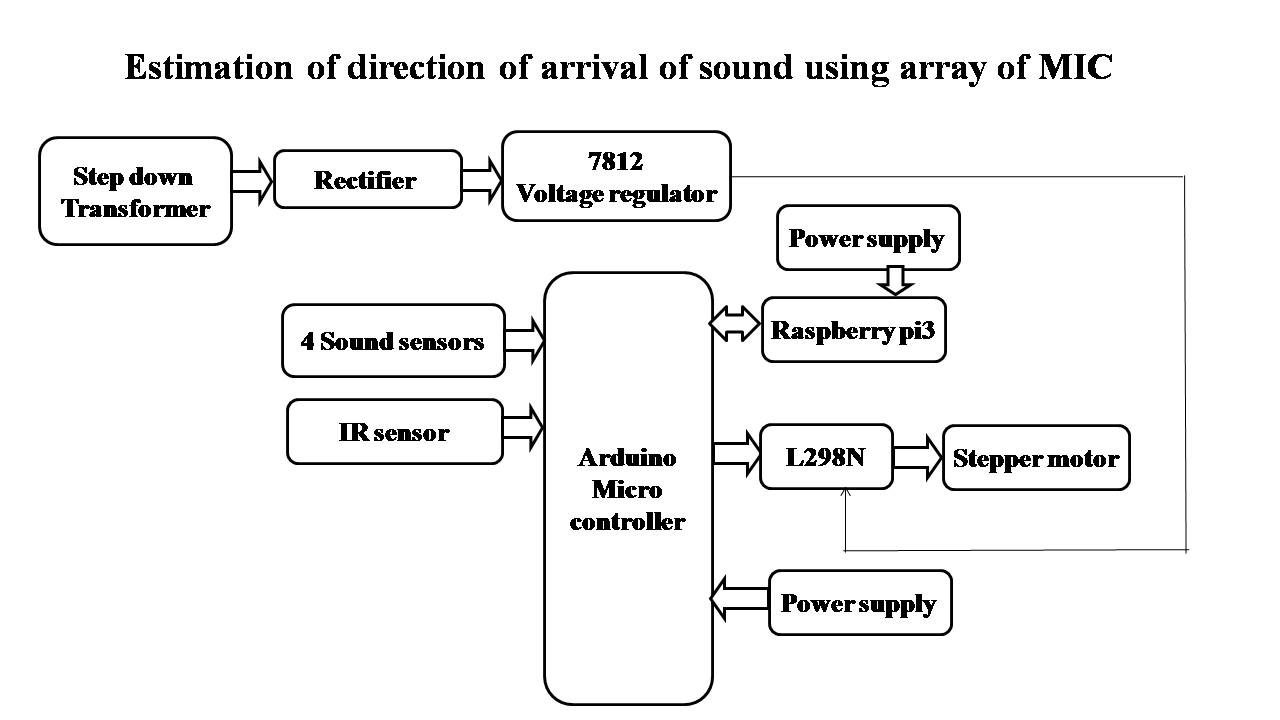
The system consists of four microphones connected to an Arduino through audio amplifier circuits. The Arduino collects the signals from the microphones and sends the required timing or signal information to the Raspberry Pi. The Raspberry Pi processes these signals and calculates the angle of the sound source based on the difference in the arrival time of the sound signals at the microphones. The calculated angle is then sent back to the Arduino.
The Arduino controls a stepper motor through a stepper motor driver according to the calculated angle. When a sound is detected, the microphones capture the sound signals and convert them into electrical signals. The audio amplifiers condition these signals before they are processed by the Arduino. The Raspberry Pi analyzes the timing differences between the microphone signals and determines the direction of the sound source. The Arduino then drives the stepper motor to rotate toward the detected sound direction.
The Raspberry Pi Zero is programmed using a Linux-based operating system, allowing it to perform the required signal processing and communication tasks. This system can be useful for sound tracking, surveillance, robotic applications, and automated directional systems.
The objectives of the project are:
 Block Diagram:
video:
Block Diagram:
video:
- Usage of Comparators as audio amplifiers.
- Usage of stepper motor to show the angle of sound arrival
- Raspberry Pi does the action of taking care of the estimation of sound source angle.
- Power supply.
- Raspberry Pi Zero processor.
- Arduino UNO
- 4 Microphones
- 4 comparators used as audio amplifiers
- Stepper Motor Driver
- Stepper Motor
- IR Sensor
- Embedded Linux programming.
- Arduino IDE for compiling and dumping code into Microcontroller
- Express SCH for Circuit design.
 Block Diagram:
 video: