No products in the cart.


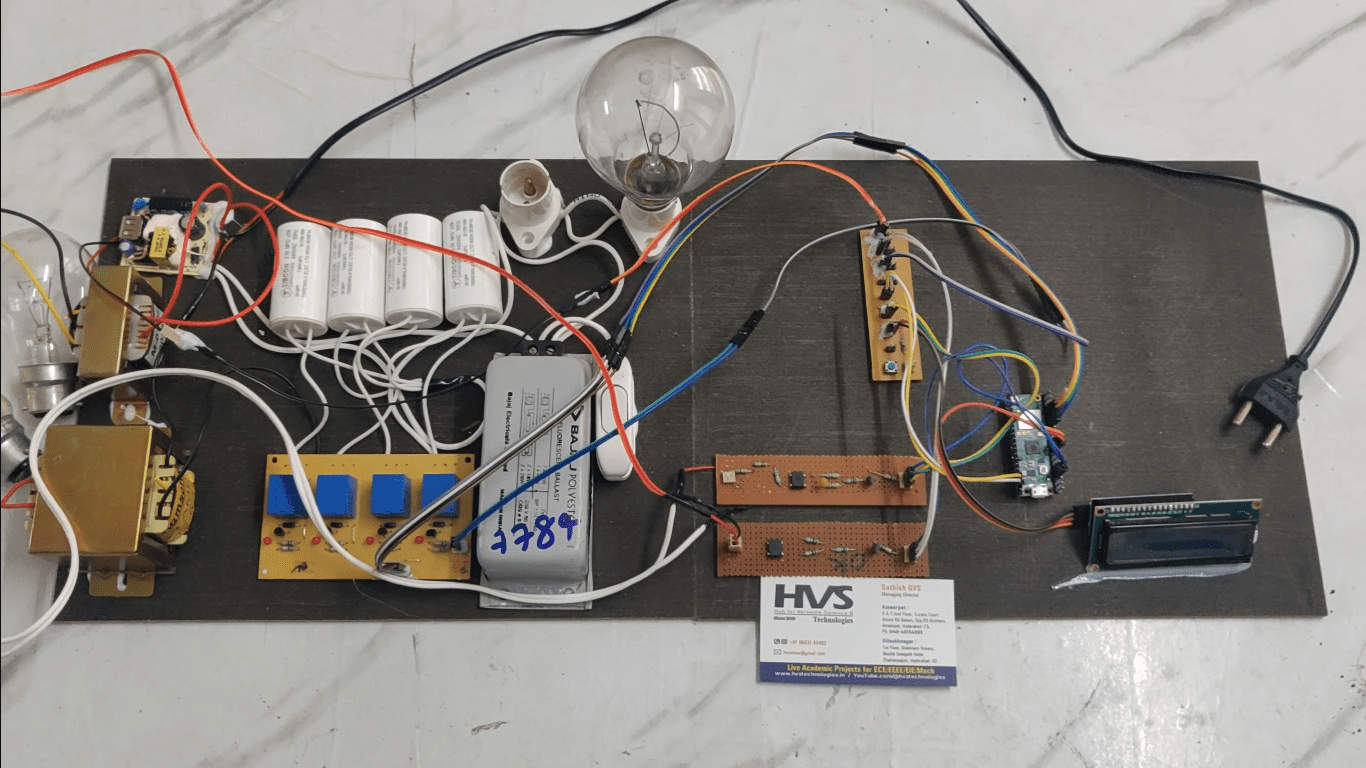
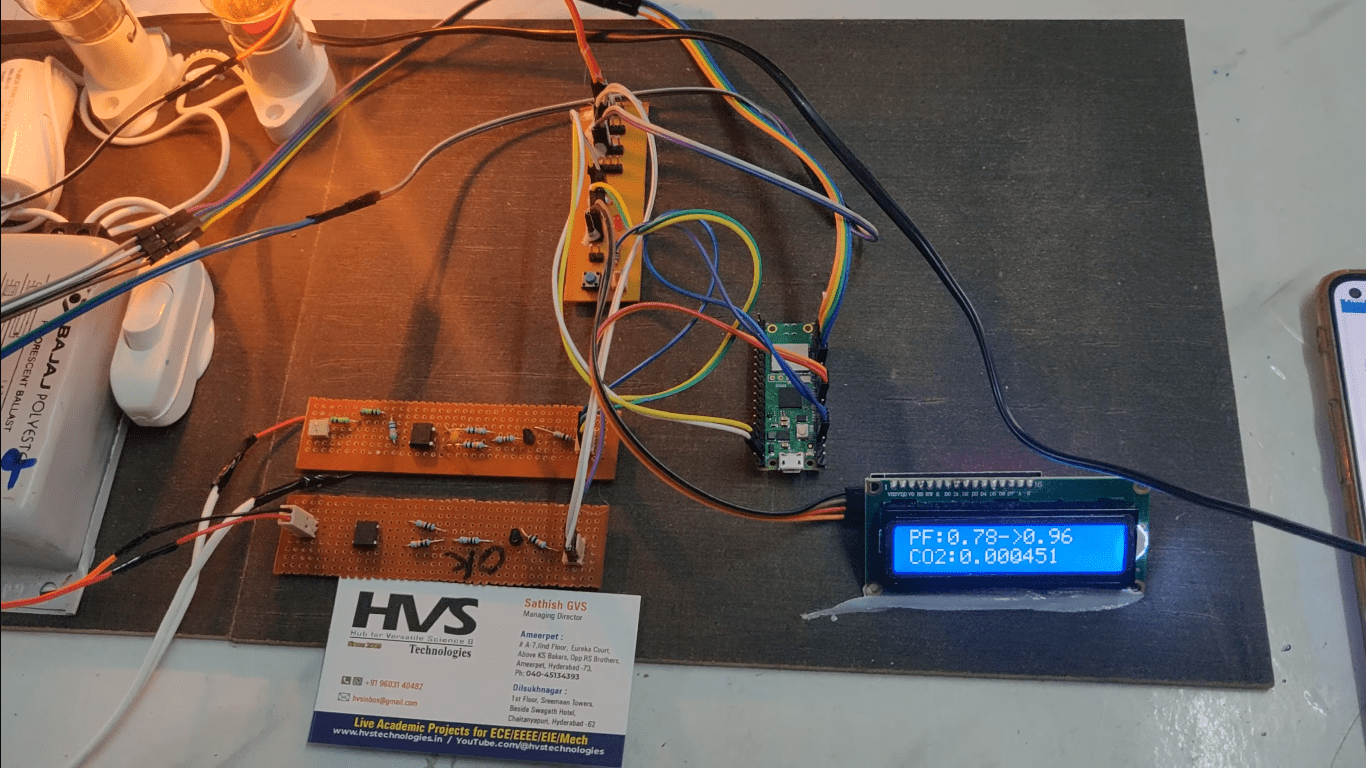
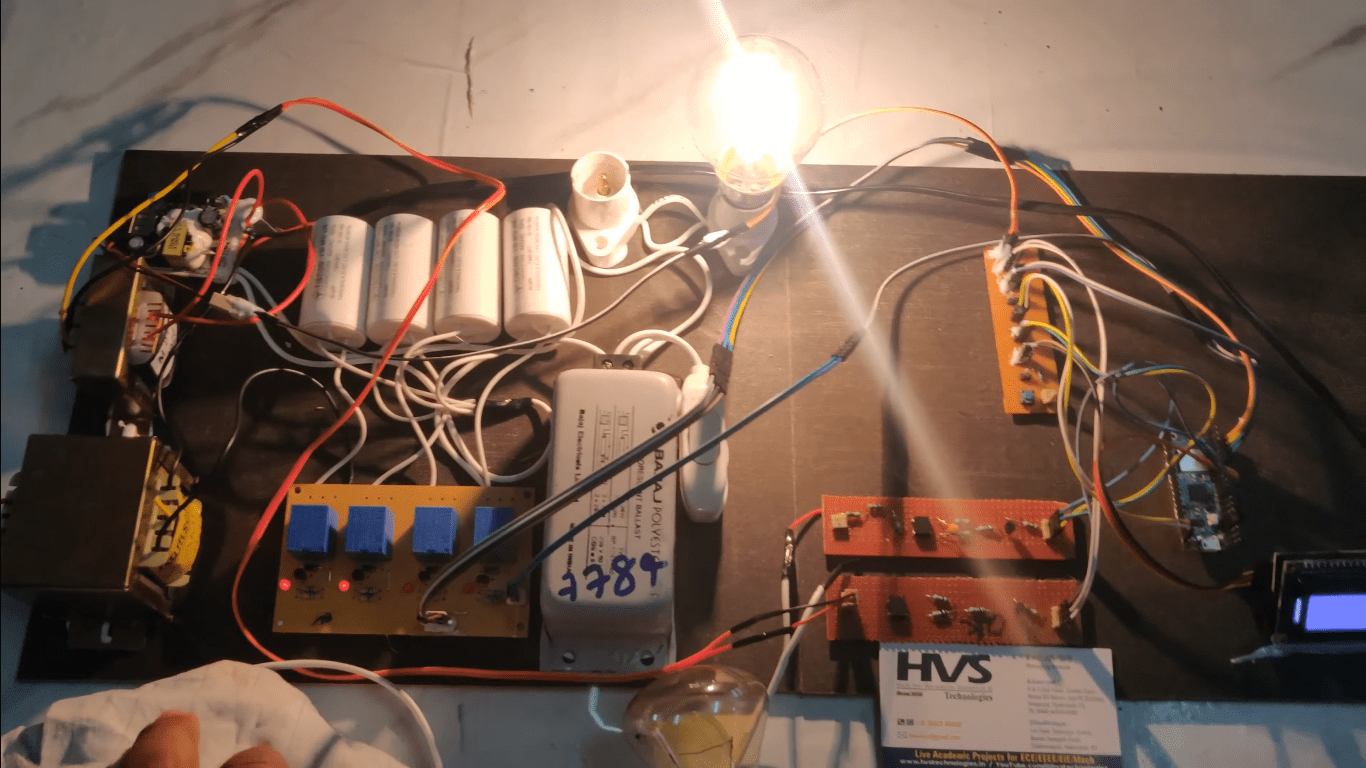
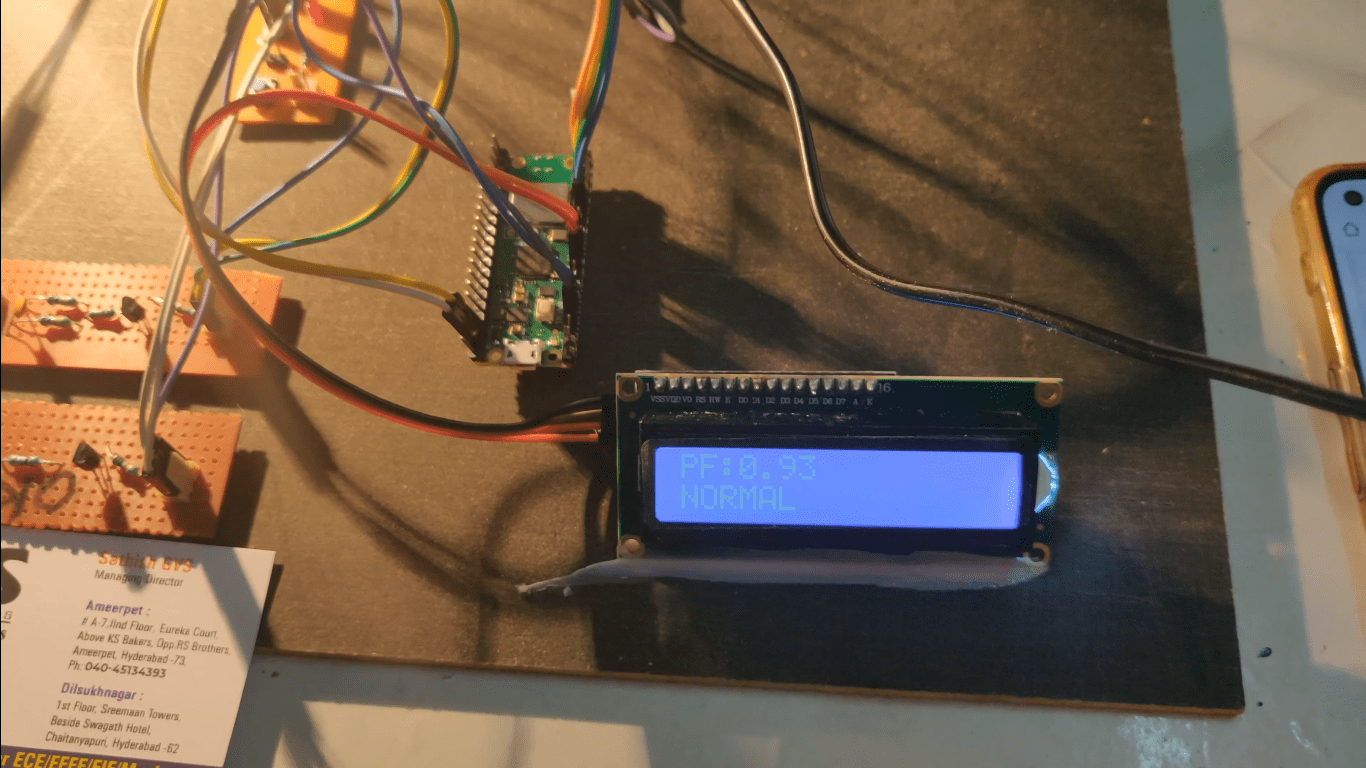
This project presents an IoT-Based Automatic Power Factor Correction (APFC) system with real-time carbon footprint estimation using a Raspberry Pi Pico W. The system is designed to automatically improve the power factor of inductive loads and quantify the associated CO₂ emission savings. Practical loads consisting of 60 W, 100 W, 160 W, and 200 W incandescent bulbs with chokes are used to emulate varying inductive conditions commonly found in domestic and small industrial environments.
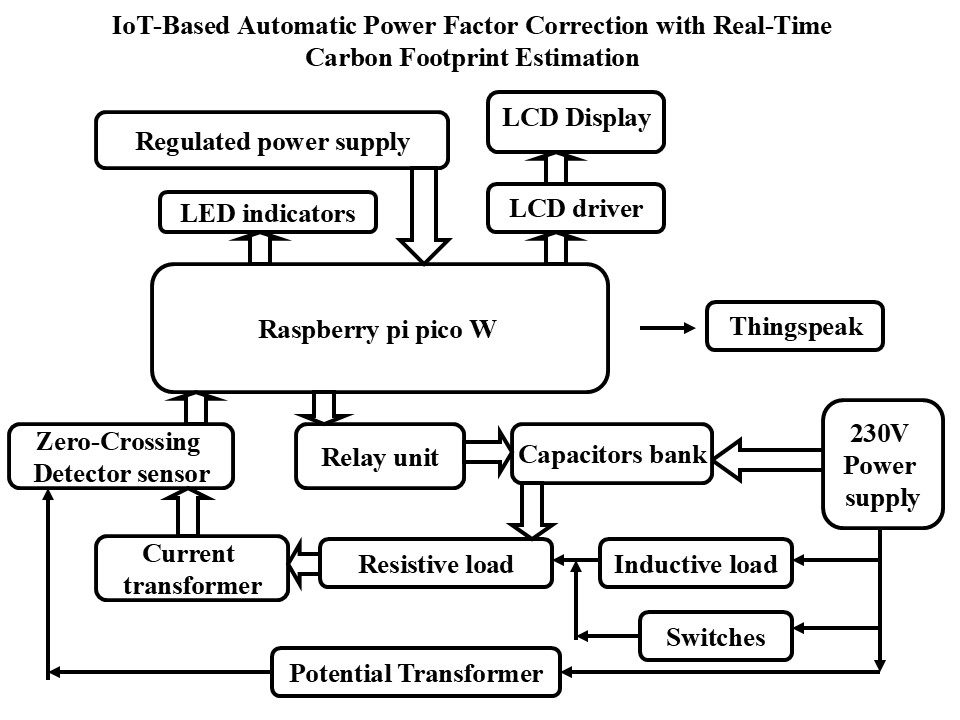
Voltage and current signals are sensed using a Potential Transformer (PT) and Current Transformer (CT), while a Zero-Crossing Detector (ZCD) enables accurate phase angle measurement. The Raspberry Pi Pico W computes real-time electrical parameters such as power factor (PF), active power (kW), and reactive power (kVAR). Based on predefined PF thresholds, a relay-controlled four-step capacitor bank is automatically switched to correct the power factor to 0.92 or above, with an appropriate time delay to ensure safe and stable operation.
The system displays one power factor value at a time, showing the PF before correction and the updated PF after correction, along with kW, kVAR, and CO₂ saved on an LCD display. Simultaneously, all parameters are uploaded to the ThingSpeak cloud platform via the Pico W’s built-in Wi-Fi for remote monitoring and data logging. The carbon emission reduction is estimated using the relation:
CO₂ Saved = kW × [(1/PF₁ − 1/PF₂)] × Time × 0.8 kg/kWh, where PF₁ and PF₂ represent the power factor before and after correction, respectively.
The proposed system demonstrates an effective, low-cost solution for energy efficiency improvement, reactive power management, and environmental impact awareness, making it suitable for smart energy management applications in residential, commercial, and educational setups.
Objectives:
 video:
- To design and implement an automatic power factor correction (APFC) system for inductive loads using a Raspberry Pi Pico W.
- To measure voltage, current, phase angle, and power factor accurately using PT, CT, and zero-crossing detection.
- To automatically switch capacitor banks using relays to improve the power factor to 0.92 or above under varying load conditions (60 W, 100 W, 160 W, and 200 W with choke).
- To display real-time electrical parameters such as kW, kVAR, power factor (before and after correction), and CO₂ saved on an LCD display.
- To estimate and monitor carbon emission reduction achieved through power factor improvement using a standard emission factor.
- To upload real-time data to the ThingSpeak IoT platform for remote monitoring, visualization, and analysis.
- To develop a low-cost, energy-efficient, and scalable solution for improving power quality and promoting sustainable energy usage.
- Regulated Power Supply.
- Raspberry pi pico W.
- Resistive load.
- Inductive load.
- Relay bank unit.
- Current transformer.
- Potential transformer.
- Zero-crossing detector.
- Capacitor Bank.
- LCD display.
- LED indicators.
- Python Language.
- Express SCH for Circuit design.
 video: