No products in the cart.


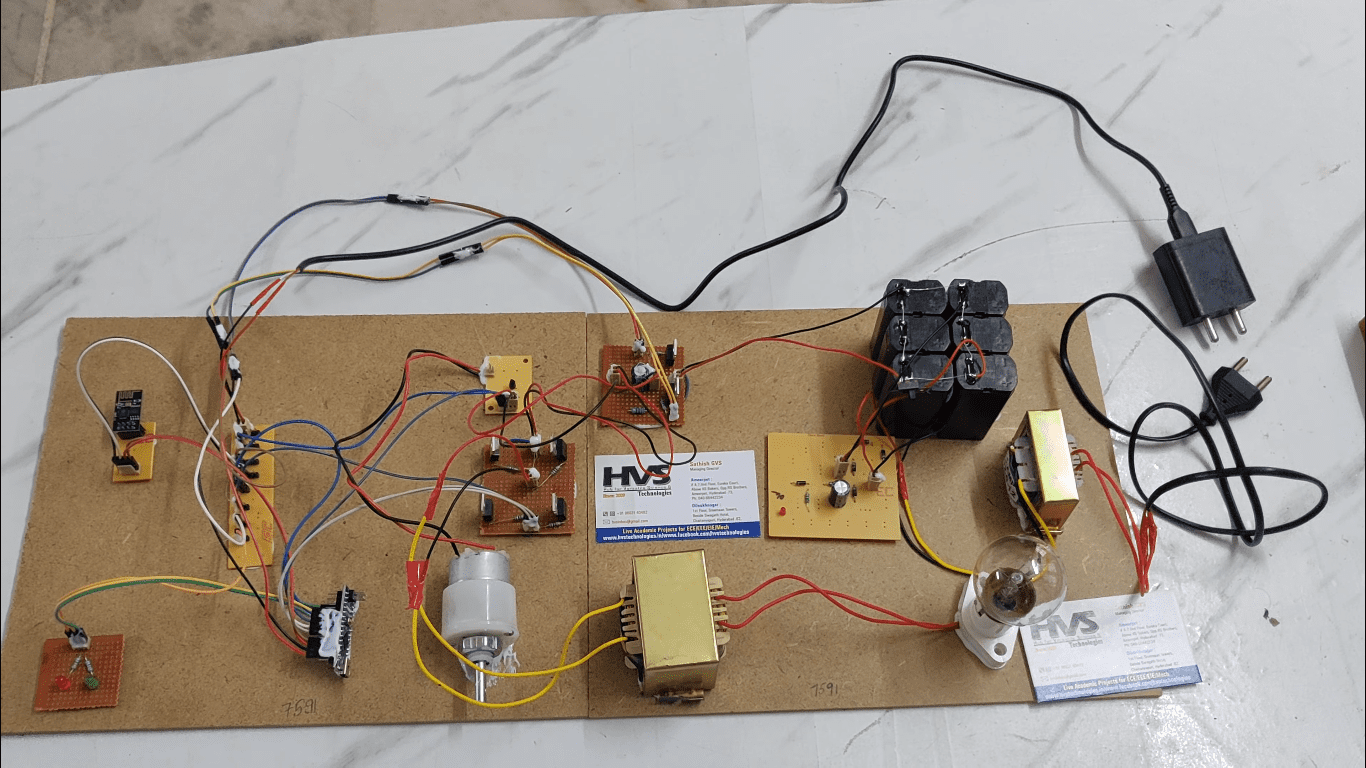
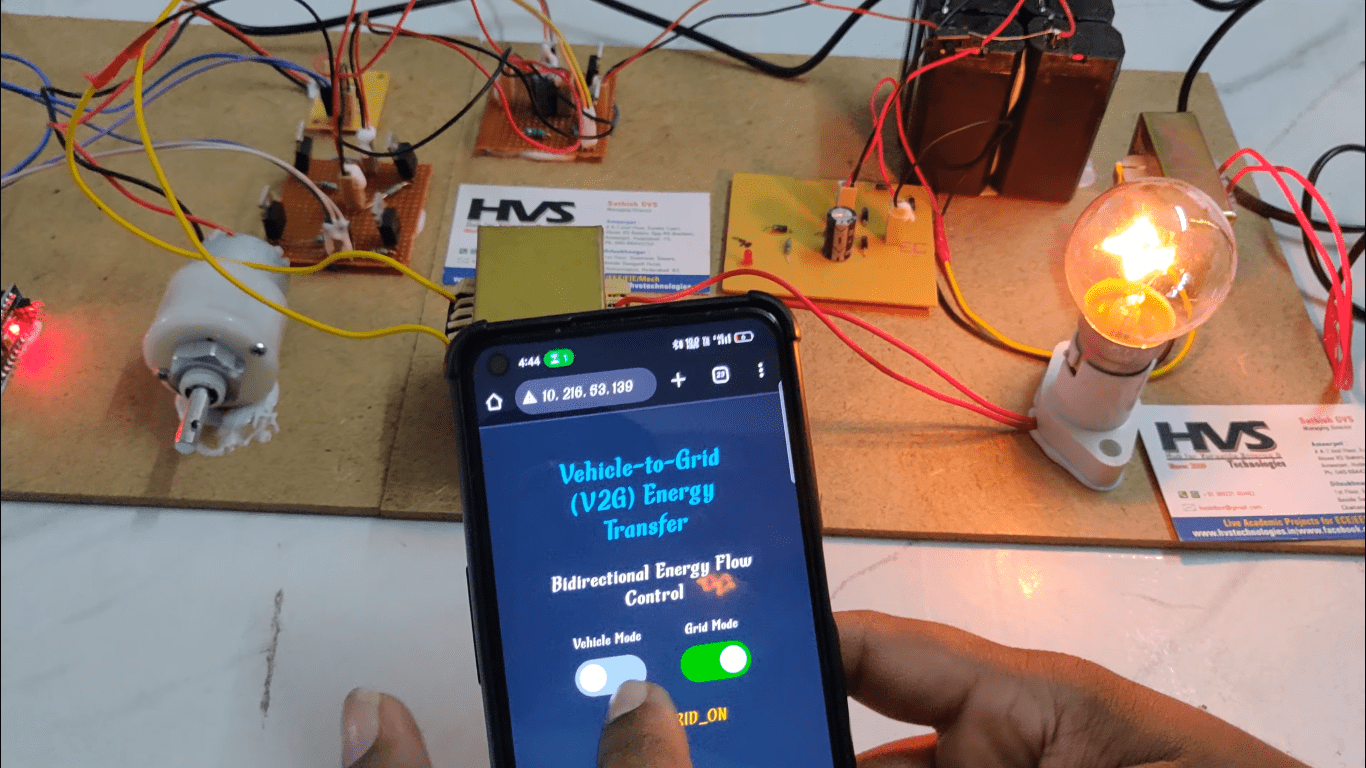
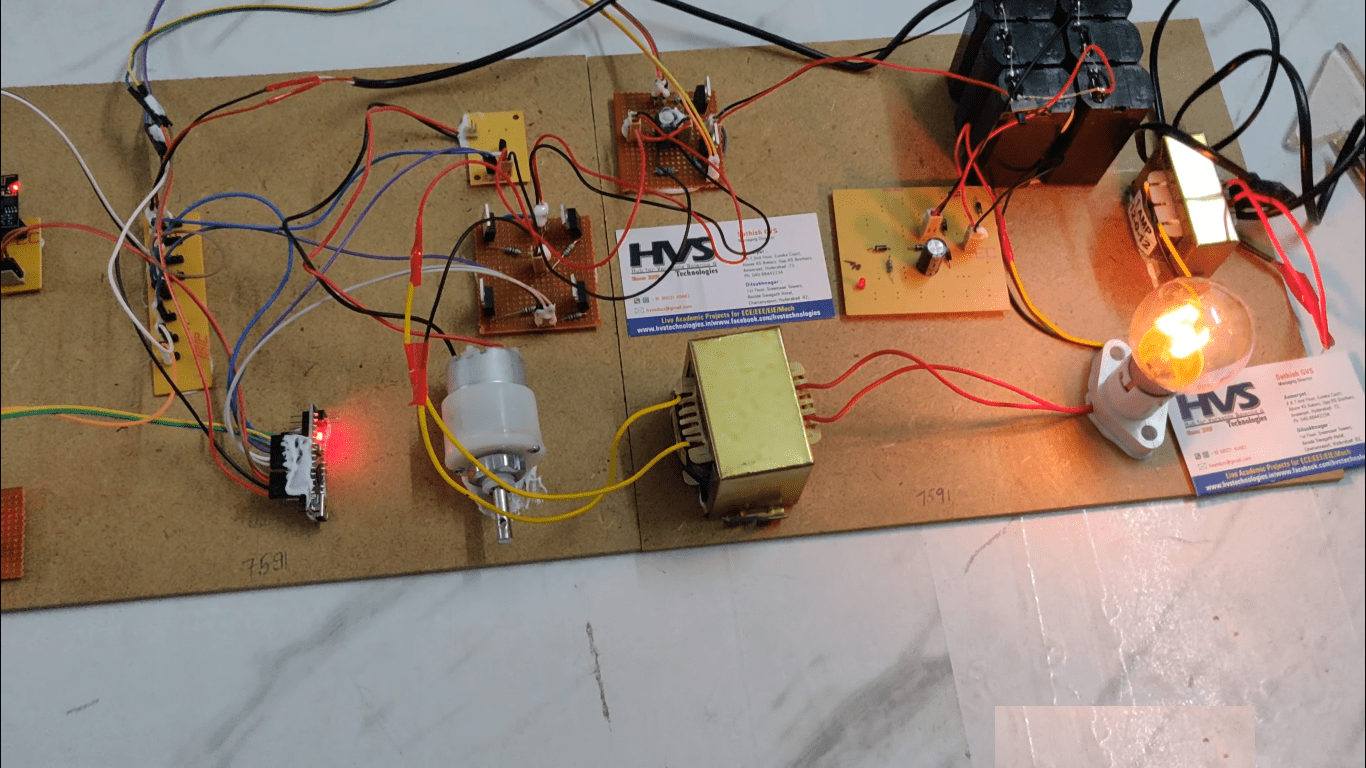
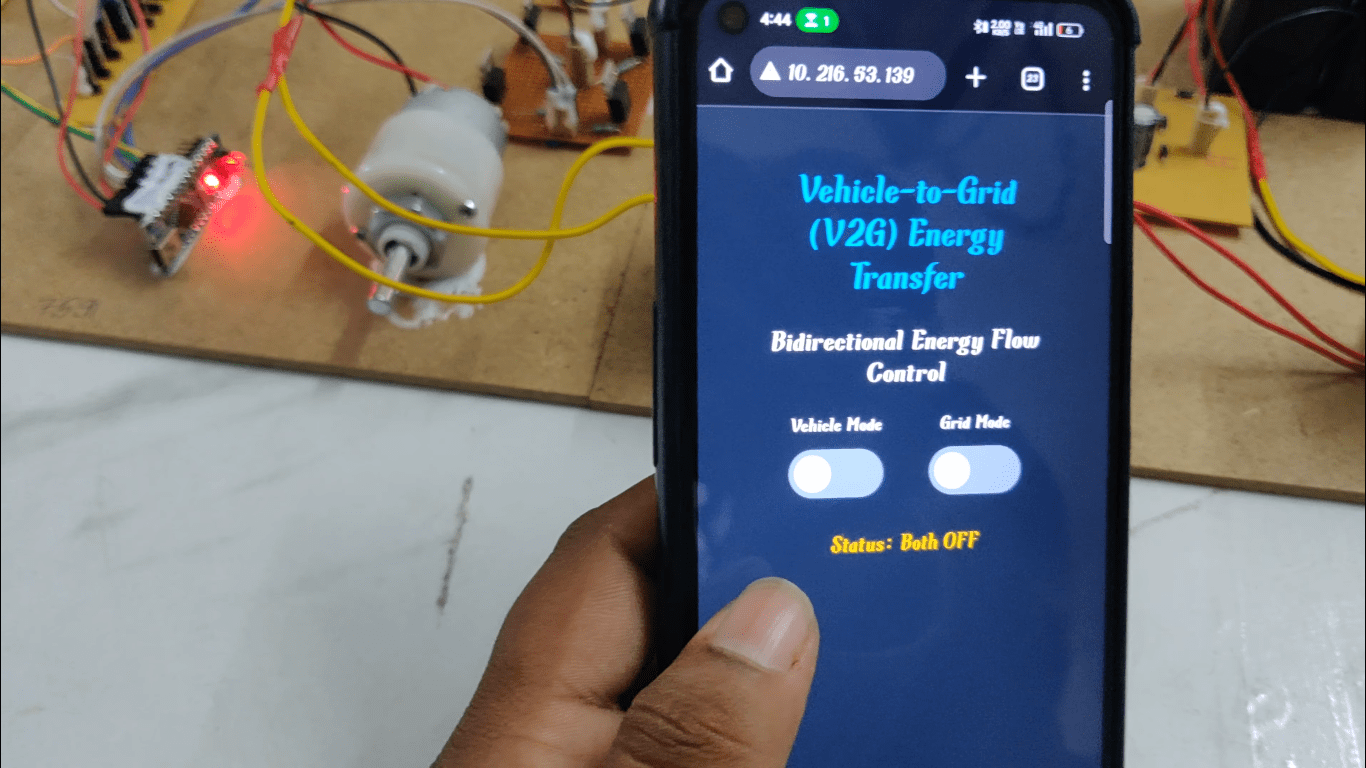
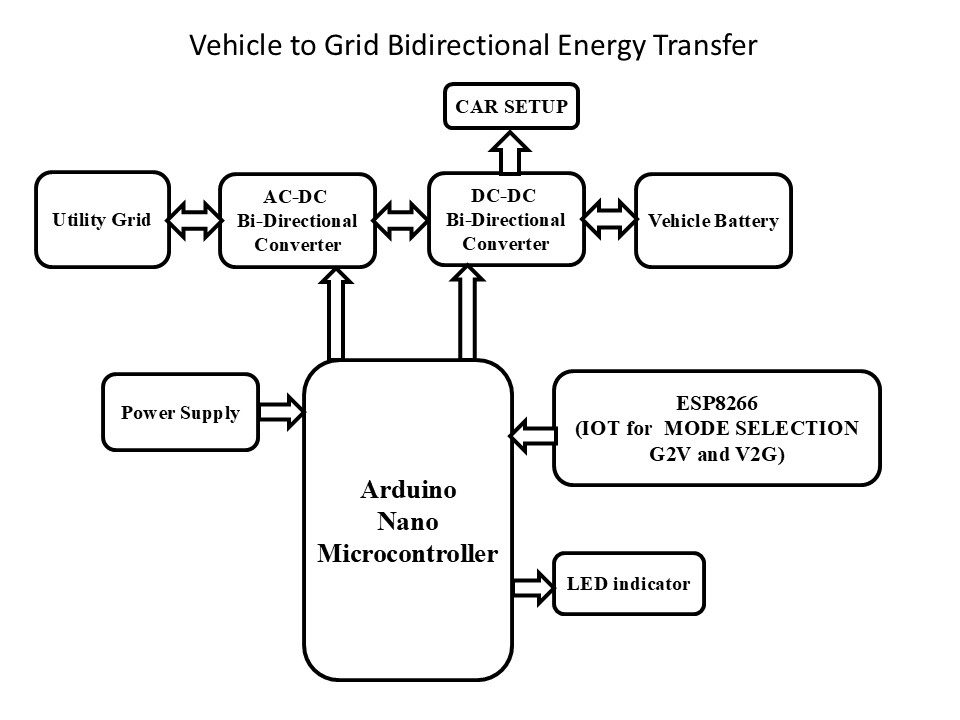
The increasing adoption of electric vehicles (EVs) and the growing demand for smart energy management systems have emphasized the need for efficient bidirectional power flow between the power grid and electric vehicles (V2G and G2V technologies). This project presents the design and implementation of a bidirectional power transfer system consisting of two main converter blocks: a bidirectional AC–DC full-bridge converter and a bidirectional DC–DC converter, both sharing a common DC link. In Grid-to-Vehicle (G2V) mode, the AC–DC converter operates as a rectifier, supplying DC power to charge the vehicle’s battery, while the DC–DC converter functions in buck mode to regulate the charging voltage. In Vehicle-to-Grid (V2G) mode, the DC–DC converter operates in boost mode to step up the battery voltage, and the AC–DC converter functions as an inverter, feeding synchronized AC power back to the grid using hysteresis current control.
Arduino nano microcontroller is employed to generate gating pulses for the converters, monitor system performance, and manage operational modes. Through IoT technology, the user can remotely switch between G2V and V2G modes, ensuring flexible control and monitoring over the internet using ESP8266 WI-FI module. The proposed system ensures efficient energy utilization, enhances grid stability, and enables EVs to act as distributed energy storage units, thereby supporting the development of smart grids and sustainable energy systems.
Modes of Operation There are two basic modes of operation: Grid-to Vehicle(G2V) mode and Vehicle-to-Grid (V2G) mode.
Grid-to Vehicle(G2V) mode:
In this mode of operation, the vehicle battery is charged from grid. Grid’s AC voltage is rectified to DC by an AC to DC converter operating in the rectifier mode. The output of this converter is fed to the DC link. The DC-to-DC converter operates in buck mode by stepping down the DC link voltage to the required battery charging voltage.
Vehicle-to-Grid Mode of Operation:
In this operating mode, energy stored in the battery is fed back to the grid. The DC voltage from the battery is stepped up using the DC-DC converter operating in boost mode and is then converted to AC using the AC-DC converter operating in the inverter mode and is fed to grid. To feed the power back to grid, output of inverter should be synchronized with that of the grid. Here the proposed grid synchronization technique is using a hysteresis current control.
The major features of this project are:
 video:
- Achieve flow of power between power grid and the electric vehicle in both the directions
- Use of Bi directional AC-DC Converter that acts as rectifier and inverter alternatively in two modes respectively
- Use of Bi Directional DC-DC Converter that acts as step down converter and step up converter alternatively in two modes respectively.
- Wireless mode selection using IOT technology.
- Utility Grid
- AC-DC Bidirectional Converter.
- DC-DC Bidirectional Converter.
- Vehicle Battery.
- NodeMCU Microcontroller.
- Power Supply.
- LED indicator.
- ESP8266 WI-FI Module.
- Arduino IDE programmers for dumping code into Microcontroller.
- Embedded C programming.
- Express SCH for Circuit design.
 video: