No products in the cart.


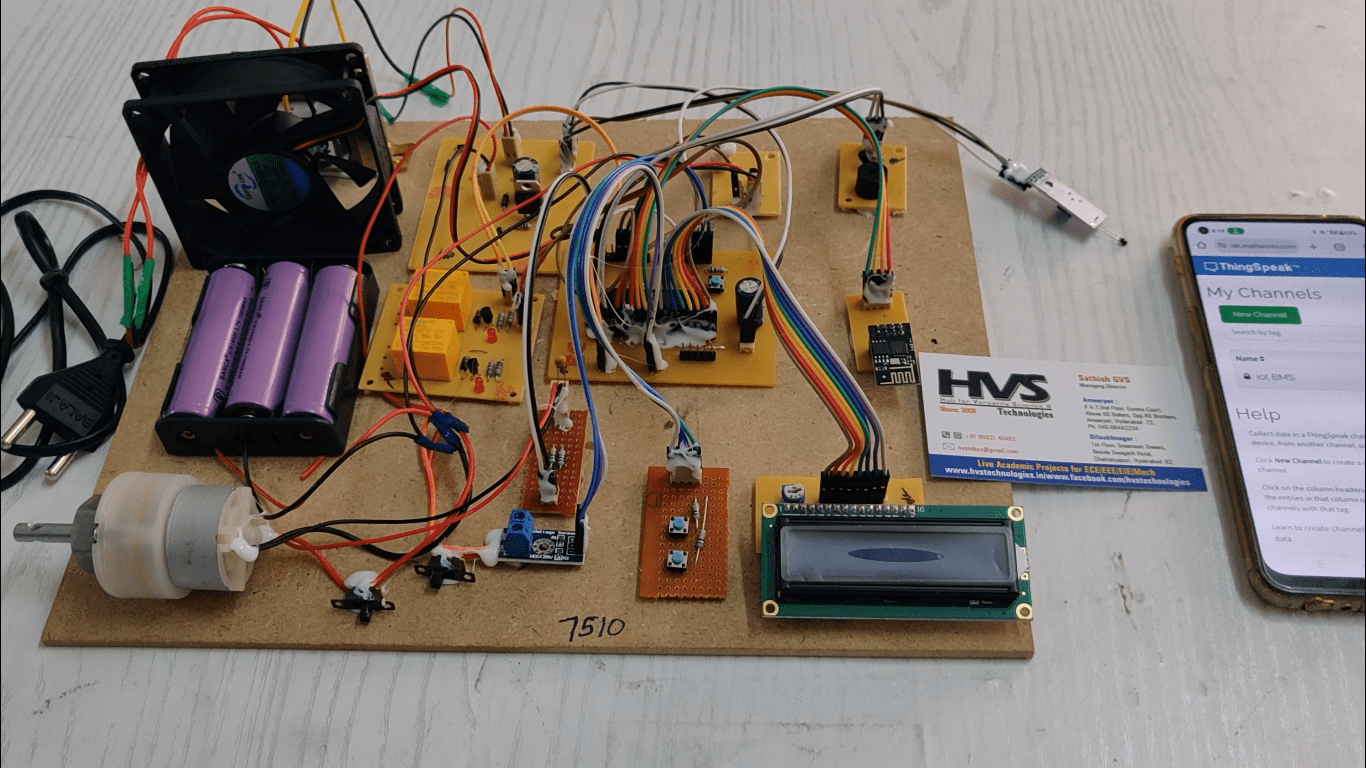
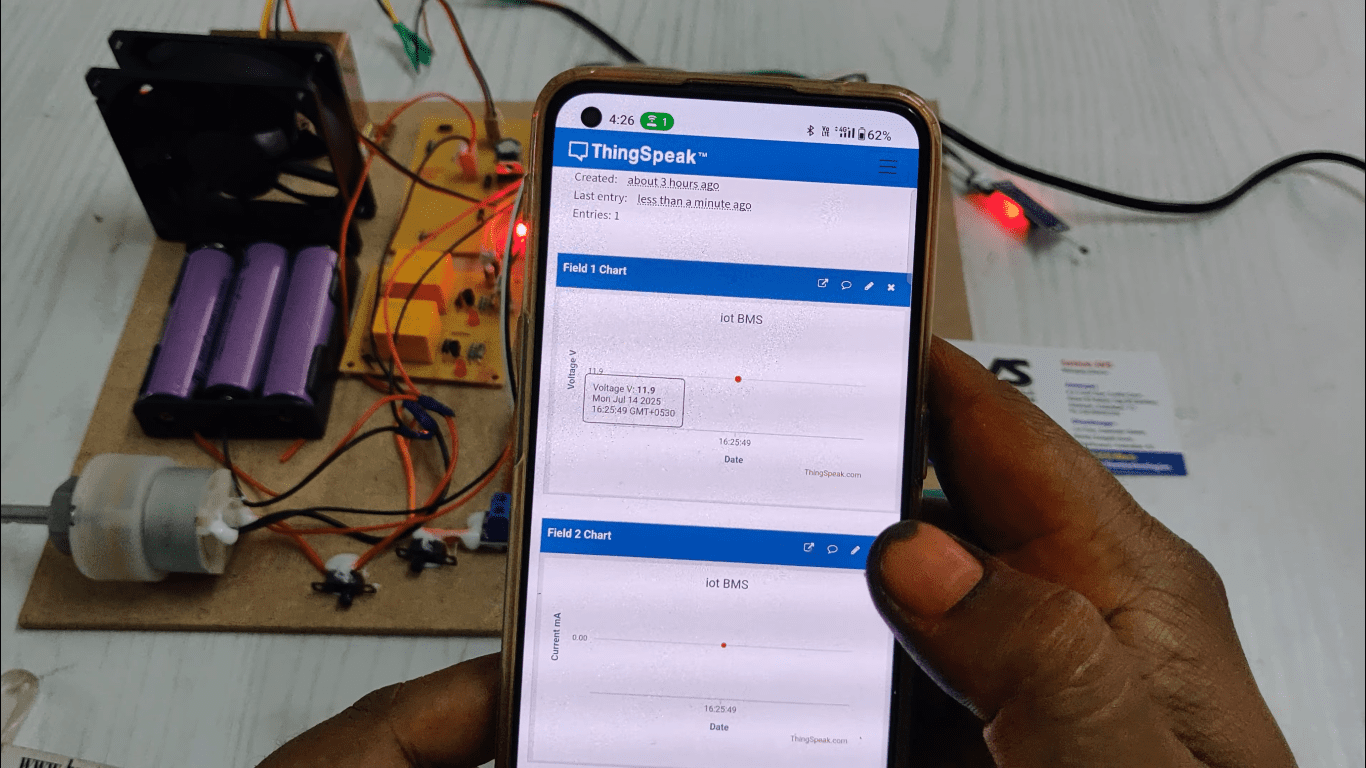
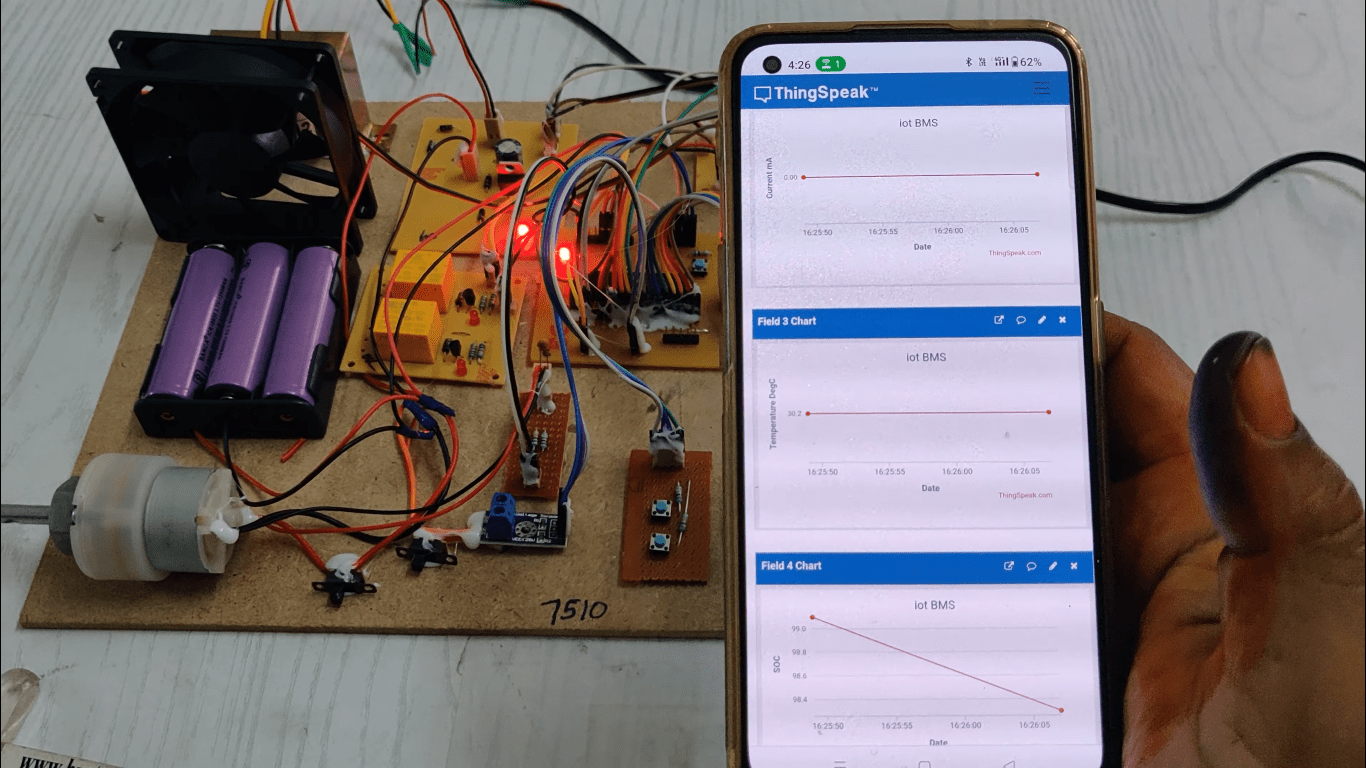
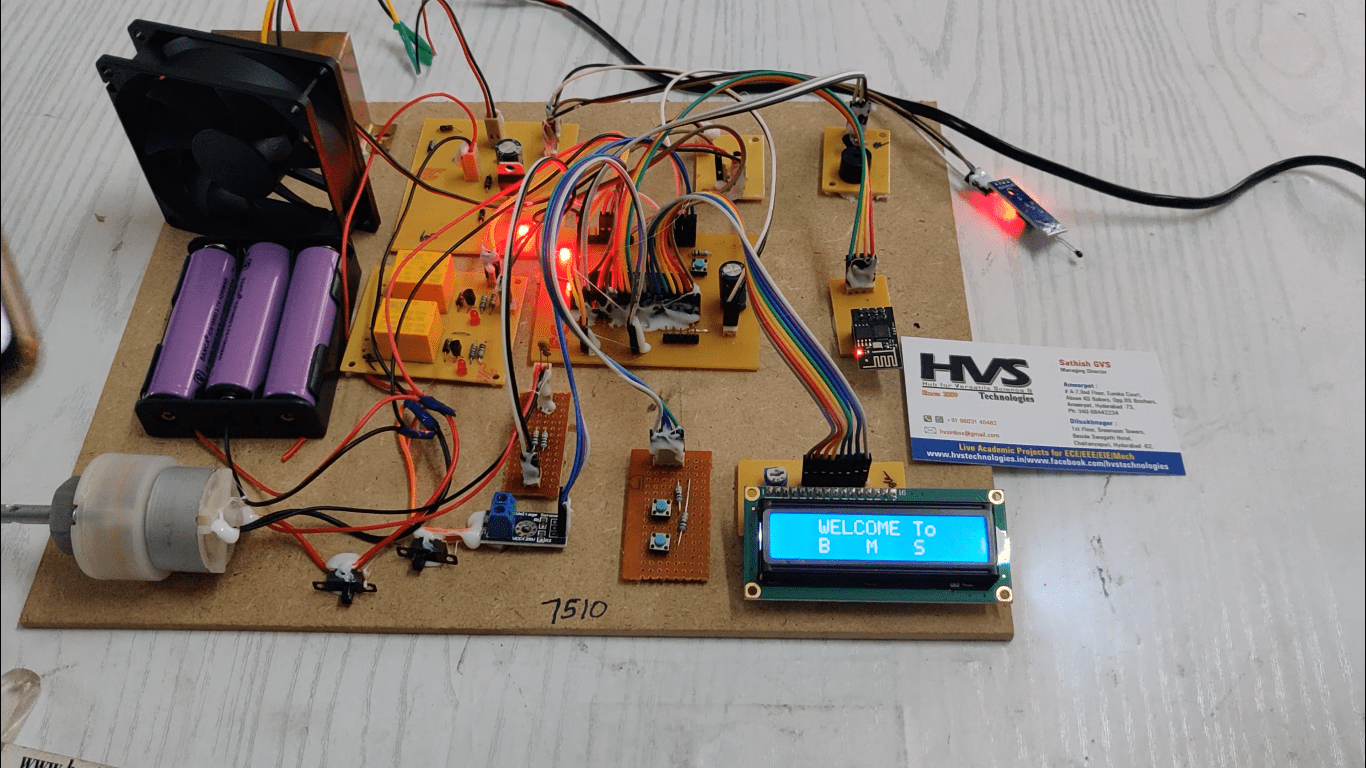
The rapid adoption of green energy solutions has accelerated the use of electric vehicles (EVs) as an environmentally sustainable mode of transportation. Lithium-ion batteries are extensively employed in EVs due to their high energy density, efficiency, and long cycle life. However, these batteries can become hazardous if operated beyond their Safe Operating Area (SOA), making an effective Battery Management System (BMS) essential. This project presents the design and implementation of an IoT-based Battery Management System (BMS) with State of Charge (SoC) and State of Health (SoH) estimation for electric vehicle applications.
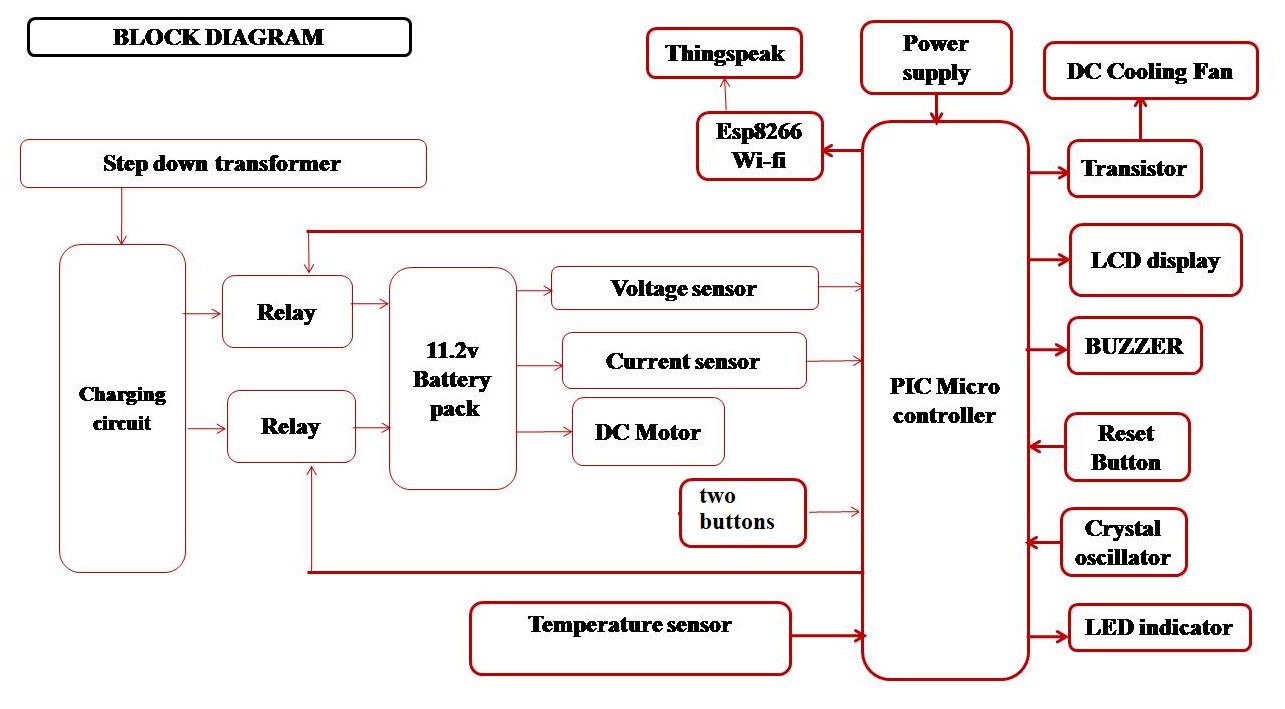
The proposed system continuously monitors critical battery parameters such as voltage, temperature, and charging status using a microcontroller-based architecture. Multiple battery packs are interfaced through relays, enabling intelligent charge control when any battery pack becomes depleted. Real-time voltage, temperature,Current, SOC,SOH data are displayed locally on an LCD module and transmitted to the ThingSpeak cloud platform via an ESP8266 Wi-Fi module for remote monitoring and data analysis. A cooling fan and buzzer are automatically activated when the battery temperature exceeds predefined safety limits, ensuring thermal protection and system reliability.
The State of Charge (SoC) is estimated using voltage-based monitoring techniques to determine the available battery capacity, while the State of Health (SoH) is evaluated by analyzing long-term battery performance parameters such as voltage degradation and thermal behavior over charging and discharging cycles. This dual-parameter monitoring enables improved battery utilization, enhanced safety, extended battery lifespan, and predictive maintenance.
The proposed IoT-enabled BMS offers a cost-effective, scalable, and intelligent solution for real-time battery monitoring in electric vehicles, contributing to safer energy storage systems and improved EV performance.
The project provides us exposure on:
 video:
- Embedded C program
- PCB designing.
- Interfacing LCD to controller.
- DC motors
- Temperature sensor.
- Regulated power supply
- PIC Microcontroller.
- ESP8266 WI-FI module.
- Temperature sensor.
- Voltage sensor.
- Current sensort
- Buzzer
- Three battery packs
- Three Relays.
- Charging Circuit.
- LCD display.
- LED Indicators
- Crystal oscillator
- Reset button.
- Cooling fan.
- DC motor
- PIC-C compiler for Embedded C programming.
- PIC kit 2 programmer for dumping code into Micro controller.
- Express SCH for Circuit design.
- Thingspeak cloud.
 video: