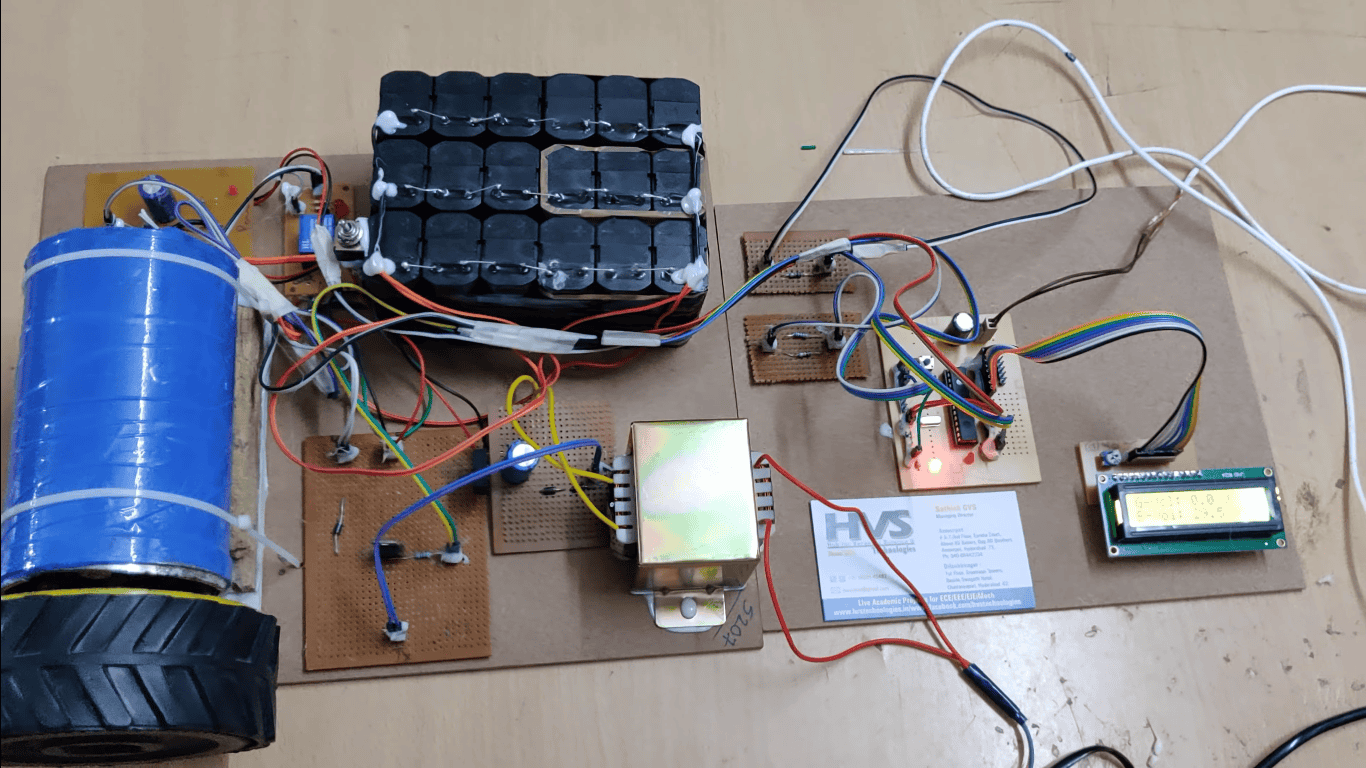
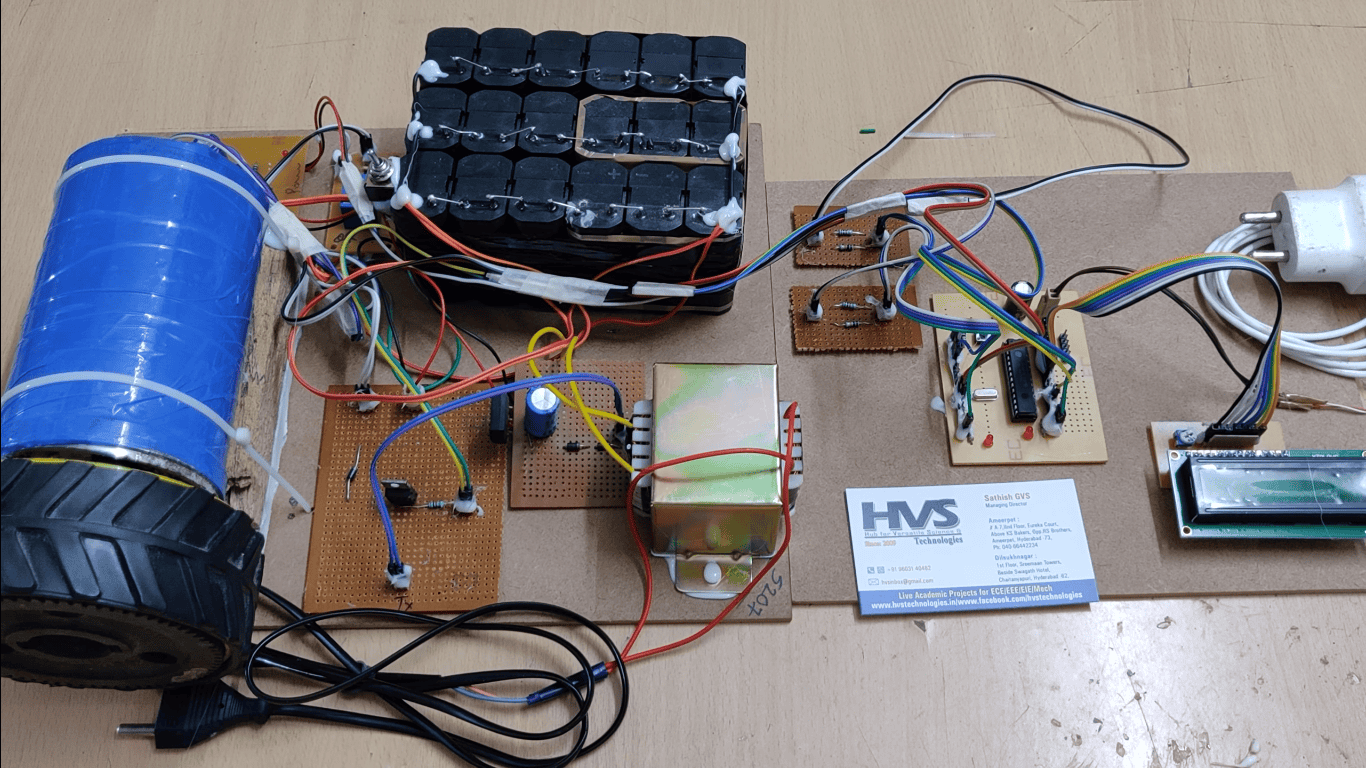
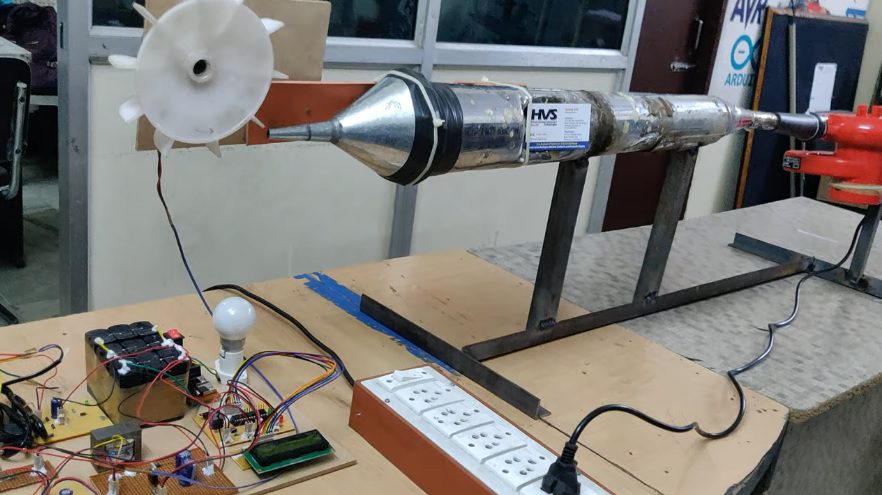
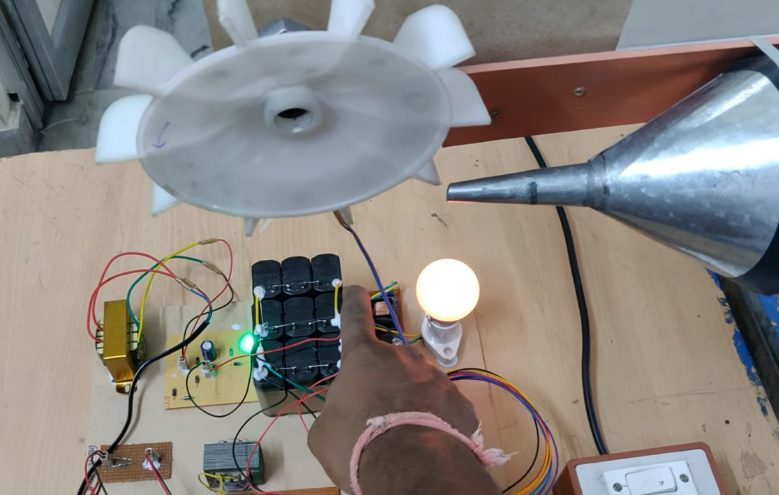
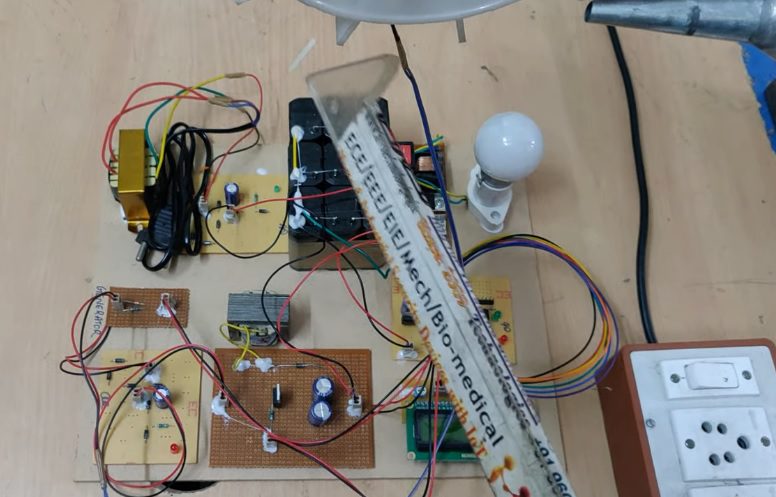
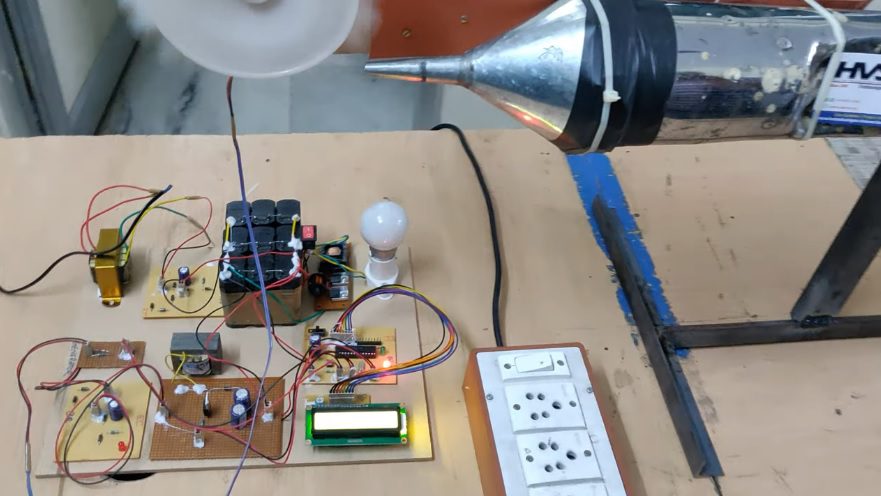
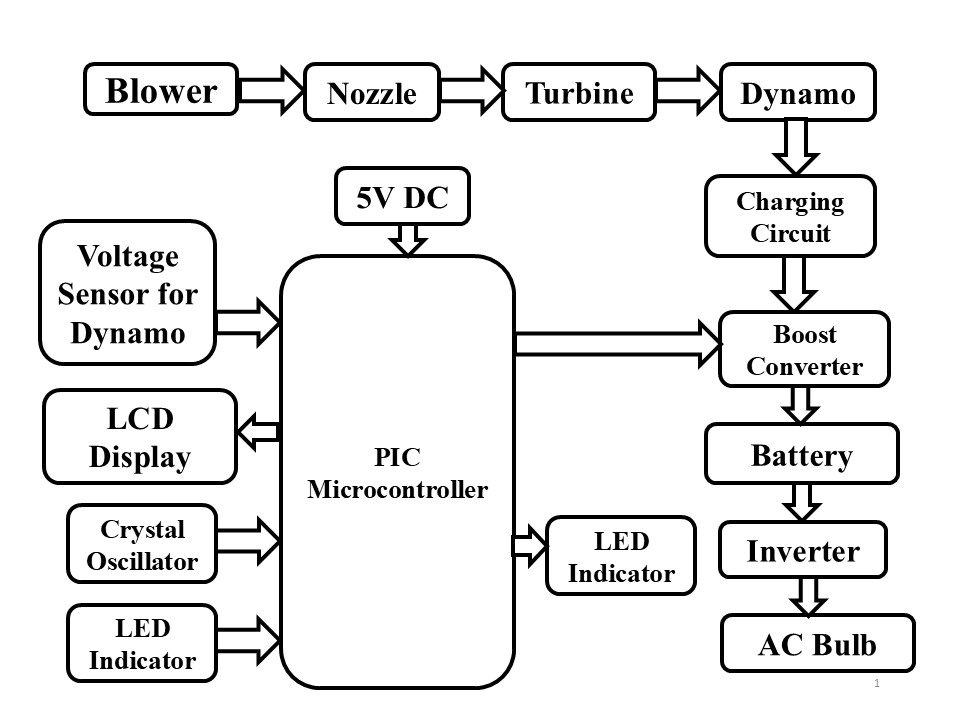
The proposed Power Generation from Exhaust Gases system is designed to recover the energy available from moving exhaust gases and convert it into useful electrical power. The system consists of a blower, nozzle, turbine, dynamo, charging circuit, boost converter, battery, and inverter. The exhaust gas flow from the blower is directed through a nozzle onto the turbine, causing it to rotate. The turbine drives the dynamo, which generates electrical energy. The generated voltage is processed through a charging circuit and boost converter to obtain a suitable voltage level for charging the battery.
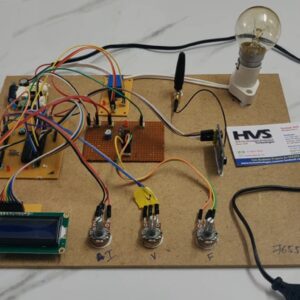
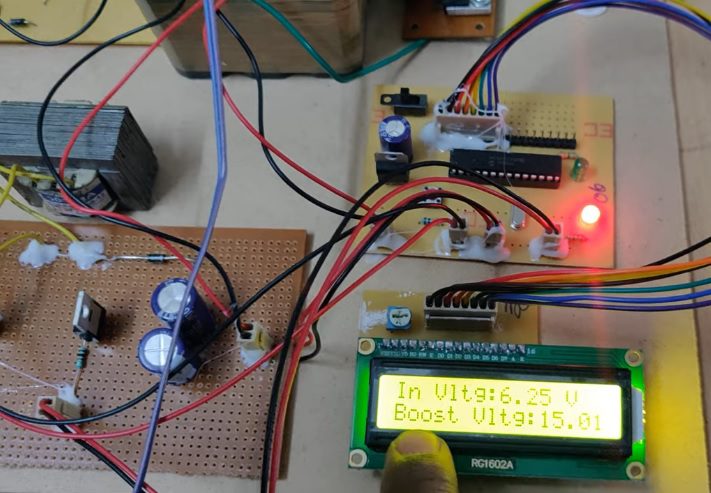
A PIC microcontroller is used to monitor and control the system. A voltage sensor measures the voltage generated by the dynamo, while the boosted voltage is also monitored. Both the generated voltage and boosted voltage are displayed on an LCD for real-time observation. LED indicators provide the operating status of the system. The stored electrical energy can be supplied to an inverter to operate an AC bulb. The proposed system provides a simple method of recovering otherwise wasted exhaust-gas energy and converting it into useful electrical energy for low-power applications.
The objectives of the project include:
To generate electricity from exhaust gas flow.
To convert exhaust gas energy into mechanical energy using a turbine.
To generate electrical power using a dynamo.
To boost the generated voltage using a boost converter.
To display the generated and boosted voltage on an LCD.
To store the generated energy in a battery.
To use the stored energy to operate an AC bulb through an inverter.
To utilize wasted exhaust energy for useful power generation.
The major building blocks of the project are:
Blower
Nozzle
Turbine
Dynamo
Charging circuit
Battery
Inverter.
Voltage sensor.
Boost converter.
PIC Microcontroller
LCD Display.
Software’s used:
PIC C compiling and dumping code into Microcontroller
 1 × ₹21,000.00


 video: