No products in the cart.


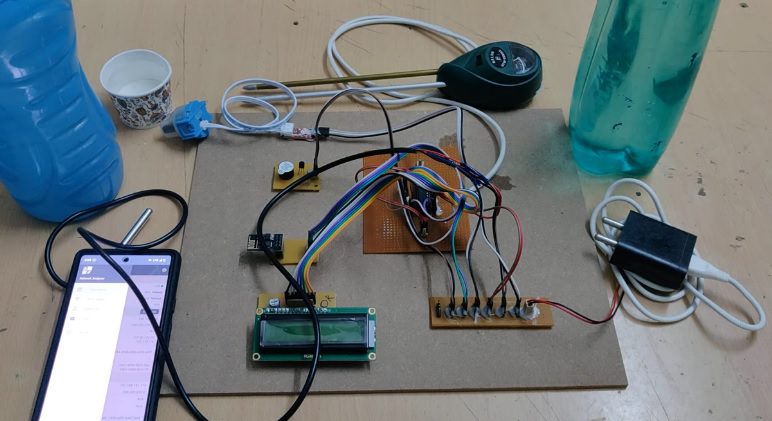
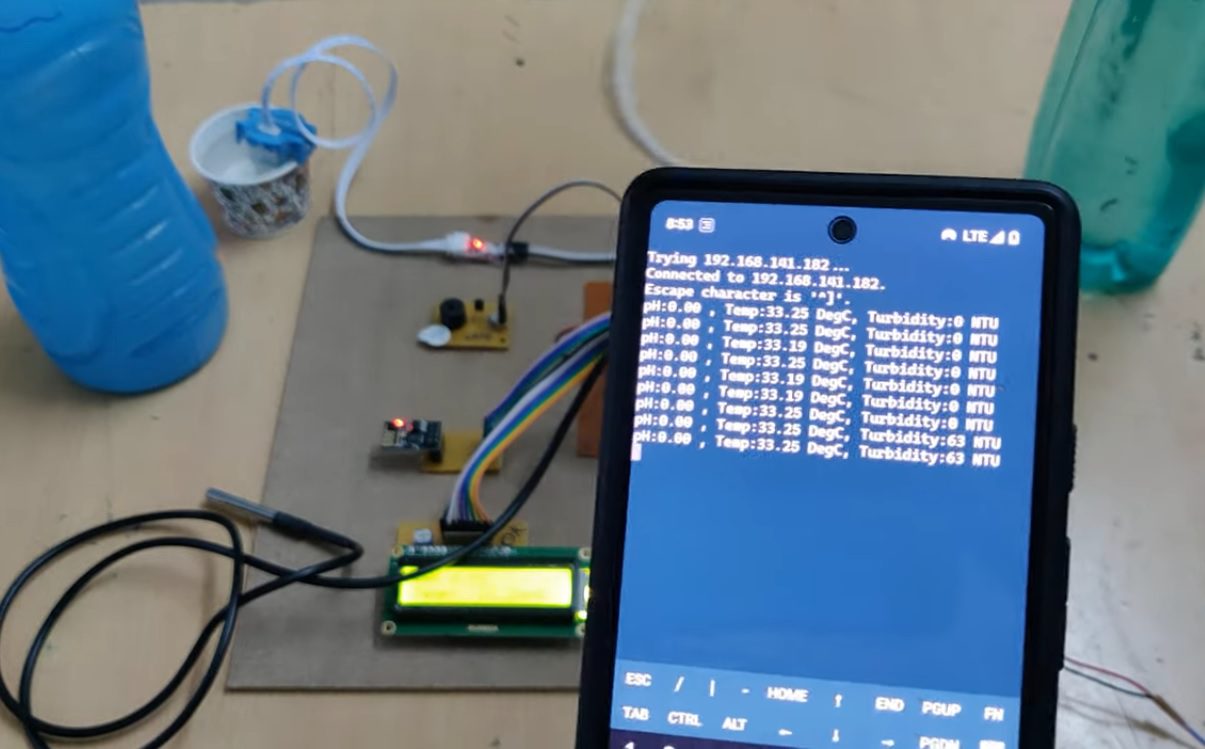
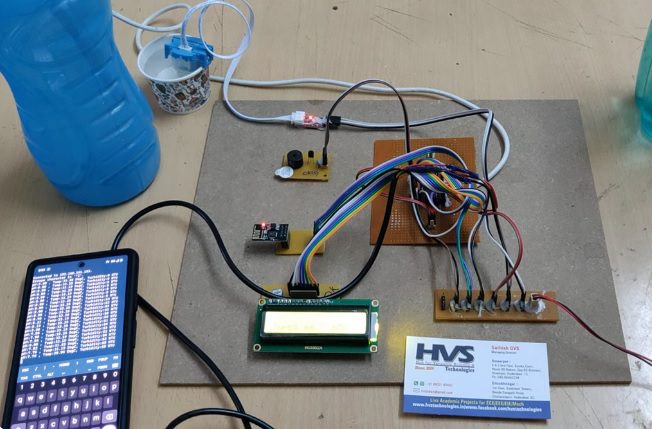
“Water quality” is a term used here to express the suitability of water to sustain various uses or processes. Any particular use will have certain requirements for the physical, chemical or biological characteristics of water; for example, limits on the concentrations of toxic substances for drinking water use, or restrictions on temperature and pH ranges for water supporting invertebrate communities. Consequently, water quality can be defined by a range of variables which limit water use. Efforts to improve or maintain a certain water quality often compromise between the quality and quantity demands of different users. There is increasing recognition that natural ecosystems have a legitimate place in the consideration of options for water quality management. This is both for their intrinsic value and because they are sensitive indicators of changes or deterioration in overall water quality, providing a useful addition to physical, chemical and other information.
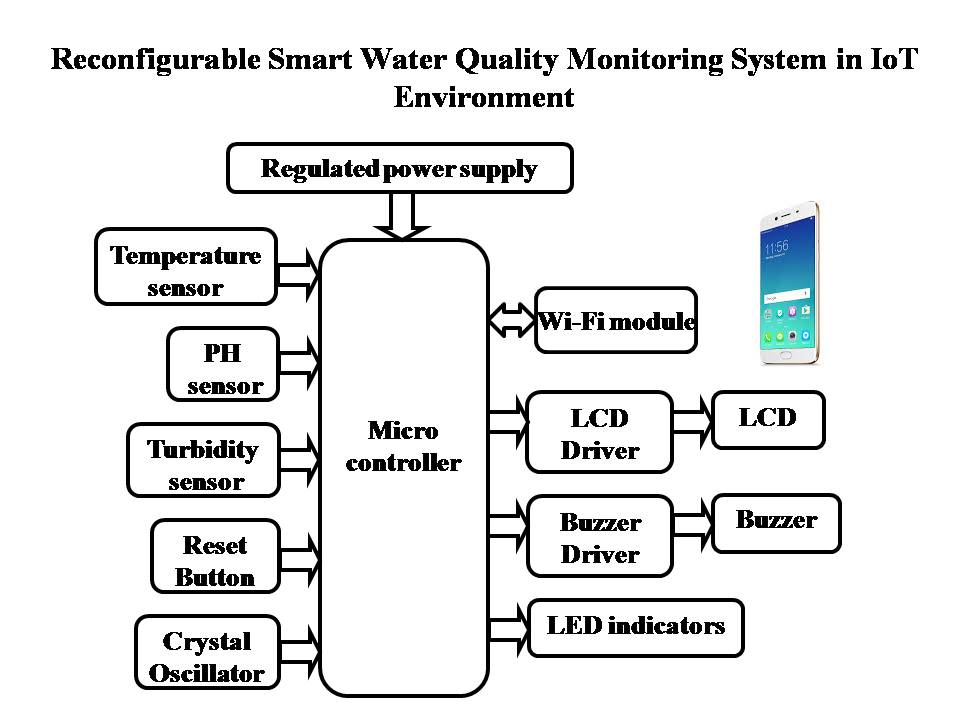
In this project temperature sensor is used to measure the temperature of the water. PH sensor measures PH of water and turbidity sensor measures the amount of light that is scattered by the suspended solids in water. All these parameters’ values are constantly fed to the microcontroller. These parameters values are constantly displayed on LCD. If any of these parameter’s values exceeds the threshold value buzzer beeps. The microcontroller sends these measured values to the user Android phone through Wi-Fi module.
Objectives:
 Block Diagram:
video:
Block Diagram:
video:
- To measure the temperature of water using a temperature sensor.
- To measure the pH level of water using a pH sensor.
- To measure the turbidity (water clarity) using a turbidity sensor.
- To continuously monitor all water quality parameters using a microcontroller.
- To display the measured values on an LCD display in real time.
- To generate an alert through a buzzer when any parameter exceeds the preset threshold value.
- To transmit the monitored water quality data to an Android smartphone through a Wi-Fi module.
- To develop a low-cost, real-time IoT-based water quality monitoring system for domestic and industrial applications.
- Regulated power supply.
- PIC Microcontroller.
- Crystal oscillator.
- Reset Button.
- Temperature sensor.
- PH sensor.
- Turbidity sensor.
- Wi-Fi module.
- Buzzer.
- LCD display.
- Android phone.
- LED indicators.
- PIC-C compiler for Embedded C programming.
- PIC kit 2 programmer for dumping code into Micro controller.
- Express SCH for Circuit design.
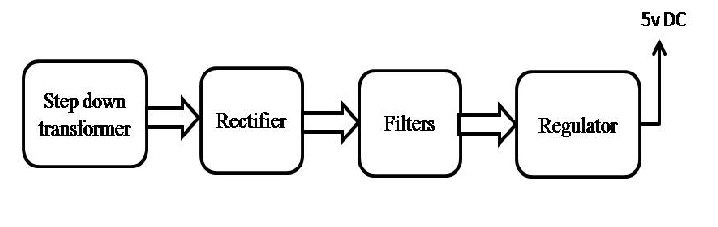 Block Diagram:
 video: