Subtotal ₹5,250.00


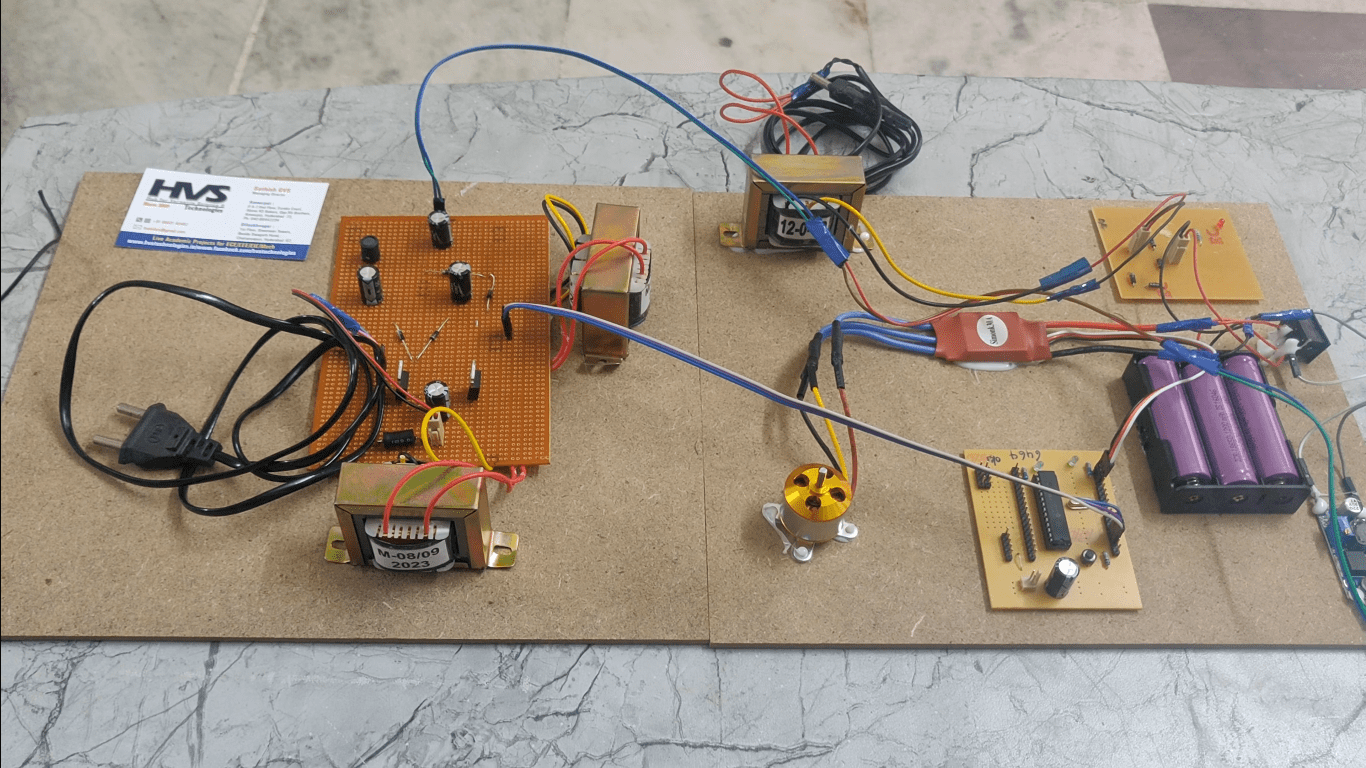
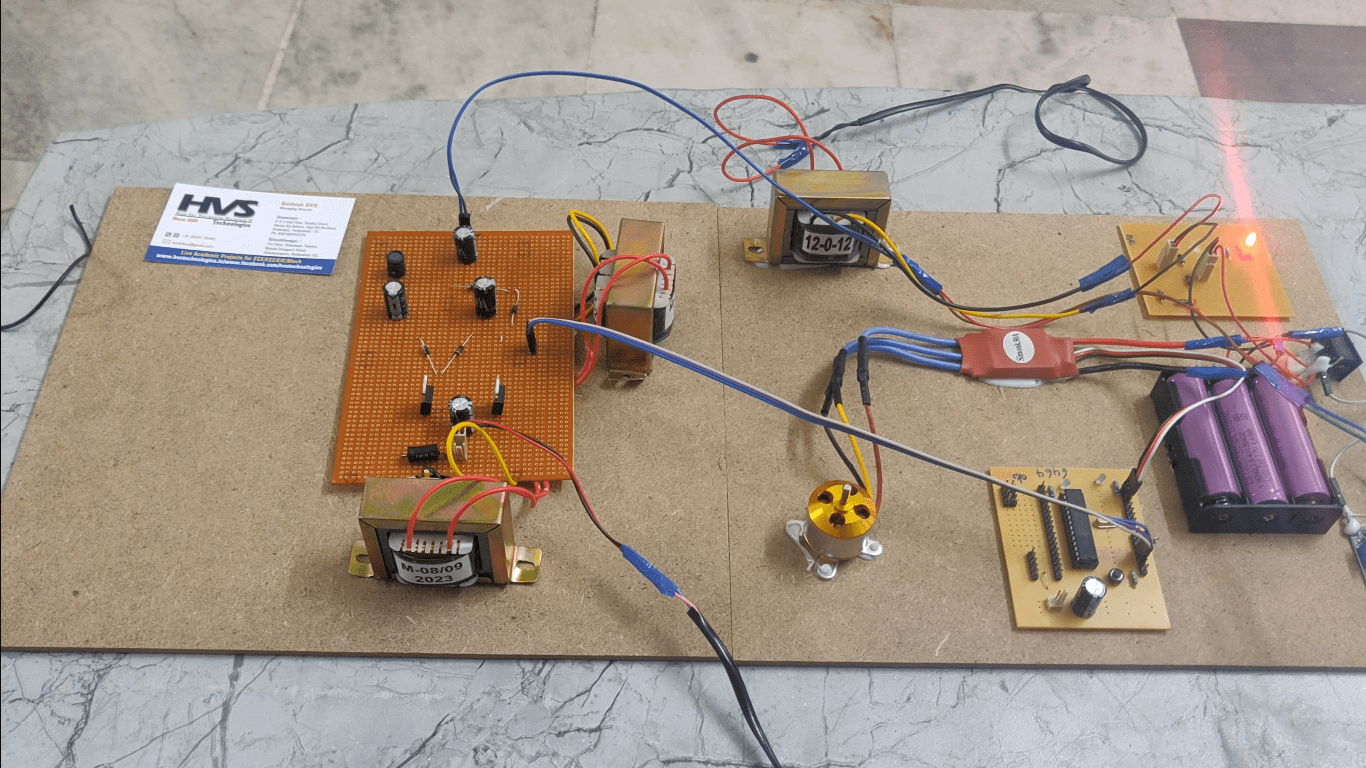
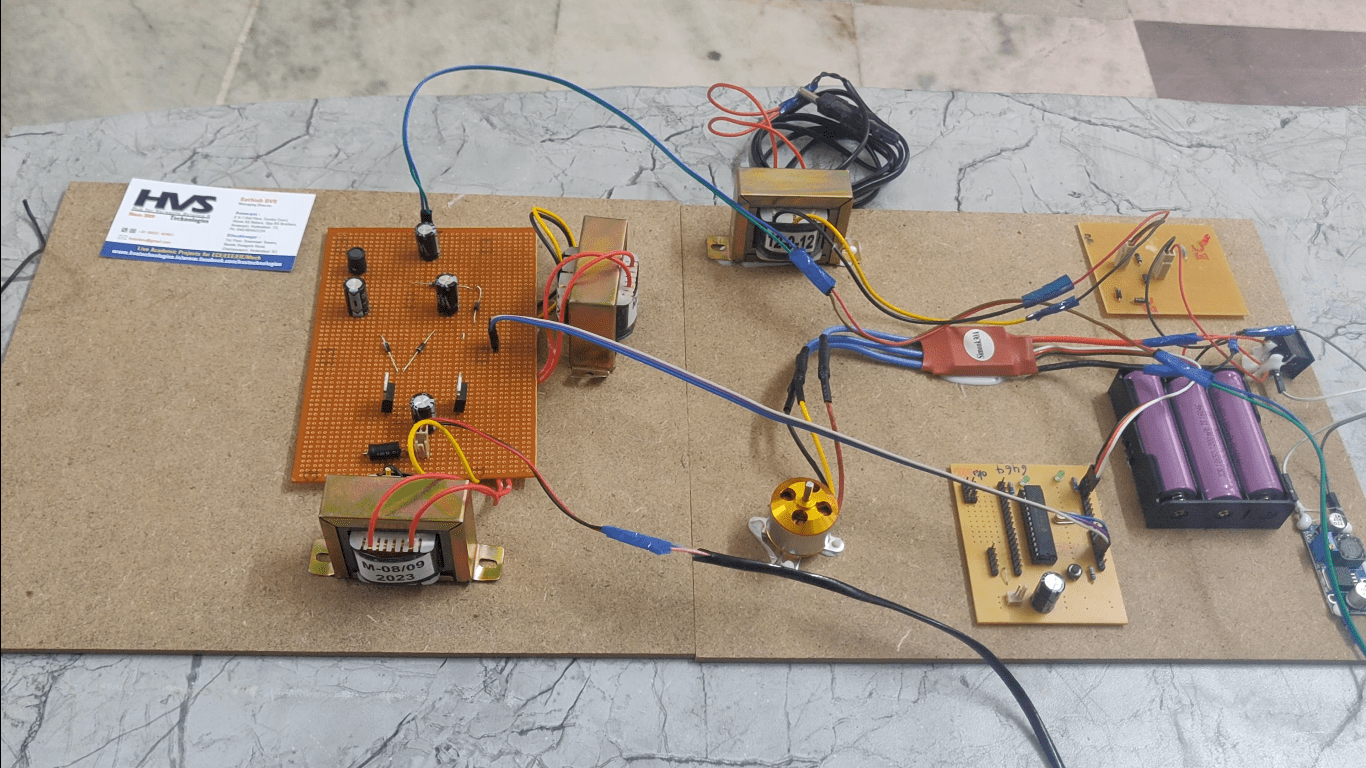
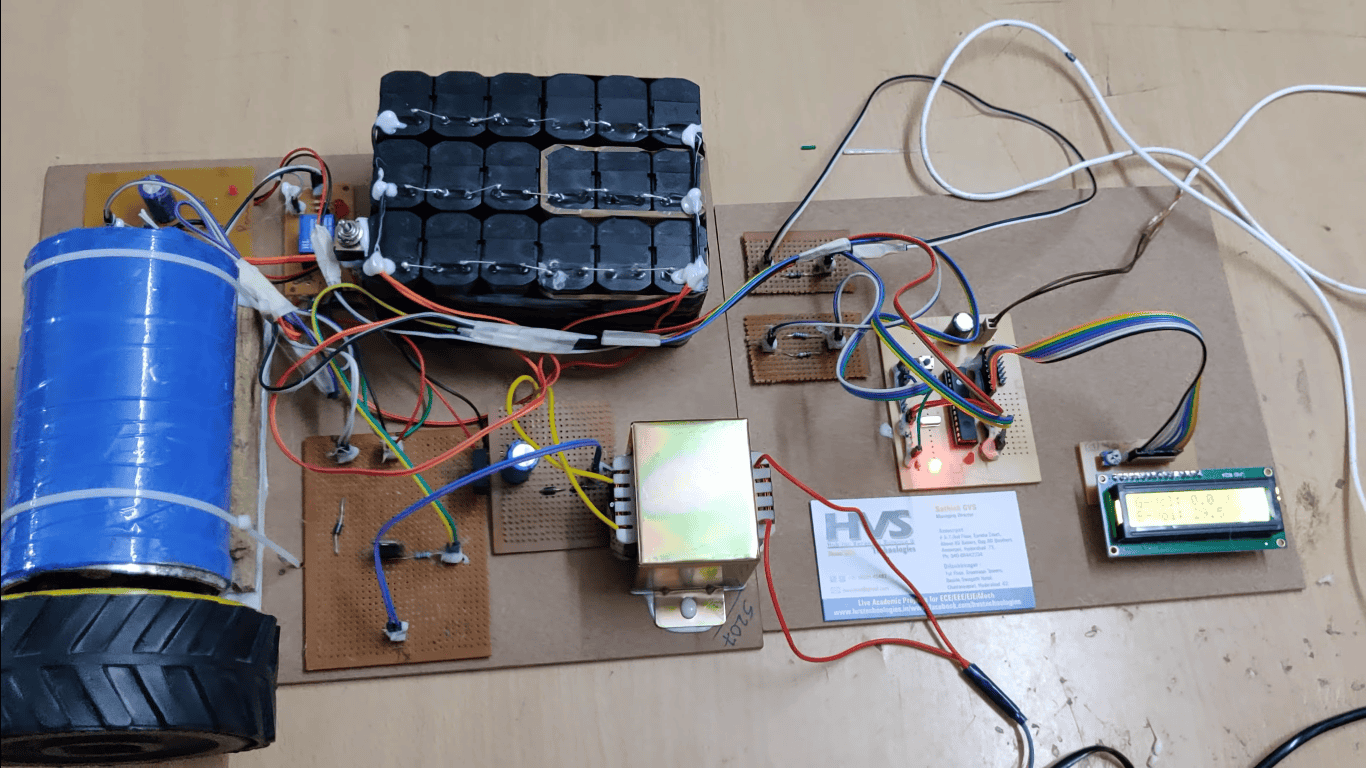
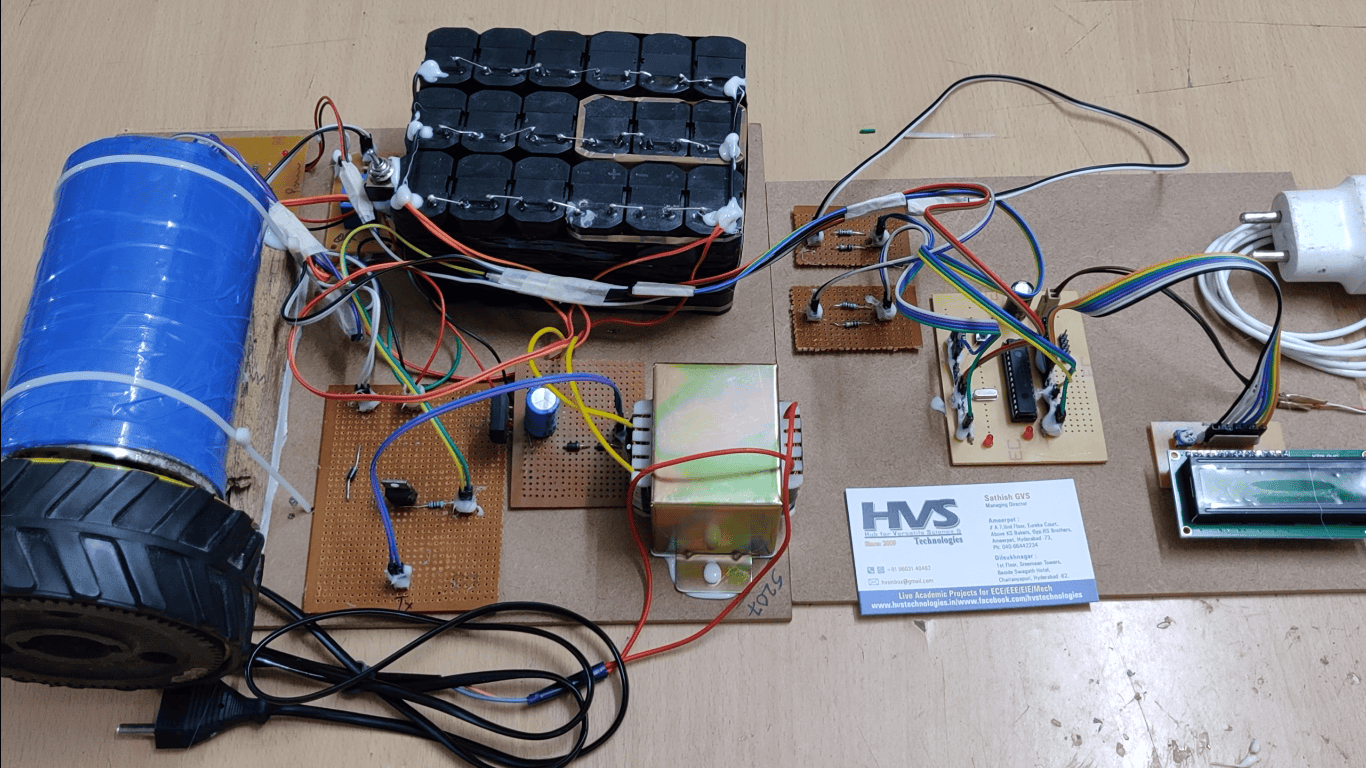
This project aims designing a new electric vehicle (EV) charger based on a bridgeless (BL) isolated Zeta–Luo converter with built-in power factor (PF) preregulation capability at the supply side.
This configuration is a combination of Zeta and Luo converters, which are designed to work during individual halves of supply voltage. This gives additional benefits of higher efficiency than the previously developed converters on the account of sharing output inductors for both converters. Moreover, a uniform charging current is obtained for the battery due to the presence of output inductance in both converters, as compared to the Zeta or Luo converter used for both cycles.
EV battery is identified in the constant current and constant voltage (CC–CV) modes using a cascaded proportional-integral (PI) controller. This new BL converter is designed to operate independently during the respective positive and negative supply cycles in either the Zeta or Luo mode. This gives the additional benefits of higher efficiency than the previously developed converters on the account of sharing the output inductors for both converters. The topology offers the advantage of reduced number of components as compared to other BL configurations due to the integration of two different converters. The significant features and contribution of this charger configuration are listed as follows.
1) The number of output inductors are reduced due to integration of Zeta–Luo converters in two half cycles. This gives significant reduction in the size of the charger.
2) Over a switching cycle, the current conduction is seen to be via reduced number of components and devices; which, comparatively, gives the improvement in efficiency.
3) The value of the magnetizing inductance of this isolated converter is selected such as the converter remains in the discontinuous conduction mode (DCM), which is beneficial for the charger with the reduced size and low cost.
The robust performance of this new BL isolated EV charger is found satisfactory during the charging operation at the steady state as well as over the change in line voltage and loads. The performance indices at utility such as mains PF, DPF, supply current THD, are seen to comply with the recommended PQ regulations.
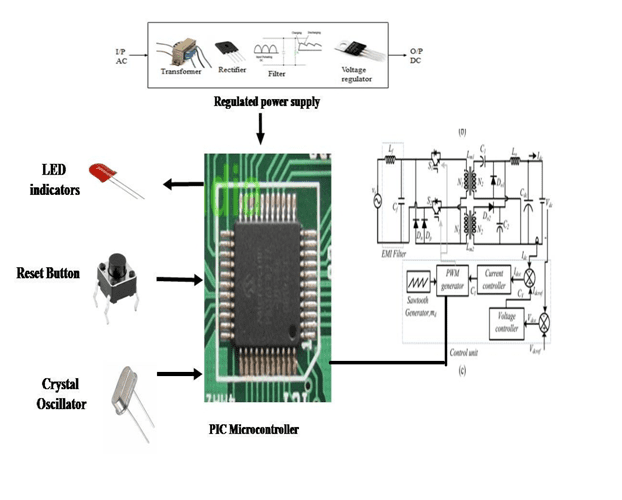
Major blocks present in this project:
 Block Diagram:
video:
Block Diagram:
video:
- Regulated power supply.
- PIC Micro controller.
- Bridgeless (BL) Zeta–Luo converter.
- Constant current (CC) and constant voltage (CV) mode discontinuous conduction mode (DCM).
- Electric vehicle (EV) charger.
- Power factor (PF) preregulator.
- Power quality (PQ).
- LED Indicator.
- Crystal Oscillator.
- Reset Button.
- PIC Compiler for Programming.
- Express SCH for Circuit design.
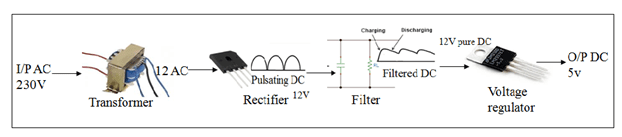 Block Diagram:
 video: