No products in the cart.


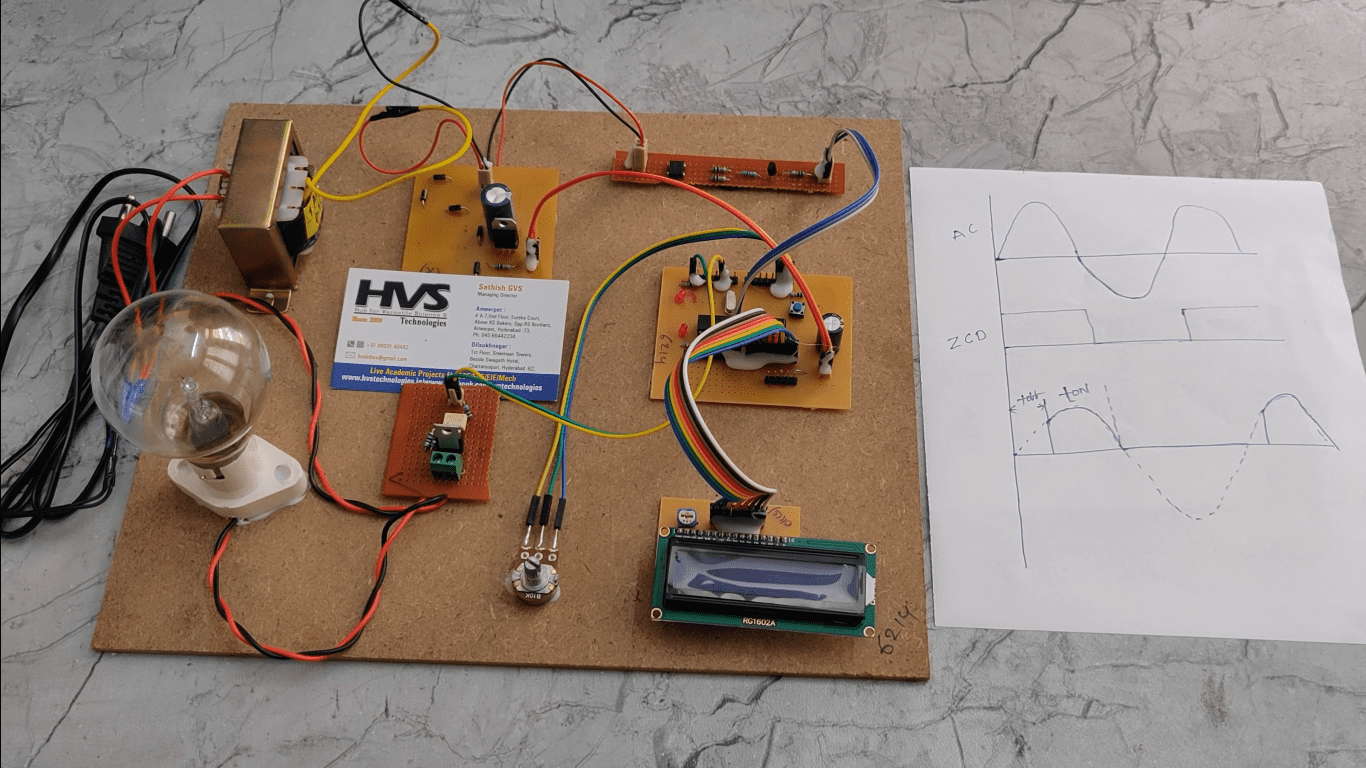
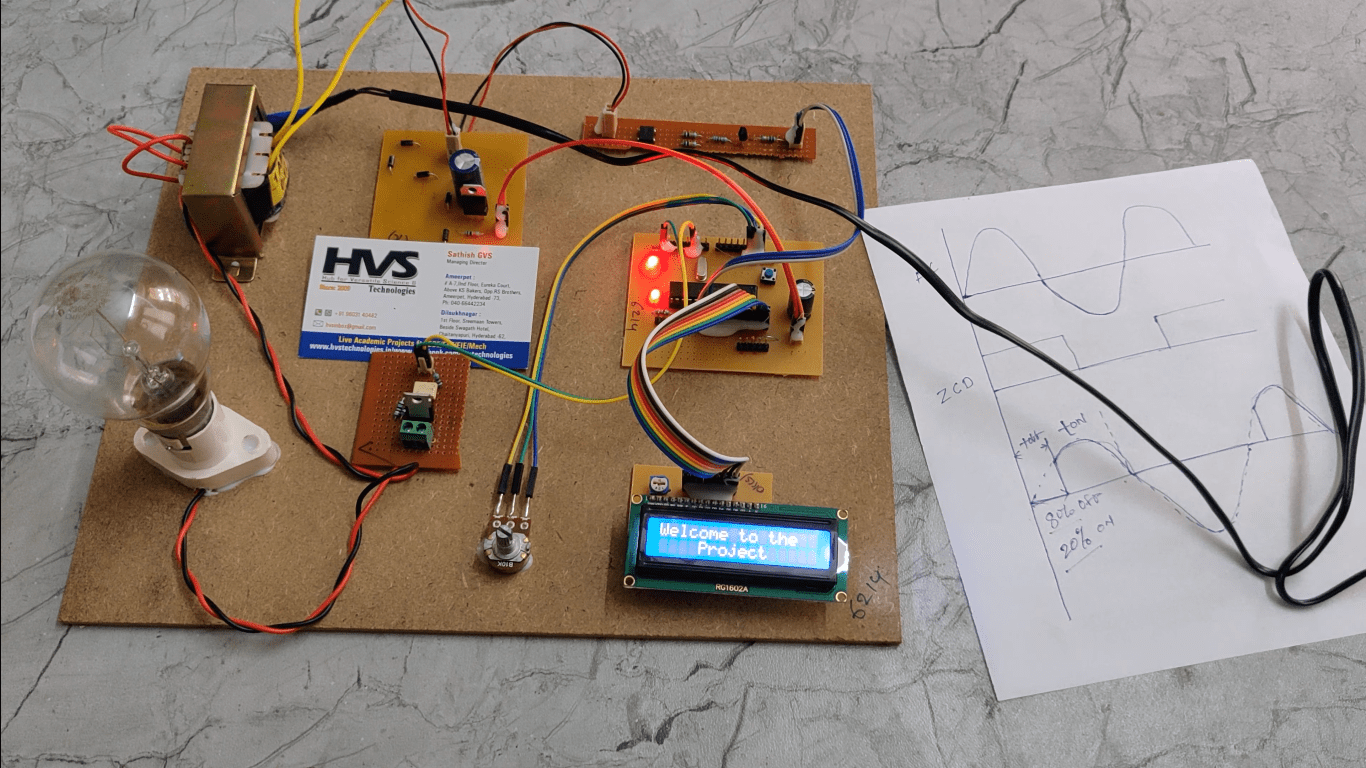
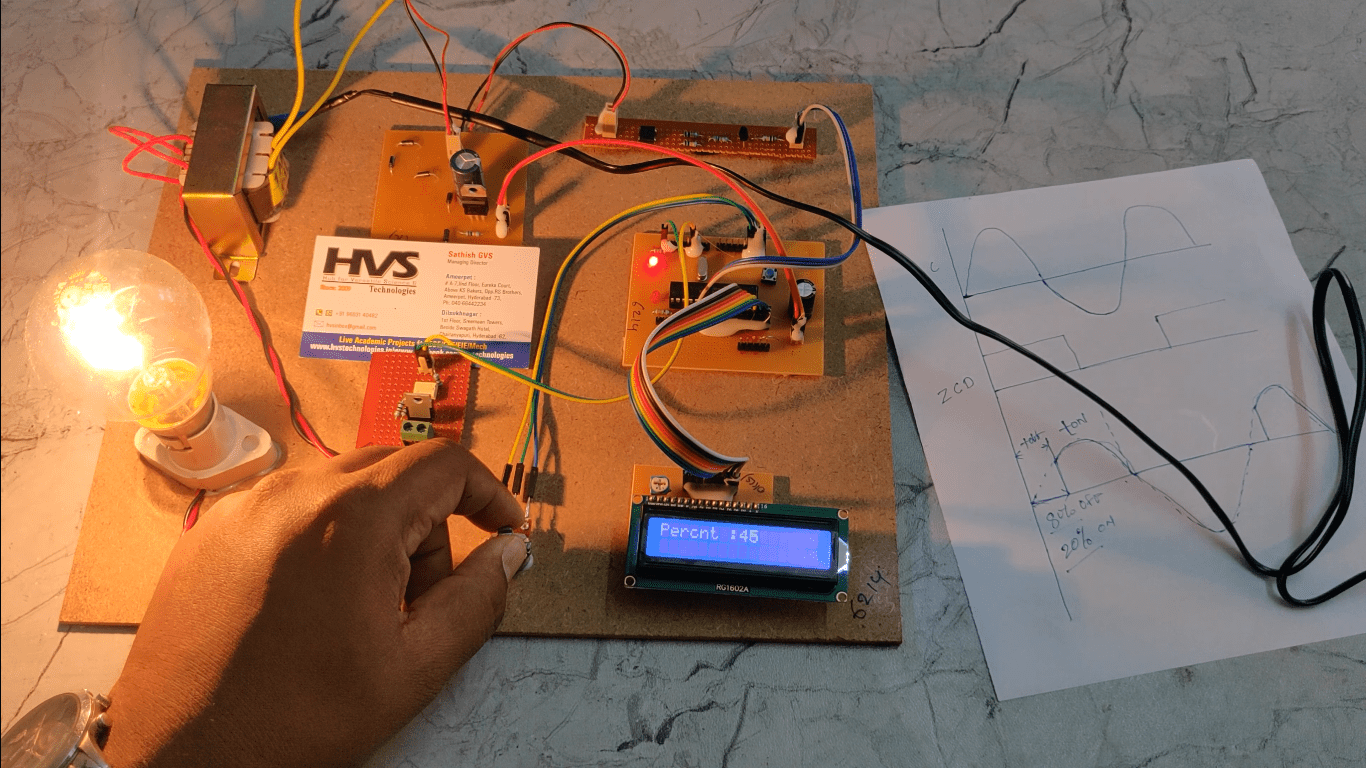
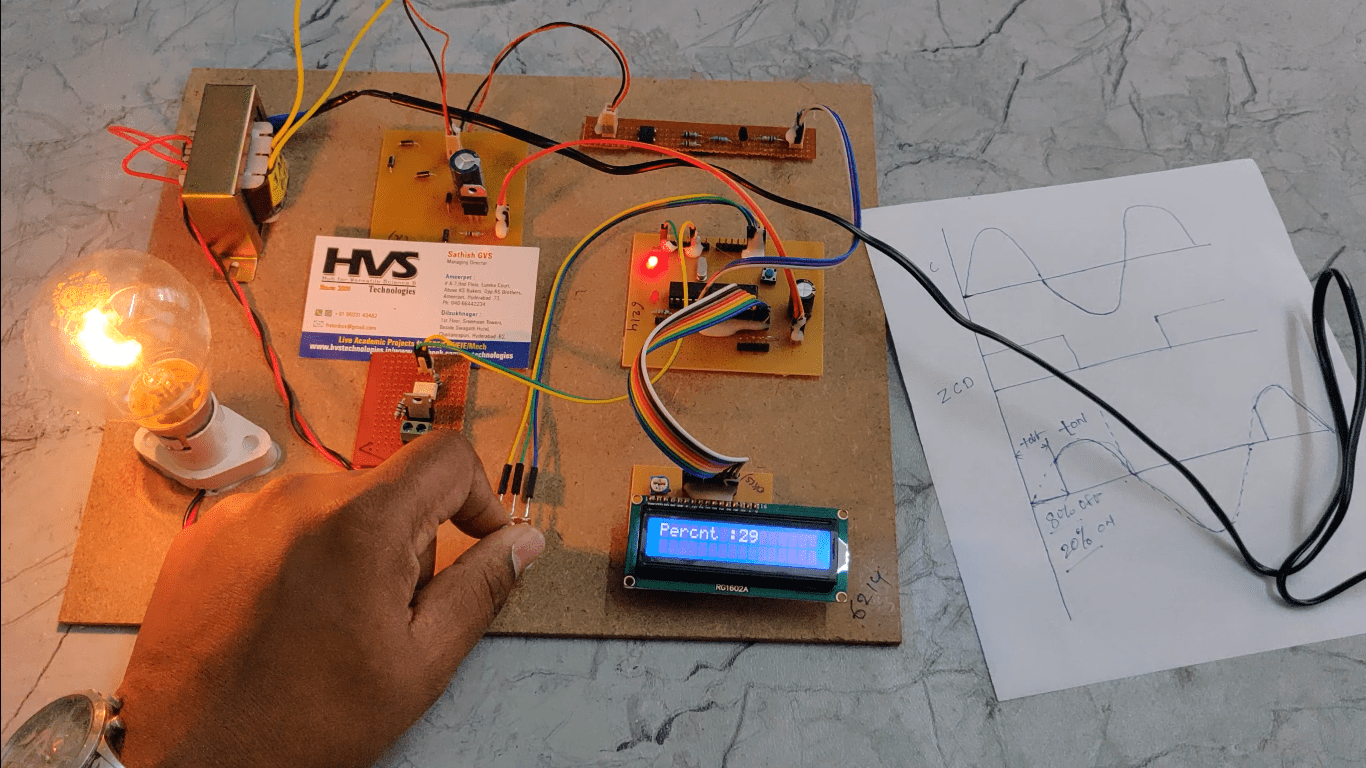
The project is a system that uses a microcontroller to maintain the illumination of a lamp by controlling a TRIAC. The illumination is maintained by varying the voltage across it. The system uses the concept of firing angle control of TRIAC. A POT is used to enter the percentage of illumination required by user. This input is fed to microcontroller which automatically initiates the firing angle control of TRIAC and adjusts the power supplied to the lamp with the help of a solid-state switching mechanism.
Illumination of a lamp varies depending on the voltage applied to it. In certain specific applications it is necessary to have controlled illumination as per requirement. This system overcomes the faults in the present system and provides a solution for light illumination control mechanism of the lamp. This system is built by using a PIC microcontroller and based on the principle of firing angle control of triac, which in turn can control the illumination of lamp. An LCD display unit is used, which displays entered percentage of the illumination through a POT(POTENTIOMETER). The firing angle control of triac is done by the microcontroller, according to the desired percentage entered by the user. Based on this input the microcontroller will automatically adjust the power delivered to the lamp through a solid-state switching mechanism.
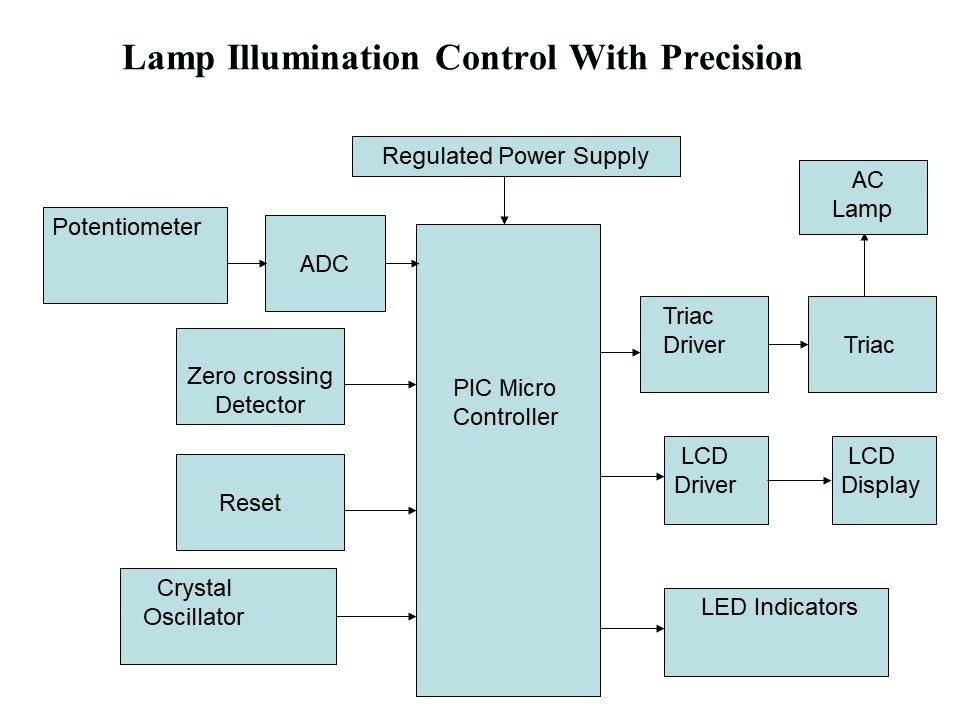
The main objectives of the project are: Block diagram:
video:
Block diagram:
video:
The light illumination is controlled by varying the duty cycles (PWM pulses) from the microcontroller as per the program. The microcontroller receives the percentage of duty cycles from the POT and delivers the desired output to switch the TRIAC for controlling the illumination of light.
The project provides learning’s on the following advancements:
- Interfacing potentiometer to Microcontroller.
- Lamp dimmer circuitry.
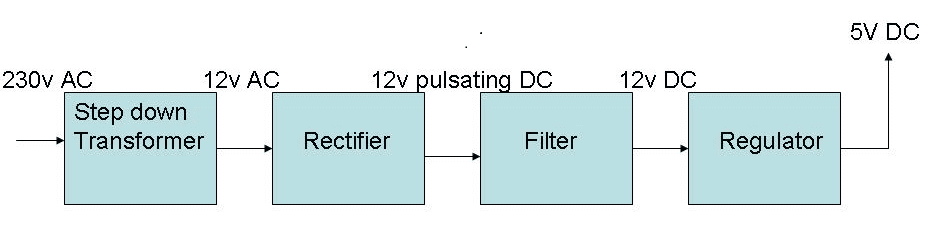
- Conversion of AC supply to DC supply.
- Embedded C programming.
- PCB designing.
- Regulated Power Supply.
- PIC Microcontroller.
- Triac with driver.
- Zero crossing detector.
- Crystal.
- Potentiometer.
- LCD display.
- Reset.
- LED Indicators.
- PIC-C compiler for Embedded C programming.
- PIC kit 2 programmer for dumping code into Micro controller.
- Express SCH for Circuit design.
 Block diagram:
 video: