No products in the cart.


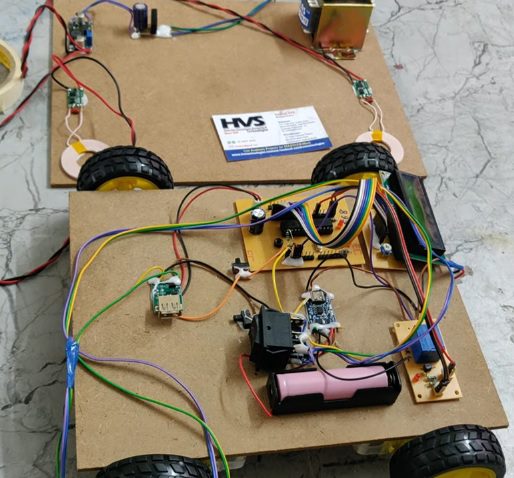
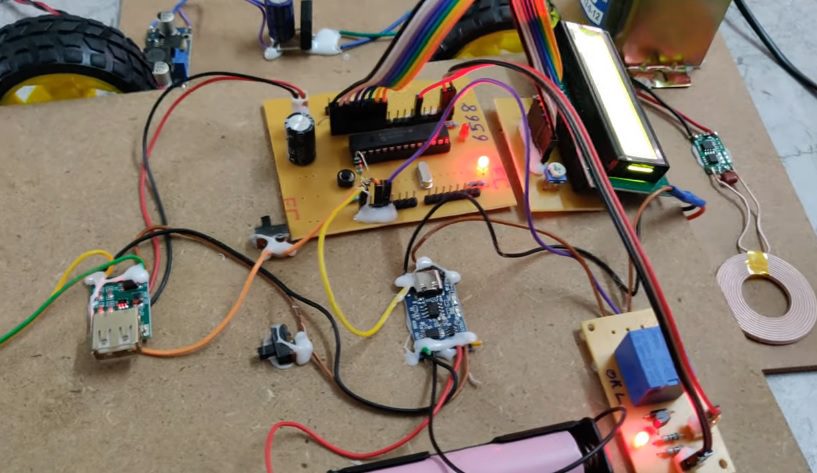
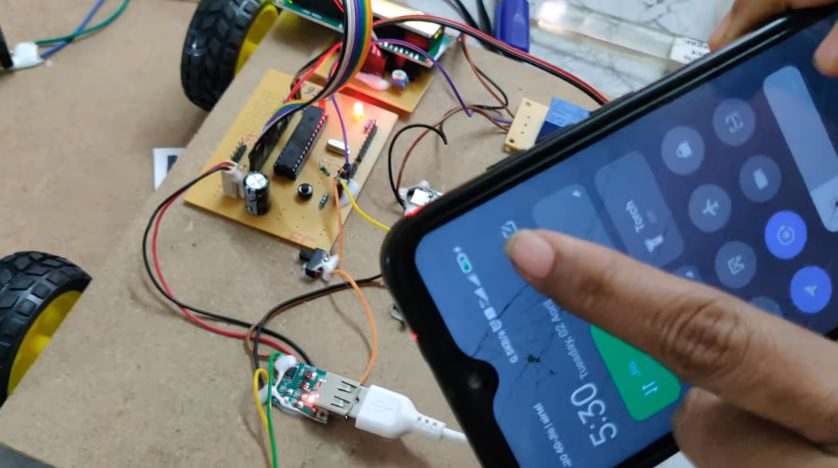
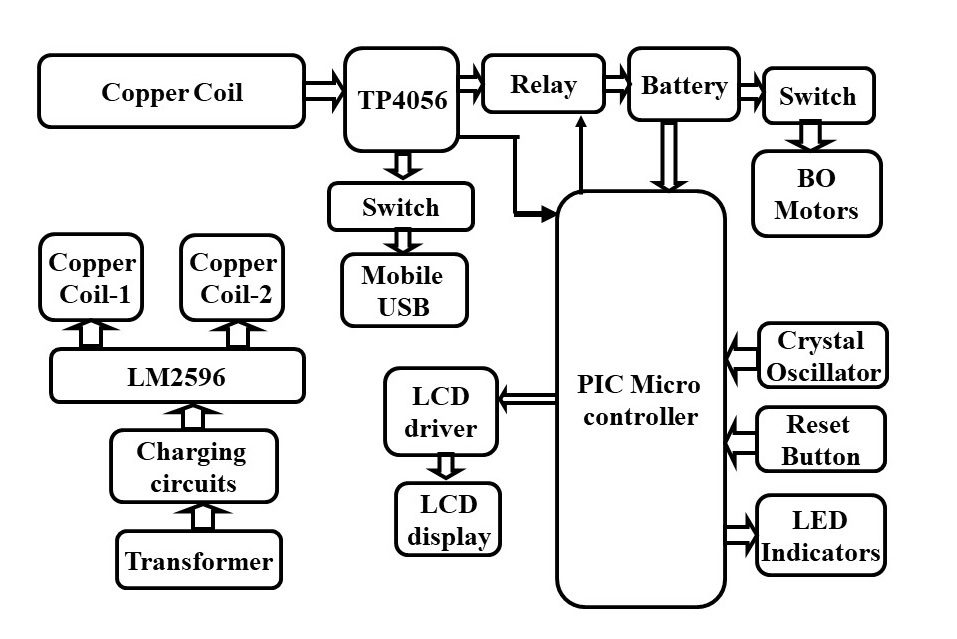
The project aims to develop an intelligent Wireless Electric Vehicle (EV) Charging System that transfers electrical power wirelessly to charge the EV battery using Wireless Power Transmission (WPT) technology. The receiver section consists of a robotic vehicle equipped with a Li-ion battery, receiving coil, PIC microcontroller, LCD display, and BO motors. The vehicle is controlled wirelessly using Robo switches, which allow the user to move the vehicle in forward, reverse, left, and right directions. While the vehicle moves over the wireless charging transmitter, the receiving coil captures the transmitted power and charges the Li-ion battery. The stored battery power is used to drive the vehicle and charge a mobile phone. The PIC microcontroller continuously monitors the received voltage, battery voltage, charging time, charging cost, and charging status, displaying the information on the LCD. The entire system is programmed using Embedded C to achieve efficient wireless charging and intelligent vehicle control.
Wireless energy transfer or wireless power is the transmission of electrical energy from a power source to an electrical load without a conductive physical connection. Wireless transmission is useful in cases where interconnecting wires are inconvenient, hazardous, or impossible. The problem of wireless power transmission differs from that of wireless telecommunications, such as radio. In the latter, the proportion of energy received becomes critical only if it is too low for the signal to be distinguished from the background noise. With wireless power, efficiency is the more significant parameter. A large part of the energy sent out by the generating plant must arrive at the receiver or receivers to make the system economical. The most common form of wireless power transmission is carried out using direct induction followed by resonant magnetic induction.
Features:
 video:
- Wireless power transmission for EV battery charging.
- Robo switches for forward, reverse, left, and right vehicle control.
- Li-ion battery used to power the vehicle and charge a mobile phone.
- PIC microcontroller monitors receiving voltage and battery status.
- LCD displays battery voltage, charging time, charging cost, and charging status.
- Tp4056 IC.
- Mobile USB.
- LI-ION Rechargeable battery.
- PIC Microcontroller.
- LCD display.
- BO motors.
- Wireless transmitting and receiving coils.
- Switches.
- Reset button.
- Crystal oscillator.
- LED indicator.
- PIC-C compiler for Embedded C programming.
- PIC kit 2 programmer for dumping code into Micro controller.
- Express SCH for Circuit design.
 video: