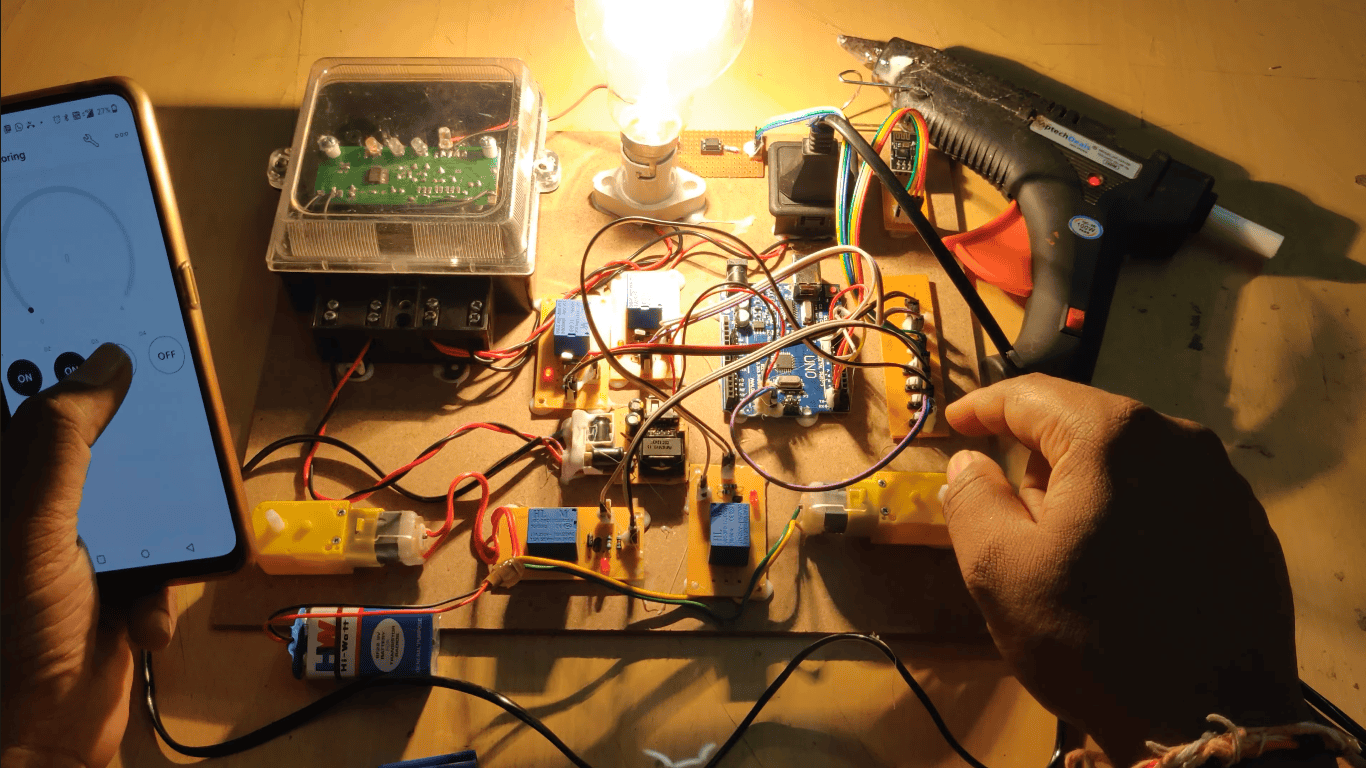
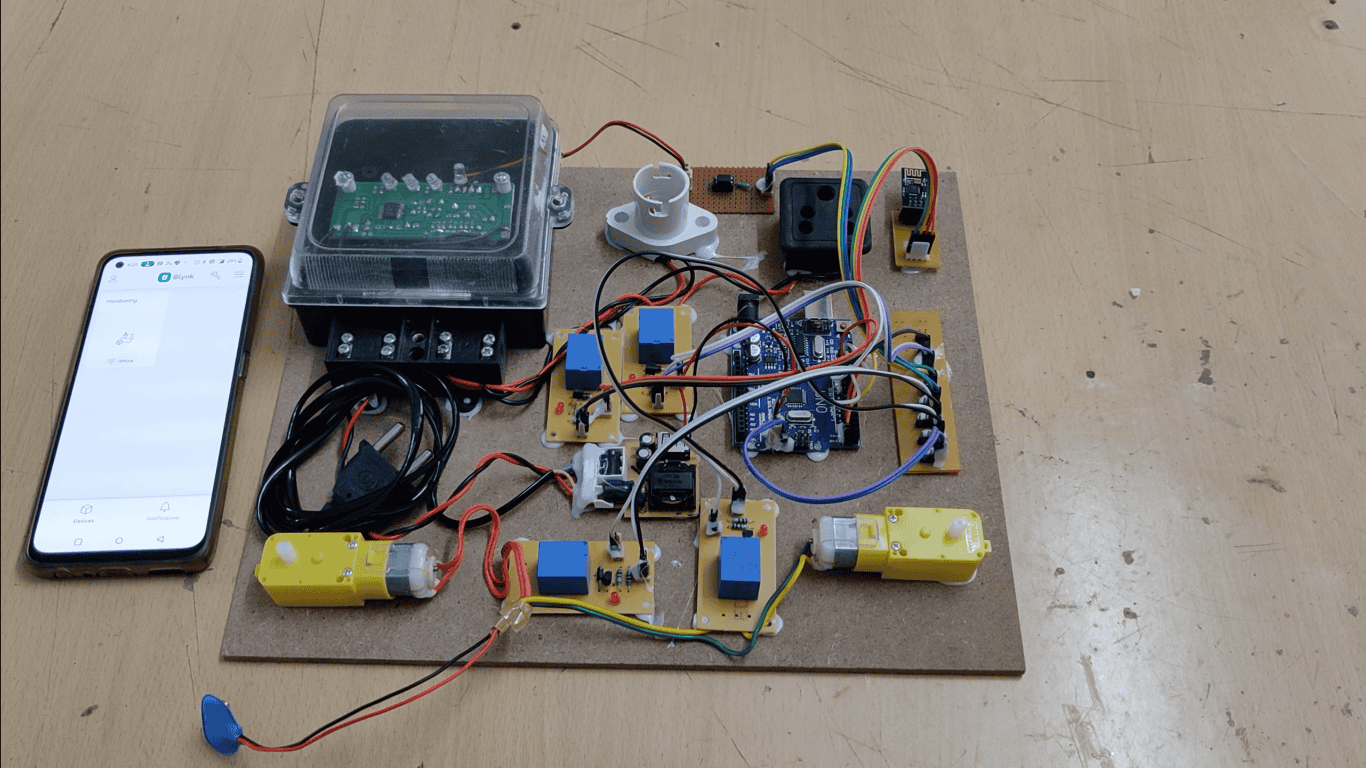
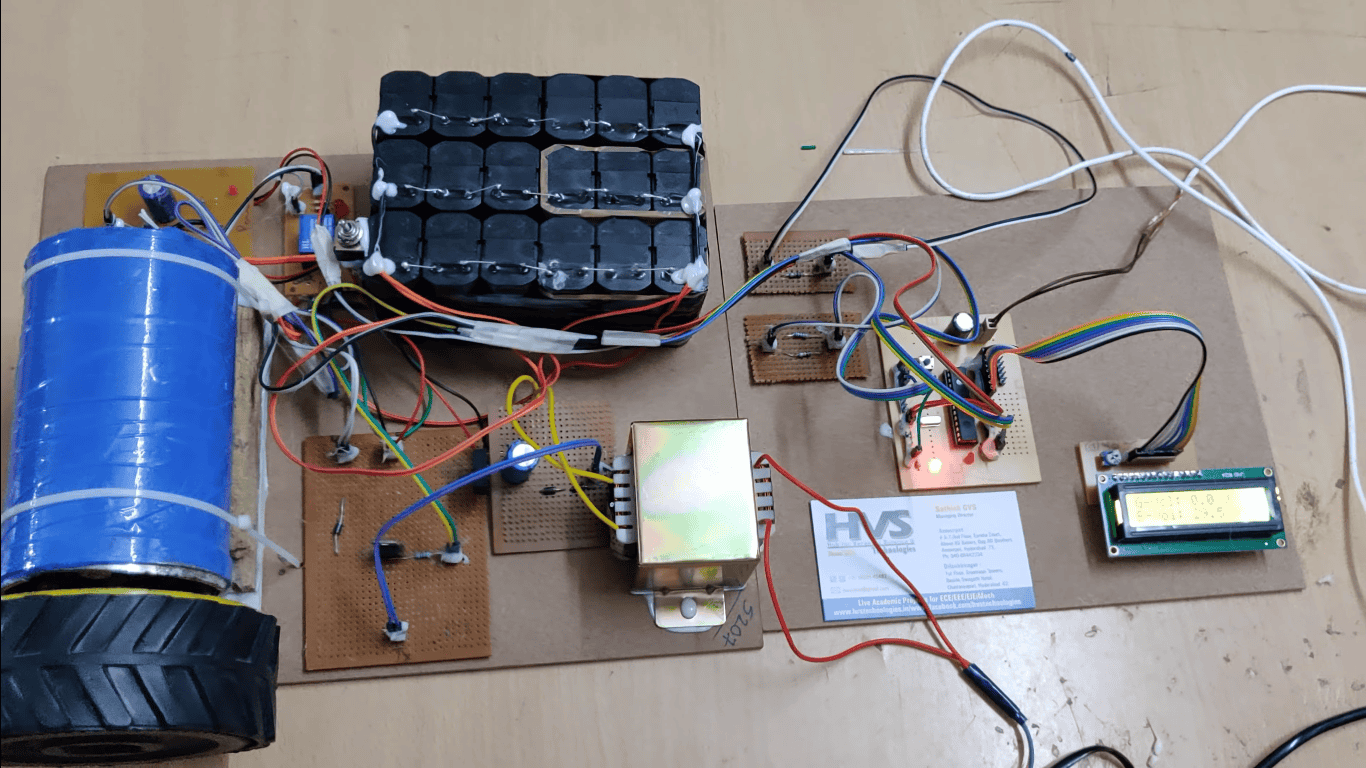
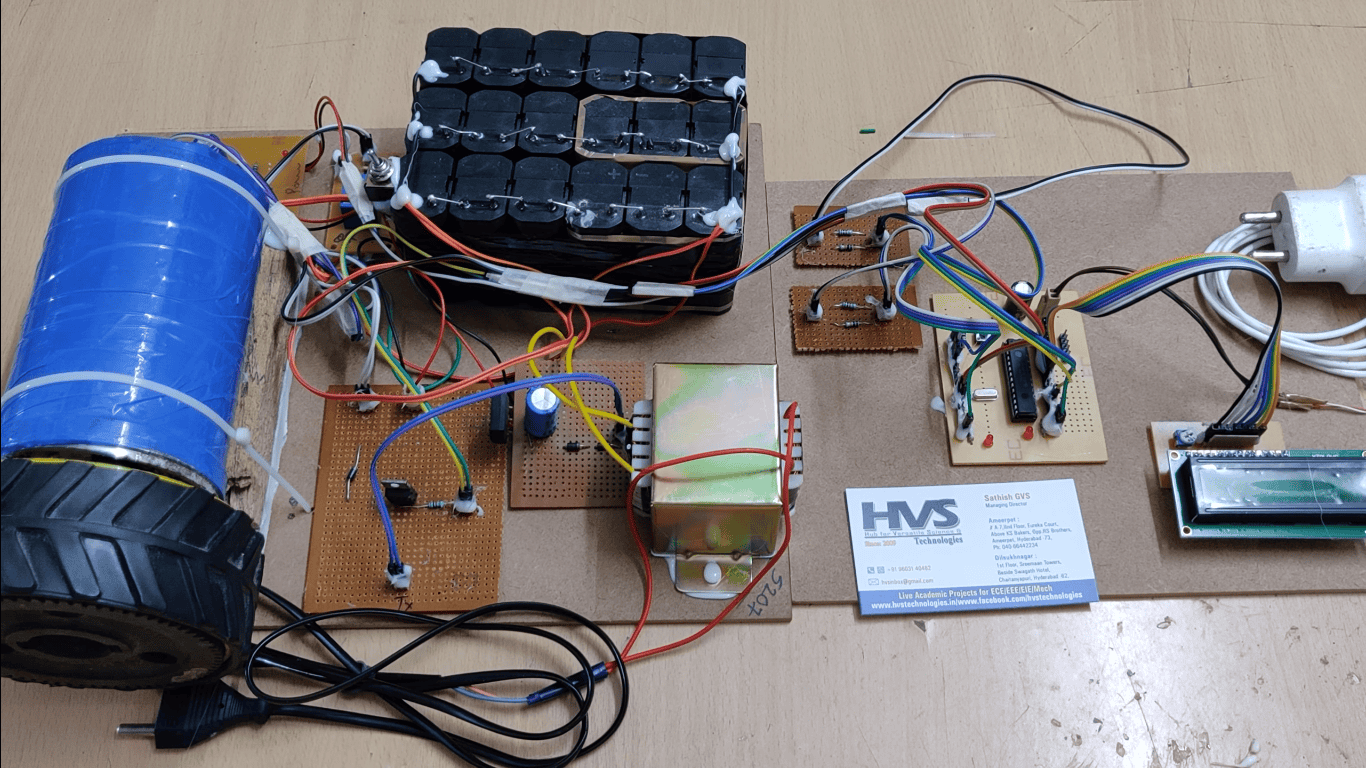
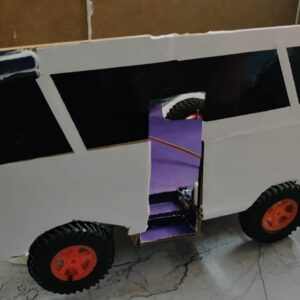
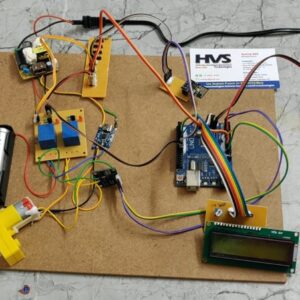
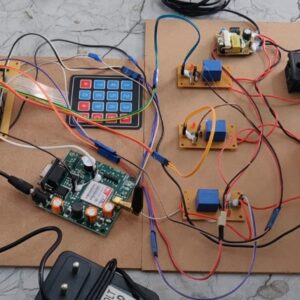
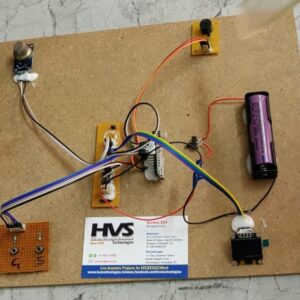
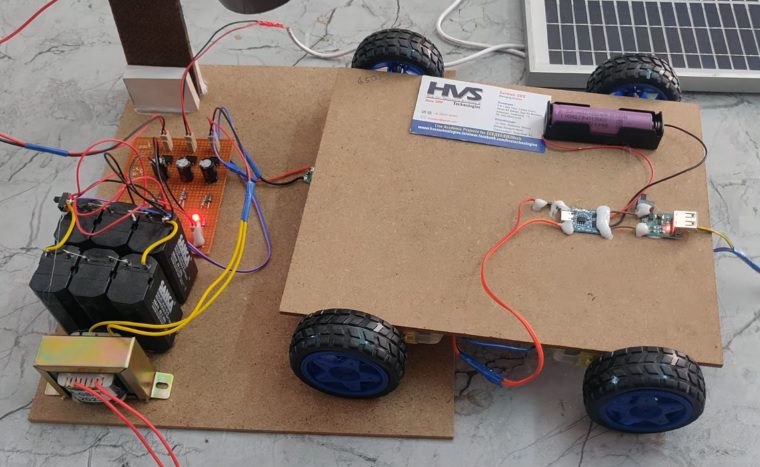
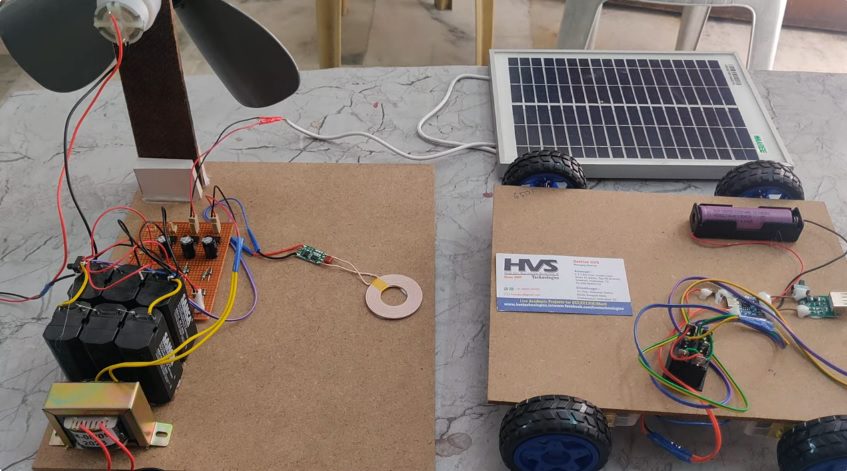
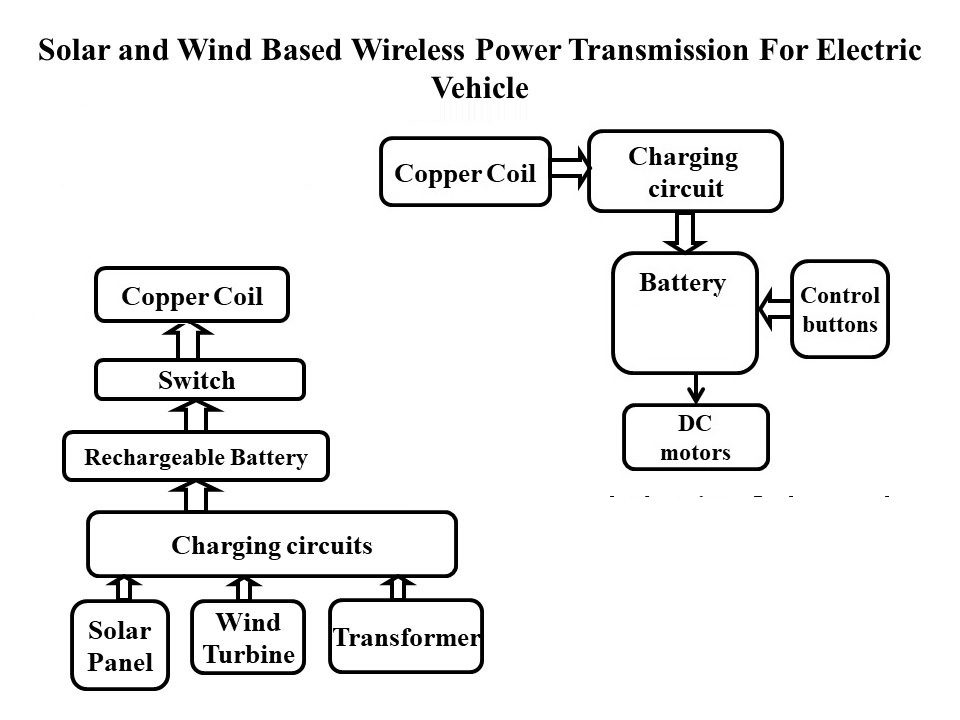
The project entitled “Solar and Wind Based Wireless Power Transmission for Electric Vehicle” aims to develop an eco-friendly and renewable energy-based wireless charging system for electric vehicles. The proposed system uses solar energy and wind energy as primary renewable power sources, along with an additional transformer-based power supply. These energy sources are connected to a charging circuit, which regulates the power and stores the generated energy in a rechargeable battery. The stored electrical energy is supplied to a wireless power transmission system using a copper coil. The transmitter copper coil transfers electrical energy wirelessly through electromagnetic induction to the receiver copper coil placed in the electric vehicle. The received power is then supplied to the charging circuit for charging the vehicle battery. A battery charging circuit is used to control and regulate the charging process, while control buttons are provided to operate the system. DC motors are used to demonstrate the movement of the electric vehicle. This system reduces the need for direct electrical connections during charging and promotes the utilization of renewable energy sources. The proposed system provides an innovative, convenient, and environmentally friendly approach to electric vehicle charging while reducing dependence on conventional energy sources.
Objectives:
To develop a wireless power transmission system for electric vehicle charging.
To utilize solar energy and wind energy as renewable power sources.
To generate and store electrical energy in a rechargeable battery.
To transfer electrical power wirelessly using copper coils based on electromagnetic induction.
To design a charging circuit for efficient battery charging.
To reduce the use of conventional electrical energy for EV charging.
To provide a simple and convenient wireless charging method.
To demonstrate electric vehicle movement using DC motors.
 1 × ₹10,500.00

 video: