No products in the cart.


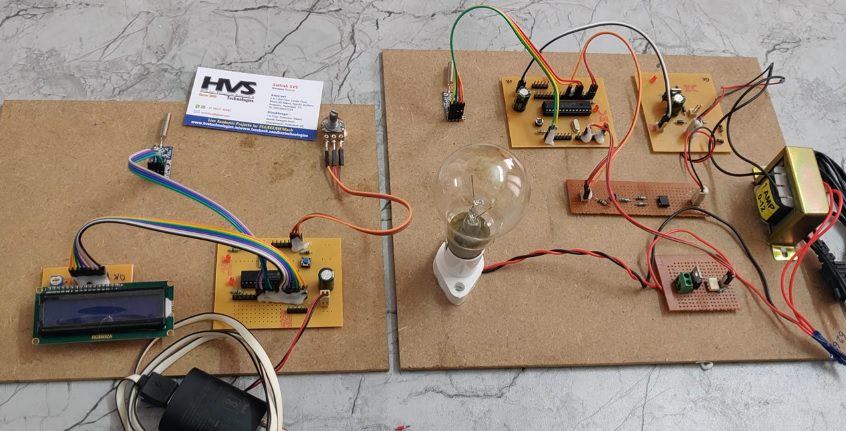
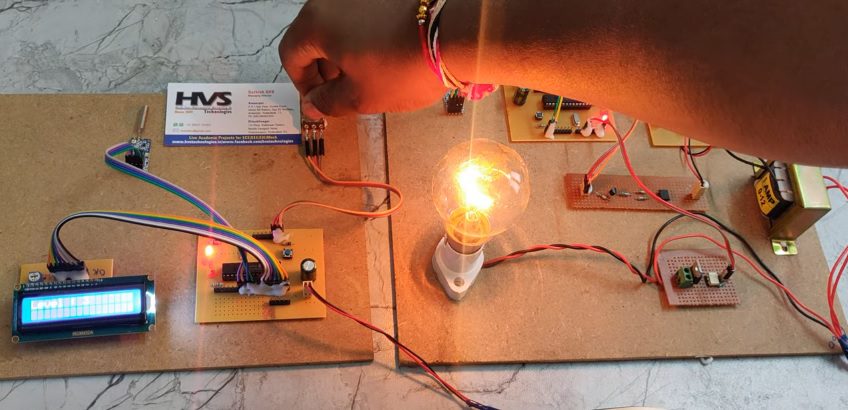
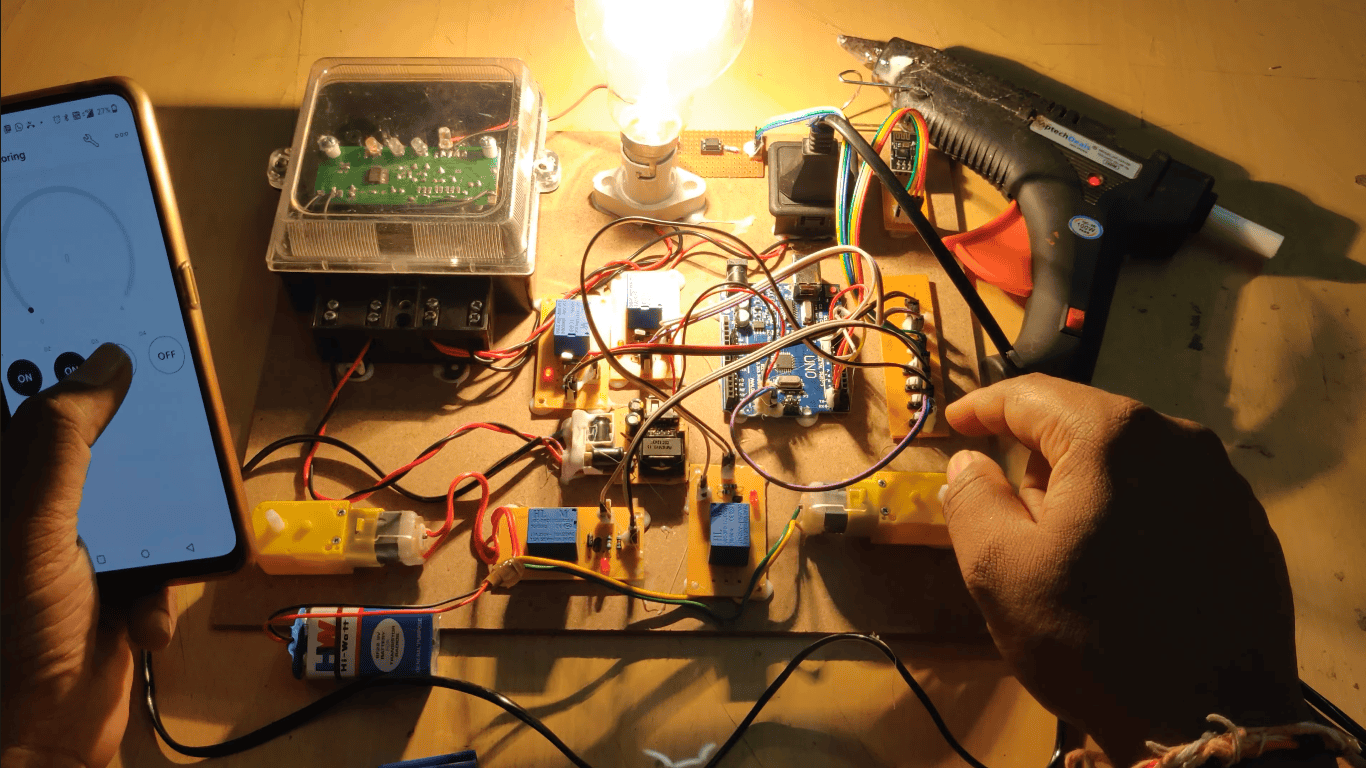
The project aims in designing a system which helps in increasing or decreasing lamp intensity through a potentiometer using wireless RF technology. As the world gets more and more technologically advanced, we find new technology coming in deeper and deeper into our personal lives even at home. Home automation is becoming more and more popular around the world and is becoming a common practice.
The process of home automation works by making everything in the house automatically controlled using technology to control and do the jobs that we would normally do manually.
The main controlling device of the whole system is a Microcontroller. Potentiometer, TRIAC is interfaced to Microcontroller. The microcontroller receives input from potentiometer and acts accordingly on the triac-based lamp dimming circuitry. A principle of zero crossing detection is employed for lamp dimming. To perform this task microcontroller is loaded with an intelligent program written using embedded ‘C’ language.
The main objectives of the project are:
 Block Diagram:
video:
- Aims at energy conservation.
- Simple potentiometer-based lamp dimming.
- Faster in operation.
- Device enabled with zero crossing detector.
- Using wireless RF technology.
- Monitoring set intensity level on LCD.
- Regulated Power Supply.
- PIC Microcontrollers.
- Triac and Diac.
- Zero crossing detector.
- RF transmitter and receiver.
- LCD display.
- Crystal Oscillator.
- Potentiometer.
- Reset Button.
- LED Indicators.
- PIC-C compiler for Embedded C programming.
- PIC kit 2 programmer for dumping code into Micro controller.
- Express SCH for Circuit design.
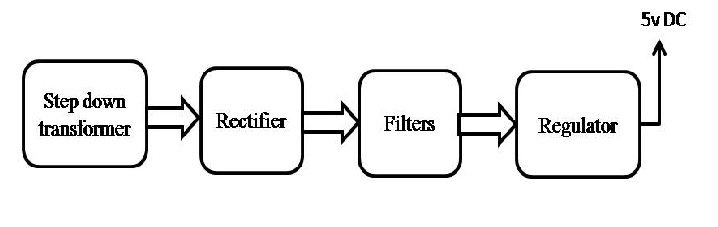 Block Diagram:
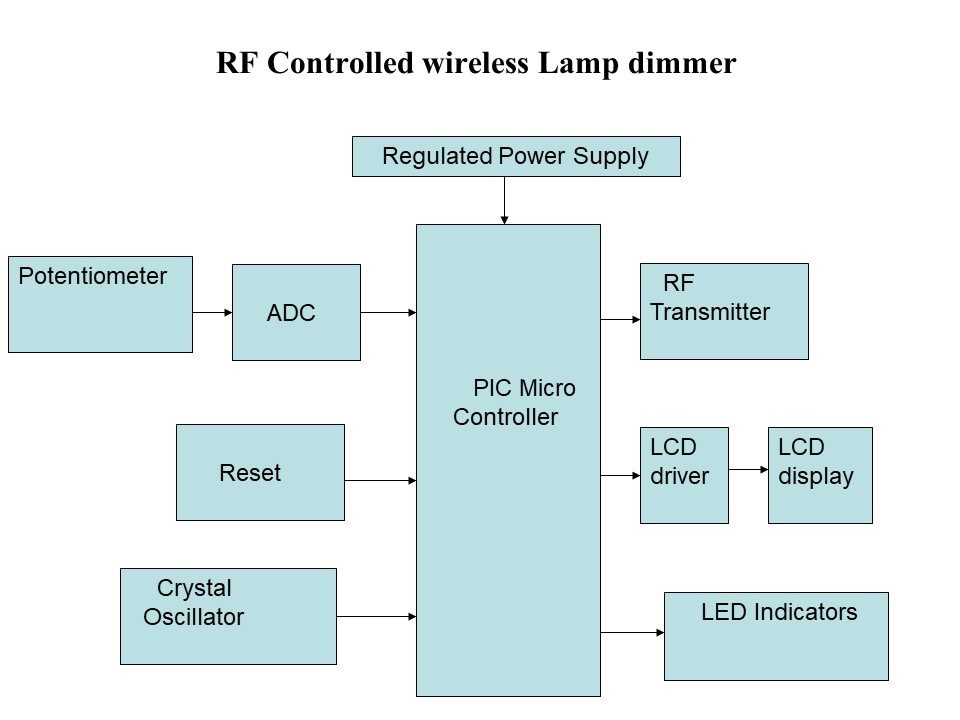
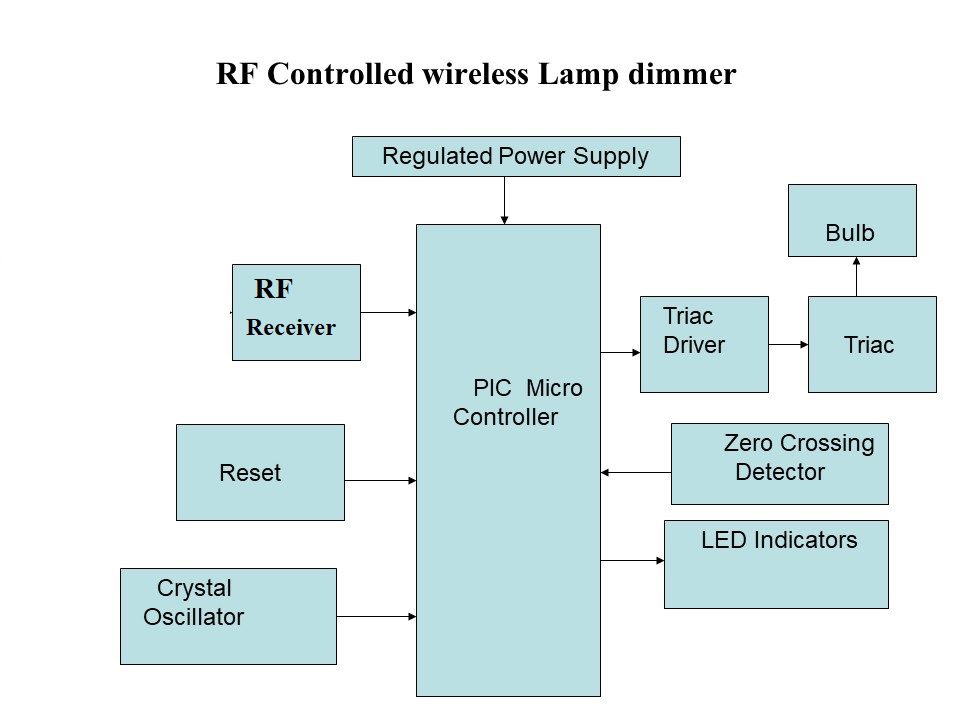 video: