No products in the cart.


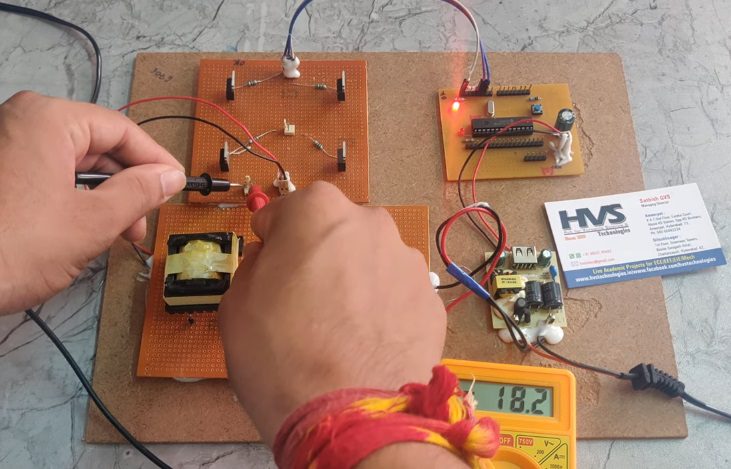
The increase in global energy demand and constraints from fossil fuels have encouraged a growing share of renewable energy resources in the utility grid. With the increase in integration of non-Conventional energy sources, the performance of the distribution grid has considerably been affected. In this grid, the concept of Smart Grids stands out as it provides an improvement by integrating distributed generation and control systems capable of communicating with each other.
The transform conventional grids into smart ones with improved communication and significant improvements in terms of power quality, solid-state transformer (SST) have been proposed is the potential solution to revolutionize the power grid by ensuring flexibility and intelligence, better interconnection possibilities, voltage and current control, frequency stability as well as power quality improvement in the smart grid.
Unlike a conventional transformer, which relies only on electromagnetic induction, SSTs utilize electromagnetic induction as well as state-of-the-art power electronics to convert and control power flow. This approach allows SSTs to operate at higher frequencies, which results in smaller and lighter designs. It has expedience such as small volume, less weight, high power density, controlled power factor, enhanced power quality such as voltage regulation, reactive power compensation, voltage unbalance, voltage sag mitigation and is provided with a DC output.
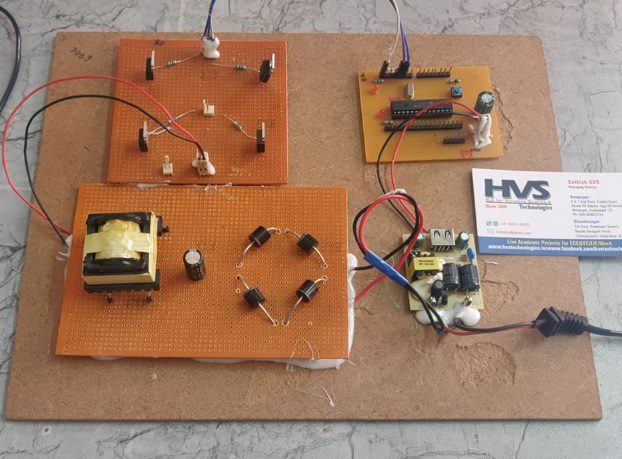
This project encompasses the system design and simulation of a medium-voltage SST. The expected outcomes of the project are: Implementation of medium voltage SST, benefits of SSTs over a conventional transformer, and the identification of the technical challenges that need to be addressed for their commercialization.
Objectives:
 video:
- To convert 230V AC input into 24V AC output.
- To reduce the input voltage using solid-state electronic circuits.
- To provide a stable and reliable low-voltage AC supply.
- To improve power conversion efficiency.
- To reduce the size and weight compared to conventional transformers.
- To provide electrical isolation and protection, if incorporated into the design.
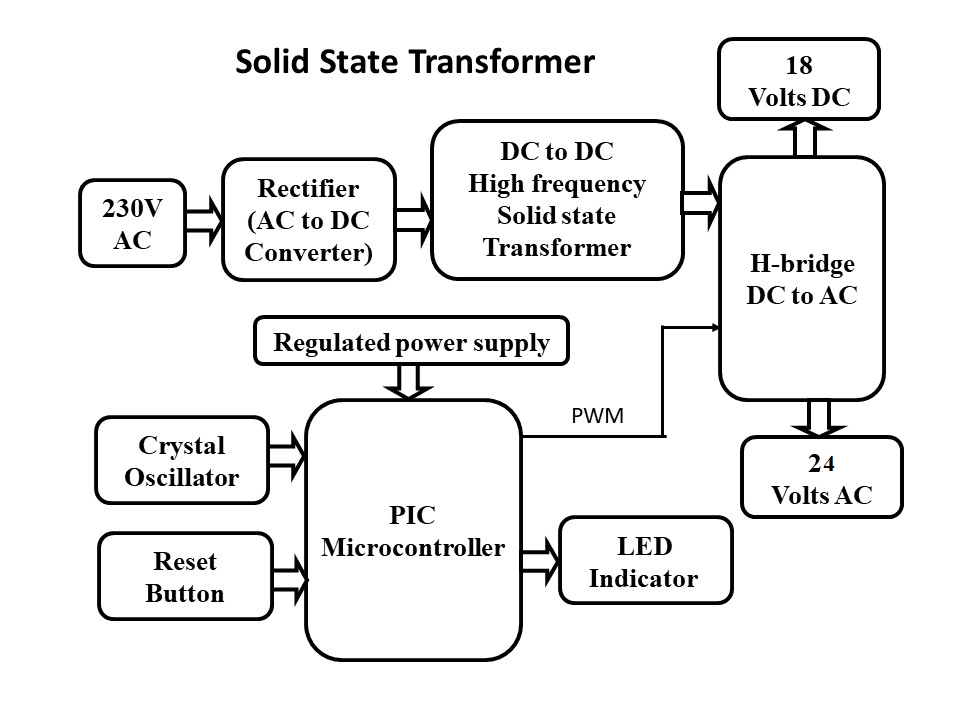
- 230 AC supply.
- RECTIFIER (AC to DC converter).
- DC to DC High frequency transformer.
- DC to AC (H-Bridge Inverter).
- PIC microcontroller.
- Crystal oscillator.
- Reset Button.
- LED indicator.
- PIC-C compiler for Embedded C programming.
- PIC kit 2 programmer for dumping code into Micro controller.
- Express SCH for Circuit design.
 video: