No products in the cart.


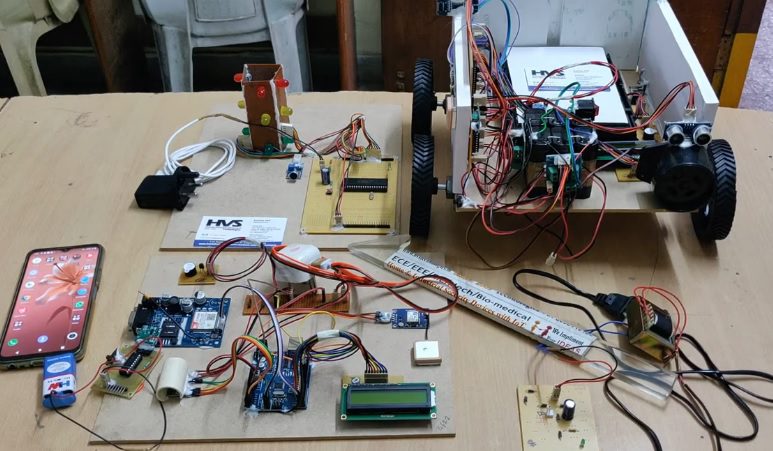
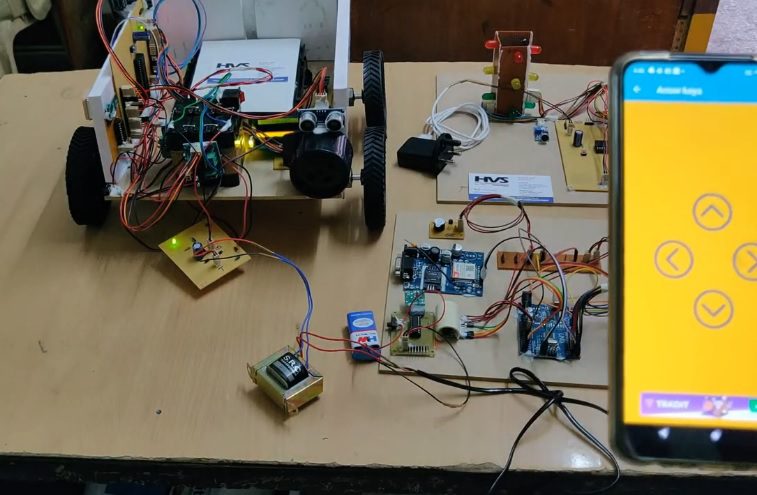
The aim of this project is to build a Smart Ambulance for COVID patients. It is very useful for taking the patient to the hospital on time. The project is developed in three sections: Patient Section, Ambulance Section, and Traffic Signal Section.
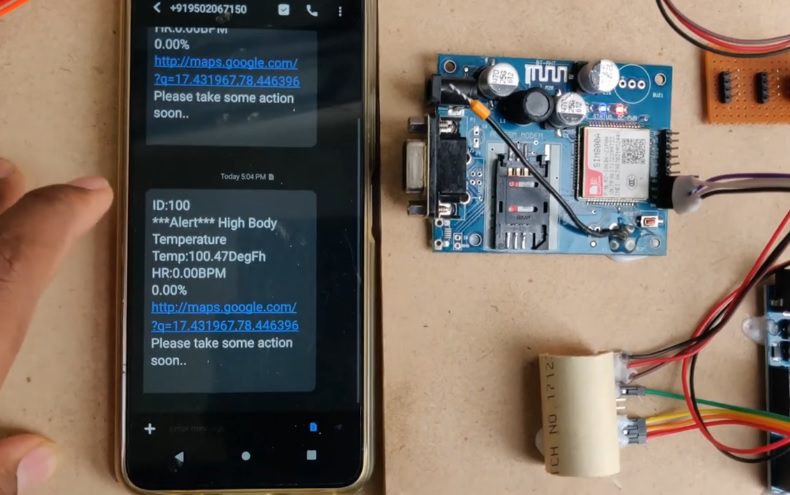
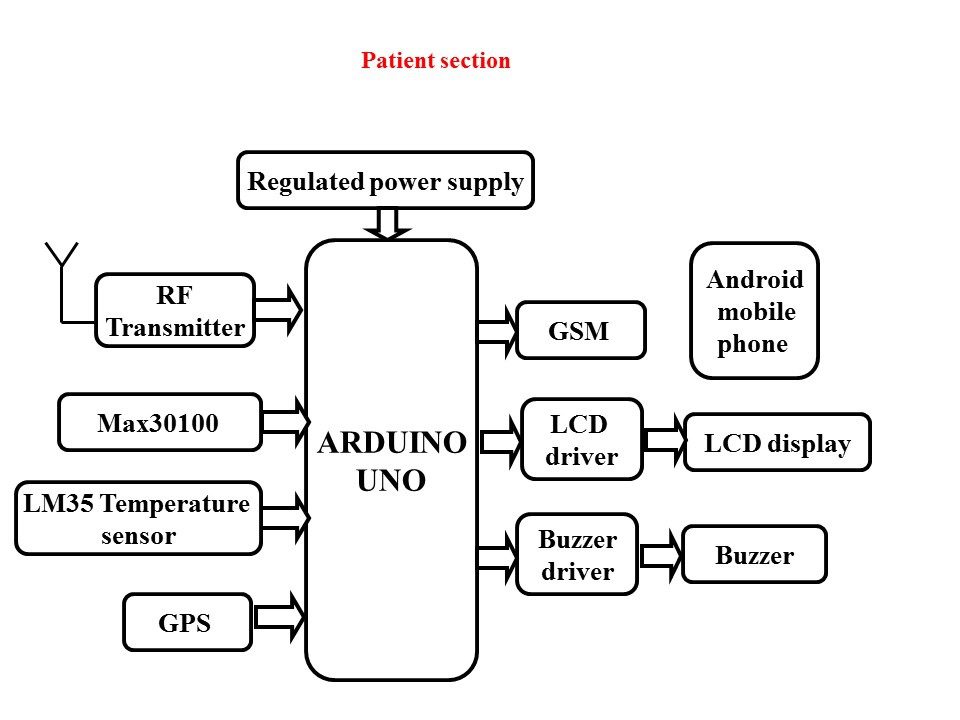
Patient Section: For implementing this project, an Arduino microcontroller, RF transmitter, MAX30100, LM35 sensor, GPS, GSM, LCD display, and buzzer are used. All the input and output modules are interfaced with the Arduino microcontroller. The MAX30100 and LM35 sensors continuously monitor the patient's health parameters. If the sensor values exceed the predefined threshold values, the Arduino sends the patient's location to the nearby ambulances, such as ID100, ID101, and ID110, in the form of latitude and longitude values using GPS and GSM. The system also provides an audible alert through the buzzer.
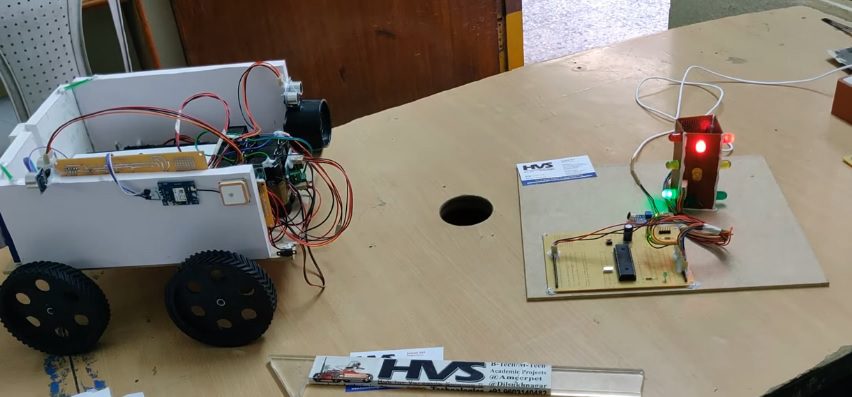
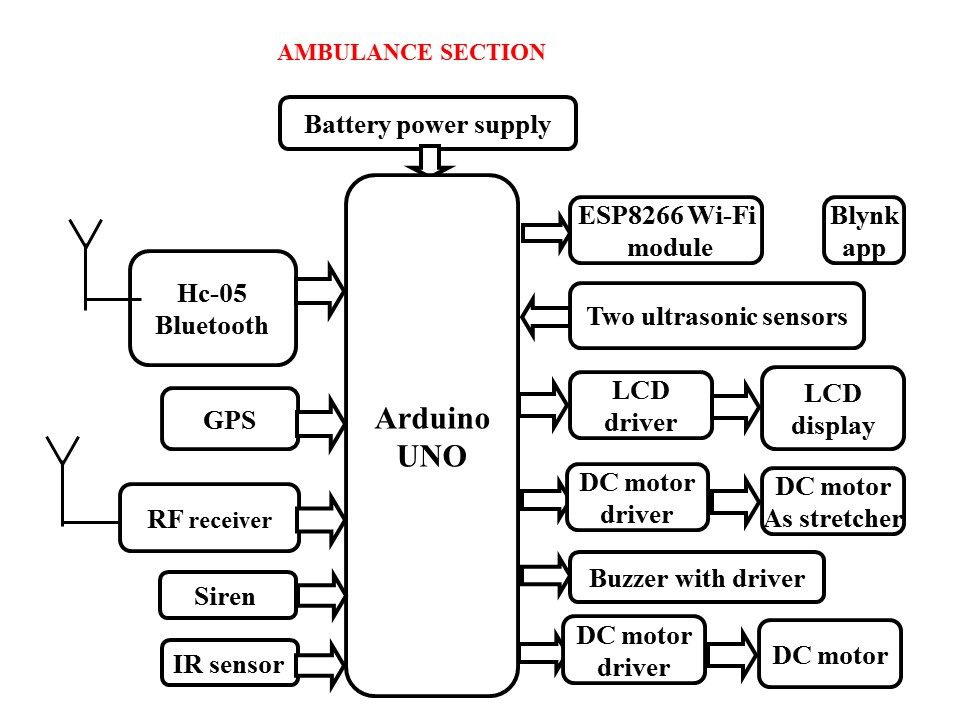
Ambulance Section: The ambulance section is implemented using a PIC microcontroller, Bluetooth module, ESP8266 Wi-Fi module, GPS, RF receiver, siren, IR sensor, two ultrasonic sensors, LCD display, sliding stretcher, buzzer, and DC motors with an L293D motor driver. All the components are interfaced with the microcontroller. The microcontroller sends the ambulance location to the Blynk application using GPS and the ESP8266 Wi-Fi module. The remaining ambulances and the patient can track the location of the nearest ambulance through the Blynk application. When the ambulance reaches the RF communication region, the ambulance door opens automatically and the sliding stretcher comes out along with the door. An IR sensor is fixed on the stretcher to detect the patient. When the IR sensor detects the patient on the stretcher, the stretcher automatically moves back inside and the door closes. The ambulance is controlled by the user through Bluetooth wireless communication. Two ultrasonic sensors are used to detect obstacles in the path of the ambulance and provide an audible alert through the buzzer when an obstacle is detected. Two DC motors connected through the L293D motor driver are used to move the ambulance and change its direction. The operating status of the ambulance is displayed on the LCD module.
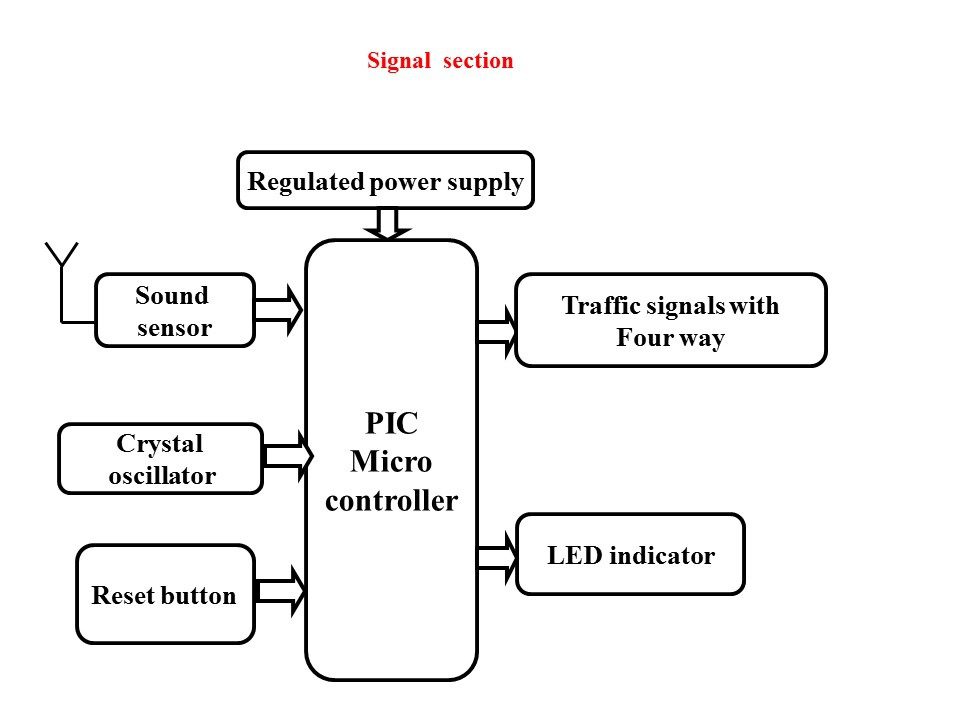
Traffic Signal Section: The traffic signal section is implemented using a PIC microcontroller, traffic lights, and a sound sensor. When the ambulance reaches the traffic signal, the sound sensor detects the ambulance siren and sends the information to the PIC microcontroller. The microcontroller processes the signal and turns ON the green light in the direction of the ambulance, allowing it to pass through the traffic signal. Apart from ambulance clearance, the traffic signals operate in their normal mode.
The main objectives:
 video:
- To develop a smart ambulance system for COVID patients.
- To monitor the patient's temperature and heart rate using sensors.
- To send the patient's location to nearby ambulances using GPS and GSM.
- To track the ambulance location using GPS, ESP8266, and Blynk.
- To provide automatic stretcher movement and door operation for patient loading.
- To detect obstacles using ultrasonic sensors and provide buzzer alerts.
- To provide traffic signal clearance for the ambulance using a sound sensor.
- Power Supply.
- TWO PIC Microcontroller.
- ONE Arduino UNO board.
- Crystal Oscillator.
- Reset Button.
- LED Indicators.
- RF transmitter, receiver.
- Traffic signals.
- IR sensor.
- Ultrasonic sensors.
- Temperature sensor.
- MLX30100 sensor.
- DC motors with L293d motor driver.
- ESP8266 Wi-Fi module
- GPS.
- GSM.
- Buzzer.
- Sound Sensor.
- LCD displays.
- Slider stretcher.
- HC-05 Bluetooth module.
- Siren.
- PIC-C compiler for Embedded C programming.
- PIC kit 2 programmer for dumping code into Micro controller.
- Express SCH for Circuit design.
- ARDUINO IDE STUDIO compiler for dumping code into ARDUINO.
- Embedded C programming.
- Express SCH for Circuit design
 video: