No products in the cart.


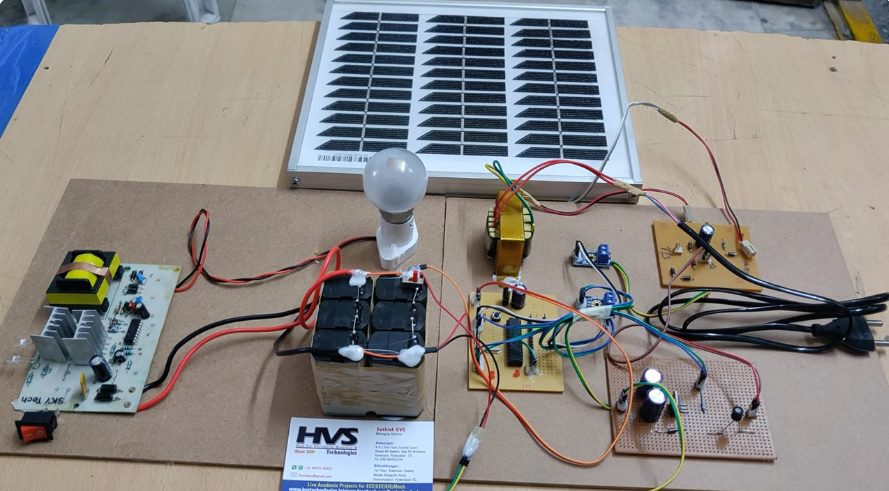
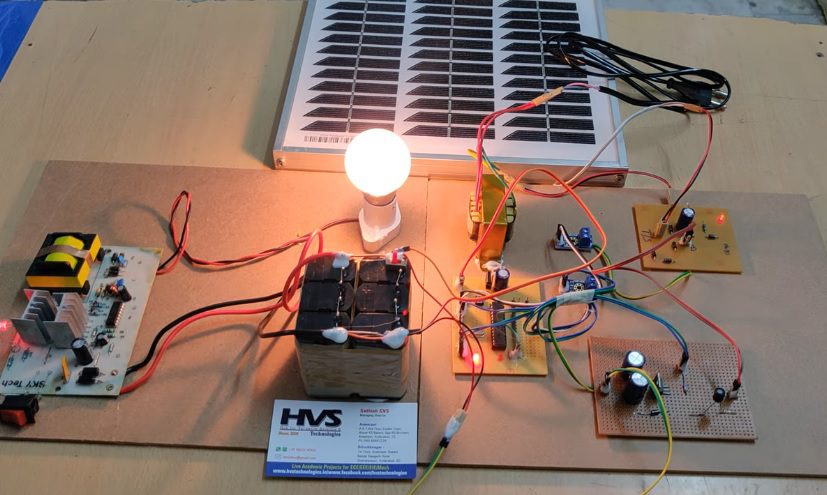
Implementation of Solar Powered Multilevel Inverter is a renewable energy project designed to convert solar photovoltaic (PV) energy into high-quality AC power using a multilevel inverter topology. The system uses a solar panel as the primary energy source and a rechargeable battery for energy storage. A charging circuit regulates the power from the solar panel and charges the battery safely. The stored DC power is then converted into AC power through a multilevel inverter controlled by a microcontroller.
The multilevel inverter generates a stepped AC output voltage with lower harmonic distortion and improved waveform quality compared to a conventional inverter. PWM (Pulse Width Modulation) switching techniques are used to control the inverter switches and achieve efficient power conversion. The generated AC output can be used to operate domestic and small industrial loads such as lights, fans, and other electrical appliances.
The proposed system improves power quality, increases conversion efficiency, reduces switching losses, and enhances the utilization of solar energy. It also provides a reliable and environmentally friendly alternative to conventional power sources, making it suitable for residential backup systems, rural electrification, and renewable energy applications. The project demonstrates the effective implementation of a solar-powered multilevel inverter for efficient and sustainable AC power generation.
Features:
 video:
Solar photovoltaic (PV) panel used as the primary energy source.
Rechargeable battery for energy storage and backup power.
Multilevel inverter topology for high-quality AC output.
Lower harmonic distortion (THD) compared to conventional inverters.
PWM (Pulse Width Modulation) control for efficient switching operation.
Microcontroller-based control for reliable inverter operation.
Improved output waveform close to a sinusoidal AC signal.
Higher conversion efficiency with reduced switching losses.
Stable AC output voltage for domestic and small industrial loads.
Automatic battery charging and power management from the solar source.
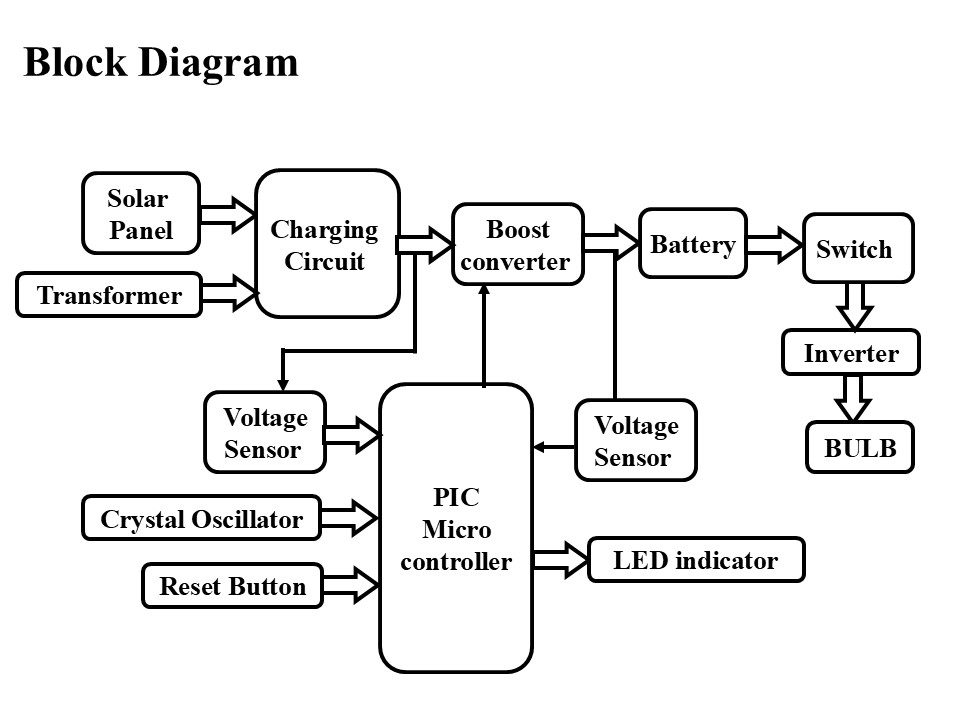
Major components presenting this system:- Solar Panel.
- Charging Circuit.
- Rechargeable Battery
- PIC Micro controller
- Boost converter.
- Voltage sensors.
- Inverter.
- AC Bulb.
- PIC-C compiler for Embedded C programming.
- PIC kit 2 programmer for dumping code into Micro controller.
- Express SCH for Circuit design.
 video: