No products in the cart.


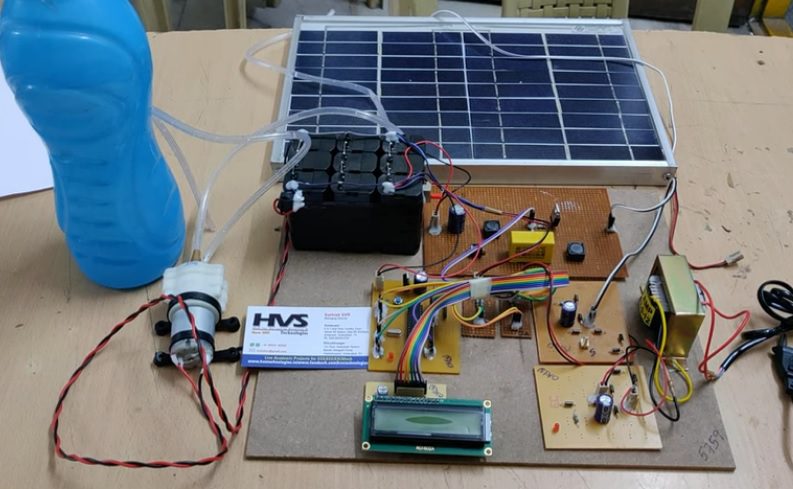
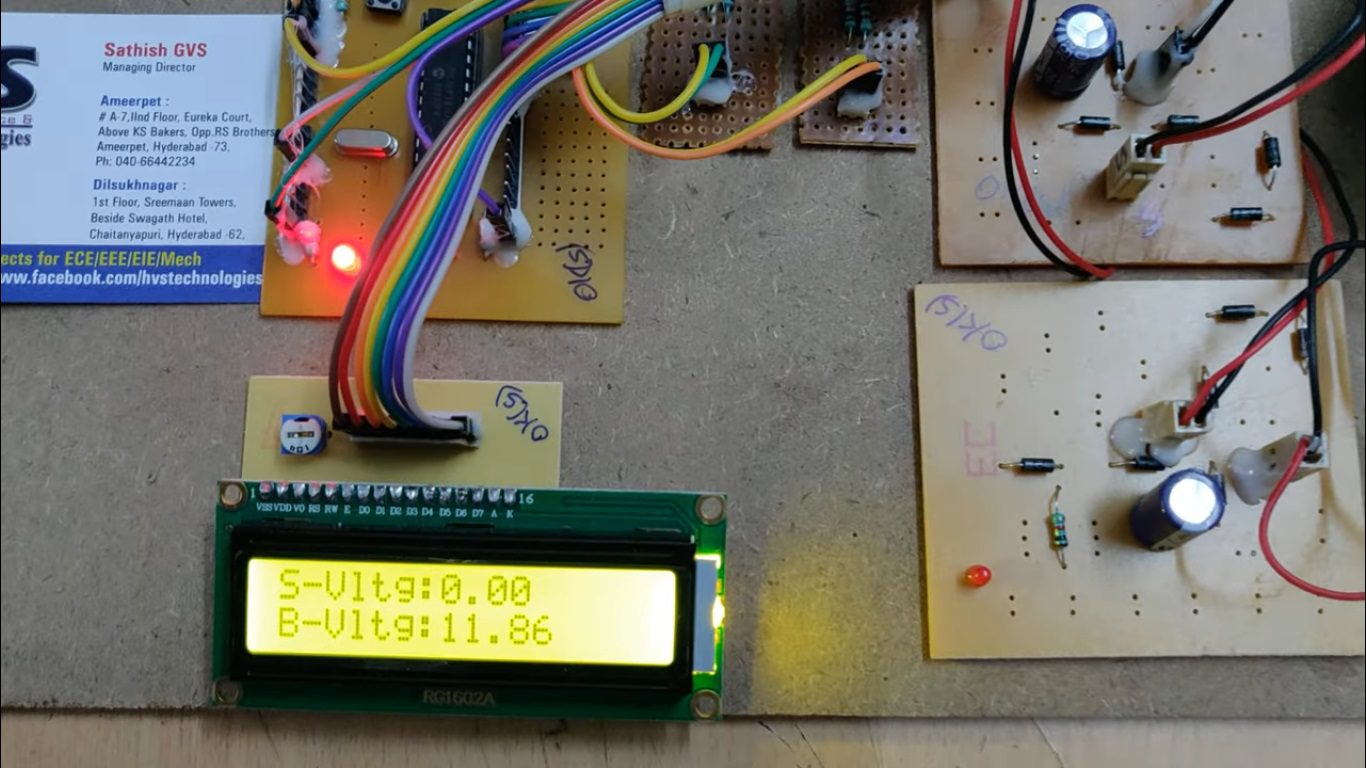
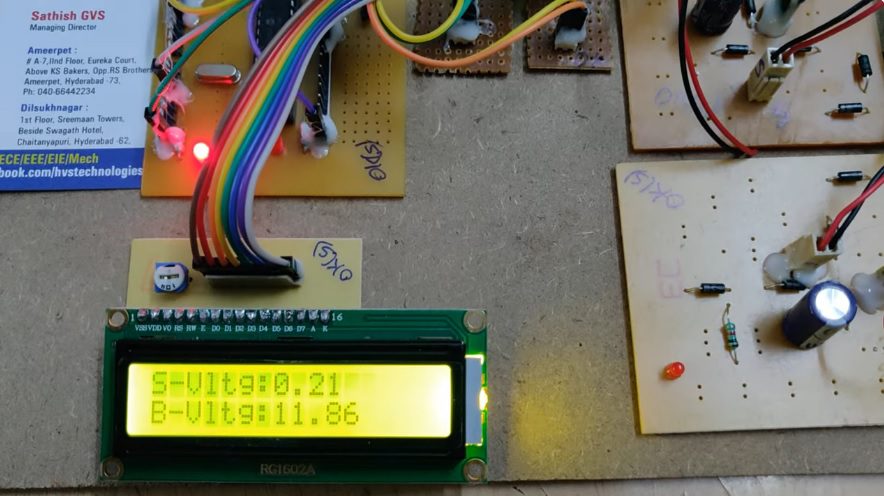
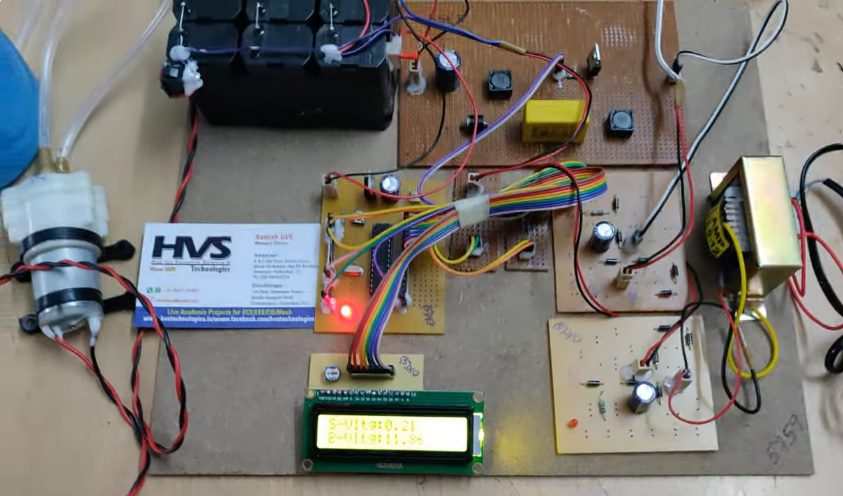
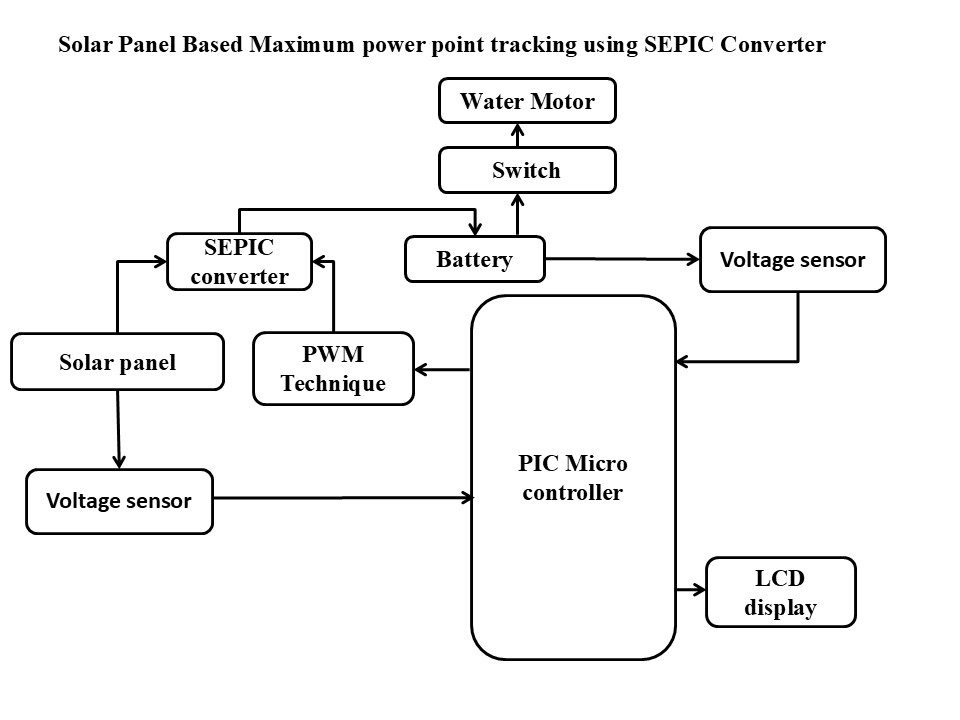
Solar Panel Based Maximum Power Point Tracking Using SEPIC Converter is a renewable energy project designed to improve the efficiency of a solar-powered agricultural water pumping system. The system uses a solar photovoltaic (PV) panel as the main source of energy and a SEPIC (Single-Ended Primary Inductor Converter) converter controlled by a PIC microcontroller to implement Maximum Power Point Tracking (MPPT). The MPPT technique continuously adjusts the duty cycle of the SEPIC converter using PWM signals to extract the maximum available power from the solar panel under changing sunlight conditions.
The output of the SEPIC converter is used to charge a battery and supply power to a DC water motor through a switching circuit. Voltage sensors monitor both the solar panel voltage and battery voltage, and the measured values are processed by the PIC microcontroller. The system displays important parameters such as solar voltage, battery voltage, and motor status on an LCD display. The SEPIC converter is capable of both stepping up and stepping down the input voltage, providing a stable output even when the solar panel voltage varies.
The proposed system increases solar energy utilization, improves water pumping efficiency, reduces dependence on grid electricity, and provides a cost-effective and environmentally friendly irrigation solution for agricultural applications, especially in remote rural areas.
Features:
 video:
- Maximum Power Point Tracking (MPPT) for maximum solar energy extraction.
- SEPIC converter provides both step-up and step-down voltage conversion.
- PIC microcontroller-based control for automatic system operation.
- PWM technique used to control the SEPIC converter efficiently.
- Solar panel voltage monitoring through a voltage sensor.
- Battery voltage monitoring for charging and protection.
- Battery charging and storage for continuous power availability.
- Automatic water motor operation through a switching circuit.
- LCD display shows solar voltage, battery voltage, and motor status.
- Stable output voltage even when solar irradiance changes.
- Improved pumping efficiency for agricultural irrigation.
- Solar Panel.
- Charging Circuit.
- Rechargeable Battery
- PIC Micro controller
- SEPIC Device
- LCD display.
- Voltage sensors.
- Water Pump.
- PIC-C compiler for Embedded C programming.
- PIC kit 2 programmer for dumping code into Micro controller.
- Express SCH for Circuit design.
 video: