Subtotal ₹4,250.00


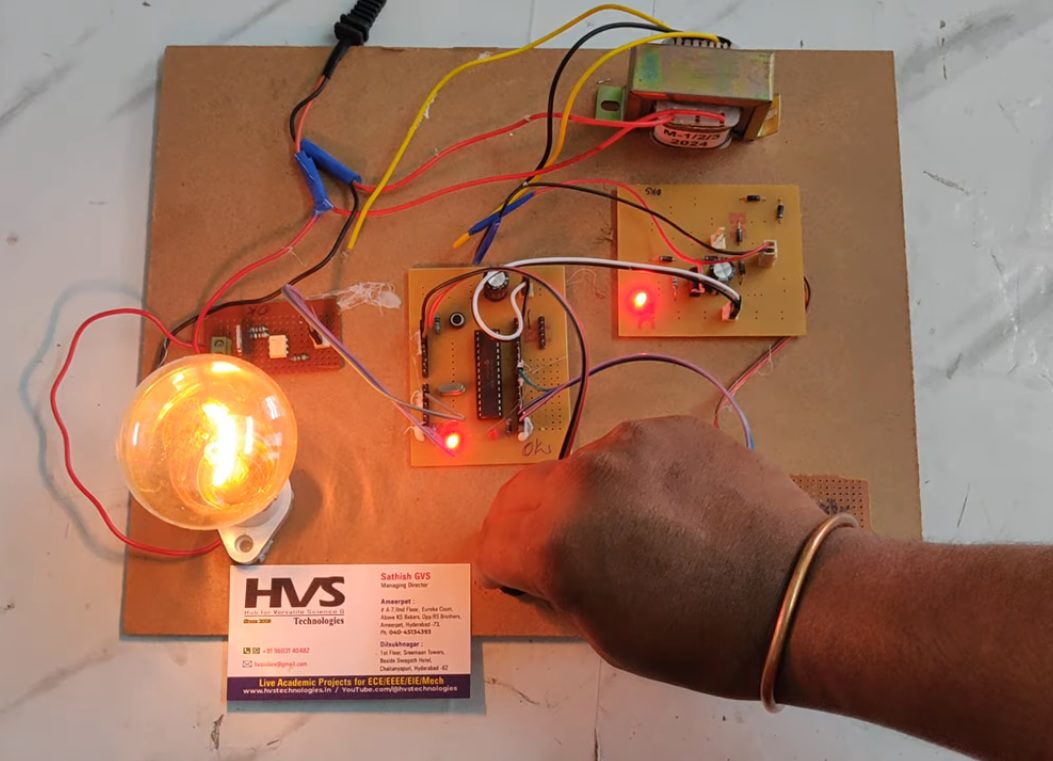
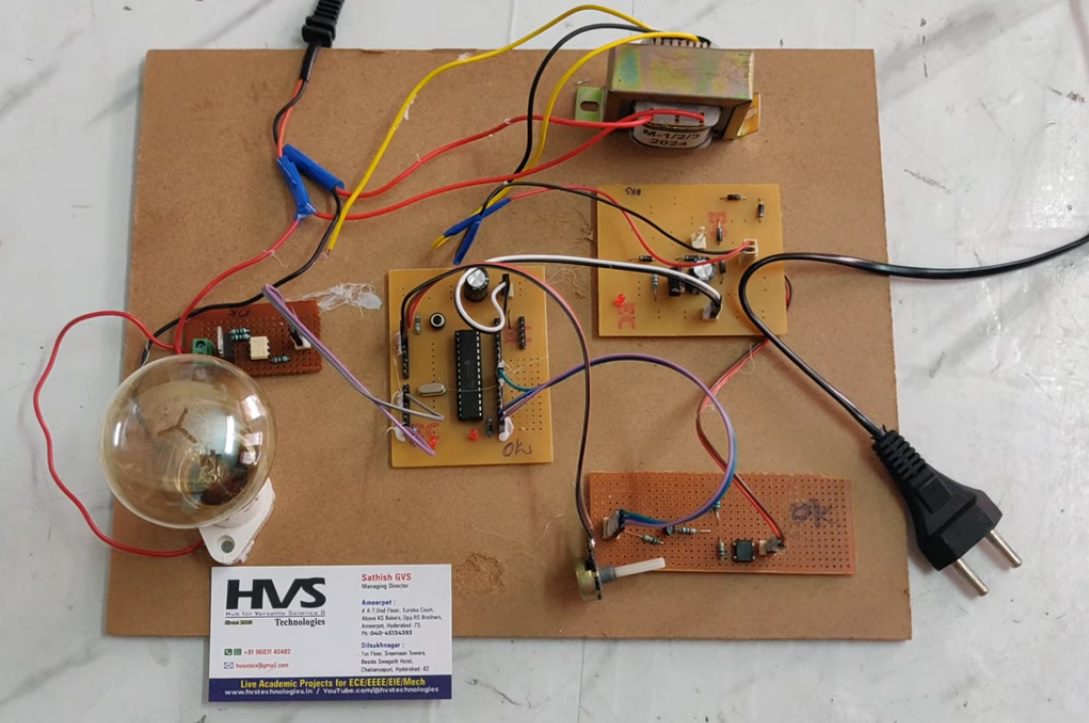
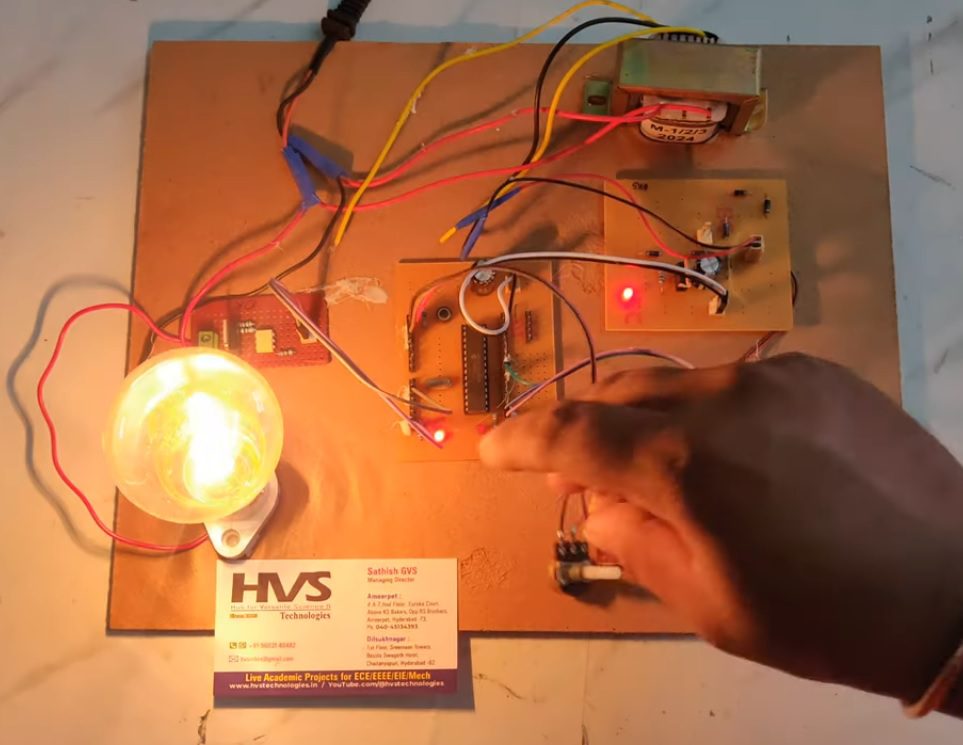
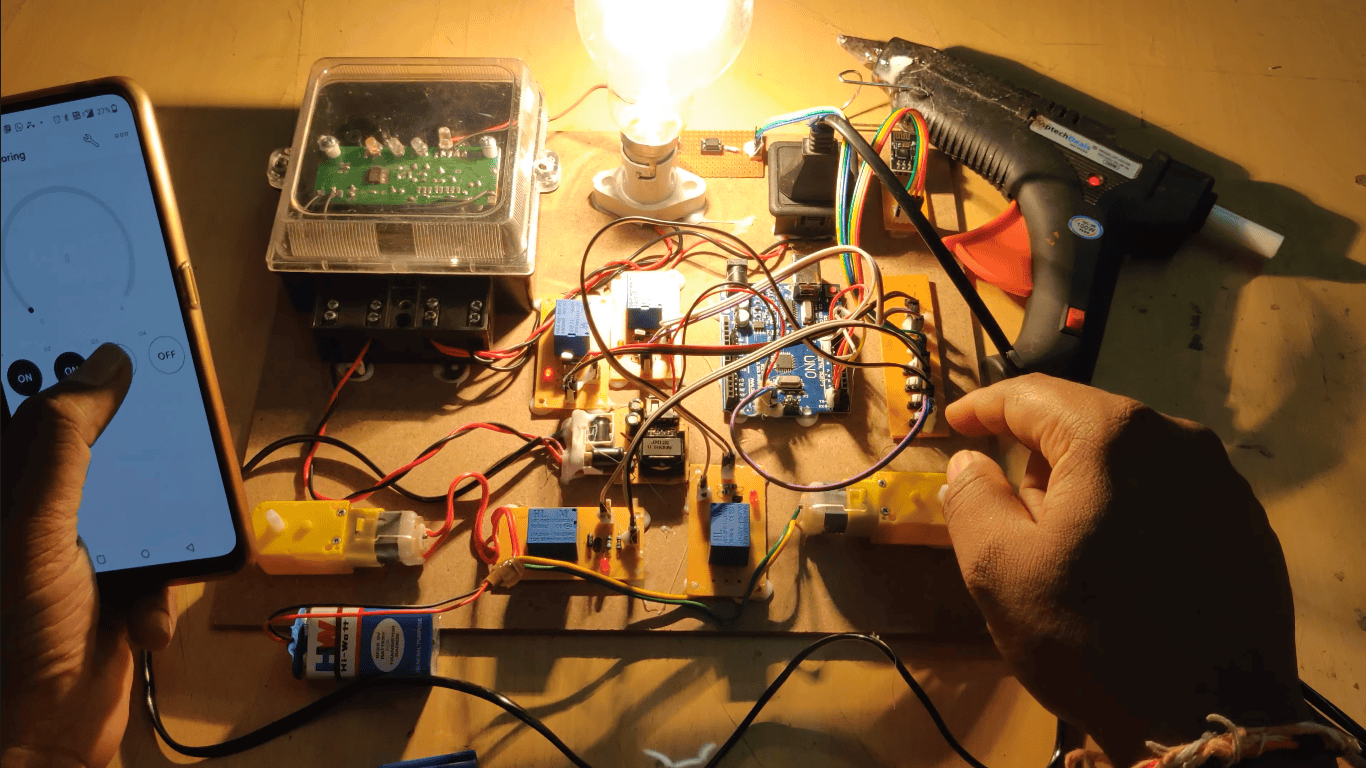
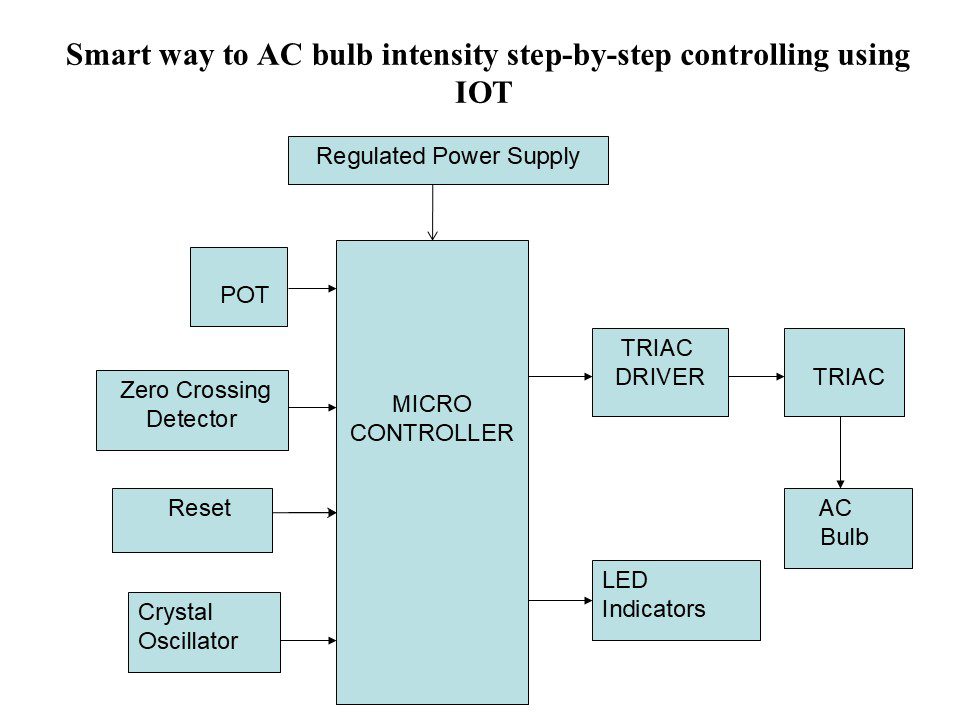
The AC Bulb Light Intensity Controlling with Potentiometer project is designed to provide smooth and efficient control of the brightness of an AC bulb using a potentiometer. The system is built around a microcontroller that continuously reads the position of the potentiometer and adjusts the firing angle of a TRIAC through a TRIAC driver. A Zero Crossing Detector (ZCD) is used to synchronize the switching of the TRIAC with the AC waveform, ensuring precise phase-angle control, reduced electrical noise, and stable operation. LED indicators are provided to display the operating status of the system.
The potentiometer acts as a user input device to vary the brightness of the AC bulb from minimum to maximum. As the potentiometer is rotated, the microcontroller calculates the required delay after each zero crossing and triggers the TRIAC accordingly. This changes the effective RMS voltage supplied to the bulb, resulting in smooth and flicker-free brightness control while improving energy efficiency.
This project provides a simple, reliable, and cost-effective solution for AC light dimming in residential, commercial, and industrial applications. It can be used in smart lighting systems, home automation, theaters, conference halls, decorative lighting, and energy-saving applications where adjustable lighting is required.
The main objectives of the project are:
 Block Diagram:
video:
Block Diagram:
video:
- To design and develop an AC bulb light intensity control system using a microcontroller.
- To control the brightness of the AC bulb using a potentiometer.
- To use a Zero Crossing Detector (ZCD) for accurate phase-angle control.
- To drive the AC bulb safely using a TRIAC driver and TRIAC.
- To provide smooth, flicker-free brightness adjustment from low to high intensity.
- To improve energy efficiency by supplying only the required power to the bulb.
- To indicate the operating status using LED indicators.
- To develop a simple, low-cost, and reliable light dimming system for home and industrial lighting applications.
- Power Supply.
- PIC Microcontroller.
- TRIAC.
- Zero crossing Detector.
- AC Bulb.
- POT (potentiometer).
- Crystal Oscillator.
- Reset Button.
- LED indicator.
- PIC-C compiler for Embedded C programming.
- PIC kit 2 programmer for dumping code into Micro controller.
- Express SCH for Circuit design.
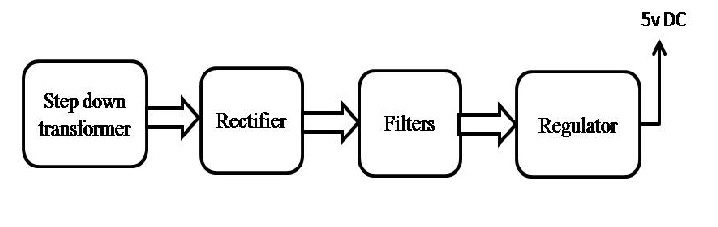 Block Diagram:
 video: