No products in the cart.


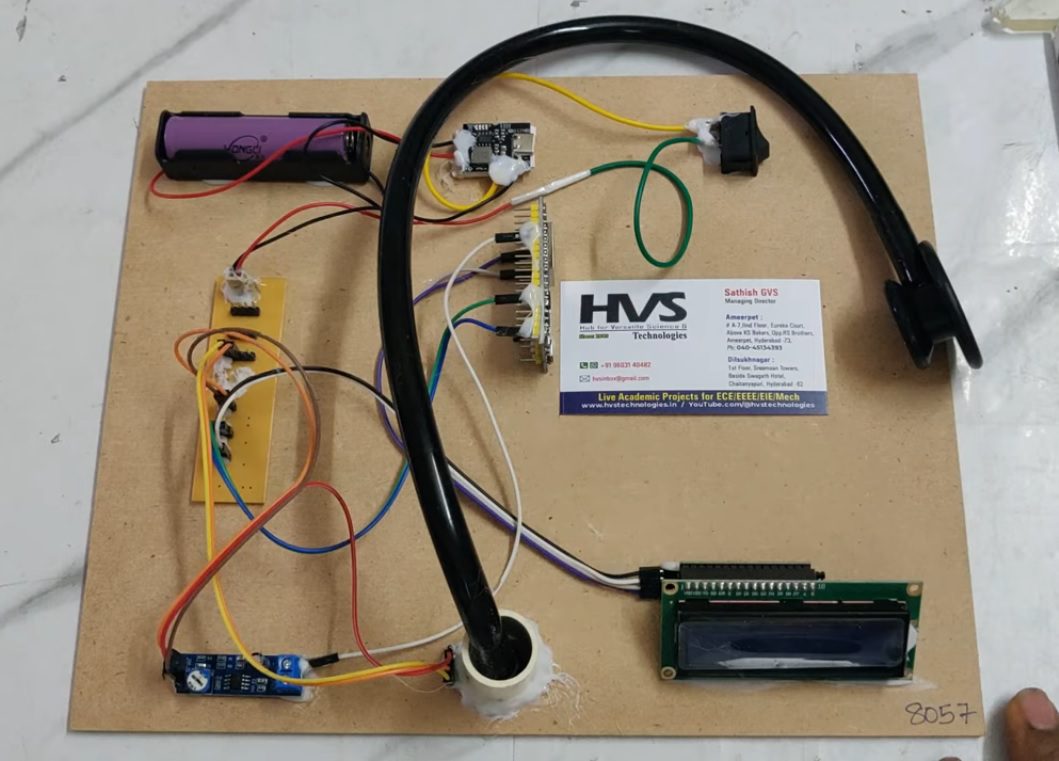
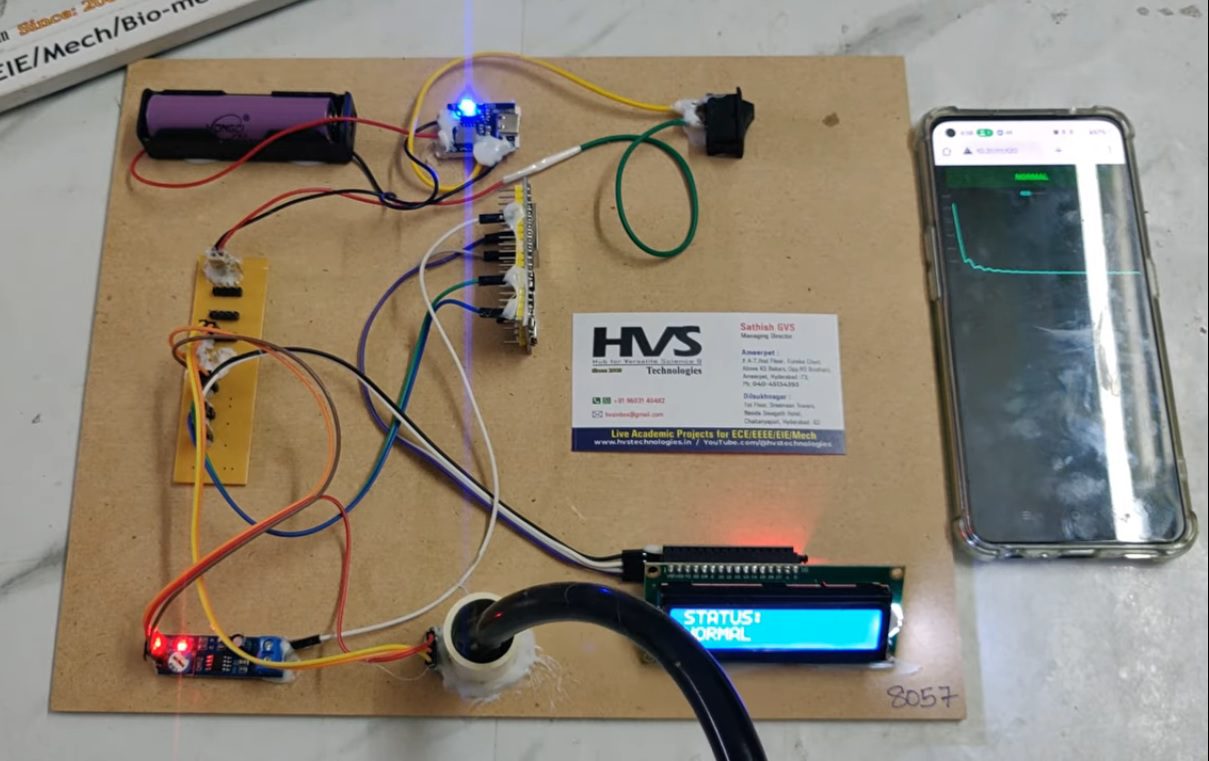
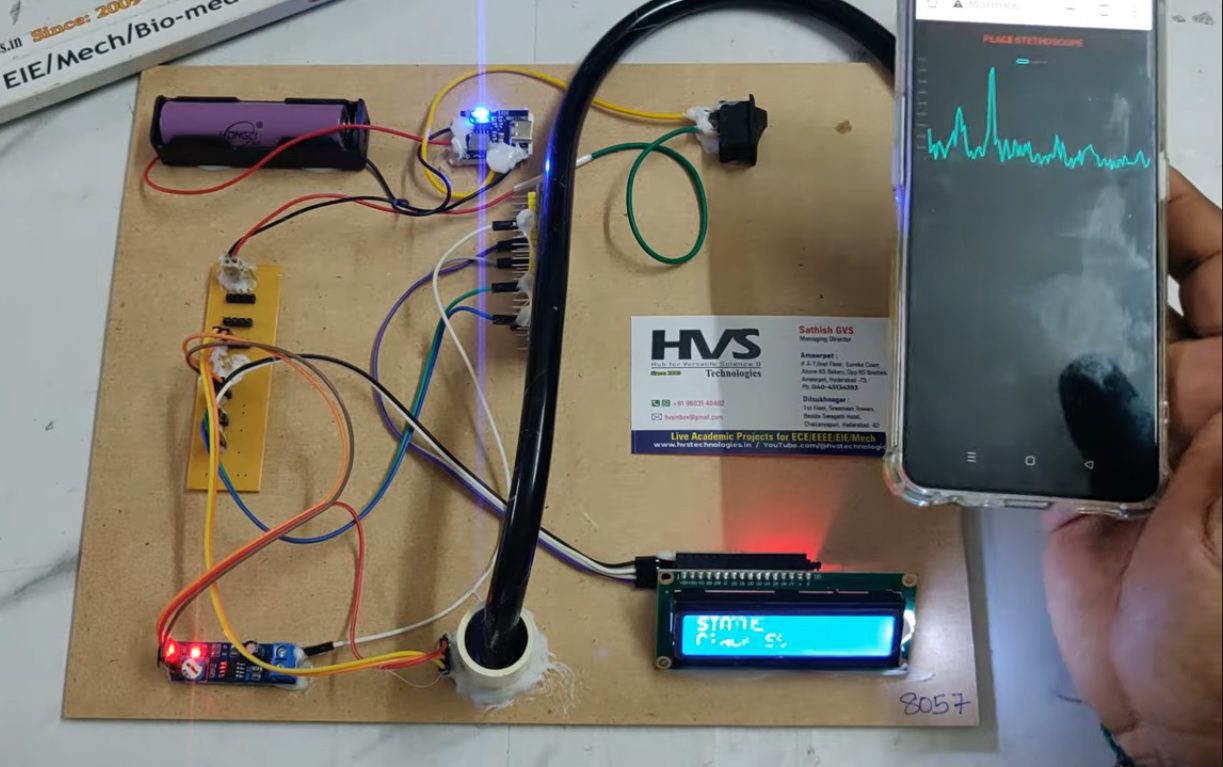
Respiratory diseases are among the leading causes of global health issues, requiring timely and accurate diagnosis. Traditional analog stethoscopes, although widely used due to their low cost and simplicity, lack the ability to record, analyze, and share auscultation data. To address this limitation, this project presents a low-cost wireless breath sound analyzer attachment designed for conventional analog stethoscopes.
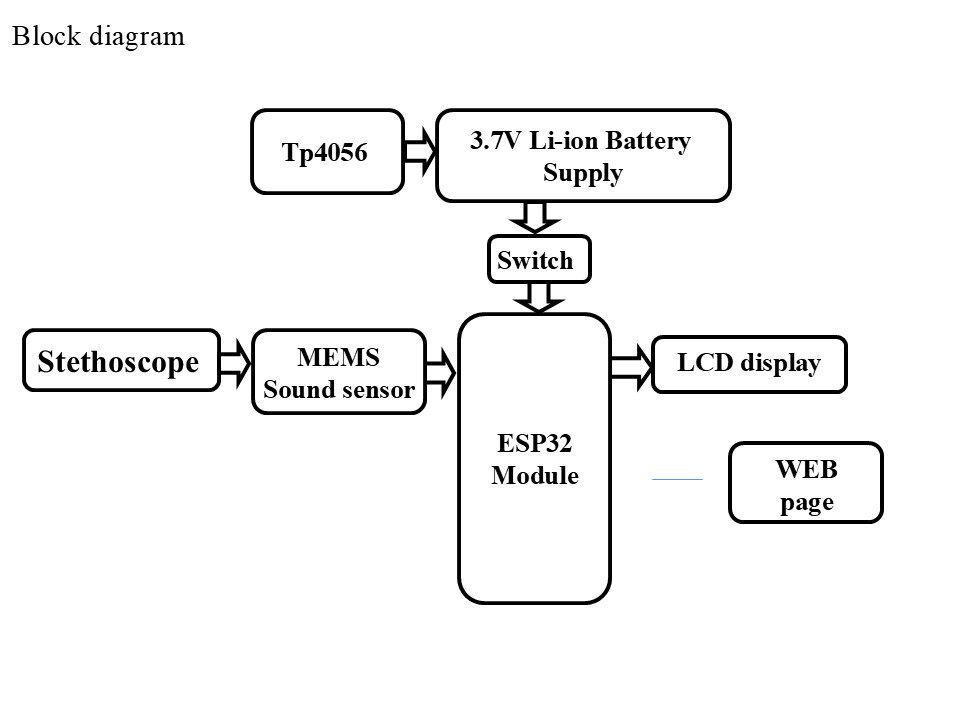
The proposed system, RespiSense, is a compact and non-invasive module that attaches to the chest piece of a standard stethoscope without affecting its normal acoustic operation. A high-sensitivity MEMS sound sensor is used to capture lung sound vibrations transmitted through the stethoscope tubing. These analog signals are fed into an ESP32 microcontroller, where they are processed and digitized.
The system is powered by a 3.7V Li-ion battery, supported by a TP4056 charging module and controlled via a power switch. The processed respiratory signals are displayed locally on an LCD screen and simultaneously transmitted wirelessly using the ESP32’s built-in Wi-Fi capability. The data is then visualized on a web page in the form of real-time waveform plots, enabling detailed breath sound analysis.
This solution provides an affordable and efficient way to enhance traditional stethoscopes with digital capabilities, supporting applications in remote healthcare, telemedicine, and medical training. The system improves diagnostic accessibility, especially in resource-limited environments, and lays the foundation for future integration of advanced signal processing and AI-based disease detection.
The objectives of the project include:
 video:
To design a low-cost attachment that can be easily integrated with a conventional analog stethoscope without affecting its normal functionality.
To acquire respiratory (lung) sounds using a high-sensitivity MEMS microphone sensor from the stethoscope tubing.
To process and digitize the acquired signals using an ESP32 microcontroller for accurate breath sound analysis.
To implement wireless data transmission using Wi-Fi for real-time monitoring and remote accessibility.
To develop a web-based interface for visualizing lung sounds in the form of waveform plots for better analysis.
To provide local display output using an LCD for quick observation of system status and readings.
To design an efficient power management system using a 3.7V Li-ion battery with TP4056 charging module.
To enable portable and user-friendly operation suitable for healthcare professionals and field applications.
To improve early detection of respiratory diseases such as asthma, pneumonia, and COPD through enhanced sound analysis.
To create a scalable platform that can be extended in the future with AI-based diagnosis and cloud data storage.
The major building blocks of this project are:- Li-ion battery.
- TP4056 Charger.
- ESP32.
- Stethoscope.
- MEMS Sound Sensor.
- LCD display.
- Arduino IDE for compiling and dumping code into ESP32 Camera and ESP32 module.
- Embedded C programming.
- Express SCH for Circuit design.
 video: